Authorities in Australia have arrested two men believed to be key members of TeamPCP, a prolific cybercrime and data extortion syndicate blamed for orchestrating the longest-running and most disruptive software supply chain attack campaign in history.
In a joint statement released today, the Australian Federal Police (AFP)—working in coordination with the FBI and the Western Police Force (WAPF)—announced the arrest of two men from Western Australia, aged 21 and 23. The suspects were apprehended in connection with a sophisticated global cybercrime syndicate that allegedly created and weaponized malicious open-source software to target and rob thousands of businesses worldwide.
While the AFP initially withheld the legal identities of the defendants, investigative reporting by Brian Krebs at KrebsOnSecurity and subsequent coverage by Australian media outlets identified the 21-year-old suspect as Ruben Ian Thomson of Cottesloe, Western Australia, and the 23-year-old suspect as Michael Gaebler. Both men now face a combined total of 14 cybercrime offenses and were scheduled to appear in the Perth Magistrates Court.

The arrests mark a major milestone in an international investigation that has tracked TeamPCP since the group vaulted onto the global cybercrime scene in late 2025. Embedding malicious code deep into hundreds of open-source software repositories, TeamPCP quickly established a terrifying new blueprint for corporate extortion. Members of the loose-knit collective made international headlines by systematically compromising corporate cloud environments through a self-propagating worm dubbed Shai-Hulud. This sophisticated malware injected malicious routines into open-source programs maintained by developers whose credentials at public repositories like GitHub and NPM had been compromised via phishing or credential theft.
Writing for Wired, journalist Andy Greenberg described TeamPCP’s core methodology as a cyclical exploitation of the software development ecosystem. Hackers would gain initial access to a network where a popular open-source coding tool was actively under development. They would then plant malware inside the tool, which subsequently propagated to the machines of other software developers—including engineers building libraries intended for broader deployment across the industry. The malware harvested credentials that allowed TeamPCP to publish malicious variants of those downstream software tools as well, feeding a self-sustaining cycle of breaches that continuously expanded the group’s network footprint.
TeamPCP also pioneered a form of cyclical recruitment. In May, following the online publication of the source code for the third iteration of Shai-Hulud, the group launched a high-profile contest. Offering a baseline prize of $1,000 in Monero (XMR) cryptocurrency, the competition challenged participants to conduct the largest software supply chain operation using the worm’s code. Contestants were scored based on the weekly and monthly download counts of the packages they successfully compromised, directly incentivizing them to target the most heavily downloaded libraries in circulation.

Security firm Dataminr noted at the time that the contest functioned as an open recruitment drive. TeamPCP leadership openly dismissed the monetary prize as a mere participation trophy, noting that anyone who harvested genuinely valuable network access would receive substantially larger payouts. This strategy allowed the syndicate to scale its operations by identifying talented malicious actors and acquiring high-value enterprise access on an industrial scale.
The group’s campaigns frequently targeted high-profile infrastructure. In March, TeamPCP executed a supply chain attack targeting artificial intelligence infrastructure by compromising the code for LiteLLM, an open-source AI gateway connecting users to more than 100 different large language models. A detailed analysis by security firm CloudSEK revealed that the LiteLLM breach harvested cloud service keys and sensitive secrets from more than 2,500 organizations, including many of the world’s leading technology enterprises. By May, TeamPCP further claimed credit for compromising at least 3,800 code repositories at Microsoft-owned GitHub after a developer installed a malicious code extension.
Meet the Cybercats
Security analysts emphasize that TeamPCP operates less like a traditional hierarchical criminal gang and more like a peer community of skilled threat actors drawn from various cybercriminal backgrounds. Austin Larsen, a principal threat analyst with the Google Threat Intelligence Group, described the collective as a peer community of individually skilled actors anchored by a distinct center of gravity.

That center of gravity has been tied to George Prepakis, an accomplished security researcher and self-described exploit developer who operates the X (formerly Twitter) profile @kernelstub. Earlier in the year, Prepakis published a public invite link to a Matrix chat server named "Cybercats," which TeamPCP members and allied cybercriminals used for daily operational coordination.
Communications within the Cybercats server exposed ties to multiple notorious cybercrime and extortion groups. Among the administrators was an operator known as "Boxturtle," linked to the data breach broker handle @xpl0itrs, which has vied for attention on underground forums like Breachforums and Darkforums by selling data stolen from major automotive manufacturers—including BMW Group, Audi, Honda, Mercedes-Benz, Volvo, and Toyota—as well as Snapchat and SportRadar. Another administrator, "SeesawSec," aligned with the Fulcrumsec extortion group, which claimed responsibility for attacks against pharmaceutical giant Novo Nordisk, data broker LexisNexis, and Fortune 500 distributor Avnet.
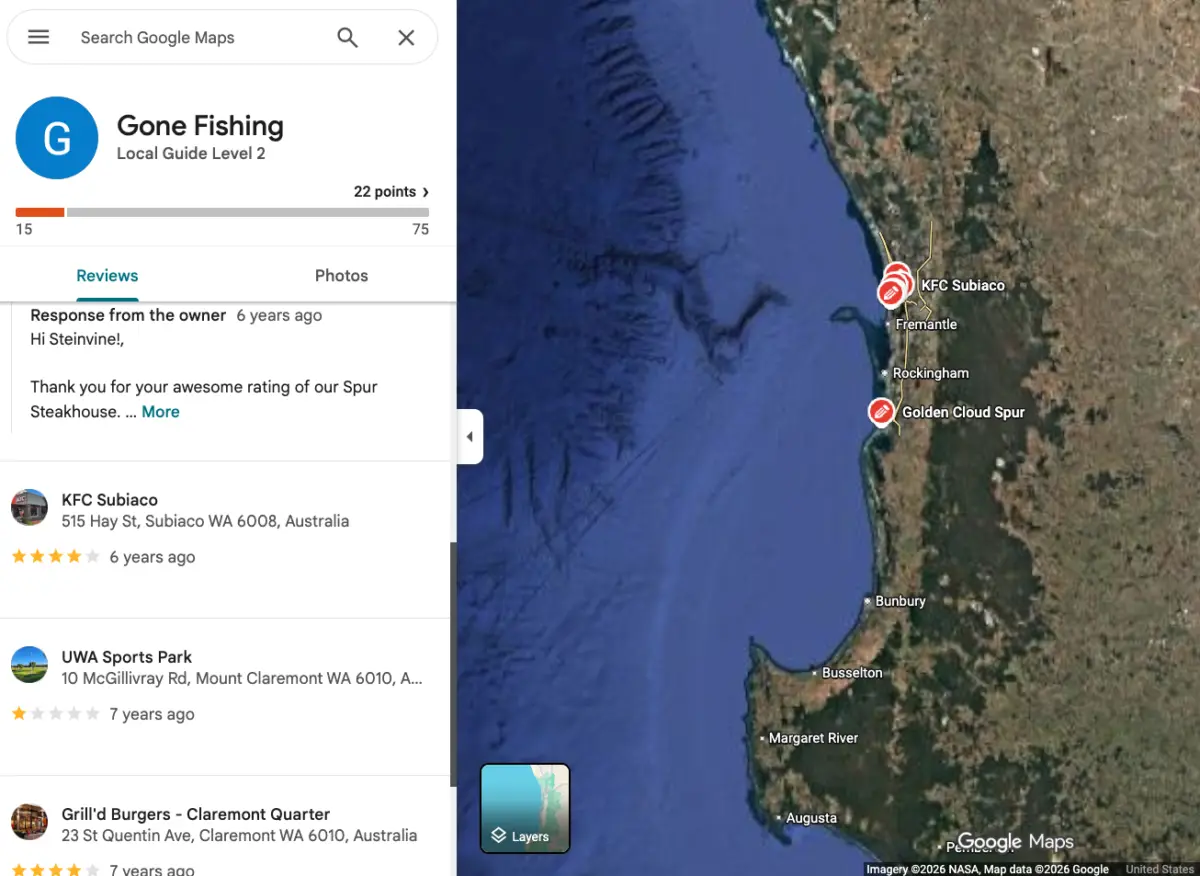
Evidence gathered from chat logs and associated Telegram channels indicated that the 23-year-old suspect, Michael Gaebler, operated under handles such as @pcpcasper. Message histories on Telegram revealed Gaebler to be an active member of the National Socialist Network, a neo-Nazi organization based in Australia. Investigators linked Gaebler to the arrests after media files shared within the chat networks placed him in Western Australia alongside domestic pets matching those found in his personal residence.

Who is the TeamPCP Leader?
Investigations into the leadership of TeamPCP centered heavily on the online persona of Ruben Thomson, who utilized handles such as EllisD25 and LSD on Darkforums, BulkDMT on Breachstars, and Express on Breachforums. These accounts shared consistent instant messaging contact identifiers across multiple forums, while BulkDMT also operated DMT Host, a virtual private server hosting venture advertised on underground marketplaces.
Threat intelligence firms including Intel 471 and Flashpoint tracked the leader’s operational habits, noting that the alter ego Persy_PCP frequently discussed living between South Africa and Australia, referencing family roots in South Africa and expressing deep personal struggles with methamphetamine addiction.
Digital forensics firms, including SpyCloud and DomainTools, traced historical forum registrations and IP addresses back to residential networks in Perth, Australia, historically used by the Thomson family. Passive DNS records, freight forwarding accounts, and business registrations linked Ruben Thomson to entities such as Secure Computing Solutions, Tensor Industries, and OPSEC Express—ironically incorporating his underground cybercrime handle into corporate registrations.

Further operational security failures sealed the group’s fate. In June, an account registered in the name of Ruben Thomson on the bug bounty platform HackerOne utilized the handle Deadcatx3, an alias previously flagged by multiple cybersecurity firms as a core identifier for TeamPCP.
Interview with Ellis
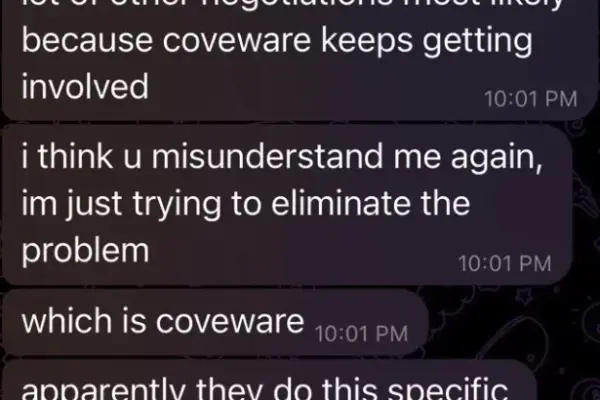
In early July, following the independent discovery of his real-world identity, KrebsOnSecurity conducted an interview with the TeamPCP leader via Signal. Operating under the name Ellis, the young hacker was remarkably candid about his involvement, his personal struggles with addiction, and the realities of modern cybercrime syndicates.
Ellis claimed he stepped away from active cybercrime for TeamPCP in March—just prior to the LiteLLM supply chain attacks—and that leadership of the group had since transitioned to others. He recounted that his entry into the underworld began after completing a sobriety program, when he reconnected with acquaintances from the malware development community to monetize GitHub credentials and stay occupied.

"Blackhatting is fun," Ellis said during the interview. "There are actual rewards and incentives to learn and you grow with your team. Without qualifications, no employer will even take the time to hear you out."
Ellis estimated that he earned roughly $20,000 total from his activities with TeamPCP, insisting that the work was never primarily about financial accumulation or notoriety. Expressing resignation regarding his inevitable apprehension, he noted that he would accept the consequences if law enforcement closed in, while acknowledging that his struggles with substance abuse required professional intervention that incarceration could not resolve.
Despite his departure from active operations, chat logs recovered from the Cybercats Matrix server indicated ongoing struggles with sobriety right up until the days preceding his arrest. On June 25, Ellis discussed plans to use dissociative and psychedelic compounds with associates, and subsequent Telegram posts featured images of powdery substances being weighed alongside vape cartridges.

Security researchers note that TeamPCP represents an emerging class of threat actors who defy traditional categorization. Charlie Eriksen, a security researcher at Aikido Security, observed that the group sits at an uneasy intersection of cybercrime, disruption, and ideological motivation. According to Eriksen, the widespread availability of artificial intelligence and large language models has compressed the learning curve for complex attack techniques, enabling individuals with limited professional discipline to execute operations at massive scale.
"They can be noisy, they can make mistakes," Eriksen said. "They can leave evidence everywhere. They can take risks that a professional criminal group or intelligence service would consider completely unacceptable. But that does not necessarily make them less dangerous. In some ways, it can make them more dangerous."
Nevertheless, security experts argue that TeamPCP’s aggressive campaigns ultimately drove positive structural changes across the software development industry. In direct response to the Shai-Hulud worm and subsequent supply chain poisoning efforts, GitHub and other major coding platforms implemented mandatory cooldown periods for automated dependency updates, giving maintainers critical windows to identify and purge malicious packages before they infect enterprise environments.

According to updates from Australian news agencies, Ruben Thomson was denied bail during his initial court appearance, while legal counsel for Michael Gaebler did not request bail. Both men remain in custody pending their next scheduled court appearance.