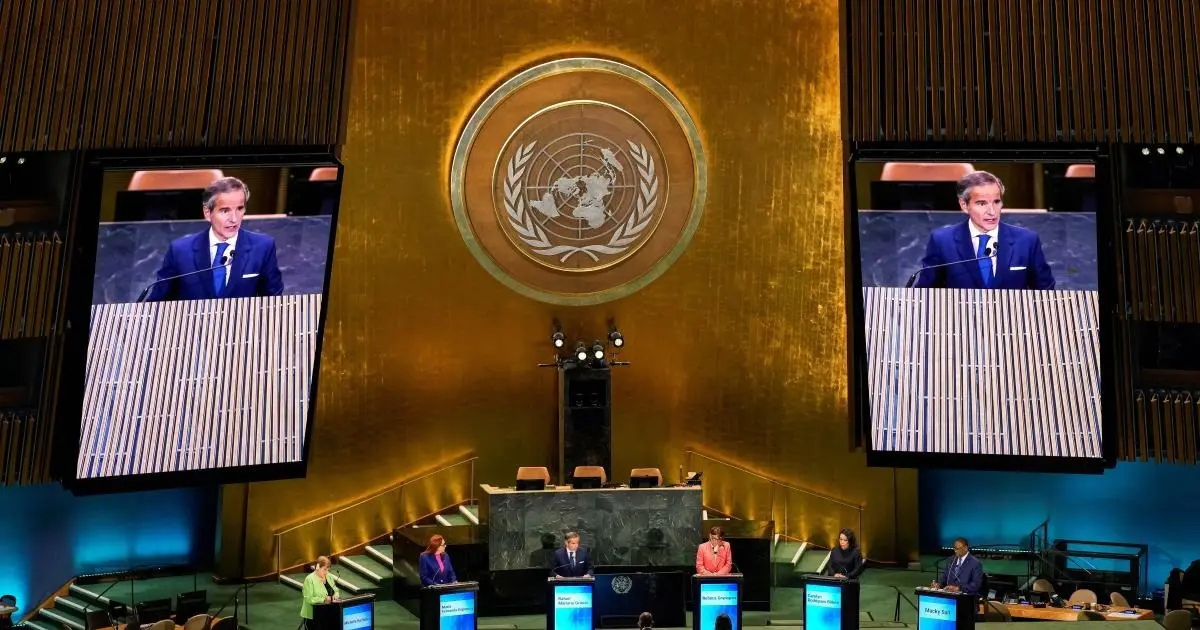
As world leaders converge on New York for the annual high-level week of the United Nations General Assembly, international officials often repeat a dark institutional joke: the United Nations is always in crisis. Since its inception in 1945 from the ashes of the Second World War, the global body has continually navigated treacherous geopolitical fault lines, devastating humanitarian emergencies, and recurring budget deficits. Yet, as current delegations take their seats, the consensus among diplomats is that the organization finds itself in a uniquely perilous position.
The three dominant, veto-wielding members of the UN Security Council—China, Russia, and the United States—have increasingly paralyzed the body, preventing decisive action on major geopolitical flashpoints. The organization has been sidelined or blocked from responding effectively to ongoing wars in Ukraine and Iran, as well as intractable civil conflicts in Sudan and Myanmar. Meanwhile, developing nations voice mounting frustration that wealthy donor states have routinely failed to fulfill their financial pledges toward international development spending. Complicating matters further, the administration of U.S. President Donald Trump halted the vast majority of U.S. funding for UN activities, compelling the organization to slash vital peacekeeping missions and humanitarian relief operations worldwide.
With these formidable challenges mounting, an impending leadership transition may determine whether the UN can stabilize its operations, recover some of its eroding credibility, or slide further into bureaucratic decrepitude. Current Secretary-General António Guterres plans to step down at the end of the year, concluding a decadelong tenure marked by persistent struggles to shift the organization’s political fortunes. Guterres has spent much of his final two years in office grappling with painful staff reductions and sweeping cost-cutting measures designed to keep the UN secretariat from sliding into bankruptcy on his watch. While his has been a largely thankless task, diplomats and career UN officials are placing their hopes in an incoming leader capable of adopting a long-term approach to revitalizing the institution and restoring fractured government commitments to multilateral diplomacy.
A small pool of candidates has emerged to succeed Guterres. The contenders include senior UN trade official Rebeca Grynspan, Rafael Grossi, the Director General of the International Atomic Energy Agency, and Carolyn Rodrigues-Birkett, Guyana’s Ambassador to the UN. Regardless of who ultimately secures the position, Guterres’s successor will face the urgent task of drafting an entirely new playbook to revitalize the global organization. Any serious attempt at reform must grapple with an unpleasant reality: as long as international politics remains defined by intense competition and chaos, the UN’s capacity to forge sweeping, wide-ranging global agreements will remain severely constrained.
Consequently, the best hope for the next secretary-general may lie in relinquishing some of the organization’s past, lofty ambitions in favor of a leaner, more focused model. By prioritizing practical crisis prevention, efficient conflict resolution, the streamlined delivery of humanitarian aid, and achievable international development goals, the organization might find a sustainable path forward. A UN that discards time-consuming diplomatic theater and bloated bureaucracies in exchange for a few core functions may disappoint ardent advocates of global governance. Yet, it may also represent the only viable version of the organization capable of surviving an era defined by great-power rivalry and severe fiscal austerity.
Less Money, More Problems
Since the conclusion of the Cold War, successive UN chiefs have routinely responded to moments of acute crisis by arguing that the institution should expand its mandate rather than scale it back. Boutros Boutros-Ghali, the inaugural secretary-general of the post-Cold War era, envisioned the UN as an all-powerful global peacemaking force. However, during his final years in office, his vision faltered after blue helmet peacekeepers failed to prevent the 1994 Rwandan genocide and the 1995 Srebrenica massacre in Bosnia, prompting a temporary organizational retrenchment.
Beginning in the late 1990s, Boutros-Ghali’s successor, Kofi Annan, charted a different course. Annan established new poverty-reduction targets, spearheaded the global fight against HIV/AIDS, and launched complex UN peace operations in Kosovo, Timor-Leste, and several African nations. Although the 2003 U.S. invasion of Iraq deeply fractured the Security Council and temporarily derailed his agenda, Annan organized a major global summit in 2005 to rally governments back to multilateralism. The following year, his efforts led to the creation of the Peacebuilding Commission and the Geneva-based Human Rights Council.
In the two decades since Annan completed his term, his successors, Ban Ki-moon and António Guterres, have had to manage an escalating catalog of global crises. Most notably, the devastating Syrian civil war fractured the Security Council for over a decade. As the volume of armed conflicts, humanitarian emergencies, and climate-induced natural disasters multiplied, the UN’s overall budget expanded in tandem. The combined revenue of all UN entities climbed from $40 billion in 2010 to a peak of $74 billion in 2022, fueled largely by a dramatic surge in humanitarian expenditures.
Both Ban and Guterres repeatedly appealed to member states to demonstrate greater global solidarity. Ban championed the landmark Paris climate change agreement in 2015, while Guterres convened a high-profile "Summit of the Future" in 2024, where member states pledged cooperation on issues ranging from artificial intelligence to intergenerational justice. These agreements showcased visionary diplomacy and demanded extraordinary efforts, with the Paris accord earning widespread public support.
However, UN member states have repeatedly failed to honor the commitments outlined in past agreements. This persistent gap has bred widespread skepticism regarding the true effectiveness of multilateralism, making it increasingly difficult to convince mistrustful governments to sign new deals equipped with binding legal force and solid enforcement mechanisms. Over time, UN negotiations have increasingly generated mountains of paperwork and procedural bureaucracy rather than tangible results.
The widening chasm between the UN’s grand self-image and its actual operational track record has grown too wide for even its staunchest advocates to ignore. While heads of state continue to make customary appearances at UN headquarters and diplomats churn out endless resolutions, the organization now faces stiff competition from alternative diplomatic clubs. Entities such as the G-7, the BRICS bloc, and the nascent Board of Peace promoted by U.S. President Donald Trump offer governments alternative spaces for debate and collaboration without the cumbersome, slow procedures characteristic of traditional UN diplomacy. Furthermore, a wave of populist and nationalist governments sweeping across various regions has openly challenged the organization’s commitment to universal values, particularly regarding the treatment of refugees and migrants—a line of attack actively encouraged by both Trump administrations.
The immediate financial impact of U.S. policy, however, has struck the UN where it is most vulnerable. In the opening months of 2025, the Trump administration froze nearly all U.S. funding destined for UN humanitarian initiatives while refusing to contribute to the organization’s core administrative budget. Over the previous year, Washington paid less than half of its expected financial obligations for UN peacekeeping operations.
Initially perceived as a potential death blow to a wobbly institution, these sweeping cuts are increasingly viewed by diplomats as a long-overdue wake-up call for UN leadership to institute strict fiscal discipline. Other major donors, including China and the European Union, have refused to step in and fill the massive financial voids left by Washington, signaling that institutional skepticism extends far beyond the White House. Many European nations have actively trimmed their own humanitarian assistance budgets to redirect funds toward domestic defense priorities.
Beijing currently covers roughly one-fifth of the organization’s core operating costs, making it the second-largest contributor behind Washington. U.S. Ambassador to the UN Mike Waltz has noted that the two superpowers have unexpectedly found a "kind of common ground" regarding budget reductions. Although the most severe cuts from Washington may have subsided—with the U.S. releasing roughly $4 billion for humanitarian work this year alongside a $725 million contribution to the UN core budget—the organization’s next leader will still be forced to operate with significantly diminished financial means.
Consequently, the incoming secretary-general will confront the delicate challenge of fulfilling the UN’s core mission and regaining the lost trust of its membership while maintaining a strict austerity posture. Defying the typical institutional reflex to launch new activities as a means of renewal, the path forward demands a streamlined, highly focused agenda for cooperation that skeptical member states are actually willing to support.
The candidates vying for the top post all acknowledge the pressing necessity of financial discipline and a pragmatic approach to solving global problems. While none have yet laid out exhaustive policy blueprints, all concur with Rafael Grossi’s assessment that "the world does not need more declarations." Rebuilding on a similar theme, Rebeca Grynspan has pledged to "make the UN more useful, more agile, and more accountable" to the nations it serves.
Whoever claims the office will need to translate these broad pledges into specific actions. The secretary-general’s authority over the sprawling UN system is complicated by a dense tangle of governance structures, separate budgeting processes, and competing institutional interests. Decades of uncoordinated expansion have left behind massive institutional redundancies. For instance, three separate agencies located in Rome handle different aspects of agriculture and food security. Similarly, the UN Refugee Agency and the International Organization for Migration both oversee assistance for displaced populations within the same regions, frequently competing against each other for operational influence during crises. A small army of special envoys, satellite offices, and trust funds address various facets of climate change independently.
While no two UN insiders agree on the exact formula to prune this thicket of entities, a broad consensus exists that structural consolidation is urgently required—even if individual agency heads resist cuts within their own domains. The incoming secretary-general will have to exert strong leadership to streamline how the organization raises funds, responds to emergencies, and deconflicts overlapping mandates across its constituent branches.
The Price of Peace
Just as candidates recognize the imperative for internal consolidation, they share the conviction that institutional reform must center on reviving the UN’s primary role in peacemaking. This perspective reflects a prevailing sentiment among New York-based diplomats who argue that António Guterres has frequently neglected peace and security issues during his tenure. In several major conflicts that erupted while he was in office, including the civil wars in Ethiopia and Sudan, Guterres focused heavily on negotiating humanitarian access while remaining largely aloof from political mediation efforts, often citing the inherent powerlessness of his office.
This cautious posture is understandable given the deep divisions paralyzing the veto-wielding members of the Security Council. Russia has consistently utilized its veto power to ensure the UN retains zero political role in resolving the conflict in Ukraine. Meanwhile, the Biden administration bristled at UN-led efforts to foster a ceasefire between Israel and Hamas in late 2023, and President Trump’s own alternative ceasefire initiatives largely marginalized the organization in favor of his newly established Board of Peace. Washington has likewise paid minimal attention to UN efforts to ease maritime tensions in the Strait of Hormuz, having previously bypassed the UN Charter’s strict prohibitions against acts of aggression when launching military actions in Iran. Furthermore, China has quietly signaled to member states that the UN should restrict its involvement in Myanmar’s protracted civil war.
Nevertheless, Guterres’s tendency to retreat from active peacemaking has alienated numerous member states that still firmly believe the UN should intervene to resolve conflicts where the vital interests of the major powers are not directly at stake. His heavy emphasis on global issues disconnected from armed conflict has grown increasingly out of touch with how member nations evaluate their own security challenges. In an era marked by a resurgence of violent conflict, diplomats in New York report that their capitals urgently want to know what concrete security contributions the UN can offer. While nations may value international cooperation in other domains, matters of war and peace invariably take precedence.
The candidates seeking to succeed Guterres appear acutely aware of this reality. Despite spending the bulk of her UN career focused on trade and development, Rebeca Grynspan has emphasized that her primary focus will be "to restore confidence in the UN as a trusted convenor in theaters of conflict." Yet, promising to act as a peacemaker is far simpler than successfully resolving active wars, particularly when permanent members of the Security Council are directly involved, or when influential middle powers actively sideline the organization, as seen with Gulf state interventions in Sudan.
To restore faith in the foundational mission of the organization, the next secretary-general must demonstrate to both the veto-holding powers and the broader membership that the UN remains capable of preventing and terminating conflicts. The organization retains proven strategies and tools within its historical playbook. During the Cold War, Secretary-General U Thant successfully mediated between the United States and the Soviet Union, facilitating the delicate backchannel diplomacy that helped defuse the Cuban missile crisis. Over the subsequent decades, the organization has accumulated unrivaled expertise in managing mediation processes, alongside the logistical and administrative structures required to mount stabilization missions. Acknowledging this utility, the Trump administration lobbied the Security Council last year to mandate that the UN provide logistical backstopping for a multinational Gang Suppression Force in Haiti.
Although the organization retains the capacity to deploy large numbers of personnel where necessary, the global demand for massive multinational peace operations—the hallmark of UN crisis management during the 1990s and early 2000s—is expected to remain subdued. Instead, the incoming secretary-general should pivot toward quieter, more cost-effective forms of crisis diplomacy. This approach would involve dedicating time and energy to shuttle diplomacy between veto-holding powers and influential middle powers, serving as an impartial source of strategic advice and creative solutions. Such work requires meticulous behind-the-scenes trust-building rather than dramatic public spectacles. If the UN’s next leader can successfully reestablish the organization’s reputation as a reliable peacemaker, it could lay the institutional groundwork for more ambitious undertakings in the future.
Party’s Over
A renewed concentration on peacemaking does not require the UN to abandon all other objectives entirely. However, organizational leaders will need to exercise greater wisdom in selecting their operational priorities. In 2015, UN member states adopted an ambitious framework of sustainable development goals, which included a solemn pledge to eliminate extreme global poverty by 2030. Following the compounding economic shocks triggered by the COVID-19 pandemic, the war in Ukraine, and disruptions in the Strait of Hormuz, the likelihood of meeting those targets is exceedingly slim.
As diplomats prepare to negotiate a fresh package of development goals for the post-2030 era, they confront the shortcomings of the previous framework. The 2015 agenda encompassed 169 specific targets distributed across 17 distinct policy categories, ranging from environmental protection to peace, justice, and security. The sheer administrative complexity of this sprawling agenda has made it exceptionally difficult to sustain cohesive political and public support for its core objectives.
While many member states will undoubtedly advocate for maintaining or even expanding this diverse array of initiatives, the incoming UN chief may need to push for a more disciplined agenda anchored strictly around poverty reduction, climate adaptation, and shielding vulnerable economies from global financial shocks. Many diplomats representing developing nations harbor deep anxieties that wealthy donor states intend to abandon the global development agenda entirely—suspicions partially validated by the Trump administration’s outright rejection of the existing goals. Negotiating a shorter, more sharply defined set of post-2030 targets could help bridge the divide between donor nations and the developing world.
A similar tempering of ambitions will likely prove necessary regarding sprawling global challenges such as climate change and the regulatory governance of emerging technologies. The organization’s preferred method for advancing international agreements in these areas has historically relied on an excess of massive conferences and declarations. For instance, approximately 55,000 delegates representing national governments, private corporations, and civil society groups registered to attend the UN climate change summit hosted in Brazil last year. While such expansive guest lists project inclusivity, they rarely serve as an effective recipe for clear, decisive action.
The next secretary-general will need to rethink how to initiate policy on complex global problems without relying on excessive fanfare. Veteran diplomats recalling the methods of successful past secretaries-general emphasize that major policy initiatives were carefully crafted through quiet consultations with small coalitions of diplomatic allies. Just as the secretary-general’s conflict-resolution efforts may rely less on large-scale blue helmet deployments and more on discrete backchannel contacts, modern multilateral diplomacy around complex global issues may require fewer megaconferences and more private gatherings. This strategy carries inherent drawbacks; the UN can effectively leverage global public sentiment as political fuel, particularly when powerful states display reluctance to act independently. Undoubtedly, moments will arise where leadership requires publicly rallying global opinion. Nevertheless, low-key coalition building will frequently yield superior practical outcomes.
General Reassembly
Experts pondering the long-term future of multilateralism frequently debate what measures will be required to get the UN back on solid footing. Some analysts contend that the organization’s internal contradictions will eventually compel member states to authorize a comprehensive, wholesale review of the UN Charter—a drastic step that carries an equal risk of exacerbating existing diplomatic fractures or alleviating them. Others speculate that an unprecedented global shock, such as a catastrophic artificial intelligence-enabled cyberattack targeting critical national infrastructure across multiple countries or a compounding cascade of climate disasters, might jolt governments into fully recognizing the indispensable need for genuine international cooperation.
The incoming secretary-general should quietly contingency-plan for such scenarios, operating on the principle that the better prepared the organization is, the more relevant it will remain when crises strike. In the interim, incoming leadership must labor to regain the trust of the governments and populations it serves by demonstrating a concrete capacity to mitigate the global rise in armed conflicts, sharpening its diplomatic and operational focus, and providing a reliable platform for pragmatic global problem-solving. This leaner, more disciplined institution may ultimately prove to be the exact version of the United Nations that the modern world requires.