China has published its official five-year plan for the development of the coal industry, marking the latest in a crucial series of policy documents shaping the nation’s sweeping energy transition. Released jointly by the National Development and Reform Commission (NDRC) and the National Energy Administration (NEA) on August 10, the 15th five-year plan governs the strategic direction of the sector from 2026 through 2030.
This timeframe represents a pivotal window for the world’s second-largest economy, building directly toward Beijing’s formal pledge to peak its carbon dioxide emissions "before 2030." While government-affiliated organizations had previously floated the possibility that total national coal consumption might peak as early as 2027, the newly unveiled plan deliberately avoids setting a specific, government-endorsed calendar year for reaching this milestone. Instead, it outlines a broader ambition to achieve a peak in coal utilization across the 2026-2030 period.
Beyond consumption trajectories, the document addresses the "green and low-carbon transition" of the coal mining industry, coal-related methane emissions, and the "clean and efficient use" of the fuel. Yet, taken as a whole, the blueprint underscores the enduring centrality of coal within China’s broader energy architecture, placing heavy emphasis on the logistical and structural systems that underpin domestic production.
Energy analysts observing the policy rollout note that the text confirms a broader strategic trend. Driven largely by ongoing geopolitical volatility and conflicts in the Middle East, Beijing is moving to reinforce coal’s standing as a cheap, reliable, and secure source of domestic energy, rather than plotting an immediate phase-down or dismantling of the industry. Nevertheless, with the overarching national deadline for carbon emissions looming large, the framework explicitly warns the sector of the necessity to diversify into alternative commercial fields—including clean energy and chemical manufacturing—as consumption eventually plateaus and declines.
What does the plan say about peaking coal?
Five-year plans remain an essential instrument of Chinese governance, serving to coordinate economic, social, and industrial development across the country. The specialized blueprint for the coal industry is just one of several topic-specific directives addressing climate and energy matters during the 15th five-year plan cycle. It operates subordinate to the overarching overarching master plan that governs China’s wider socio-economic strategies. Companion documents for the same period target broader climate change policies, the development of a "new-type energy system," and the aggressive expansion of renewable energy sources.
The coal plan opens by explicitly declaring that coal remains a foundational energy source for the nation. It notes that the fuel is vital to the national economy, people’s livelihoods, and national energy security, playing a critical role in providing baseline support and systemic regulation within the broader energy supply grid.
At the same time, the 2026-2030 window marks a period of significant structural transformation. Official policy documents issued earlier in April called for the strict control of fossil fuels and established a performance-based framework to grade local and regional governments on their coal consumption.
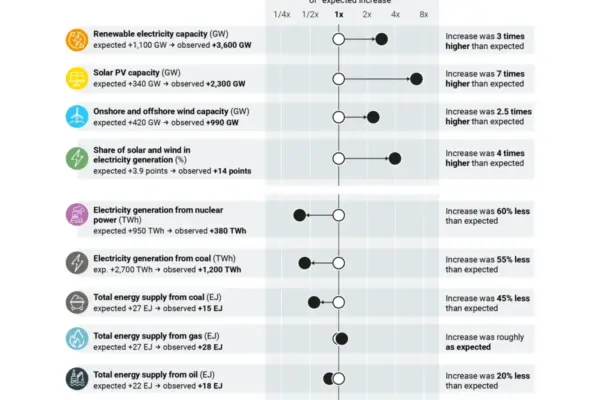
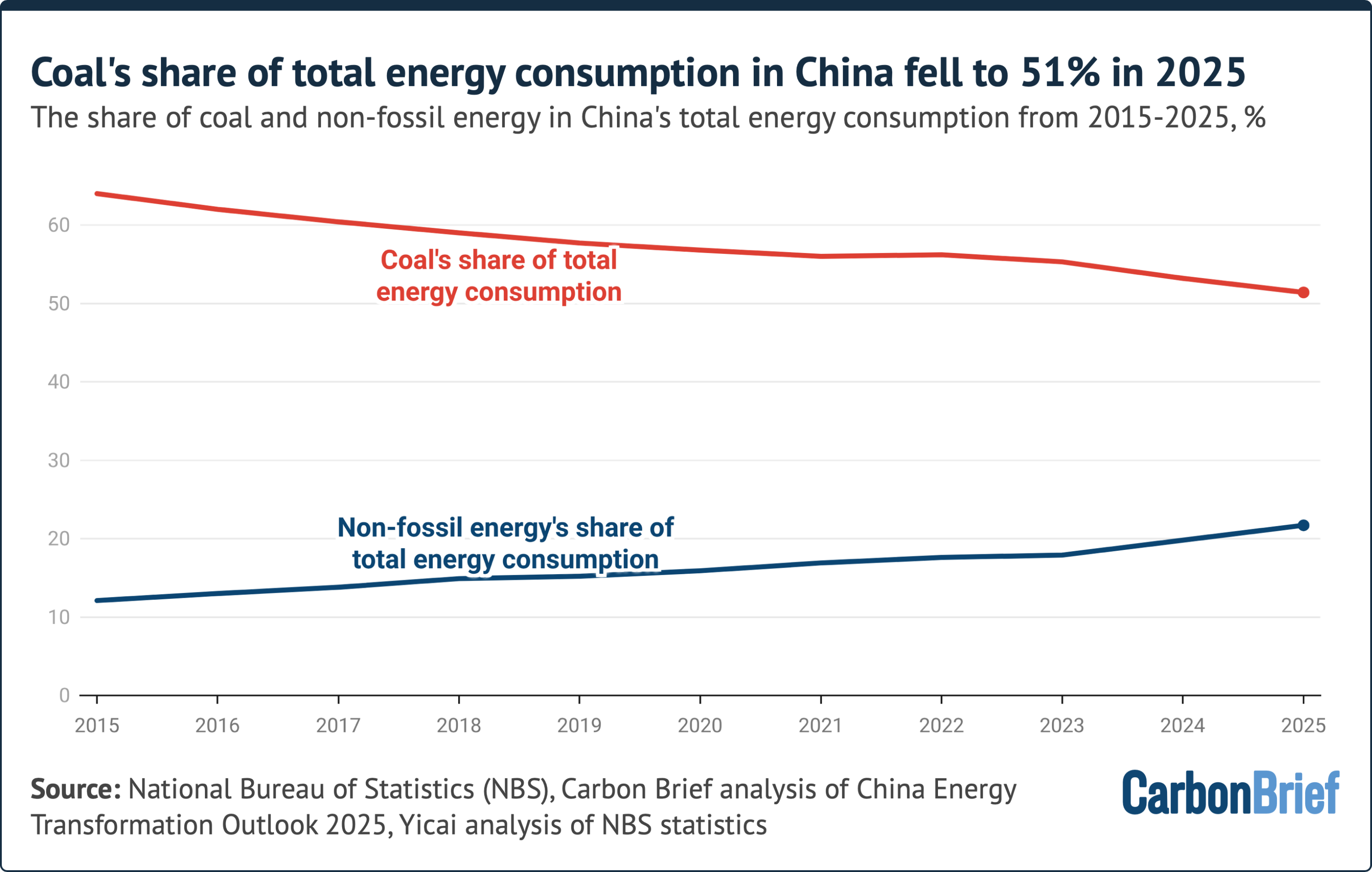
Historically, coal has served as China’s primary energy source and accounts for roughly 80% of its total carbon dioxide emissions. However, its historical dominance is gradually being superseded by non-fossil energy generation. Clean energy sources accounted for more than half of the national power mix by the end of 2025. Furthermore, during the first half of 2026, coal supplied less than 50% of total power generation, while its share of overall primary energy consumption dropped to 51.4%.
Experts emphasize that the document signals continuity in Beijing’s dual objective of safeguarding national energy security while simultaneously advancing a low-carbon transition. Kevin Tu, a non-resident fellow at Columbia University’s Center on Global Energy Policy, notes that energy security concerns—sharpened significantly by instability in the Middle East—have heavily influenced the strategy. In early August, the Communist Party-affiliated People’s Daily highlighted the severe market volatility caused by overseas wars, praising the resilience of China’s domestic energy network. NEA head Wang Hongzhi similarly remarked at a press conference that coal remains China’s greatest source of confidence in ensuring an uninterrupted energy supply.
Li Shuo, China climate hub director at the Asia Society Policy Institute, observes that international conflicts will inevitably reinforce coal’s structural role in the domestic economy, functioning both as a direct fuel source and as a vital chemical feedstock.
While the plan explicitly reiterates a commitment to promoting the successful peak of coal consumption during the 2026-2030 period—guided jointly by national carbon goals and energy security imperatives—it deliberately refrains from mandating a fixed target year. State-affiliated bodies like Xinhua have previously suggested a 2027 peak, and independent assessments indicate that coal-derived emissions may have already plateaued. Analysts like Tu argue that the absence of a hard 2027 deadline is significant but should not be over-interpreted, as the exact timing will ultimately depend on variables such as electricity demand growth, renewable energy generation rates, industrial activity, weather patterns, and shifting industrial demand from the chemical sector. Li adds that market forces and technological advancements will likely dictate the exact tipping point, with Beijing’s regulatory interventions serving primarily as a backstop to ensure timelines do not stretch past 2030.
What does the plan say about China’s coal production?
In a departure from previous strategies—such as the 12th and 13th five-year plans, which set rigid aggregate production ceilings—the current blueprint omits a concrete target for total coal output. It also scales back a reserve production capacity target first introduced in 2024.
The strategy reiterates that by 2030, China should establish a dynamic coal reserve production capacity of 100 million metric tonnes or more per year, a goal initially outlined in June’s "new-type energy system" plan. State media outlets have argued that despite the rapid integration of wind and solar capacity, reserve coal assets are essential to buffer the inherent variability of renewables, allowing coal to transition seamlessly into a supporting and regulatory function. Notably, this new reserve target is significantly lower than the 300 million tonne figure floated when the mechanism was first conceptualized in 2024.
Yang Biqing, an energy analyst at Ember, points out that the document is fundamentally targeted at optimizing the coal industry itself rather than driving the broader energy transition, though the transition serves as its overarching backdrop.
Geographically, northern provinces will continue to anchor national supply. The plan affirms previous commitments to maintain "coal-supply security bases" across Shanxi, Inner Mongolia, Shaanxi, and Xinjiang. These four regions are expected to account for more than 80% of China’s total coal output by 2030, a concentration that largely mirrors existing market realities where they supplied 82% of the national total in 2025. To further streamline operations, new or expanded mining projects in these key regions—with the exception of southern Xinjiang—must maintain a minimum annual production capacity of 1.2 million tonnes.
Analysts view this consolidation as an important signal that China’s coal transition is focused not simply on reducing absolute volume, but on forging a more concentrated, efficient, flexible, and resilient supply network. The framework mandates a centralized management approach, requiring all new production capacity additions to be registered under a single national ledger and approved by the central government before implementation. According to analysts, this centralized oversight is designed to prevent a chaotic rush for new capacity approvals as consumption patterns level off.
What does the plan say about coal’s greenhouse gas emissions?
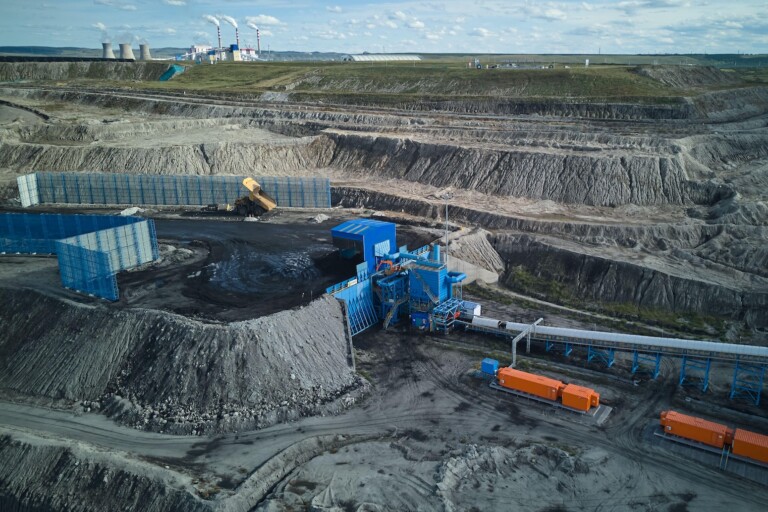
The policy document contains dedicated sections addressing the acceleration of the industry’s low-carbon transition and the clean, efficient utilization of the fuel. While the former focuses on mining operations and mineral processing, the latter targets emissions generated during end-use combustion. Recommended measures include improving energy efficiency, advancing water conservation, expanding industrial electrification, and integrating greater shares of renewable energy directly into mining sites.
To curb consumption-related emissions, the framework calls for accelerated energy conservation in key coal-dependent industries. This involves phasing out inefficient combustion equipment, deploying clean energy alternatives, reining in the use of dispersed coal, and expanding clean heating initiatives such as distributed solar thermal systems and waste heat recovery.
Tom Wang, executive director of People of Asia for Climate Solutions, characterizes the blueprint as an exploration plan rather than an outright transition roadmap, noting that while it frequently advocates for smart and green mining practices, it stops short of fully addressing the lifecycle greenhouse gas emissions tied to extraction and processing.
A major focus of the strategy is the expanded capture and utilization of coalbed methane, a potent greenhouse gas and a significant contributor to China’s overall emissions profile. The government aims to scale up coalbed methane production and accelerate deep-site extractions, supported by dedicated operational appendices. By 2030, authorities are targeting 26 billion cubic metres of total coalbed methane production alongside 6.5 billion cubic metres of mine-gas utilization, with at least 18 billion cubic metres expected to originate from the Ordos Basin across northern China.
State media has framed the commercial development of coalbed methane as a vital strategic move to optimize the national energy mix, enhance domestic gas security, and position the country as an energy powerhouse. While the appendix notes that the industry will steadily advance methane emission control and participate in non-carbon greenhouse gas reduction efforts, Sun Xiaopu, senior China counsel at the Institute for Governance and Sustainable Development, points out that the framework does not establish a binding absolute reduction target for methane, leaving actual emissions outcomes dependent on future implementation rules.
How does the plan tell coal companies to evolve?
Even as it reaffirms the foundational importance of coal, the plan stresses that the fuel’s long-term role within the national economy is fundamentally changing, requiring mining enterprises to adapt. As the industry modernizes, companies are instructed to strengthen the management of mine closures and exit strategies, ensuring smooth transitions that carefully handle workforce relocation, debt resolution, and environmental restoration.
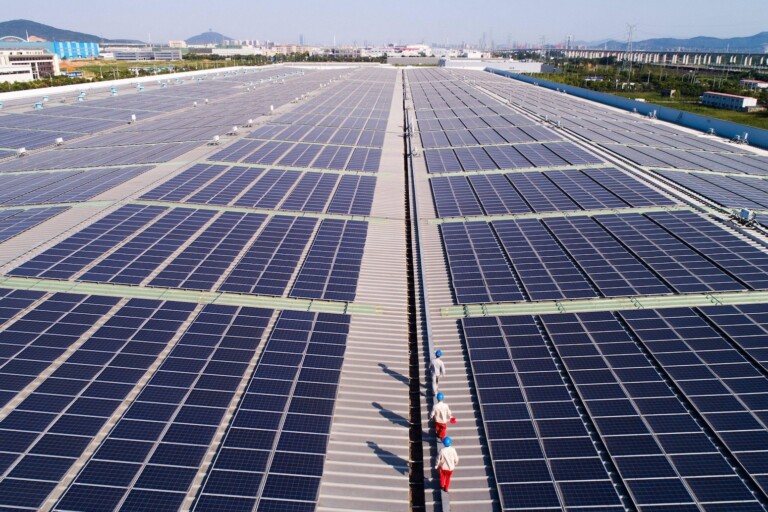
Simultaneously, enterprises are being encouraged to diversify their business models by expanding into adjacent sectors, including power generation, renewable energy development, and chemical manufacturing. Several major state-owned coal producers and oil giants have already established specialized clean energy business divisions.
The deliberate emphasis on coal-to-chemicals processing is viewed by experts as one of the plan’s most consequential components. Beijing is urging policymakers to advance the construction of strategic coal-to-oil and gas production bases. While the chemical sector represents one of China’s fastest-growing sources of industrial emissions, the strategy calls for deep decarbonization within the sector through the deployment of low-carbon power, green hydrogen, and carbon capture, utilization, and storage (CCUS) technologies.
Consequently, the policy signal is not to abandon coal-based chemicals, but to render production processes more efficient, higher-value, and less carbon-intensive. Analysts conclude that geopolitical tensions and persistent concerns over energy self-sufficiency will likely provide strong, sustained momentum for these industrial sectors, overriding environmental arguments for a more rapid curtailment of capacity.