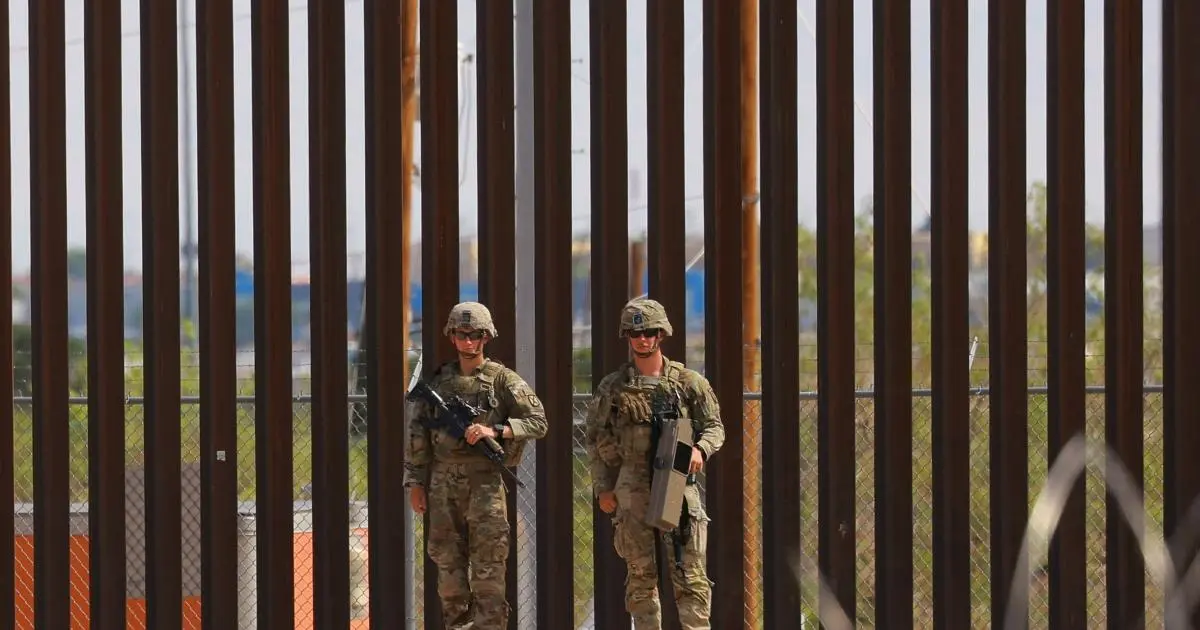
For generations, the United States has enjoyed a profound and rare form of geographic luck. Bracketed on the east and west by two vast oceanic moats—the Atlantic and the Pacific—and bordered to the north and south by only two relatively friendly neighbors, the nation has long felt secure within its borders. This inherent geographic advantage has been compounded since the end of World War II by the possession of a powerful nuclear arsenal and unparalleled military, economic, and technological might.
Even the tragedy of the September 11 terrorist attacks failed to permanently shatter this deep-seated sense of domestic invulnerability. For many Americans, home remains an untouchable sanctuary. According to a 2024 Chicago Council on Global Affairs poll, just 19 percent of those surveyed expressed concern about foreign threats, reflecting a collective confidence that is increasingly disconnected from modern geopolitical realities.
Security experts argue that it is time for Americans to fundamentally revise these assumptions. In truth, the U.S. homeland has never been as vulnerable to attack as it is today. Major adversaries such as China, Russia, and North Korea are aggressively building up both their conventional and nuclear capabilities with the intent and capacity to strike the United States across a diverse array of domains. Meanwhile, traditional U.S. defenses have simply not kept pace. A major evolution in technology and tactics has drastically increased the threat of subversion and gray-zone attacks. Drones operated by both state and nonstate actors can now strike almost any target within the United States, while adversaries leverage AI-enabled offensive cyber-operations capable of crippling critical infrastructure.
Despite these escalating dangers, the United States remains largely unprepared. The country’s air and missile defenses are porous, constrained by arcane domestic laws and policies that prevent the necessary coordination and authority required to defend against dynamic airborne threats like drones. At the same time, foundational pillars of modern society—including energy, water, financial, and health-care infrastructure—remain dangerously vulnerable to advanced cyberattacks.
Faced with these multi-faceted threats, federal, state, and local entities find themselves caught flat-footed. The 9/11 attacks occurred, in large part, because policymakers failed to grasp that the global security landscape was shifting and proved incapable of sharing vital information across government agencies. Without a comprehensive overhaul of the nation’s homeland security apparatus, Washington is in profound danger of repeating that historic mistake.
MISSILES OVER THE MOAT
The security measures enacted in the wake of September 11 were meticulously designed to protect the U.S. homeland from terrorism. Legislation such as the USA Patriot Act enabled intelligence agencies to collect vastly more information both at home and abroad. Institutional frameworks were entirely overhauled with the creation of the Department of Homeland Security, the Office of the Director of National Intelligence, the National Counterterrorism Center, and Joint Terrorism Task Forces designed to foster interagency intelligence sharing. The FBI significantly expanded its footprint across the country, coordinating closely with state and local law enforcement to conduct intelligence-led operations aimed at identifying and arresting domestic terror cells.
These measures proved remarkably effective for an era when terrorism represented the primary threat to the U.S. homeland, successfully thwarting the vast majority of domestic plots. Today, however, the gravest threats to the United States emanate not from nonstate extremist groups, but from aggressive state actors. China, Russia, and North Korea all possess intercontinental ballistic missiles capable of striking the U.S. homeland, and all three nations have routinely conducted tests and exercises demonstrating their readiness to employ them.
Recent conflicts in Ukraine and the Middle East demonstrate that possessing a massive nuclear arsenal no longer serves as a reliable shield against conventional attacks on the homeland. Iran and its extensive network of proxy forces have repeatedly lobbed tens of thousands of rockets, missiles, and drones at major population centers in Israel. Similarly, Ukraine has successfully struck Russian cities, energy infrastructure, industrial bases, logistics nodes, and military bases without triggering a nuclear response from the Kremlin. Advanced Israeli and Russian air and missile defense systems have frequently struggled to neutralize these complex waves of drones and missile assaults.
In the event of a conventional conflict on U.S. soil, American air and missile defense systems could face identical failures. The United States currently lacks a sufficient inventory of air defense systems and interceptors to protect against a sustained ballistic missile campaign. Protended engagements in the Middle East have severely depleted the military’s global supply of THAAD interceptors by as much as 80 percent and Patriot interceptors by up to 50 percent.
Furthermore, homeland defense against cruise missiles remains a glaring vulnerability. Cruise missiles fly dangerously close to the earth to evade conventional radar, utilizing natural terrain features such as mountains, valleys, and hills to hide from ground-based sensors—a tactic known as terrain masking. The United States simply does not possess enough missile defense systems distributed across enough geographic areas to adequately protect against a widespread cruise missile assault.
China, in particular, has rapidly expanded and modernized its ability to project power directly against the United States. Beyond traditional missiles, the threat profile now extends into space. China has developed and tested a Fractional Orbital Bombardment System, which places a warhead traveling at hypersonic speeds into low-earth orbit. This capability allows a strike to approach the U.S. homeland from an unpredictable direction, effectively bypassing traditional early warning radar and missile defense networks. The People’s Liberation Army is also actively researching advanced space-based capabilities, including orbital strike weapons designed to drop destructive projectiles directly from space.
CHEAP SHOTS
Beyond strategic missile systems, the U.S. homeland faces novel and rapidly evolving subversion threats. While adversaries have long utilized physical sabotage against critical infrastructure, disinformation campaigns, and offensive cyber-operations to weaken opponents below the threshold of conventional warfare, emerging technologies like artificial intelligence have dramatically amplified these hazards.
Unmanned aerial systems, or drones, represent the most visible manifestation of this shift. Technological advancements have made drones remarkably inexpensive and widely available, featuring extended ranges, higher payload capacities, and sophisticated electronic warfare evasion mechanisms. Adversaries will soon be capable of deploying coordinated drone swarms driven by artificial intelligence, capable of overwhelming any conventional defense network. Global powers are currently locked in an arms race, aggressively ramping up drone production to capture the cutting edge. Russia now produces as many as seven million weaponized drones per year, while some estimates suggest China possesses the industrial capacity to manufacture up to one billion drones annually.
Wreaking catastrophic havoc on the U.S. homeland would not require industrial-scale production. In 2025, Ukraine successfully smuggled over 100 drones into Russia inside standard cargo trucks, executing strikes that destroyed roughly one-third of Russia’s active bomber fleet and caused approximately $7 billion in damages. This operation served as a chilling reminder of the United States’ own susceptibility to similar asymmetric tactics. A determined adversary could easily conceal weaponized drones inside modified cargo vans, shipping containers, or trucks equipped with slidable roofs, positioning these vehicles near high-value targets such as military airfields or naval bases without detection. By programming the drones to launch simultaneously using commercial cellular networks, attackers could circumvent domestic air defense systems, signal-jamming measures, and strategic early warning radar networks.
While such scenarios might once have sounded far-fetched, unauthorized drone incursions over sensitive U.S. military installations, nuclear power plants, and other critical infrastructure have escalated dramatically over recent years. In March, Barksdale Air Force Base in Louisiana—home to the nation’s long-range B-52 bombers—was forced into lockdown after numerous unauthorized drones were spotted hovering over sensitive areas of the facility. In June, federal law enforcement arrested multiple suspects involved in an alleged plot to target a major public event on the White House South Lawn using explosive-laden drones. The integration of artificial intelligence makes individual drones and coordinated swarms increasingly difficult to intercept, as they no longer rely on vulnerable remote radio signals that can be jammed by traditional electronic countermeasures.
Drones are only one facet of the challenge compounded by rapid developments in artificial intelligence. Advanced AI systems are making it exponentially easier for state and nonstate actors to penetrate sophisticated cyberdefenses and target critical infrastructure at an unprecedented scale. Once deployed, autonomous AI agents can rapidly discover vulnerabilities in corporate and government computer systems and execute self-directed cyberattacks with minimal human oversight. Even prior to these breakthroughs, the shockingly inadequate state of national and municipal cyberdefenses left American critical infrastructure deeply exposed. Beginning in 2021, Chinese state-sponsored operations such as Volt Typhoon infiltrated U.S. power grids, water treatment plants, telecommunication networks, and transportation hubs, quietly embedding malicious software designed to sabotage these systems during a future geopolitical crisis. An AI-enabled expansion of such campaigns could shift operations from deliberate, human-managed efforts taking months or years to nearly instantaneous, self-adapting assaults against thousands of targets simultaneously.
Compounding these terrestrial and cyber threats is the alarming proliferation of counterspace capabilities. Direct-ascent antisatellite weapons—ground-, sea-, or air-launched missiles designed to destroy orbital satellites—alongside directed-energy weapons and electronic warfare systems, pose a direct threat to U.S. orbital assets in low-earth and geosynchronous orbits. China and Russia are actively developing and testing these counterspace technologies. Successful employment of such capabilities could degrade global positioning and navigation systems, ground commercial aviation, and severely disrupt logistics networks dependent on satellite tracking, potentially bringing daily economic life in the United States to a temporary standstill.
IMAGINING THE UNIMAGINABLE
Effectively preparing for this new era of domestic vulnerability requires a fundamental shift in strategy, beginning with the active defense of critical infrastructure. Washington must prioritize the acquisition and deployment of tiered defense systems: upper-tier assets like Patriot and THAAD for ballistic missiles, medium-range systems such as the Indirect Fire Protection Capability for cruise missiles, and short-range platforms like the Coyote and Merops systems for countering drones. The integration of directed-energy weapons—including high-energy lasers and high-power microwave systems—alongside advanced radio-frequency jamming equipment, will be vital for neutralizing drone swarms. Furthermore, the nation must invest heavily in passive defenses, such as constructing underground facilities for vital infrastructure and erecting hardened, multi-layered concrete barriers around power-generation units, fuel depots, ammunition storage sites, and military barracks.
Because protecting every potential target across the entire country is financially prohibitive, Washington must focus its initial defensive investments on critical nodes that adversaries are most likely to target in a conflict. These high-priority locations include military command-and-control facilities, strategic bomber bases, nuclear weapons storage sites, air and missile defense installations, and major naval ports.
Proposed comprehensive homeland defense initiatives, such as the Golden Dome framework, can play a central role in unifying these efforts. The concept aims to establish a cohesive command-and-control network connecting sensors, weapons, and early warning systems to detect and intercept incoming airborne threats. However, such initiatives have historically suffered from underfunding and bureaucratic delays. Moving forward, the primary focus should be on rapidly integrating existing capabilities—including missile warning satellites, the global network of ground-based radars, interceptors in Alaska and California, and various federal, state, and commercial systems—rather than waiting for entirely new technologies to be developed from scratch. Rigorous live-fire testing must also be accelerated to validate software integration and tracking reliability.
Addressing the threat posed by drones presents unique legal and administrative hurdles. Commanders at domestic military installations and personnel tasked with protecting critical infrastructure frequently lack the legal authority to destroy or disable unauthorized drones operating within local airspace. While recent legislative measures have granted state and local agencies greater latitude to detect and track hostile drones, more comprehensive statutory reforms are urgently needed. Appropriately trained personnel must be granted clear authorization to deploy counterdrone systems under federal, state, or local law enforcement oversight. To mitigate the risk of accidental interference with civilian aviation, training pipelines at specialized facilities like the National Counter-UAS Training Center must be significantly expanded.
Intelligence sharing structures must similarly evolve. While interagency cooperation improved markedly after 9/11 to counter decentralized terrorist networks, the sophisticated conventional and nuclear capabilities of major nation-states, combined with rapid technological changes, render many traditional counterterrorism intelligence models obsolete. Furthermore, institutional instability has occasionally damaged key agencies tasked with defending against modern threats, such as cybersecurity and infrastructure security divisions. Establishing a robust National Counterintelligence Center—modeled after the post-9/11 National Counterterrorism Center—would help fuse disparate analytical streams, evaluate state-sponsored threats, and coordinate strategic planning across federal, state, and local entities.
Ultimately, navigating these emerging hazards requires a profound transformation in national mindset. U.S. policymakers, security officials, and the American public must recognize that the nation has entered a historical era where geography and nuclear deterrence are no longer sufficient guarantees of safety. Nations like Finland, Israel, and Ukraine have long maintained transparent traditions of strategic planning and public communication regarding domestic security risks. The United States would benefit immensely from following this example by educating the public on evolving homeland threats and developing a comprehensive national resilience plan aimed at hardening critical infrastructure, deepening public-private collaboration, and modernizing domestic legal frameworks.
A quarter-century ago, the tragedy of September 11 briefly shattered Americans’ sense of security, prompting the 9/11 Commission to warn that the nation faced a generational challenge from international terrorism. Today, the United States confronts a new generation of Americans and an entirely new generational challenge from state adversaries wielding advanced technology. As the historical record shows, failing to anticipate these shifting dangers risks repeating the most costly mistakes of the past.