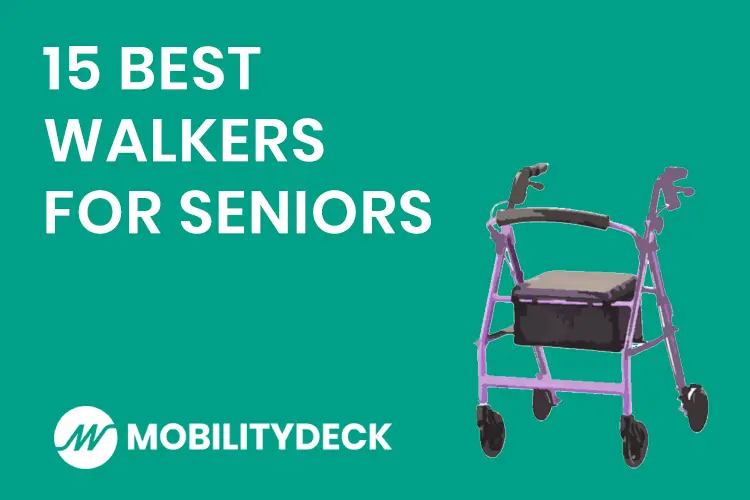
For senior citizens and elderly individuals dealing with balance or mobility challenges stemming from aging and its associated medical complications, traditional walkers and modern rollators provide a straightforward, effective pathway to staying active and independent. These mobility devices serve as essential daily tools, yet selecting the correct model requires careful deliberation to match an individual’s specific physical needs, lifestyle, and home environment.
Experts generally advise consulting with a medical professional or a licensed physiotherapist before making a purchase, especially when dealing with specialized health needs or severe mobility restrictions. However, for those navigating the market independently, evaluating dozens of available options helps clarify which devices best suit particular user profiles. By assessing a wide array of essential features, design styles, and trusted brands, caregivers and seniors can better navigate their choices based on personal requirements and budgetary considerations.
Among the top-rated devices evaluated in market reviews, the NOVA Vibe 6 Rollator Walker emerges as a standout overall pick. It combines comfort, a lightweight frame, and a competitive price point with high build quality and user-friendly operation.
The Top-Rated Walkers for Seniors
Market evaluations consistently categorize top mobility aids by their specific strengths to help users target the right device. Leading models include the Helavo Bariatric Walker with a large seat, recognized as a top choice overall for robust support. For those prioritizing minimal weight, the Hugo Mobility Explore Side-Fold Rollator Walker offers exceptional portability.
Users navigating tight spaces often lean toward the Planetwalk Premium 3 Wheel Rollator as a premier narrow option, while budget-conscious buyers frequently turn to the Medline Folding Rollator, which includes a built-in seat and six-inch wheels. Finally, for individuals seeking traditional stability without complex wheel configurations, the OasisSpace Compact Folding Walker serves as a reliable standard model.
When Should an Elderly Person Get a Walker?
Determining the exact moment an elderly person should transition to using a walker is rarely tied to a chronological age. Instead, the decision depends entirely on individual circumstances and physical progression. Generally speaking, once a person begins to experience difficulty supporting their full body weight on one or both legs, introducing a walker or a similar mobility aid becomes strongly advisable.
Medical professionals also routinely recommend walkers following major orthopedic procedures, such as knee surgeries or hip replacements. During the recovery period, maintaining independence while ensuring adequate physical support is critical. Utilizing a walker or rollator during rehabilitation helps patients navigate their living spaces safely. Conducting research and selecting a device prior to undergoing scheduled surgery ensures that patients are fully prepared for their post-operative recovery phase.
Furthermore, individuals managing chronic balance or mobility issues can rely on walkers as a practical and affordable option to maintain ease of movement. Whether the assistance is required primarily indoors to manage daily household tasks or outdoors for community engagement, these devices facilitate freedom and active living for those who need them most.
Important Features to Consider When Choosing a Walker or Rollator
Identifying the ideal walker involves finding a balance between bodily comfort and individual functional requirements. Because the marketplace offers an extensive variety of options, understanding critical structural features helps streamline the decision-making process for seniors and their families.
Weight and portability represent primary considerations. While walkers generally weigh significantly less than wheelchairs, considerable variance exists among current market offerings. Lightweight options are widely recommended for seniors because they actively support mobility rather than acting as a cumbersome hindrance. Although a heavier device might remain operable, travel and frequent transport quickly turn excess weight into a burden. Lightweight models also tend to feature simpler folding mechanisms, making storage and carrying much easier.
Walker width is another vital factor, particularly for indoor use. An appropriate width ensures the device moves smoothly through all standard household doorways. For users focusing primarily on outdoor mobility, width becomes slightly less critical regarding interior navigation, though seat dimensions still demand attention to ensure a comfortable ride.
Seat height heavily influences rollator selection, as four-wheeled models typically incorporate built-in cushioned seats. Finding a model with adjustable or properly proportioned height dimensions prevents discomfort. Reviewing detailed product descriptions and cross-referencing them with the user’s height measurements ensures a proper fit.
Braking systems differentiate standard walkers from wheeled rollators. While standard walkers require no braking mechanism, rollators rely on reliable brakes for safety. Most rollator models utilize loop brakes activated by squeezing a hand lever. Although standard, these tightly tensioned brakes can present challenges for individuals experiencing hand weakness or reduced dexterity. To accommodate such needs, certain rollator designs incorporate push-down brakes that demand minimal force and physical effort.
Weight capacity remains a non-negotiable safety check. Most standard walkers and rollators support up to 300 pounds, accommodating the majority of seniors. However, individuals exceeding this threshold require heavy-duty or bariatric models. Utilizing a device beyond its certified weight limit introduces severe safety risks. Bariatric alternatives, such as heavy-duty rollators capable of supporting up to 500 pounds, provide the necessary reinforcement for heavier users.
Foldability and storage capabilities dictate how easily a device integrates into a travel-heavy lifestyle or a compact living area. Models engineered for quick, compact folding ease the transition from car trunks to hallway storage closets.
Finally, pricing plays a significant role in consumer decisions. Standard walkers and rollators generally range from $80 to $200. Exploring options above this price bracket typically yields diminishing returns in quality and functional utility unless specialized medical requirements dictate otherwise. Setting a realistic budget of around $180 generally secures a high-quality device equipped with all essential features. Additionally, if a healthcare provider deems a walker a medical necessity, the expense may qualify for coverage under Medicare Part B.
Frequently Asked Questions
Understanding the broader context of mobility aid usage helps clarify common concerns among seniors and caregivers.
Elderly individuals primarily use walkers to enhance their overall mobility, allowing them to walk longer distances safely and independently while mitigating the physical discomfort and pain associated with aging joints. Beyond daily support, these devices offer essential balance assistance during post-surgical recovery periods.
Proper measurement ensures a walker fulfills its intended purpose efficiently. Individuals experiencing significant physical weakness, bone conditions, or fractures benefit immensely from a precisely fitted device. Height measurements for handlebars, along with seat dimensions, maximize user independence and operational efficiency. While professional assistance from a physiotherapist, occupational therapist, or medical supply specialist guarantees precise fitting, many modern models feature adjustable handlebars and seats that accommodate a wide range of body types.
Brake locking mechanisms on wheeled rollators eliminate the need for continuous hand pressure on the grips. Typically, pushing the brake lever downward and away from the handlebar until an audible click is heard engages the lock, while pulling the lever back to its original position releases it. Consulting individual operation manuals remains essential due to design variations across different brands.
Online purchasing platforms provide a convenient avenue for acquiring mobility aids, particularly for individuals facing physical travel restrictions due to injury or disability. Retailers like Amazon offer a broad selection of affordable models alongside customer reviews, while specialized medical supply websites offer niche expertise for buyers seeking dedicated customer support.
Choosing between a standard walker and a rollator depends heavily on user preference and physical stamina. Rollators feature four wheels and built-in seats, making them ideal for individuals with lower stamina who require smooth movement without the burden of lifting the device. Conversely, standard walkers lack wheels or feature front wheels only, offering superior stability and easier maneuverability within tight indoor spaces.
Best Walkers for Seniors: Detailed Reviews
NOVA Vibe 6 Rollator Walker
Research highlights the NOVA Vibe 6 Rollator Walker as a premier overall selection, offering exceptional quality and widespread positive user feedback at an affordable price point. Its standout attributes include an intuitive braking mechanism and a comprehensive warranty. The device features a robust frame supporting up to 300 pounds, feather-touch brakes accessible to users with hand mobility limitations, four six-inch wheels, a padded seat, and an integrated storage pouch. A limited lifetime warranty on the frame and a five-year warranty on the brakes reinforce its long-term reliability for both indoor and outdoor use, though its weight might present a challenge for individuals dealing with severe muscle weakness or osteoporosis.
Hugo Mobility Explore Side-Fold Rollator Walker
Recognized as a top lightweight choice, the Hugo Mobility Explore Side-Fold Rollator Walker weighs just 15.4 pounds, making it highly manageable for individuals experiencing agility or muscular weakness. Its side-folding frame facilitates effortless transport and storage, fitting easily into car trunks and public transit. Beyond its portability, the walker includes a comfortable built-in seat, a contoured adjustable backrest, and eight-inch wheels capable of handling varied outdoor terrain while maintaining a narrow profile for tight indoor spaces.
NOVA Traveler 3 Wheel Rollator Walker
Designed for superior maneuverability in confined spaces, the NOVA Traveler 3 Wheel Rollator Walker utilizes a three-wheel configuration to easily navigate narrow hallways, tight doorways, compact kitchens, and bathrooms. Equipped with durable eight-inch tires, it performs capably both indoors and outdoors. Assembly is straightforward, and the frame accommodates storage accessories such as a zip pouch, basket, and tray. However, the compact three-wheel design precludes the inclusion of a built-in seat, making it less suitable for individuals with limited standing stamina who require frequent rest breaks.
Lumex Walkabout Lite Rollator
For shoppers prioritizing affordability without sacrificing essential functionality, the Lumex Walkabout Lite Rollator offers a reliable aluminum frame priced under $100. It includes standard features such as a cushioned seat, a sturdy backrest that doubles as a push handle for caregivers, a storage basket, four durable wheels, and a folding mechanism equipped with a safety lock.
Vive Folding Walker
Serving as a premier standard model without permanent wheels, the Vive Folding Walker functions as a traditional Zimmer frame while offering detachable five-inch front wheels. It provides straightforward balance and stability support for users who do not require the advanced features of a rollator. Weighing very little and featuring a simple folding frame, it supports weights up to 250 pounds and offers adjustable height settings, making it a cost-effective choice for indoor balance assistance.
Alternative Notable Walkers
The Medline Premium Empower Rollator stands out for outdoor use, featuring eight-inch wheels, a convenient cupholder, a thick cushioned backrest, a removable under-seat storage bag, and a memory foam seat treated with Microban antimicrobial technology to resist bacteria, mold, and mildew.
The Drive Medical Aluminum Rollator Walker offers rugged outdoor durability with six-inch non-marring wheels, serrated-edge safety brakes, a hinged padded backrest, and a secure under-seat zippered storage pouch, though its overall weight is heavier than comparable models.
For heavier users, the Medline Heavy Duty Rollator Walker utilizes a steel-reinforced wider frame to support up to 500 pounds, paired with large eight-inch smooth wheels and a comfortable cushioned seat. While exceptionally robust, its increased width can restrict movement through narrow indoor doorways.
The Drive Medical Trigger Release Folding Walker caters to individuals with limited finger mobility through a trigger mechanism that allows closure without releasing handle grips. It boasts a lightweight portable frame combined with a heavy-duty weight capacity of up to 350 pounds and soft, ribbed handgrips.
Additional lightweight and specialized models include the Hugo Elite Rolling Walker, designed for shorter users down to four feet three inches tall; the Drive Medical Side Style Hemi One Arm Walker, operable with a single hand for individuals with localized mobility impairments; and the Vaunn Medical Two-Button Folding Walker, which utilizes a dual-button fast-push release system for easy travel and compact storage.
Honorable mentions in the market include the Drive Medical Nitro Euro Rollator Walker, praised for its large front wheels, adjustable back support, and one-handed folding mechanism, alongside the Medline Three-In-One Stand Assist Walker, which provides multi-level handles to assist users in transitioning safely from sitting to standing positions.