Expect to see quite a few websites serving error pages and going offline today, as system administrators around the globe scramble to address a monumental security crisis. Nearly 70 percent of websites currently rely on core software updates to fix a pair of severe vulnerabilities that allow an attacker to seize full control over affected servers. Security experts have confirmed that working exploits for these flaws already exist in the wild and are actively being leveraged by malicious actors.
The core vulnerabilities reside within PHP, the ubiquitous programming language that powers a vast portion of the internet. PHP serves as the foundational architecture for countless sites running on major web publishing systems, content management platforms, and e-commerce solutions, including WordPress, Joomla, Drupal, and Magento. In response to the crisis, the PHP development team released an emergency security update earlier today to patch two critical bugs capable of allowing an authenticated or unauthenticated attacker—depending on the vector—to execute arbitrary code of their choosing on any vulnerable web server.
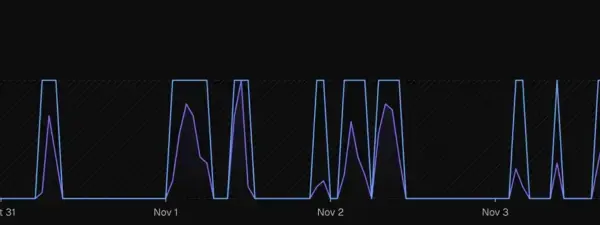
International news reports indicate that government websites across Europe and other regions went offline earlier today almost immediately after the PHP vulnerabilities were publicly disclosed. Major infrastructure and security providers have mobilized rapidly to mitigate the fallout. Cloudflare announced that it has already detected active exploitation of the flaws in the wild. In response to the escalating threat, the company implemented specialized web application firewall rules to protect customer websites from incoming attack traffic designed to exploit the bugs. According to Cloudflare, these vulnerabilities could easily result in severe outcomes, including denial-of-service conditions, remote code execution, and dangerous data exposure if left unaddressed.
Artificial intelligence research organizations were also deeply intertwined with the discovery and coordinated disclosure process. OpenAI, which actively participated in vulnerability research and outreach efforts alongside other tech entities, issued a public statement emphasizing the gravity of the situation. Given the extraordinary severity of these security flaws paired with the exceptionally widespread use of PHP across the global internet, OpenAI characterized the issue as one of the most impactful security events in recent memory.
Internet scanning and telemetry firms have rushed to measure the staggering scale of the potential attack surface. Censys, a leading technology company that continuously tracks internet-facing hosts and infrastructure, reported that a recent scan identified approximately 2.58 million internet-facing hosts and an astonishing 54.9 million distinct web properties running PHP. Meanwhile, security researchers at Wiz noted that virtually every single version of PHP released over the past decade is affected by at least one of these two critical vulnerabilities.
The findings represent a watershed moment in software vulnerability research. According to a detailed advisory published by the Wiz research team—who shared credit for discovering the flaws alongside other organizations—these findings rank among the most severe vulnerabilities ever discovered in PHP, and arguably in the broader history of software development. The Wiz researchers explained that the underlying structural flaws had actually been present within the language for decades. However, demonstrating their exploitability previously required an exceptionally complex chain of steps, pushing right up against the edge of what human researchers could practically achieve on their own. The involvement of frontier artificial intelligence models substantially reduced that barrier, effectively transforming a longstanding theoretical flaw into a dangerous, functional exploit.

Security analysts at Wiz warned that it is highly likely these PHP vulnerabilities will face widespread mass exploitation. Attackers are expected to leverage the flaws to install web-based backdoors, commonly referred to as web shells, which provide malicious actors with a convenient web-based administrative panel enabling remote control over compromised sites. Before the bugs were publicly disclosed, Wiz worked in tandem with the core PHP development team, Calif, and OpenAI to measure the exact magnitude of the problem, verify patches, and coordinate a responsible disclosure timeline.
The zero-day vulnerabilities are officially being tracked by their respective Common Vulnerabilities and Exposures identification numbers: CVE-2026-109618 and CVE-2026-109619. These critical bugs affect all web servers running PHP version 5.4 or later. To remediate the issues, administrators must upgrade immediately to the newly released security patches: PHP versions 8.5.12, 8.4.27, 8.3.36, or 8.2.35, depending on their active deployment branch.
Because PHP is so deeply and invisibly embedded into the fabric of countless web applications, frameworks, and server environments, industry experts warn that organizations will likely struggle with patching these vulnerabilities for a significant period. Many security analysts have drawn direct comparisons between this unfolding PHP crisis and the infamous Log4Shell weakness that emerged in late 2021—a similarly pervasive and severe security flaw found in the Log4j Java logging framework that kept cybersecurity teams working around the clock for months.
A security vulnerability situated directly within core PHP reaches far beyond any single application or isolated content management system. PHP runs across complex cloud environments, commercial hosting providers, content delivery networks, and millions of independently managed servers worldwide. Successfully reducing exposure before technical details became publicly available required unprecedented, coordinated remediation work across the entire technology ecosystem.
Various defense organizations and institutions are closely monitoring the situation as software distributors race to ship updates. The SANS Internet Storm Center has raised its alert posture and is actively tracking major software platforms that are bundling updated PHP packages to deal with the flaws. For instance, Ubuntu released updated PHP packages shortly after the disclosure. Organizations seeking a technical deep-dive into the vulnerabilities can review documentation from Calif, another technology company credited with uncovering the bugs, which details the timeline of the discovery process.
As system administrators, hosting providers, and security teams continue racing to patch vulnerable infrastructure, the situation remains fluid. Further updates from telemetry providers, software vendors, and incident responders are expected as the global community responds to one of the most challenging web security incidents in years.