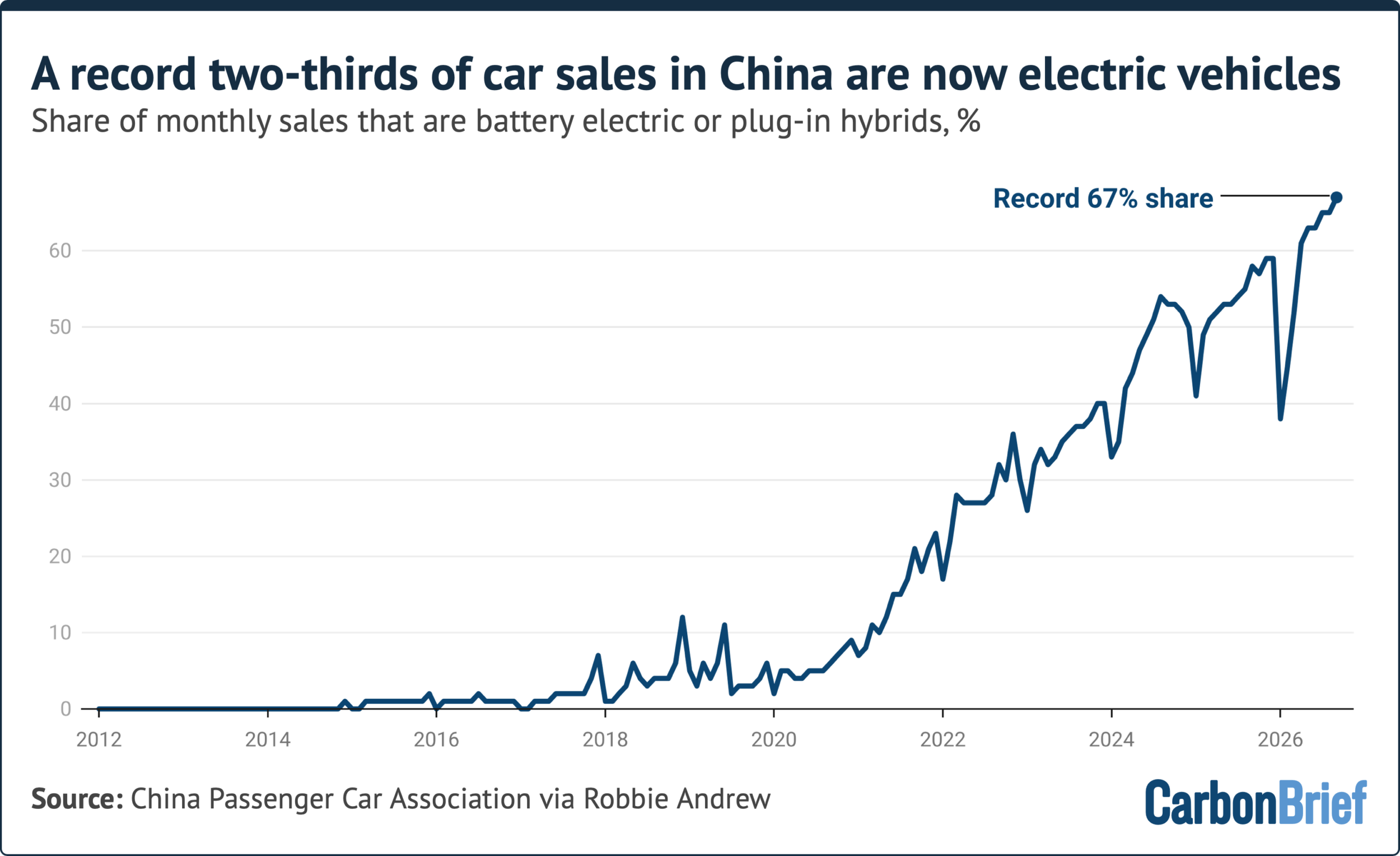
New-energy vehicles (NEVs) achieved a historic milestone in September, making up 67% of all new car sales in China, according to the latest data released by the China Passenger Car Association (CPCA). This unprecedented market share represents a dramatic leap from just 6% of new car sales in 2020, highlighting the rapid pace at which the world’s largest automotive market is transitioning toward electrification.
The latest figures show that NEVs—a category that primarily encompasses battery electric vehicles (BEVs) and plug-in hybrids (PHEVs)—captured a record-breaking slice of the domestic market, even though overall sales volumes were lower compared to the same period last year. This dynamic is primarily driven by a steep and sustained contraction in sales of traditional internal combustion-engine (ICE) cars. According to the CPCA, the decline in petrol-powered vehicles has been significantly accelerated by rising fuel prices resulting from the ongoing energy and geopolitical pressures stemming from the Hormuz crisis.
Industry analysts note that China’s rapidly expanding fleet of electric and plug-in hybrid passenger cars has played a crucial role in buffering the nation against global energy shocks. By curbing domestic demand for fossil fuels, the massive adoption of NEVs has successfully displaced millions of barrels of oil since the onset of the disruptions in the Strait of Hormuz, underscoring the deep intersection between road transport electrification and national energy security.
NEV Market Records and Changing Dynamics
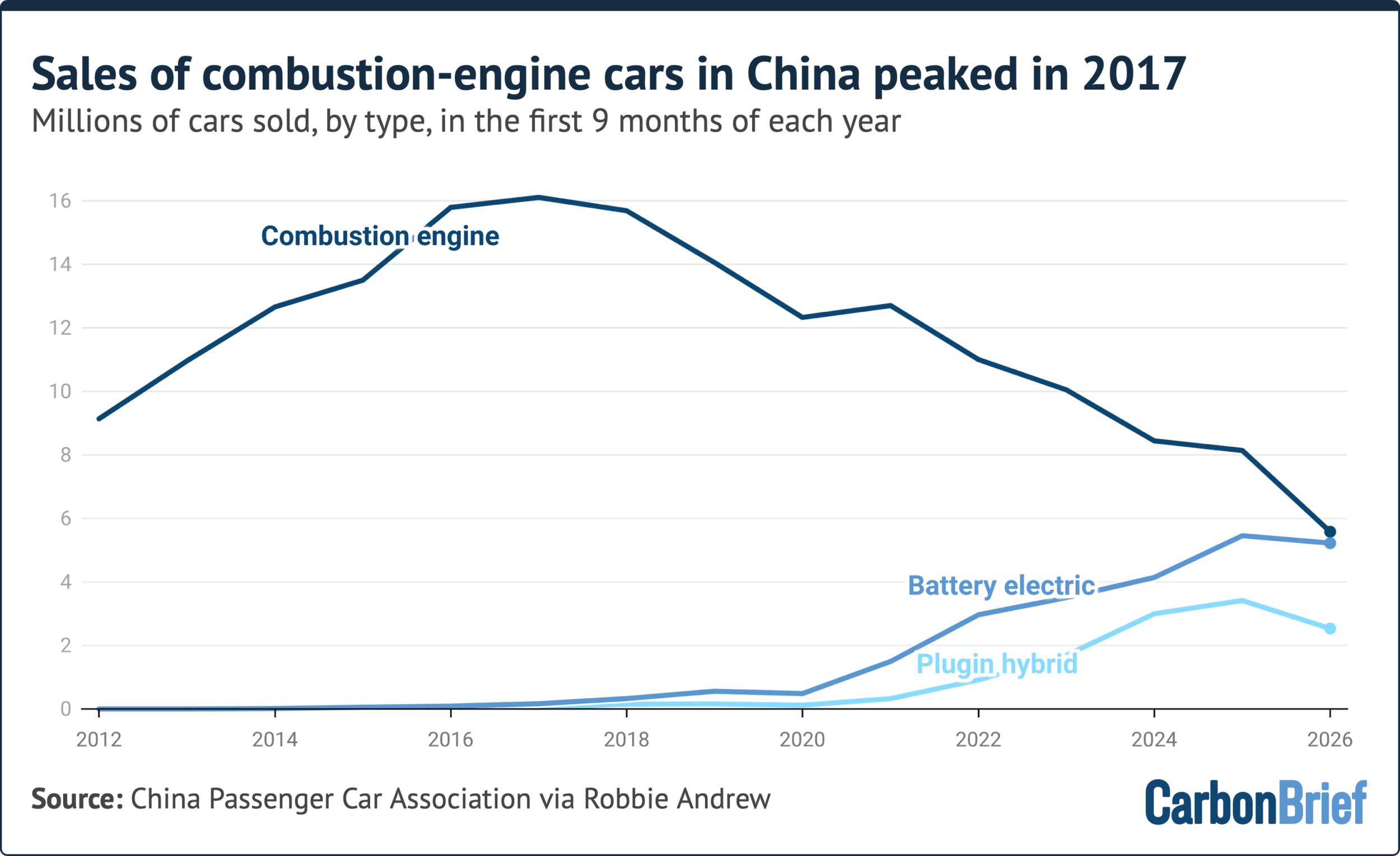
The September data illustrates a remarkable trajectory for new-energy vehicles over the past decade. While market penetration stood at a modest 6% in 2020, it surged steadily to reach 58% across the entirety of 2026 before culminating in the historic 67% high recorded in September.
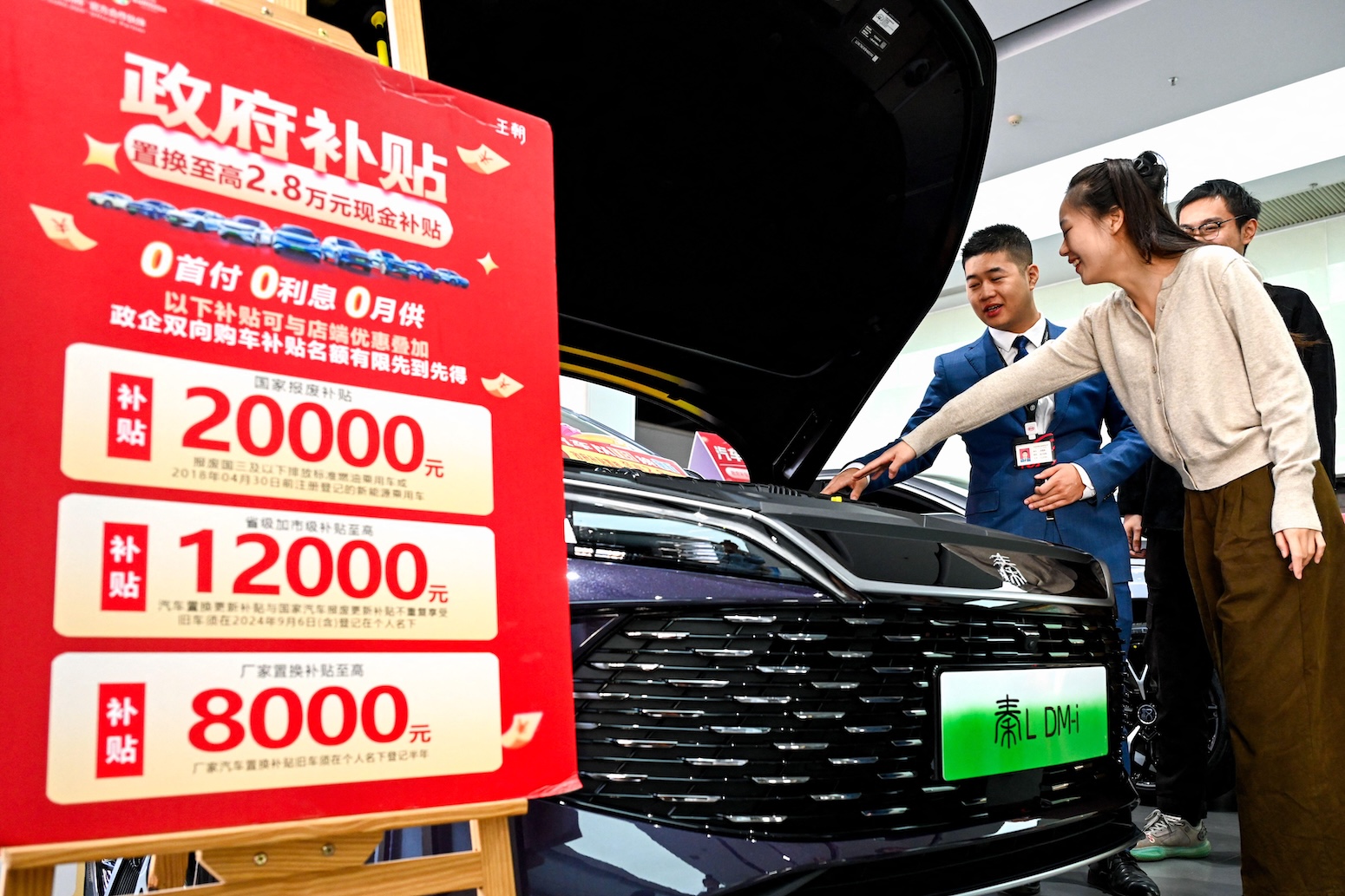
This year’s market performance has also demonstrated strong resilience. NEV sales share initially bounced back from a temporary dip to 39% in January, which followed the official expiration of a comprehensive purchase tax exemption that had remained in place for more than a decade through December 2025.
The surging market share of NEVs throughout 2026 has occurred against the backdrop of a broader slowdown across the wider domestic passenger-car market. This wider cooling trend has hit combustion-engine vehicles particularly hard. In September, passenger-car retail sales across all categories declined, with total sales volumes dropping by 28% compared to the previous year.
This market contraction was overwhelmingly led by traditional fuel-only cars, which experienced a 43% plunge in sales year-on-year in September, contributing to a 31% decline across the first nine months of 2026. However, alternative powertrains were not entirely immune to the broader economic headwinds. Plug-in hybrid electric vehicles (PHEVs) also saw notable declines, with sales dropping by 36% year-on-year in September and 26% for the year to date.
By comparison, battery electric vehicles (BEVs) demonstrated stronger relative resilience. While BEV sales still experienced a modest decline—falling 8.5% year-on-year in September and 4% across the first nine months of 2026—they significantly outperformed their combustion counterparts. Consequently, overall NEV sales fell by 17% in September and 13% for the year to date, reflecting a softer macroeconomic environment but a decisive structural shift away from traditional petrol vehicles.
These turbulent market shifts in 2026 represent an intensification of long-term structural trends rather than an isolated anomaly. Historical data shows that sales of combustion-engine cars in China peaked as early as 2017 and have been on a persistent downward trajectory ever since. Chinese technology media and industry observers have noted that petrol cars are rapidly surrendering market share simply because they are being systematically outcompeted by cleaner, more advanced electric alternatives.
The Impact of the Hormuz Crisis on Fuel Security
A critical catalyst for the accelerated advance of NEVs in 2026 has been the turbulent state of global energy markets. Cui Dongshu, secretary-general of the CPCA, pointed directly to higher domestic petrol prices as a primary driver behind the weak sales performance of combustion-engine cars.
Data shows that China’s crude oil imports between January and September fell by 15% compared to the same period in 2025, representing a reduction equivalent to approximately 470 million barrels. Ongoing geopolitical conflict and supply constraints in the Strait of Hormuz have tightened global petroleum supplies and driven up import costs, placing an unprecedented financial burden on drivers of traditional fuel vehicles.
Energy analysts emphasize that China’s early strategic investments in electric mobility have provided a vital economic and strategic cushion against these external shocks. Euan Graham, a senior energy analyst at the energy thinktank Ember, estimated that China’s passenger NEV fleet has successfully displaced 143 million barrels of oil since the beginning of the Hormuz crisis. Additional analysis provided to the Brookings Institution similarly estimated that electric vehicles accounted for roughly 12% of the total decrease in China’s oil consumption following the emergence of the Hormuz energy shock.
Erica Downs, a senior research scholar at Columbia University’s Center on Global Energy Policy, noted that the disruption in the Strait of Hormuz and the resulting spike in global oil prices are actively reinforcing China’s long-standing strategy to electrify road transport. According to Downs, what has unfolded as the world’s largest oil supply disruption effectively vindicates Beijing’s historic bet on electric vehicles, which was originally formulated largely out of acute concerns over long-term oil supply security and import vulnerability.
Evaluating Post-Peak Demand Growth
Despite capturing a record-high percentage of monthly sales, absolute demand for NEVs has experienced some cooling alongside the broader passenger car market. Industry experts attribute this temporary moderation to a combination of policy transitions, economic tightening, and shifting consumer behavior.
Zhang Yichao, a partner at consulting firm AlixPartners, explained that NEVs have continued to weather the downturn better than combustion vehicles largely due to supportive government trade-in policies and a strong, innovation-driven pipeline of newly released models. However, he noted that the explosive growth rates seen in previous years are naturally beginning to level off.
Other industry perspectives, including commentary from consulting firm Wood Mackenzie, point to additional factors such as "demand pull-forward" effects witnessed in late 2025 ahead of subsidy expirations, alongside tighter macroeconomic financing conditions for consumers. Cui Dongshu also noted that year-on-year comparisons for September 2026 were influenced by an exceptionally high baseline of sales from the corresponding month in 2025, combined with holiday calendar disruptions and evolving trade-in frameworks.
Looking forward, analysts suggest that the market share of NEVs in China is approaching its structural ceiling. Zhang Yichao observed that there appears to be limited room for further exponential gains in domestic market share, suggesting that NEVs are unlikely to exceed roughly 80% of total sales in China because certain specialized use cases and premium market segments will likely retain a requirement for combustion-engine vehicles.
Surging Exports Amid Domestic Headwinds
As domestic retail sales faced downward pressure, Chinese automotive manufacturers increasingly turned their focus toward overseas markets, resulting in a dramatic surge in vehicle exports throughout 2026.
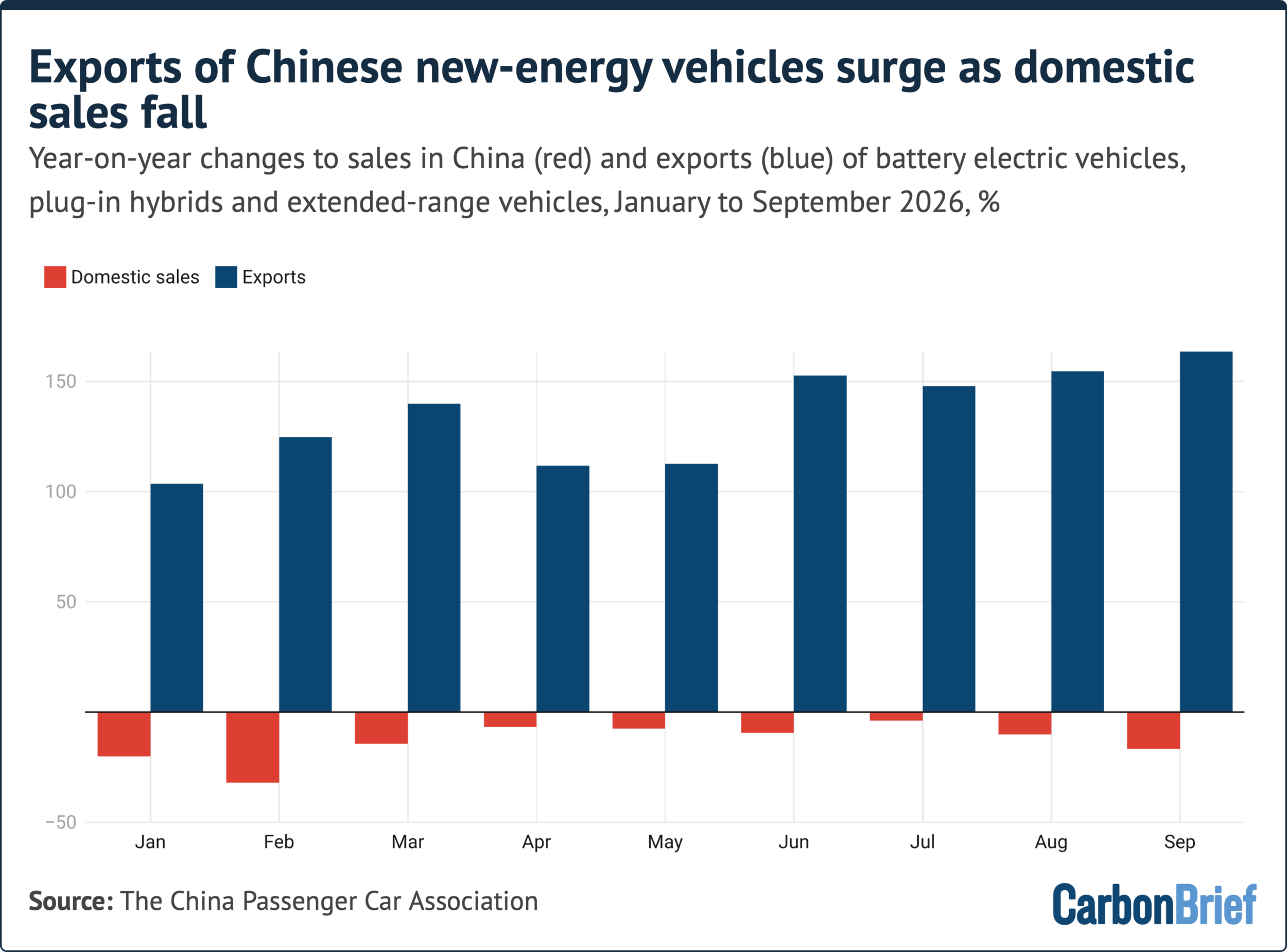
According to CPCA figures, while domestic NEV retail sales fell by 17% in September, overseas shipments more than doubled, exploding by 164% year-on-year. During the month, Chinese automakers sold 1,084,000 NEVs domestically while exporting 558,000 units. This performance extends a consistent trend observed throughout the year, characterized by slowing domestic volume growth paired with exceptionally strong export momentum.
With domestic demand softening and a cut-throat price war squeezing profit margins within China’s domestic market, overseas expansion has transformed into a core strategic priority for many domestic carmakers. However, this aggressive export push has increasingly sparked protectionist friction and regulatory pushback abroad.
The European Union has implemented tariffs on electric vehicle imports from China and recently advanced plans to curb incoming shipments of plug-in hybrids. Simultaneously, nations including Mexico and Turkey have introduced their own tariff barriers and import restrictions targeting Chinese electric vehicles.

Domestically, Beijing has also begun recalibrating policy incentives, including adjustments to value-added tax export rebates that could potentially disincentivize excessive reliance on overseas shipping. While industry analysts remain divided on the ultimate impact these policy shifts will have on trade volumes—with some predicting minimal disruption and others warning of rising export price tags—international markets remain an indispensable frontier for Chinese automakers navigating a transforming domestic landscape.