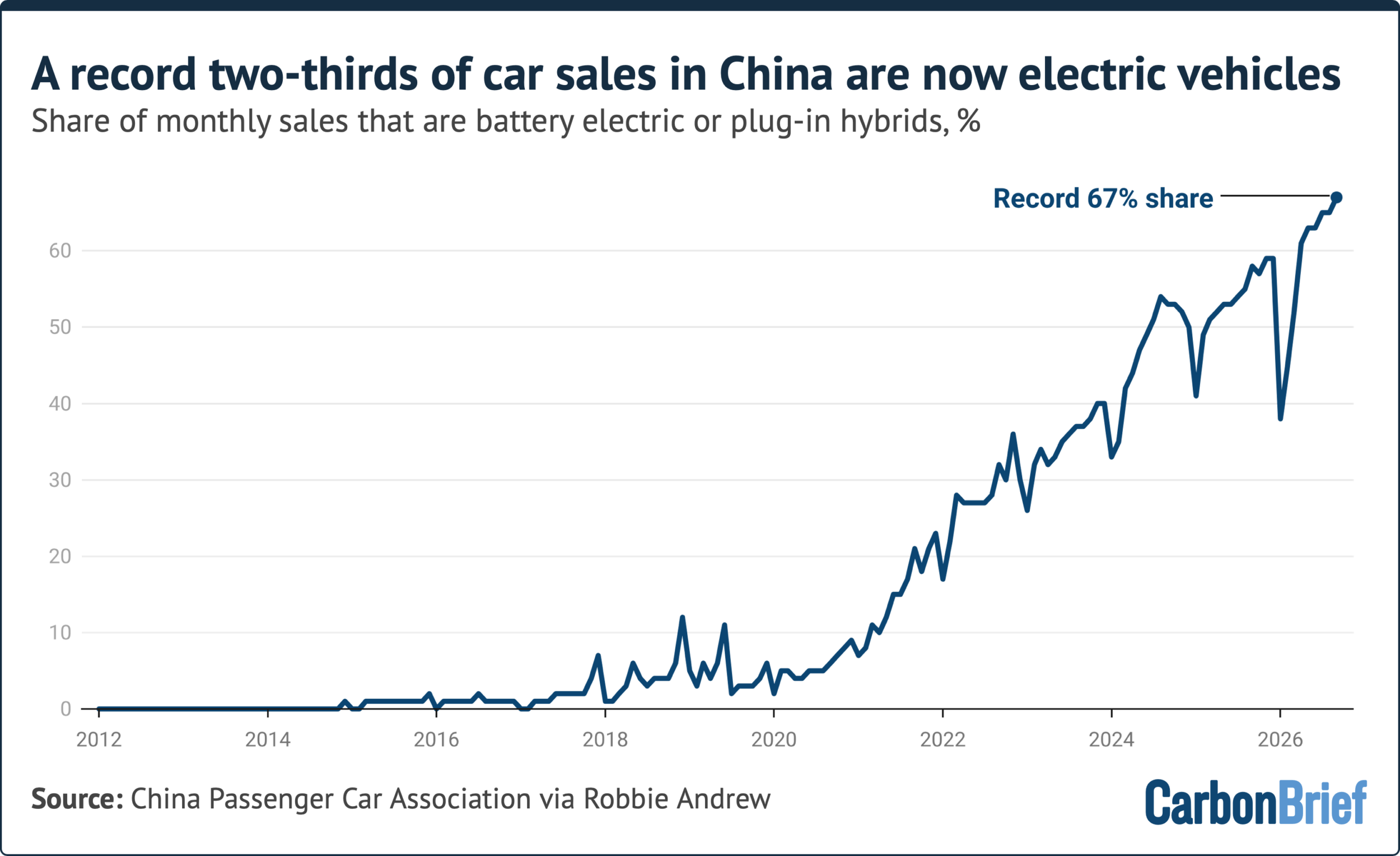
New-energy vehicles (NEVs) achieved a historic milestone in September, capturing 67% of all new car sales in China, according to the latest data released by the China Passenger Car Association (CPCA). The figures highlight a dramatic acceleration in the country’s transition toward electrified road transport, driven not only by long-term policy momentum and domestic industrial strategy but also by sudden external shocks to global energy markets.
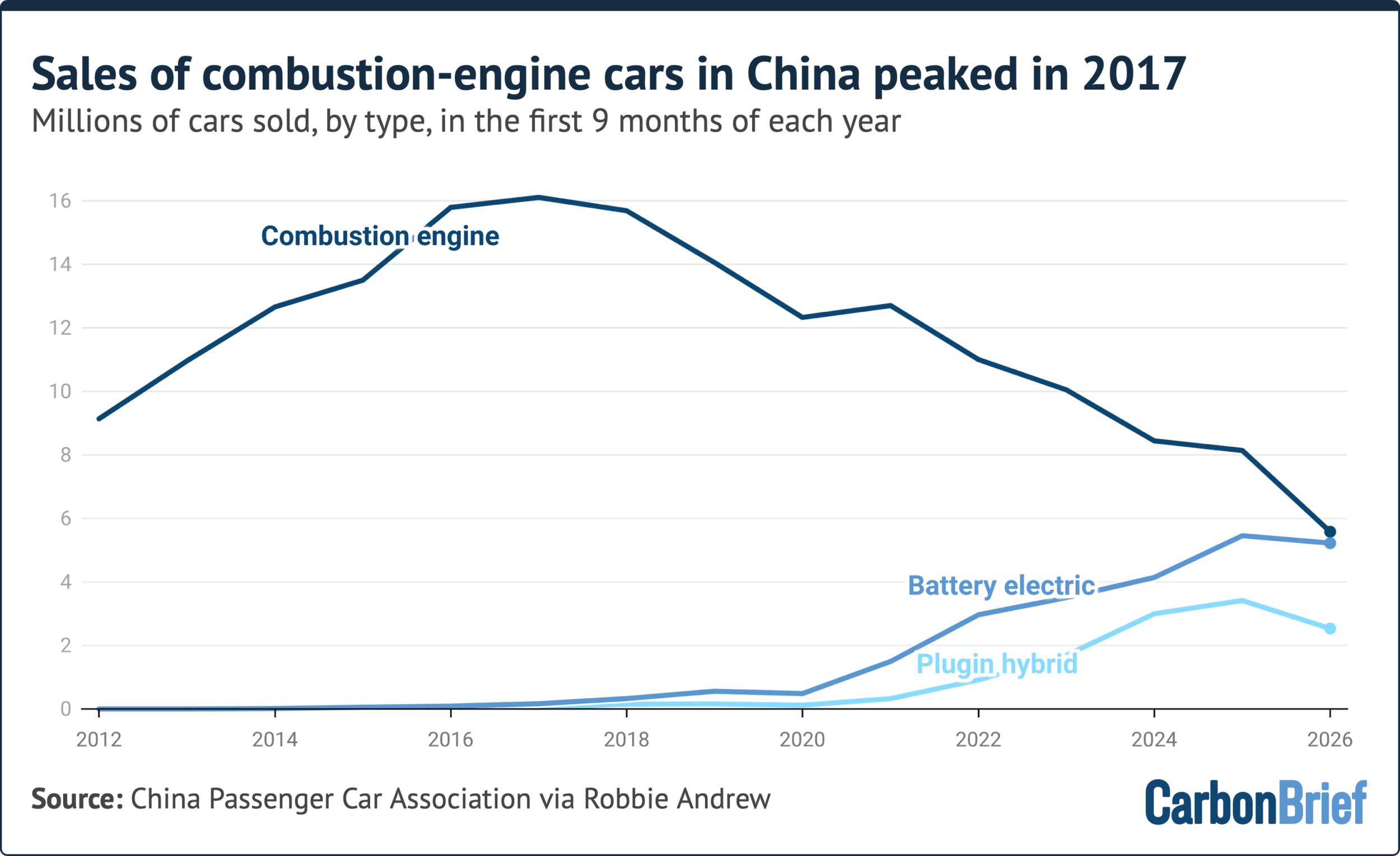
While the new market share represents an all-time high—climbing steeply from just 6% of sales in 2020 and an average of 58% across the first nine months of 2026—the record was achieved during a month that actually saw absolute sales volumes decline. Analysts point out that the growing dominance of NEVs is largely the result of a precipitous collapse in the market for traditional combustion-engine vehicles. Internal combustion engine (ICE) cars are rapidly losing ground as consumers contend with soaring petrol prices triggered by ongoing geopolitical instability in the Middle East.
The broader passenger-car market in China has experienced a pronounced slowdown throughout 2026. Overall retail sales across all vehicle categories fell by 28% year-on-year in September. However, the contraction has been overwhelmingly concentrated in fuel-only vehicles, which saw sales plunge by 43% in September alone and drop 31% over the first nine months of the year compared to the same period in 2025.
In contrast, while the NEV sector has not been entirely immune to broader economic headwinds and changes in government incentives, its sales figures have proven far more resilient. Battery electric vehicles (BEVs) saw September sales decline by just 8.5% year-on-year, with a minor 4% drop across the first three quarters of 2026. Plug-in hybrid electric vehicles (PHEVs) faced steeper declines—down 36% in September and 26% year-to-date—yet their performance still significantly outpaced that of traditional petrol-powered alternatives.
This ongoing divergence underscores a structural shift that has been unfolding for nearly a decade. Sales of combustion-engine cars in China officially peaked in 2017 and have maintained a steady downward trajectory ever since, as domestic manufacturers shifted their focus, investments, and marketing heavily toward electrification.
NEV Record and Market Dynamics
The rapid rise of NEVs to two-thirds of the monthly market represents a remarkable rebound from earlier in the year. In January 2026, the market share of NEVs slipped to a low of 39% following the expiration of a full purchase tax exemption that had supported the industry for more than a decade through the end of 2025.
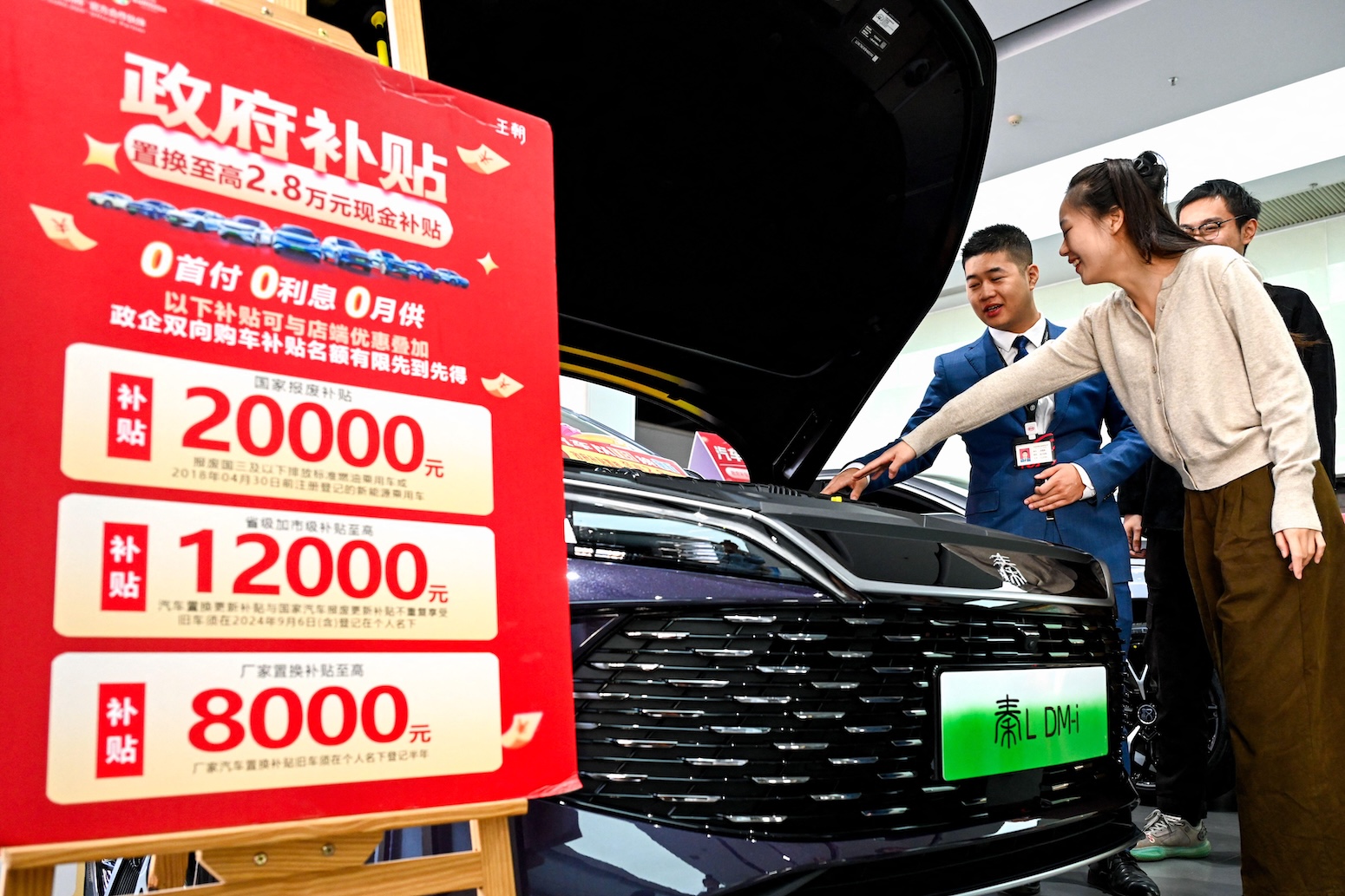
Despite the removal of long-standing subsidies, NEVs have managed to claw back market share rapidly. Industry experts attribute this resilience to a combination of aggressive corporate innovation, government trade-in policies, and a continuous pipeline of appealing new models. Zhang Yichao, a partner at consulting firm AlixPartners, noted that these factors have cushioned the blow for electric vehicle manufacturers, allowing NEV sales to fall at a much slower rate than their combustion-engine counterparts.
At the same time, market analysts caution that the hyper-growth phase of NEV market penetration may be approaching a ceiling. Cui Dongshu, secretary-general of the CPCA, explained to state media that the September sales figures were also impacted by a remarkably high comparative baseline from September 2025, alongside shifts in trade-in regulations and holiday-related disruptions. Furthermore, Wood Mackenzie highlighted that weakened consumer demand caused by "demand pull-forward" ahead of the subsidy expiration in late 2025, combined with tighter financing conditions, has cooled the market.
Looking ahead, Zhang suggests that there is limited room left for exponential market share expansion domestically. In his view, the domestic market share of NEVs is unlikely to exceed 80%, as certain premium market segments and specialized industrial use cases will continue to rely on combustion-engine vehicles for the foreseeable future.
Impact of the Hormuz Crisis
A major catalyst accelerating the retreat of petrol cars in 2026 has been the ongoing crisis in the Strait of Hormuz, which has severely disrupted global oil supplies and driven petroleum prices significantly higher.
China’s overall imports of crude oil dropped by 15% between January and September compared to the previous year, equivalent to a reduction of approximately 470 million barrels. As tightening supplies and elevated prices squeezed fuel consumers at the pump, traditional petrol cars began rapidly relinquishing market share to their electric alternatives, according to reports from Chinese technology outlet OFweek.
Energy analysts emphasize that China’s massive, rapidly expanding fleet of electric and hybrid passenger vehicles has served as a crucial buffer against these external shocks. Euan Graham, a senior energy analyst at the think tank Ember, told Carbon Brief that China’s passenger NEV fleet has displaced demand for 143 million barrels of oil since the onset of the Hormuz crisis. An independent estimate provided to the Brookings Institute by an unnamed analyst similarly calculated that EVs accounted for 12% of the total reduction in China’s oil consumption following the energy shock.
Erica Downs, a senior research scholar at Columbia University’s Center on Global Energy Policy, noted that the disruptions in the Strait of Hormuz and the resulting spike in oil prices are effectively reinforcing China’s national strategy to electrify road transport. She argued that the severe global oil supply shock fully vindicates Beijing’s early, aggressive bets on electric mobility, which were originally formulated out of deep-seated concerns regarding national energy security and over-reliance on foreign oil imports.
Exports Surge Amid Domestic Headwinds
Faced with slowing domestic sales and intense cut-throat competition within the home market, Chinese automakers have increasingly looked outward, transforming overseas expansion into a core corporate priority.
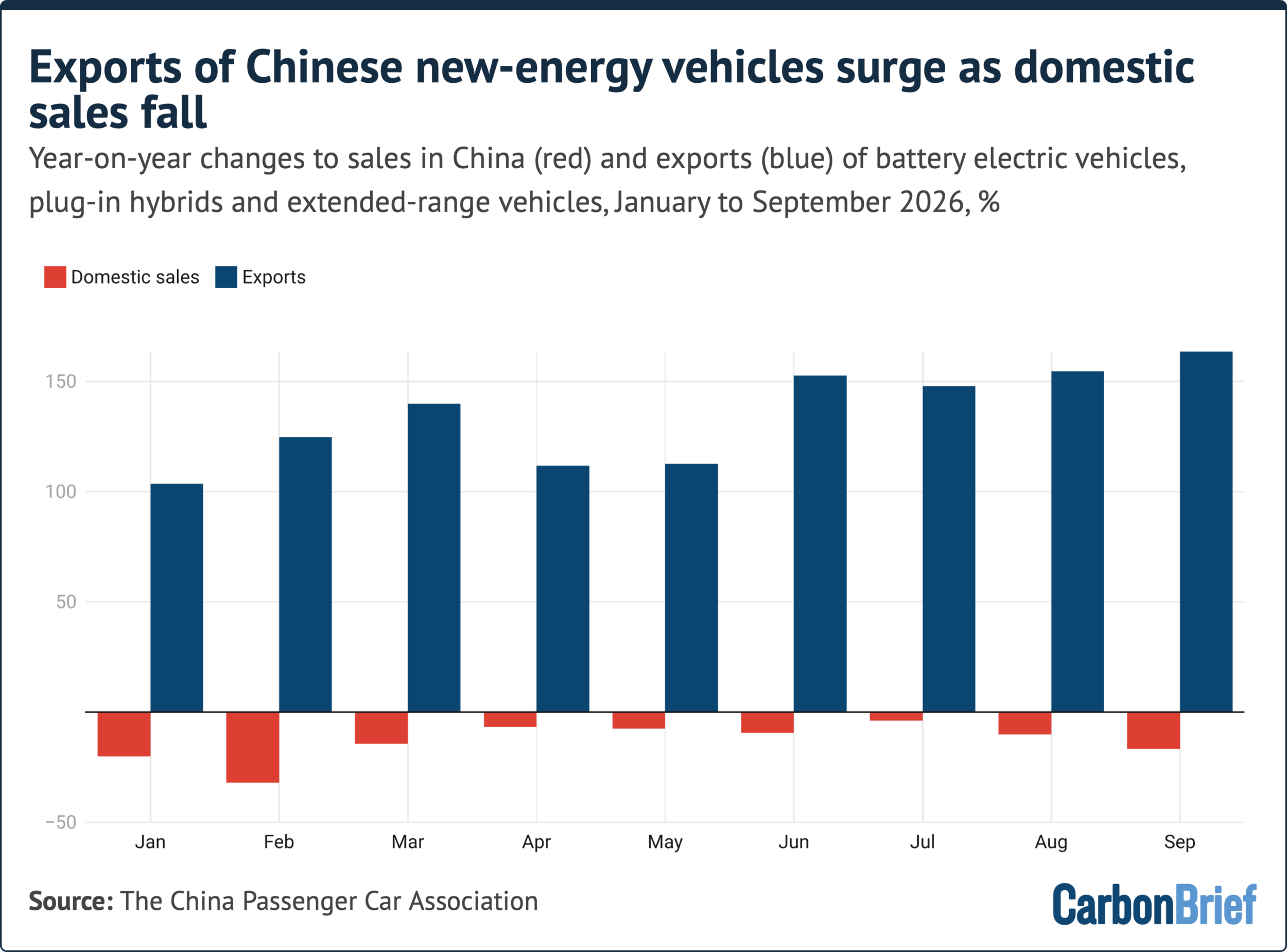
Data from the CPCA reveals that while domestic NEV retail sales fell by 17% in September, overseas shipments more than doubled, surging by 164% compared to the same month last year. In total, Chinese manufacturers sold 1,084,000 NEVs domestically in September while exporting an additional 558,000 units. This mirrors a broader trend throughout 2026, where sluggish domestic volume has been heavily offset by booming international sales.
However, the aggressive export push has encountered significant regulatory friction abroad. The European Union has implemented tariffs on imports of battery electric vehicles from China and has recently moved to restrict hybrid imports as well. Other major economies, including Mexico and Turkey, have similarly introduced tariffs and trade barriers to curb the influx of Chinese vehicles.
Simultaneously, policymakers within China have begun introducing measures that could potentially cool the export wave, such as reductions in value-added tax export rebates. Industry analysts remain divided on the ultimate impact of these domestic policy adjustments; some argue the effect will be minimal due to manufacturers’ profit margins and scale, while others warn it could lead to higher price tags for Chinese vehicles in international markets. As domestic and global market dynamics continue to shift, Chinese automakers find themselves navigating a rapidly evolving landscape defined by shifting energy security priorities and rising international trade tensions.