A mysterious train delay that occurred nearly 180 years ago has led an international team of scientists to uncover a surprising historical error regarding some of the earliest documented cases of solar activity interfering with human technology. The discovery has effectively rewritten a portion of the timeline concerning how space weather first impacted electrical infrastructure on Earth, proving that the hazards we face today from solar storms are part of a long-standing natural phenomenon rather than a strictly modern threat.
The incident in question dates back to the 1840s, a transformative era when electric telegraph networks were beginning to expand rapidly and revolutionize long-distance communication across continents. As these pioneering electrical systems grew, operators occasionally encountered bizarre and unexplained electrical disturbances that could disrupt, stall, or completely halt their equipment. Modern science has long since understood that many of these historical anomalies were caused by rapid fluctuations in Earth’s magnetic field, which in turn were triggered by powerful solar activity erupting from the Sun.
Seeking to better understand this pivotal intersection between early industrial technology and space weather, a multi-institutional research team led by Lancaster University revisited a historical account involving a train delayed in Exeter, England. The comprehensive investigation brought together space weather experts and geologists from RMIT University, the British Geological Survey, Natural Resources Canada, Baylor University, and the United Kingdom’s national space laboratory, RAL Space. By meticulously cross-referencing a wide array of historical documents, archival newspapers, and scientific observations, the team uncovered a glaring discrepancy that fundamentally changes the chronology of the earliest known technological disruptions caused by space weather.
How Solar Storms First Disrupted Technology
To fully grasp the significance of these early 19th-century disruptions, it is helpful to look at the broader historical context of solar storms. One of the most famous and dramatic examples of space weather affecting human technology occurred in 1859, an event now globally known as the Carrington Event. This exceptionally powerful solar storm involved a massive solar flare accompanied by a coronal mass ejection—an enormous, violent eruption of charged particles and powerful magnetic fields hurled directly from the atmosphere of the Sun into interplanetary space.
The resulting geomagnetic disturbances produced breathtaking, highly visible auroras, commonly referred to as the northern lights, which appeared in skies far south of their usual polar domains, reaching as far as Hawaii and Central America. In numerous locations across the globe, the nighttime sky glowed with such astonishing intensity that ordinary people were able to read newspapers outdoors at night without artificial light. This unusual nocturnal illumination even tricked gold miners into mistakenly believing that morning had finally arrived, prompting them to wake up and prepare breakfast shortly after midnight.
Beyond creating celestial spectacles, the storm wreaked absolute havoc on the fragile telegraph networks spanning the globe. Severe electrical surges caused widespread equipment failures, sent bright sparks flying wildly from telegraph wires, shocked unsuspecting operators, and in some cases, even sparked fires in telegraph stations. Under certain conditions, the electrical currents generated naturally by the geomagnetic disturbance were so immensely powerful that telegraph systems were able to continue transmitting messages even after their batteries had been completely disconnected.
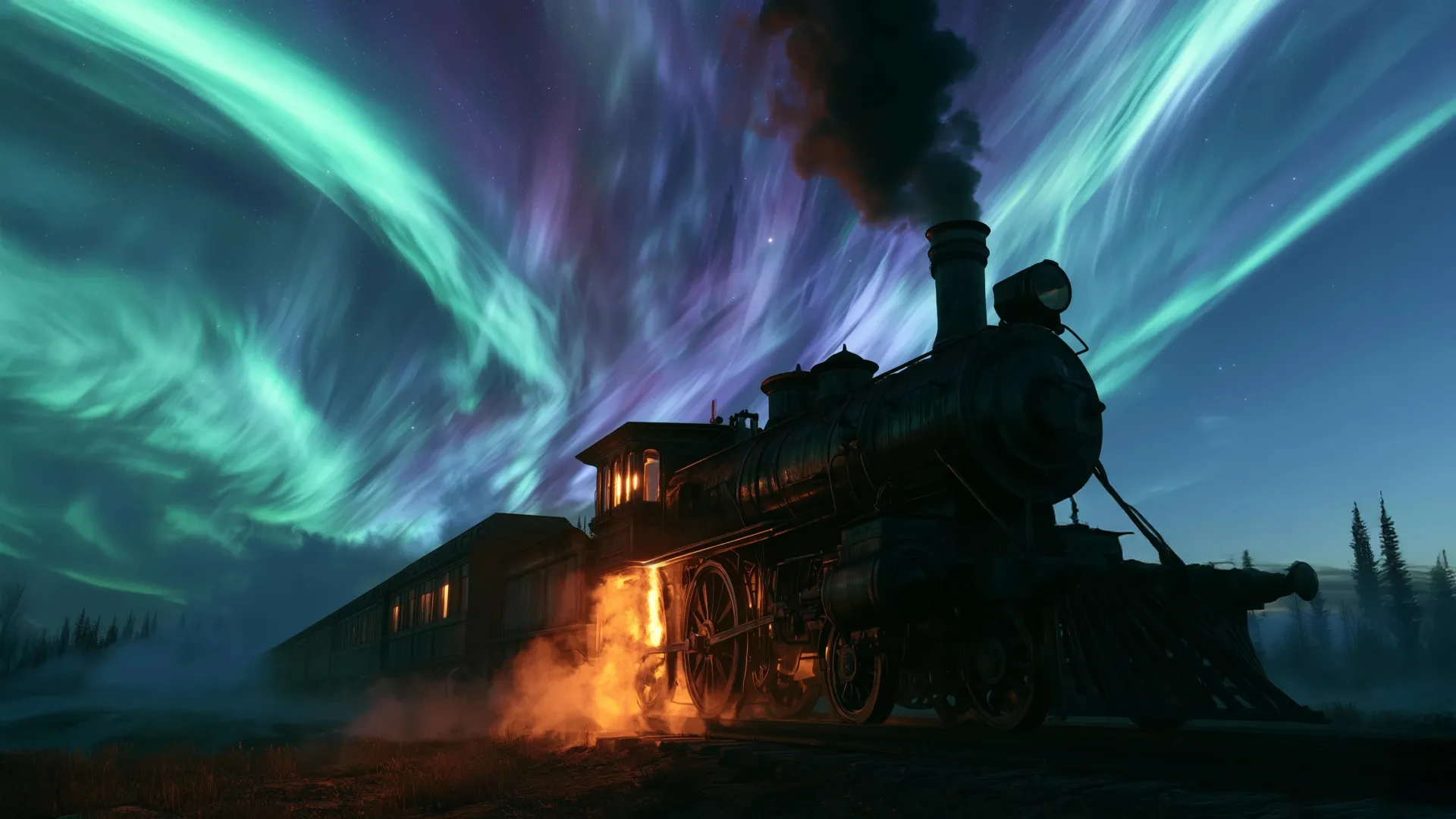
Although the Carrington Event remains the most famous and well-documented example from this formative period of electrical technology, physical evidence and historical accounts show that solar activity was already interfering with electrical systems years earlier. In 1871, an anonymous author published a brief but descriptive account in the prestigious scientific journal Nature, detailing a "very intense magnetic disturbance" that supposedly occurred on October 18, 1841. According to that historical report, the geomagnetic disturbance severely interfered with railway signaling equipment in Exeter, England, causing a frustrating delay that pushed back the scheduled 10:05 p.m. train departure by precisely 16 minutes.
If that initial date had proven to be accurate, the incident would have stood undisputed as the earliest known instance of space weather directly disrupting human technology. However, a meticulous new investigation published in the American Geophysical Union journal Space Weather has revealed that the original account contained a significant historical error that eluded detection for nearly two centuries.
The Railway Mystery That Changed Solar Storm History
Associate Professor Brett Carter, an esteemed space weather researcher at RMIT University who helped spearhead the investigation into the historical records, noted that the research team quickly noticed a glaring inconsistency that cast immediate doubt on the original timeline provided in the 1871 publication.
Upon examining the logistical details, the team realized that the Exeter-to-Starcross railway line mentioned in the report did not actually open until 1846, which was nearly five years after the event was supposedly documented to have taken place.
"In this study, we effectively investigated what had to be a typo in a Nature paper from 1871. We know it was a typo because the Exeter-to-Starcross train line mentioned in that paper didn’t exist until 1846, which is 5 years afterwards," Carter explained.
Determined to establish when the train delay actually occurred, the researchers embarked on a thorough archival hunt. They compared historical railway timetables and local newspaper reports with historical observations of solar activity, documented accounts of auroras, and digitized historical measurements of Earth’s magnetic field. Together, these disparate records pointed conclusively to a different date: October 18, 1848, exactly seven years later than the date originally published in the 19th-century journal.
This revised timeline successfully resolves the apparent chronological contradiction and places the incident squarely during a crucial period in human technological history, when electrical communication systems were rapidly expanding across civilized nations. Carter explained that the 1840s marked an irreversible turning point in humanity’s relationship with space weather. While solar disturbances had naturally occurred for billions of years, the sudden, widespread emergence of electrical technology meant that these natural space events could now interfere directly with everyday human activities and critical infrastructure.
"Understanding this historical event is important because the 1840s mark the intersection between the rise of our technological age and space weather, which has always been around," Carter noted, adding that "since this line was crossed, humans have not looked back."
The findings also alter the incident’s specific place in the historical record. Although the Exeter disruption firmly remains one of the earliest credible examples of space weather affecting human technology, it can no longer lay claim to being the absolute first. That historical distinction now rightfully belongs to an earlier documented incident involving telegraph interference on Britain’s Midland Railway, which took place in March 1847.
Why the 178-Year-Old Discovery Matters
Professor Jim Wild of Lancaster University, who led the overarching study, emphasized that the findings demonstrate how the hidden dangers associated with space weather began impacting human society long before the development of modern power grids, orbital satellites, and complex electronic communication networks.
"What this research highlights is that space weather is not a new threat but a long-standing natural hazard. Society has been experiencing the effects of space weather on technology for almost as long as electrical technologies have existed," Wild said.
The Exeter railway incident is considered especially significant because it occurred at a time when electrical technology was still in its absolute infancy. Early railway operators and telegraph pioneers were only just beginning to rely on emerging systems, inadvertently creating new vulnerabilities that allowed solar disturbances to interfere with essential public infrastructure.
"The Exeter train delay is a fascinating story because it sits right at the point where emerging technologies first began to encounter the realities of the space environment. By combining historical archives with scientific observations, we’ve been able to show that the event almost certainly happened in 1848 rather than 1841," Wild said. He added that while this means it is not technically the earliest recorded space weather impact, it remains one of the first clear examples of solar activity disrupting critical infrastructure. Furthermore, the investigation illustrates the immense value of combining rigorous scientific records with contemporary newspaper reports and archival documents when attempting to reconstruct historic space weather events that occurred long before modern monitoring instruments were invented.
Dr. Mike Hapgood, a Visiting Scientist and leading space weather expert at the United Kingdom’s national space laboratory, RAL Space, described the research process as sharing many similarities with a classic detective investigation. "It highlights the importance of preserving these older records, which give us the evidence base we need to interpret past events and strengthen future predictions," he stated.
Modern Technology Still Faces the Threat of Solar Storms
Nearly two centuries after the Exeter train delay, powerful solar storms continue to pose very real risks to modern railways, aviation, and other essential public infrastructure. While the specific technologies involved have evolved and expanded dramatically over the past 178 years, our modern systems remain fundamentally susceptible to energetic disturbances originating from the Sun.
Today, severe space weather can readily interfere with high-voltage electrical power grids, sophisticated railway signaling equipment, satellite navigation systems, and global telecommunication networks. Powerful solar events can violently disturb Earth’s protective magnetic field, potentially inducing unwanted electrical currents in long-distance infrastructure and degrading systems that depend heavily on reliable satellite signals.
Scientists today possess vastly more sophisticated scientific instruments and advanced forecasting methods than were available to researchers in the 19th century. However, Hapgood emphasized that modern society’s ever-growing dependence on highly interconnected electrical and space-based technologies also creates unprecedented new vulnerabilities. Understanding how past solar storms impacted early infrastructure can help contemporary researchers accurately assess the dangers posed by future events and develop better ways to reduce potential disruptions.
"Deepening our understanding of these events is essential for preparing for, and mitigating, the impacts of space weather – especially as we look forward to a decade of exciting space developments that will face the challenge of a new solar cycle in the 2030s," Hapgood concluded.