On the warm summer evening of August 9, 2025, passengers aboard the expedition vessel Hanse Explorer gathered on the deck to capture the final light on the South Sawyer Glacier. They framed their shots, recorded videos of the towering blue ice, and smiled for selfies before the ship turned around, departing the narrow confines of the Alaskan fjord to head back down open waters.
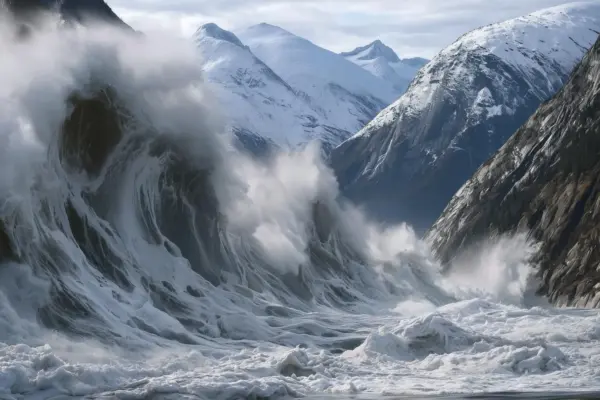
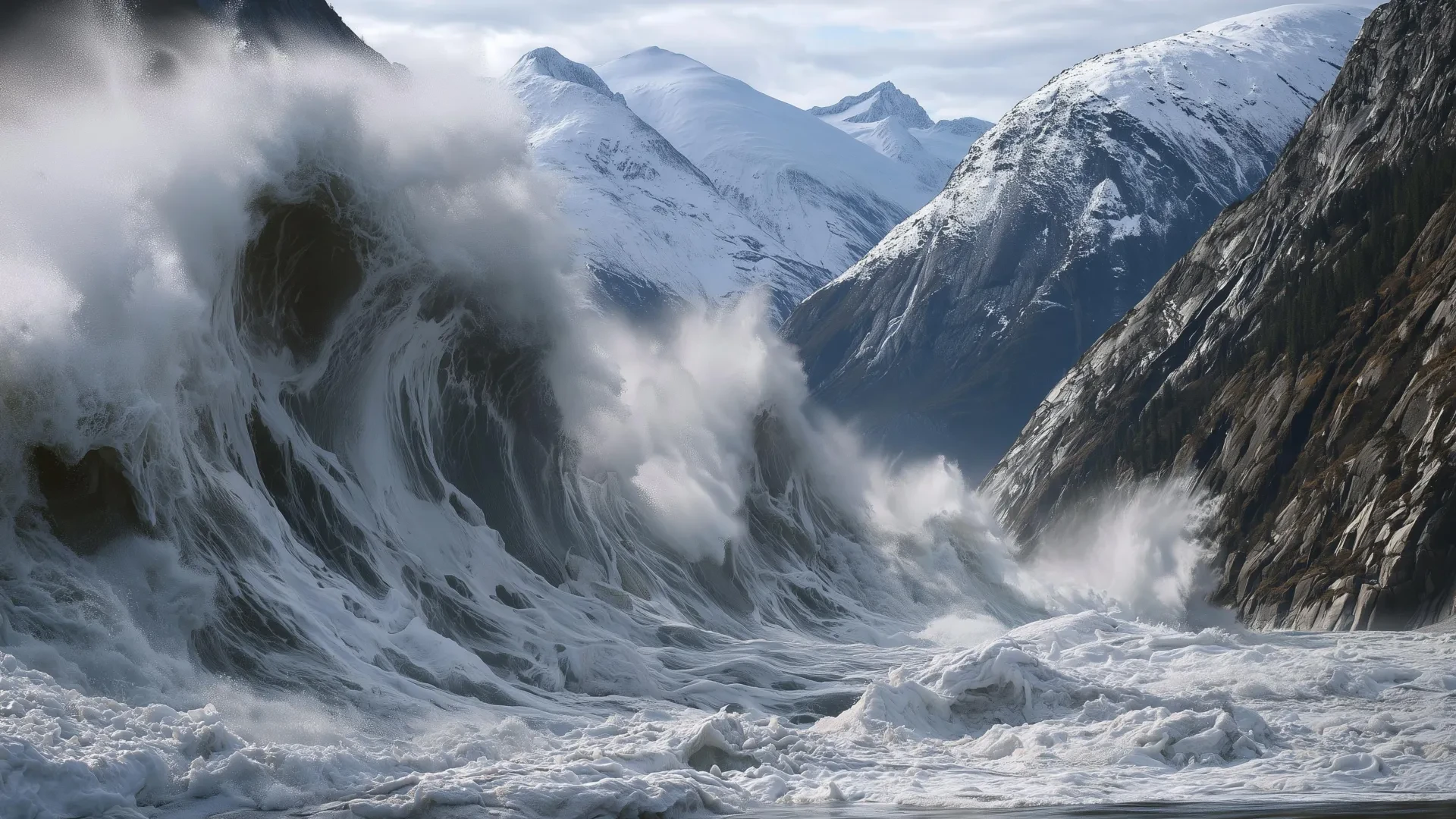
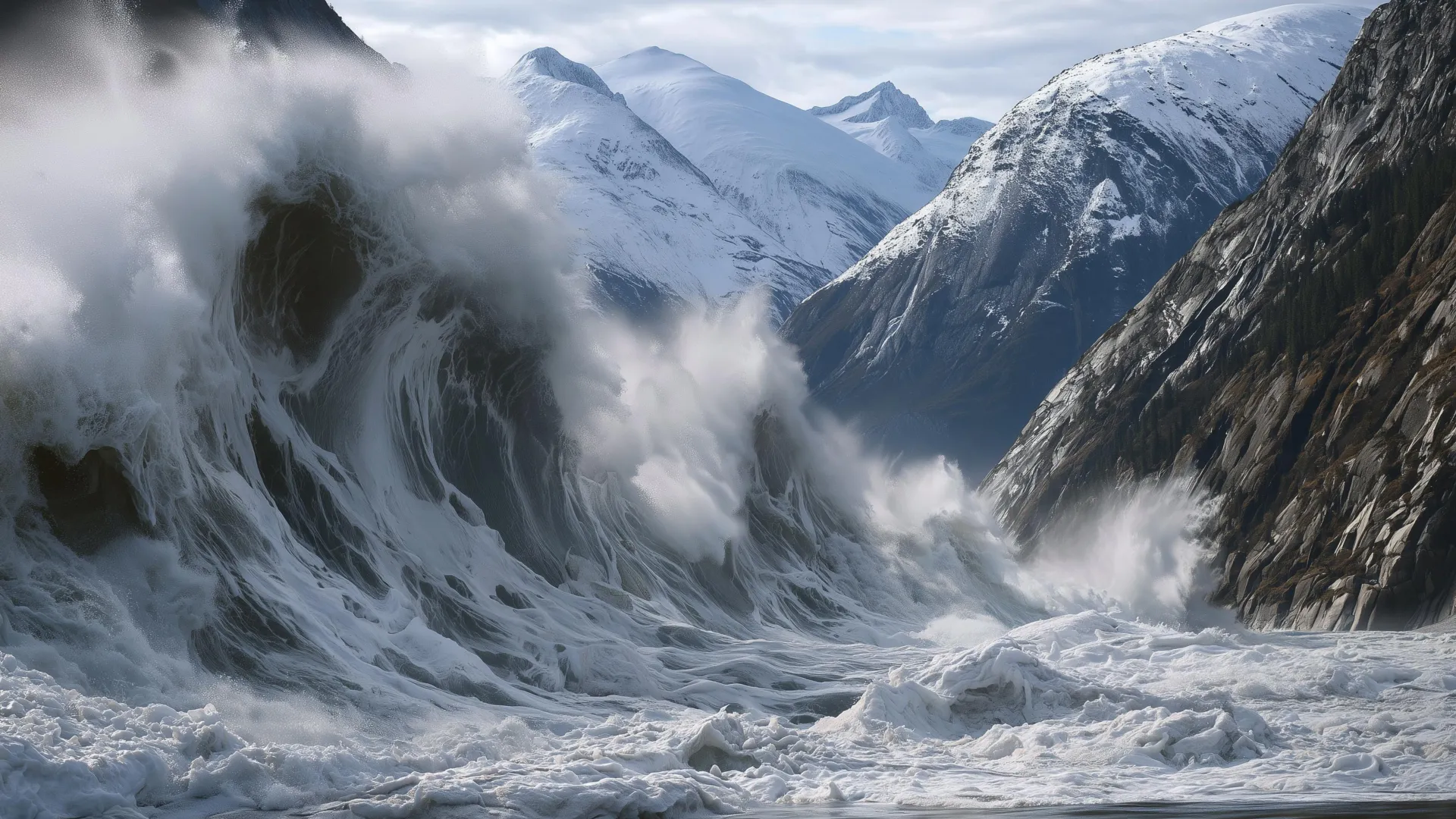
Just twelve hours later, a massive section of the adjacent mountain gave way without warning. Millions of tons of rock and earth collapsed directly into the fjord, displacing a wall of water that triggered the second-highest tsunami in recorded history.
Researchers studying earthquakes and tsunamis at the Alaska Earthquake Center, including the Alaska state seismologist, have detailed the catastrophic mechanics of that morning in a new study published in the journal Science. According to the researchers, the momentum of the collapse sent a massive surge of water and debris crashing 1,580 feet—or 481 meters—up the opposite side of the fjord. The wave reached a height greater than the top floor of the Taipei 101 skyscraper before the immense force of the water rushed back down Tracy Arm, stripping the steep fjord walls entirely bare down to raw bedrock.
Miraculously, the disaster struck at just past five o’clock in the morning on a dreary, overcast day, and no ships or human settlements were in the immediate path of the cataclysm. In the months following the event, however, the sobering reality of the disaster began to ripple through the tourism industry, prompting several cruise lines to alter their itineraries and temporarily avoid Tracy Arm altogether. Yet, experts emphasize that the lethal conditions which converged to cause this massive slope failure are far from isolated to a single fjord in Southeast Alaska.
The Growing Threat Along Rapidly Retreating Glaciers
Landslides are a historically common occurrence in the rugged coastal mountains of Alaska, where a unique combination of tectonic forces and long-term ice loss causes rapid land uplift. These powerful geological processes constantly converge with the erosive forces of heavy precipitation and moving glaciers, shaping deep valleys and dramatic coastlines. However, in recent years, scientists have identified a highly concerning and curious pattern: multiple major landslides have begun occurring precisely at the terminus of retreating glaciers.
While the exact physical mechanics remain complex and poorly understood by the scientific community, mountain slopes in these regions appear to become fundamentally unstable once supporting ice disappears. When a mountainside fails and violently impacts the water below, the sheer momentum of millions of tons of plunging rock is transferred instantly into devastating tsunami waves.
This exact phenomenon is no longer confined to Alaska. Similar catastrophic events are playing out across global cold-region landscapes from Greenland to Norway, occasionally resulting in tragic, deadly consequences. Across the entire Arctic, national governments and local communities are struggling to come to terms with this expanding hazard. The options currently available to authorities and industries are far from attractive: they can either completely avoid vast, economically vital swaths of coastline, or they can continue to live with a poorly understood and escalating risk.
Researchers argue that there is an obvious, highly necessary role for advanced alert systems in mitigating these dangers. However, such life-saving networks can only function effectively if scientists develop a much clearer and more timely understanding of where and when these catastrophic landslides are likely to strike.
Signs That a Landslide Might Be Coming
The cataclysmic slope failure at Tracy Arm serves as a powerful and sobering case study for how these geological hazards develop over time.
The landslide took place in August, a peak period when warm ocean waters and heavier seasonal precipitation foster both rapid glacier retreat and dangerous slope failure. In the two months leading up to the disaster, the glacier situated directly below the unstable mountain area had experienced severe calving, a process where massive chunks of ice break off and plunge into the water. During this same window, the glacier had retreated by more than a third of a mile.
Compounding these destabilizing factors, heavy rain had been persistently falling across the region. When substantial rainfall infiltrates fractures and fissures within a mountain’s rock face, it dramatically increases internal water pressure, pushing the structural integrity of the slopes much closer to a critical point of failure.
Even more provocative to researchers analyzing the geological record are the thousands of small seismic tremors that emanated directly from the area of the slide in the days prior to the eventual mountainside collapse.
Scientists believe that this specific convergence of environmental and seismic warning signs would have been more than sufficient to issue progressive alerts to any ships operating in the vicinity, as well as to homes and businesses vulnerable to tsunami impacts, at least a full day before the failure occurred—if an operational monitoring program had been in place.
Escalating alert systems are already widely utilized across modern society for everything from international security threats and nuclear plant safety to avalanches and volcanic unrest. While such systems do not completely eliminate underlying risks, they fundamentally make it easier for human populations to safely coexist with formidable natural hazards. For instance, although tragic accidents still occur in mountainous terrain, organized avalanche alert systems have played an indispensable role in making winter backcountry travel significantly safer for millions of people. The catastrophic collapse at Tracy Arm demonstrates precisely what could be possible for landslide monitoring and public safety.
What an Alert System Could Look Like
Researchers suggest that the dangerous combination of meteorological conditions and rapid glacier retreat observed in early August 2025 would likely have been sufficient to issue an initial advisory, notifying populations that the hazard level was temporarily elevated across a general region. Translating this to a standard multi-tiered warning scale, this phase would constitute a yellow alert.
In the hours immediately preceding the landslide, the exponential increase in seismic events—alongside a telltale transition into what seismologists refer to as seismic tremor, a continuous, low-frequency "hum" of seismic energy—provided enough data to communicate a highly time-sensitive warning for a specific, localized region.
These crucial observations, which were recorded as a byproduct of existing regional earthquake monitoring infrastructure, fully warranted an orange alert signaling immediate concern. In hindsight, these indicators were arguably sufficient to recommend keeping all recreational and commercial boats entirely out of the fjord.
Furthermore, scientific research conducted over the past few years has demonstrated that once a large-scale landslide has initiated, it is entirely possible to detect, locate, and measure the event within a couple of minutes. During this brief window, seismic waves reverberating through the surrounding region can indicate the rough mass and size of the landslide, as well as whether the failure occurred near open water. A dedicated monitoring program capable of rapidly communicating these findings would be positioned to issue a red alert, signaling a catastrophic event actively in progress.
The National Oceanic and Atmospheric Administration’s established tsunami warning program has spent decades fine-tuning the mechanics of rapid message dissemination. While a real-time warning system would have offered little physical protection for vessels caught in the immediate impact zone of Tracy Arm, it could have provided perhaps ten minutes of critical warning time for individuals who ultimately had to ride out the harrowing tsunami further down the fjord.
Currently, no comprehensive landslide monitoring system operates at this specific scale across the United States. Constructing such a network will require unprecedented cooperation across state and federal agencies, alongside significantly strengthened monitoring and communication networks. Even with these advancements in place, warning systems will never be entirely fail-proof.
Understanding Risk, Not Removing It
Alert systems cannot completely remove the inherent risks of a dynamic planet, but they represent a vastly superior option compared to having no warning at all. Over time, consistent communication also builds vital hazard awareness as local communities, commercial operators, and visiting tourists become accustomed to factoring these risks into their plans.
Many of the most alluring, visually stunning landscapes on Earth naturally come with significant environmental hazards, and the dramatic fjords of the Arctic are prime examples. The exact geological processes that create these hazards—including ongoing glacier retreat, precipitously steep terrain, and dynamic tectonic geology—are precisely what make these landscapes so compelling to travelers. The unique mix of towering glaciers, ice-choked waters, and sheer mountain faces is what draws people to these remote destinations, and visitors will undoubtedly continue to travel to experience them.
The fundamental question facing authorities, tourism operators, and scientists is not whether these magnificent places should be avoided altogether, but rather how to help people make more informed, safer decisions. Strengthening geophysical and meteorological monitoring, coupled with innovative research and reliable communication channels, represents the crucial first step toward that goal.
On August 9, unsuspecting visitors passed quietly through a wilderness landscape that was standing on the very cusp of geological failure. A functional early-warning system might have provided tour operators and individuals in the area with the vital information they needed to make different choices and avoid being caught completely by surprise.