The United Kingdom has launched aggressive economic sanctions against Cryptomus, a chameleonic cryptocurrency platform that security experts identify as a critical financial conduit for ransomware operations, narcotics trafficking, darknet markets, and widespread fraud. According to investigative findings and intelligence reports, the platform has played a pivotal role in helping Russia circumvent international financial restrictions amid ongoing geopolitical tensions.
On October 8, the U.K. government officially enacted sanctions targeting Cryptomus—which has previously operated under the corporate aliases Certa Payments and Xeltox Enterprises—for processing high-volume transactions that directly benefit the Russian government and its allied financial institutions. The sweeping measures immediately freeze any assets held by Cryptomus within British banking institutions and legally bar UK-based companies from conducting any form of business with the platform, whether digital or conventional. Alongside Cryptomus, the U.K. government also clamped down on several associated virtual payment platforms, including VexPay, TokenSpot, and the Tsunami Payments service, dealing a coordinated blow to the broader financial ecosystem facilitating illicit cross-border transfers.

The designation builds upon extensive investigative work by independent security researchers and blockchain intelligence firms. Long before the U.K. intervention, deep-dive analyses revealed that Cryptomus served as a premier payment processor for dozens of clandestine Russian cryptocurrency exchanges and underground websites hawking illicit cybercrime-as-a-service offerings. As the platform faced mounting international pressure, it repeatedly altered its corporate identity. After emerging on the digital landscape in 2022, the service transitioned through various structures, most recently rebranding under the name “Heleket” last year. This tactical shift followed a record-shattering CAD $176 million administrative fine levied against Cryptomus by Canadian authorities for severe anti-money laundering violations.
Blockchain data analytics firm Chainalysis noted that the U.K. sanctions are explicitly designed to dismantle the complex financial infrastructure propping up Russia’s wartime economy. In an official blog post published on the day of the sanctions, Chainalysis underscored the staggering scale of illicit funds moving through these specific channels, pointing out that Cryptomus and its derivatives had accumulated a massive volume of illicit transactions across tracked categories, even surpassing traditional cryptocurrency mixers. According to their telemetry, the number of illicit counterparties interacting with the platform surged to more than 900 in a single month during late 2025.
Parallel analyses from other premier blockchain intelligence organizations further highlight the depth of the platform’s criminal entanglement. In April 2026, TRM Labs published a comprehensive intelligence dossier revealing that Cryptomus had processed upwards of $7 billion in total cryptocurrency transactions since its inception in 2022. The volume included transactions directly tied to vendors of child sexual abuse material, transnational terrorist financing networks, and large-scale human trafficking operations. Furthermore, TRM Labs observed a distinct pattern in how the company adapted to regulatory enforcement: when Cryptomus instituted baseline "know your customer" (KYC) rules, its transaction volume temporarily cratered. In response, the operators launched Heleket as a parallel service designed explicitly to continue offering frictionless, no-KYC payment processing to high-risk actors.

Richard Sanders, a prominent blockchain analyst and investigator who spent months meticulously mapping Cryptomus’s payment infrastructure and interacting with its customer base, emphasized the profound strategic importance of the U.K. actions. Sanders noted that while Canada’s historic fine against the platform made global headlines, it ultimately proved unenforceable and uncollectible in practical terms. A monetary penalty, he argued, does little to deter a deeply entrenched digital payment processor from continuing its daily operations, whereas comprehensive state-level economic sanctions possess the legal gravity to effectively dismantle the enterprise.
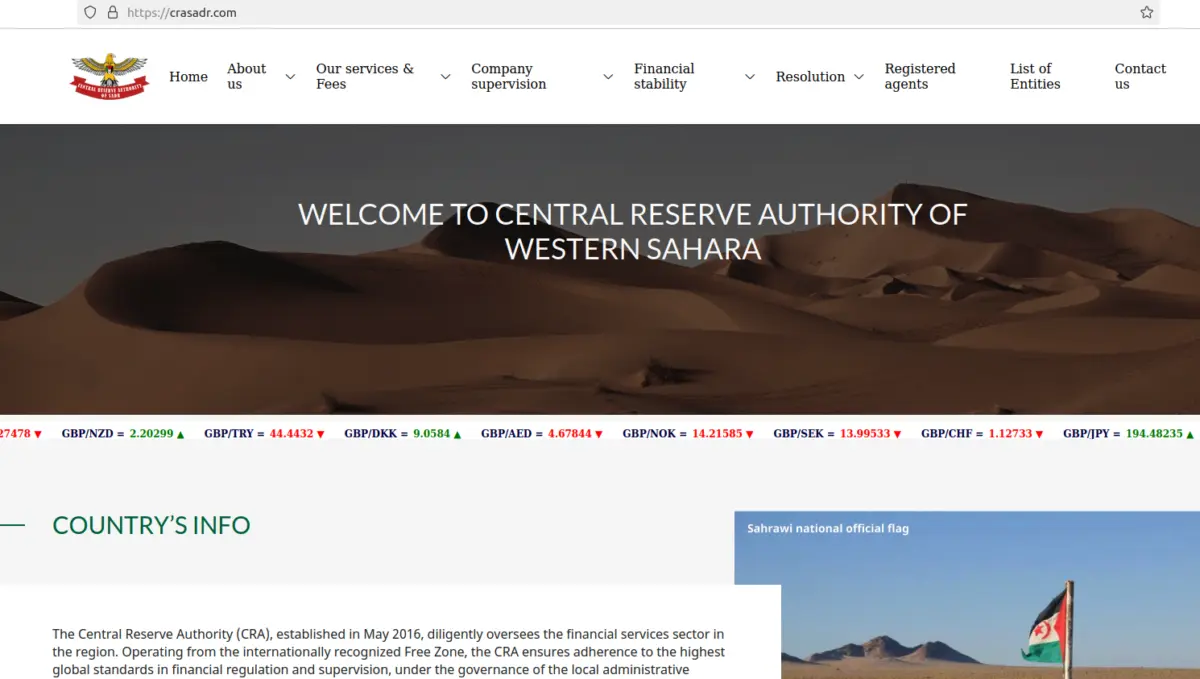
The investigative trail surrounding Cryptomus has consistently pointed to murky corporate origins and fictitious regulatory oversight. Previous investigations into the platform’s corporate lineage discovered that the sole shareholder of its original parent company, Certa Payments, was a young Ukrainian individual who also headed a network of interconnected firms. Among these was the WS Management and Advisory Corporation, an entity that bizarrely marketed itself as the exclusive regulatory body overseeing licenses for cryptocurrency operations, foreign exchange brokerages, and online gambling enterprises incorporated within the Western Sahara, a disputed region in northwest Africa not widely recognized as a sovereign nation.
Digital infrastructure analysis revealed that the regulatory body’s primary web portal, crasadr.com, functioned as an institutional facade, assisting applicants with corporate formation, banking setups, and pseudo-legal licensing. Domain and hosting records further tied these operations together, showing that Certa Payments’ former website shared server space with a dozen other domains, including rasd-state.ws, which purported to be the official online presence for the Central Reserve Authority of the Western Sahara. By operating behind these elaborate, manufactured credentials, platforms like Cryptomus and its successor Heleket managed to project a veneer of legitimacy while moving billions of dollars for criminal syndicates and sanctioned Russian entities across the global financial system.