The Federal Aviation Administration is introducing a significant update to its Part 107 remote pilot knowledge test, shifting how prospective commercial drone operators are examined on their understanding of airspace and navigation. Beginning October 26, the agency will incorporate dynamic, image-based questions directly into the testing interface, requiring candidates to interpret aviation charts that do not appear in traditional printed testing supplements.
According to the FAA’s August 2026 Airman Testing Community Advisory, the regulatory body is collaborating closely with its official testing provider, PSI, to modernize the examination process. The update specifically impacts the Unmanned Aircraft General-Small (UAG) knowledge test, which is the mandatory examination that all applicants must pass to earn their initial remote pilot certification under Federal Aviation Regulations Part 107. While the underlying regulations governing commercial drone operations remain completely unchanged, the method of testing pilot competency is evolving to better reflect real-world visual navigation and aeronautical chart interpretation.
What Is Changing in the Exam Format?
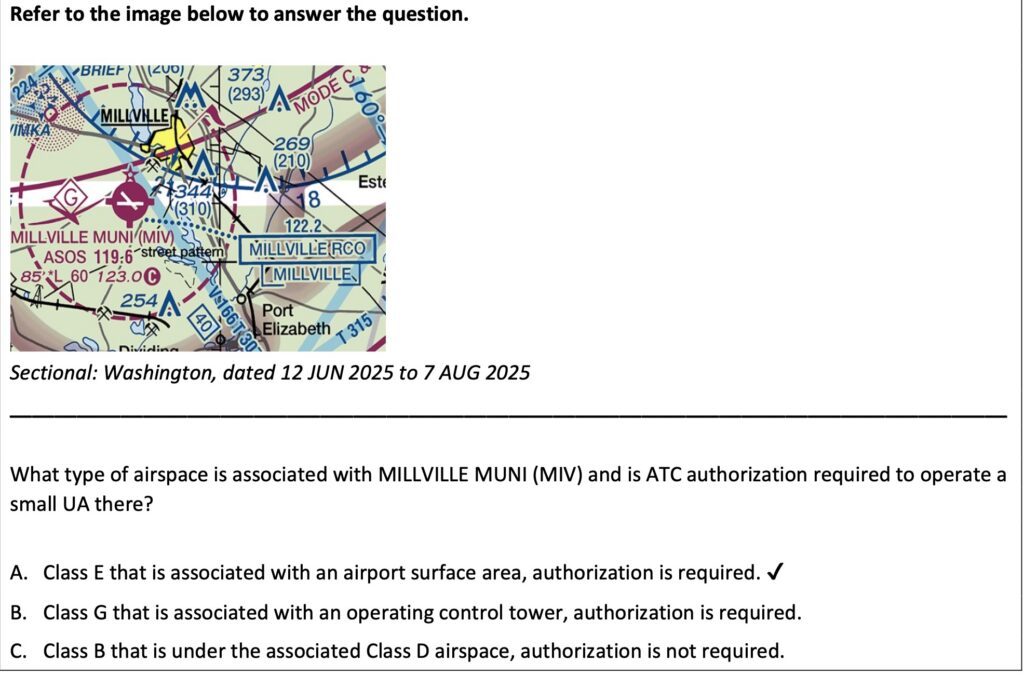
Under the newly revised testing format, applicants taking the initial certification exam may encounter specialized questions featuring updated aviation chart images integrated directly into the computer-based testing platform. Crucially, these specific graphic excerpts are not included in the standard printed testing supplements that candidates have relied upon for years during their exam preparation.
The introduction of these novel graphic assets means that rote memorization of traditional test banks and static figures will no longer suffice for candidates aiming to pass the initial certification hurdle. Instead, future drone pilots must demonstrate a deeper, more adaptable comprehension of sectional charts and airspace classifications.

The FAA highlighted two primary examples of the new question format in its official advisory. In one scenario, an applicant is presented with an image and asked to identify the complex airspace surrounding a specific airport, subsequently determining whether proposed drone operations at that location require explicit air traffic control authorization. In another scenario, test-takers are challenged to identify the correct airport communications frequency directly from an unfamiliar chart excerpt.
These adjustments signal a shift toward testing applied critical thinking rather than familiar recall. Because candidates will be forced to analyze unfamiliar chart excerpts on the fly, the update places a premium on genuine situational awareness and comprehensive aeronautical chart-reading skills.
Despite the modernization of the digital question bank, the transition will occur gradually regarding physical study materials. The FAA has not yet announced a definitive timeline for the complete removal or retirement of printed testing supplements. Consequently, applicants will continue to have access to these traditional study guides during their exam sessions until the agency enacts further administrative updates. Furthermore, the regulatory framework itself remains untouched; the exam changes do not alter Part 107 operating rules, nor do they introduce any novel certification requirements or operational limitations for drone pilots.
Resources and Industry Adaptation for Prospective Applicants
As the aviation community prepares for the implementation of the updated test format, industry stakeholders and training providers are stepping up to help candidates navigate the transition. The FAA strongly recommends that prospective remote pilots review official sample questions through its designated testing provider, PSI, to become thoroughly familiar with the new digital interface and image-based questioning style before sitting for their scheduled exam.
Independent training organizations are also responding to the regulatory shift. Providers such as Fly107Prep have published detailed public breakdowns explaining the October 26 updates, accompanied by specialized study tools centered squarely on advanced aviation chart interpretation. These educational platforms offer a mix of complimentary resources alongside proprietary mobile and web applications designed to help students master the nuances of reading sectional charts under examination conditions.
Ultimately, this updated testing format represents a single component of a much broader, ongoing FAA initiative aimed at modernizing airman knowledge testing across all aviation sectors. For individuals looking to enter the commercial drone industry, the fundamental knowledge requirements regarding safety, weather, regulations, and airspace have not shifted. However, the exact mechanism by which the federal government evaluates that knowledge is changing, raising the standard for how future remote pilots prove their readiness to share the National Airspace System safely and effectively.