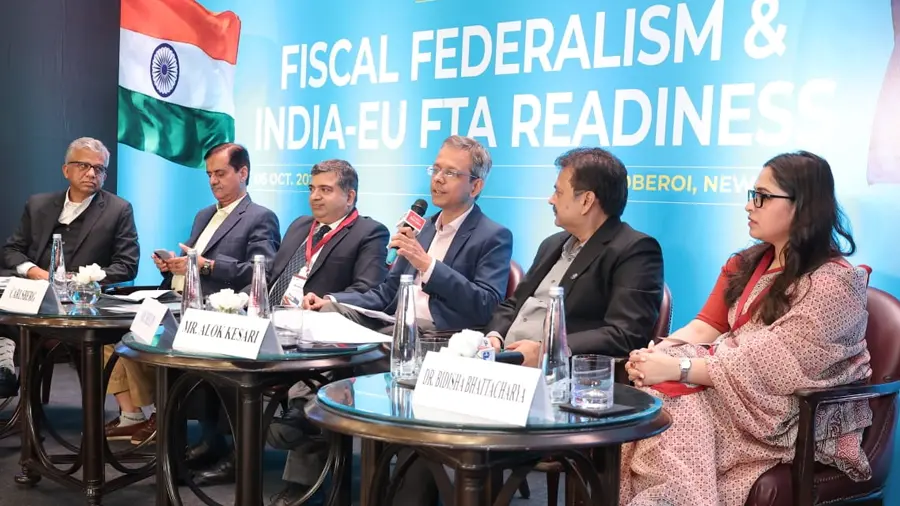
As India and the European Union move closer to deepening their bilateral economic ties through a landmark Free Trade Agreement (FTA), industry leaders are increasingly turning their attention from national-level negotiations to the ground-level realities of implementation. At a recently held policy roundtable in New Delhi, corporate executives and trade experts emphasized that the true measure of the FTA’s success will not lie merely in the lowering of tariffs or the expansion of nominal trade volumes. Instead, it will depend heavily on whether individual Indian states can build the robust digital, regulatory, infrastructural, and human resource ecosystems required for domestic businesses to compete effectively on the global stage.
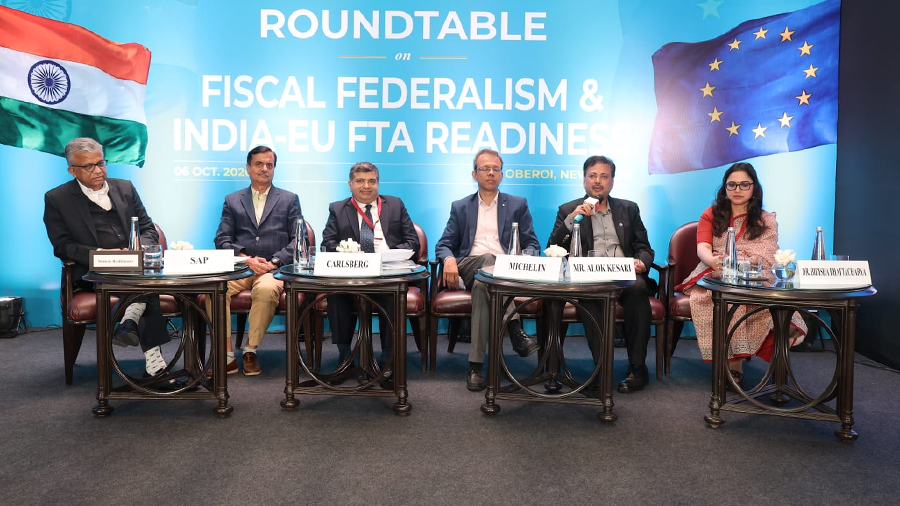
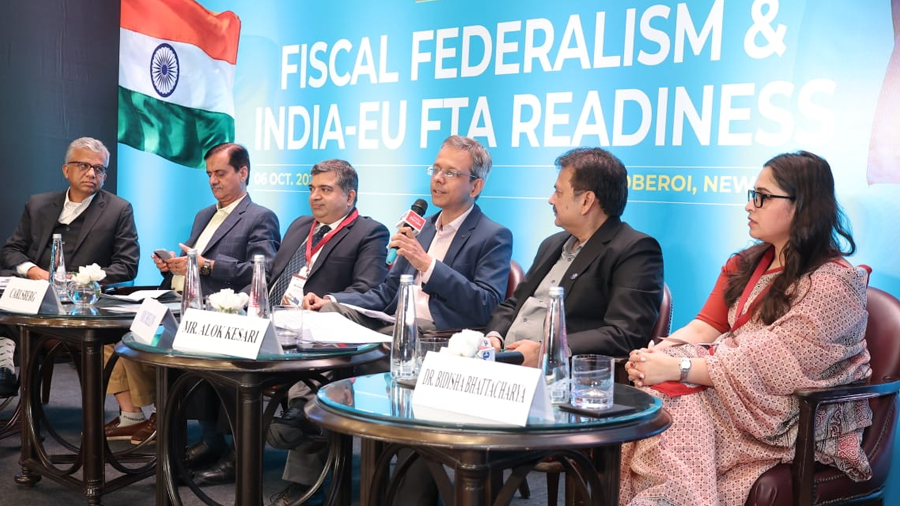
The National Policy Roundtable on Fiscal Federalism and India–EU FTA Readiness was convened on October 6, 2026, in New Delhi. The high-profile event was jointly organized by the Services Export Promotion Council (SEPC) in collaboration with the Hanns Seidel Foundation India, the Federation of European Business in India (FEBI), and several other institutional partners. Titled “From Market Access to Market Presence: What Businesses Need from States to Make the India–EU FTA Implementation Effective,” the gathering served as a vital forum for stakeholders across various sectors—including information technology, automotive manufacturing, alcoholic beverages, and medical technology—to evaluate the practical challenges and opportunities of future economic integration.
The panel discussion was skillfully moderated by Alok Kesari, Director of Policy Advocacy and Trade Facilitation at FEBI. Throughout the session, the dialogue steered away from abstract projections of trade growth to confront a more pressing, operational question: What concrete steps must Indian states take to ensure that local enterprises can fully leverage the new commercial horizons opened by the agreement?
The distinguished panel featured industry leaders such as Bikas Kr. Singh, Vice-President and India Head of Government Affairs at SAP; Rishi K. Chawla, Vice-President of Corporate Affairs at Carlsberg India; Sidharth Prasad, Director of Public Affairs and CSR at Michelin India; and Vineet Gupta, Head of Government Affairs at Siemens Healthineers. Context-setting remarks for the roundtable were delivered by Dr. Bidisha Bhattacharya, Associate Fellow and Head of Research at the Centre for Economy and Trade within the Chintan Research Foundation.
Digitalisation as the Starting Point
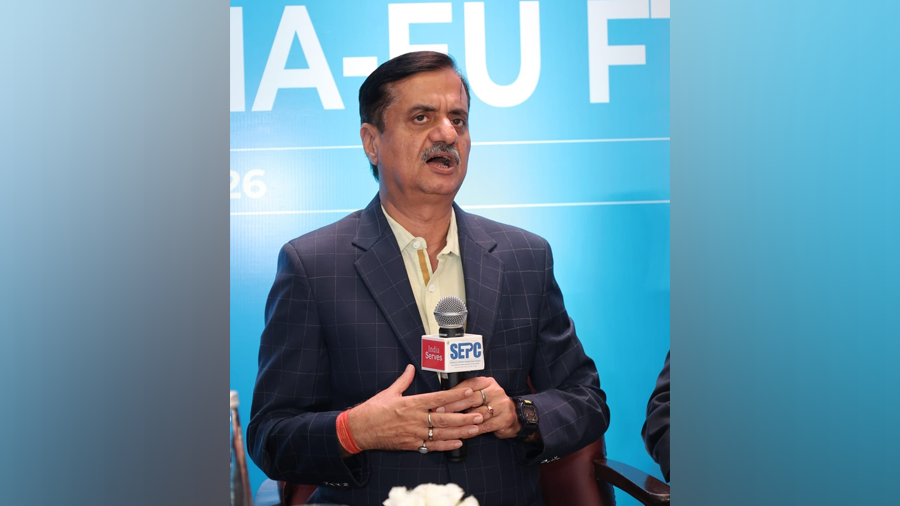
Opening the discussion, Alok Kesari turned the spotlight toward the foundational role of digitalisation, particularly regarding how small and medium-sized enterprises (SMEs) can successfully integrate into complex European supply chains. For Bikas Kr. Singh of SAP, digital readiness is far more than an administrative upgrade; it forms the absolute backbone required for businesses to navigate an increasingly intricate web of requirements spanning data management, corporate compliance, environmental sustainability, and seamless supply-chain integration.
"Digitalisation, in our opinion, is a great starting point," Singh remarked during the session, emphasizing that the India–EU FTA must be viewed through a lens much broader than traditional tariffs and trade flows. He noted that enhanced economic integration will naturally catalyze deeper investments, as well as more sophisticated manufacturing and services linkages between the two economic powerhouses. "The FTA, especially the India–EU FTA, is not just about trade," he added.
Singh drew attention to the growing complexity of regulatory frameworks enforced across the European Union. Businesses seeking to export goods or services to the EU must constantly contend with rigorous technical standards, stringent product safety measures, conformity assessments, sanitary and phytosanitary requirements, and comprehensive sustainability reporting mandates. Furthermore, exporters must navigate specialized regulations such as the EU deforestation regulation, eco-design criteria, packaging and packaging-waste rules, and the rollout of digital product passports.
While large multinational corporations possess the internal resources to establish the sophisticated systems required to manage such vast arrays of compliance data, smaller businesses often face daunting hurdles. According to Singh, digital platforms can play a pivotal role in bridging this capability gap. European enterprises operating within India frequently possess a dual understanding of commercial and regulatory environments across both jurisdictions. Their institutional experience and technological infrastructure can potentially serve as a guide for Indian firms seeking to decode European market requirements and secure footholds in global value chains. However, the fundamental challenge remains one of interoperability—ensuring that disparate digital systems utilized by suppliers, manufacturers, regulators, and consumers can communicate without friction.
The Business Case for Predictability
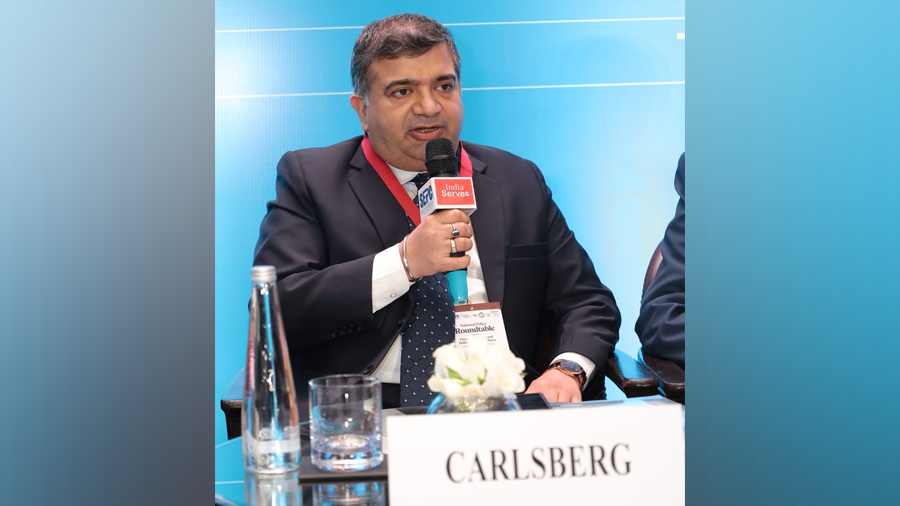
Shifting the focus from technology to regulatory environments, Kesari engaged Rishi K. Chawla of Carlsberg India on how variations in state-level regulations impact commercial operations spanning multiple jurisdictions across the country. Operating in the alcoholic-beverage sector provided Chawla with a unique vantage point, as the industry is inextricably bound to complex state-level frameworks governing taxation, licensing, route-to-market arrangements, and routine permits. For enterprises managing manufacturing and distribution footprints across diverse Indian states, this decentralized landscape can present considerable operational challenges.
Yet, Chawla argued that the imperative for regulatory reform extends well beyond sector-specific hurdles. For long-term capital allocation and strategic planning, predictability remains one of the single most influential criteria for global investors. "Investors see ease of doing business as the first priority; predictability comes first," Chawla stressed.
Global investors are rarely satisfied with short-term financial incentives alone; they need absolute confidence that they can secure regulatory approvals within reliable timeframes, tap into dependable physical infrastructure, recruit adequately skilled talent, cultivate robust local supplier networks, and maintain operational stability over a ten- or twenty-year horizon. "Predictability of the regulations, or transparency of the regulations, is the number one ask," he noted.
Chawla also challenged the prevailing assumption that European investments in India are heavily concentrated within just a handful of traditional industrial powerhouses. While states like Maharashtra, Tamil Nadu, Gujarat, Karnataka, Andhra Pradesh, and Telangana have historically served as primary magnets for foreign direct investment, an increasing number of other states are actively vying to position themselves as competitive destinations for European capital. The primary challenge lies in broadening this geographical footprint of investment, a goal that requires sub-national governments to compete on the strength of their overall business ecosystems rather than relying exclusively on fiscal subsidies.
From Automotive Exports to Global Supply Chains
For Sidharth Prasad of Michelin India, the impending FTA with the European Union represents a transformative catalyst for the entire automotive ecosystem. Highlighting key provisions covering automotive components, specialized chemicals, plastics, and related industrial inputs, Prasad reiterated that regulatory predictability is paramount for long-term strategic investments. More importantly, he argued that the benefits of such trade agreements should not remain exclusive to European multinational corporations; rather, the pact holds immense potential to elevate Indian manufacturers, component suppliers, and end-consumers while driving deeper integration into global supply networks.
India’s expanding domestic consumer base, combined with continuous improvements in transport infrastructure and manufacturing capacity, lays a solid foundation for future growth. Well-maintained highways and expressways, modern industrial parks, and a steadily expanding pool of technically proficient workers position India favorably as a competitive manufacturing and export hub. Nevertheless, the strength of the underlying supplier ecosystem will ultimately dictate success. Prasad noted that Michelin’s own manufacturing operations rely extensively on a vast tier of local suppliers, emphasizing that these vendors must consistently meet exacting international benchmarks if India is to solidify its status as a preferred export base.
"All in all, it is a win-win for the EU industry, for Indian industry, for suppliers and, of course, for consumers," Prasad stated. When prompted by Kesari regarding what makes a specific state attractive to foreign investors, Prasad reiterated that ease of doing business stands above all else. He pointed to dedicated investor-facilitation agencies, efficient single-window clearance mechanisms, well-developed manufacturing zones, secure land availability, skilled human resources, and supportive local supplier networks as critical elements of an investment-friendly climate.
While citing states like Tamil Nadu and Maharashtra as successful models of institutional facilitation and industrial infrastructure, Prasad reinforced the consensus that financial incentives alone are no longer sufficient. "States should compete not only on incentives, but on ecosystem," he asserted, underscoring that physical infrastructure, workforce skills, testing capabilities, and responsive governance are indispensable components of sustainable economic growth.
Medical Technology: From Market Access to Manufacturing
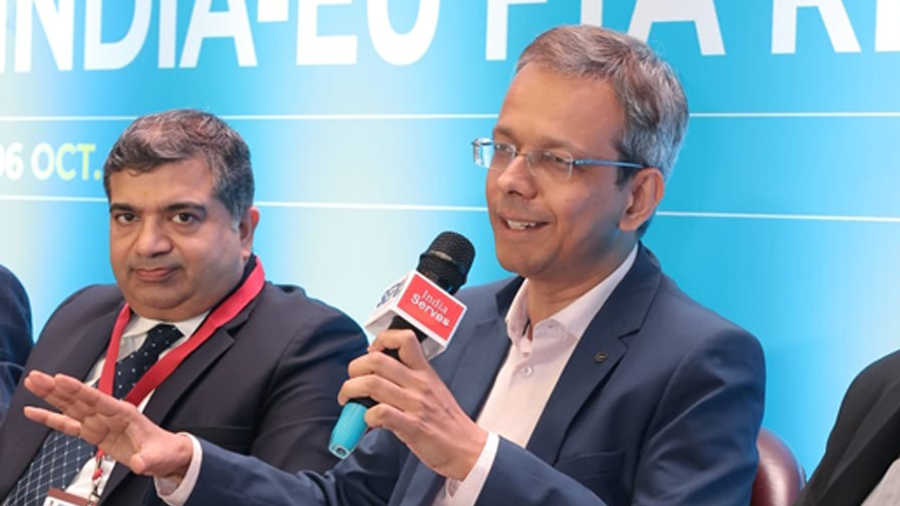
The roundtable discussions subsequently transitioned into the healthcare and medical technology sectors, with Vineet Gupta, Head of Government Affairs at Siemens Healthineers, offering a fresh perspective on the potential ramifications of the India–EU FTA. Gupta argued that the agreement possesses the capacity to fundamentally alter the macroeconomic dynamics of the medical-device industry. While India already represents a vast consumer market for healthcare equipment, the strategic objective moving forward must focus on transitioning from mere consumption toward enhanced manufacturing depth and export competitiveness.
"The FTA can fundamentally change the economics of the Indian medical-device industry," Gupta stated. By fusing India’s proven manufacturing prowess and cost efficiencies with advanced European technology and engineering expertise, the sector could witness a paradigm shift. Such a collaborative model would incentivize European firms to expand their production footprint within India while simultaneously enabling domestic medical-technology enterprises to ascend global value chains.
Gupta’s insights reinforced a recurring theme throughout the roundtable: formal market access is only valuable if domestic enterprises possess the institutional and infrastructural capacity to utilize it. Within the medical technology domain, this capacity hinges on specialized physical infrastructure, highly skilled technical manpower, accredited testing laboratories, advanced logistics networks, and sophisticated regulatory expertise. As a prime illustration of effective state intervention, Gupta highlighted the Andhra Pradesh MedTech Zone (AMTZ), which successfully provides shared industrial infrastructure and specialized testing facilities under a single roof, allowing medical-device manufacturers to establish operations with minimized upfront capital expenditure. For other states seeking to attract similar high-value investments, the message is unequivocal: constructing a supportive industrial ecosystem yields far greater returns than relying solely on tax holidays or financial subsidies.
Testing, Standards, and the MSME Challenge
Throughout the proceedings, panellists repeatedly converged on a singular operational bottleneck: the availability of high-quality testing and certification infrastructure. As Indian businesses increasingly seek to tap into lucrative European markets, strict adherence to international standards becomes an absolute prerequisite. While large corporations can absorb the costs of maintaining sophisticated internal testing and compliance protocols, micro, small, and medium enterprises (MSMEs) frequently lack the financial resources or geographical proximity to certified testing laboratories.
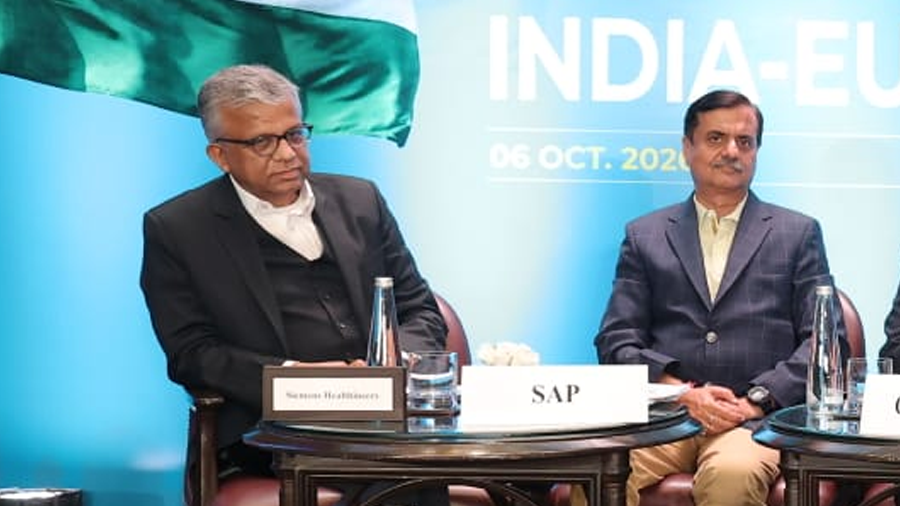
Bikas Kr. Singh of SAP pointed out that contemporary European regulatory frameworks demand exhaustive data documentation covering every stage of production, from raw material sourcing and energy consumption to overall environmental lifecycle performance. For Indian MSMEs, meeting these rigorous requirements represents a monumental challenge. The availability of accessible digital systems, regional testing laboratories, and structured compliance support can ultimately decide whether a smaller enterprise successfully integrates into an international supply chain or remains permanently restricted to the domestic market. Consequently, the panellists issued a strong call for state governments to invest heavily in regional testing and quality-assurance infrastructure, sparing smaller businesses the logistical burden of transporting goods to distant industrial hubs for mandatory certifications.
States as Partners, Not Just Regulators
Another prominent theme that resonated throughout the roundtable was the evolving nature of the relationship between industrial enterprises and state-level government bodies. The panellists collectively argued that sub-national authorities must transcend traditional bureaucratic mindsets, viewing corporations not merely as applicants seeking licenses or financial sops, but as long-term strategic partners driving local employment, capital investment, technology transfer, and regional economic development.
Sidharth Prasad emphasized the vital necessity of a collaborative working relationship, while Rishi K. Chawla drew upon practical experiences to illustrate how regulatory consistency fosters a stable business environment across multiple states. The overarching sentiment was clear: global businesses require institutional partners that genuinely comprehend their long-term operational needs. While specialized investment-promotion agencies play an invaluable role in attracting capital, their ultimate effectiveness depends heavily on their internal capacity to coordinate smoothly with various government departments and expedite bureaucratic resolutions. A genuine single-window clearance system, therefore, must evolve beyond a superficial digital portal to function as an empowered mechanism capable of bridging the gap between investors and regulatory authorities.
Building Skills for the Next Phase
Human capital and workforce readiness emerged as yet another critical pillar determining state-level FTA preparedness. If India is to successfully attract advanced manufacturing, precision medical technology, high-end digital services, and other sophisticated investments, sub-national governments must ensure that local talent pools possess relevant, up-to-date competencies. This objective necessitates much closer institutional linkages between private industry, universities, technical training institutes, and state policymakers.
In specialized sectors such as medical technology, Gupta noted that states will increasingly require professionals possessing multidisciplinary backgrounds spanning engineering, clinical medicine, regulatory affairs, and quality compliance. Similarly, the ongoing digital transformation of traditional manufacturing and supply chains demands a workforce capable of managing increasingly complex software and automation systems. Consequently, the panellists underscored that economic investment readiness and human capital development are inextricably linked and must be pursued in tandem.
The FTA Will Be Tested on the Ground
As the roundtable drew to a close, moderator Alok Kesari recapped the core objectives of the session, steering the discourse back to the central challenge of translating high-level international trade negotiations into tangible economic realities visible across India’s diverse states and business communities. The insights shared by the panellists converged around a unifying conclusion: while an international trade pact establishes the overarching legal framework and market opportunities, the actual utilization of those opportunities relies entirely on sub-national preparedness.
Digitalisation will remain indispensable for managing complex compliance standards, just as predictable regulations will govern long-term capital allocation. Access to robust testing infrastructure and quality-assurance laboratories will determine whether domestic suppliers can meet international thresholds, while targeted skill development and supportive local ecosystems will dictate manufacturing competitiveness. Furthermore, effective investor facilitation will dictate the speed at which businesses can transition from strategic intent to operational implementation.
Ultimately, ensuring that the economic dividends of the India–EU FTA are distributed equitably—rather than concentrated exclusively within historical industrial centers—will require state governments across the nation to proactively build the sophisticated ecosystems demanded by modern global enterprises. As India steadfastly pursues its long-term national developmental goals, the realization of its export ambitions will be tested not in diplomatic corridors, but on the ground, where the readiness of individual states will determine how much of the global opportunity India is truly able to capture.