For generations, the debate over how best to manage Australia’s native forests has been cast as a stark, uncompromising binary. On one side are conservationists advocating for total protection to preserve fragile ecosystems, old-growth structures, and rare wildlife habitats. On the other side are local economies, timber communities, and foresters arguing that active harvesting is essential to support regional livelihoods and manage landscapes that are naturally shaped by catastrophic events. For decades, this polarization has paralyzed constructive public policy and entrenched opposing camps in an endless cycle of conflict.
However, the reality of forest management is far more nuanced, complex, and promising than this traditional divide suggests. New scientific research examining a long-forgotten, decades-old field experiment tucked away in Victoria’s iconic mountain ash forests reveals that thoughtful, active intervention can deliver a remarkable trifecta: supporting local timber industries, bolstering carbon storage, and actively improving vital habitats for endangered wildlife.
Since the 1970s, scientists, environmentalists, and the general public have fiercely questioned the practice of clearfell logging—a silvicultural method where all trees within a designated block of forest are harvested simultaneously. Conservationists have long maintained that clearfelling inflicts devastating blows on the environment by destroying delicate habitats for rare and threatened species, fragmenting ecosystems, and drastically reducing the overall ecological value of the landscape. Conversely, foresters and industry advocates have defended the practice by pointing to the natural history of mountain ash ecosystems. They note that these towering trees are evolutionarily adapted to severe, high-severity bushfires that obliterate entire forest canopies, arguing that clearfelling essentially mimics the ecological disruption of a catastrophic fire.
Despite the intensity of the debate and the deep ideological divides it generated, the underlying scientific questions concerning the long-term ecological and structural impacts of clearfelling—and how those impacts realistically compared to less intensive forestry options—remained largely unresolved. The public discourse was heated, but empirical, long-term data tracking the direct side-by-side outcomes of alternative harvesting methods was scarce.
A Landmark Experiment
That data gap began to close in the mid-1980s, when the Victorian government initiated a major restructuring of the state’s timber industry. Backed by a substantial financial commitment—equivalent to approximately A$26 million in today’s currency—the government launched an ambitious scientific initiative designed to explore and evaluate alternatives to traditional clearfelling. This initiative leaned on silviculture, the specialized branch of forestry dedicated to establishing, growing, tending, and shaping forest compositions to meet various ecological and economic objectives.
The resulting initiative was named the Silvicultural Systems Project (SSP). Established between 1987 and 1989, the project set up comprehensive research sites in two distinct regions: Tanjil Bren, located within Victoria’s rugged Central Highlands, and Cabbage Tree Creek, situated further east in East Gippsland.
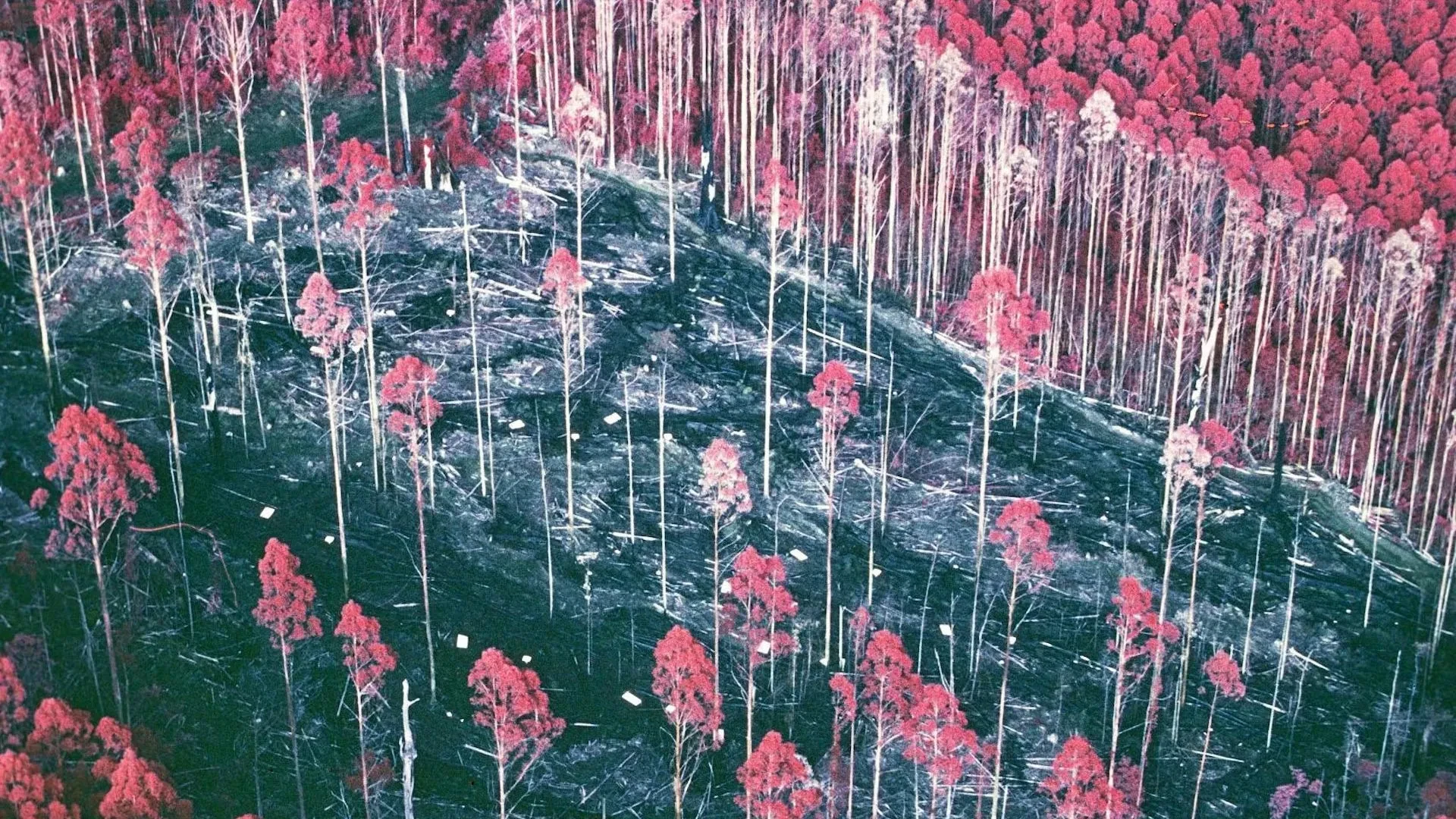
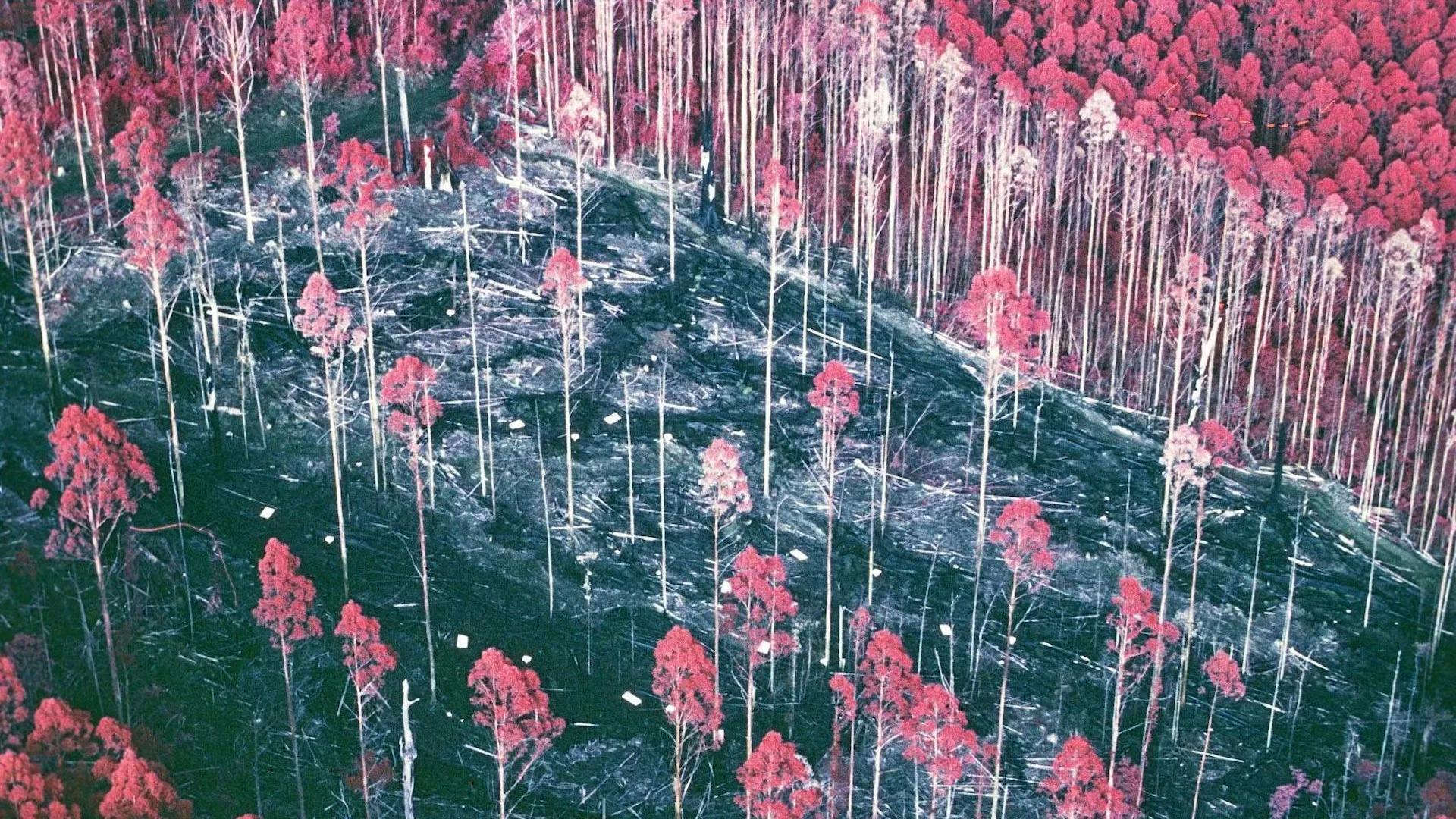
The SSP was designed as a landmark, large-scale experiment intended to directly compare forest regeneration and ecosystem recovery across the full spectrum of silvicultural approaches. The research design incorporated traditional clearfells, which spanned blocks between 250 and 350 meters wide; small patch clearfells, scaled down to blocks measuring 50 to 140 meters wide; and heavy thinnings, a more surgical approach where 50 to 70 percent of the existing trees were selectively removed. To ensure rigorous scientific baseline comparisons, extensive tracts of unharvested forest were set aside as control benchmarks.
At the Tanjil Bren site, the experimental landscape consisted of dense mountain ash regrowth that had risen following the devastating 1939 bushfires. Researchers established hundreds of permanent survey plots and initiated intensive monitoring programs tracking thousands of individual seedlings. By the early 2000s, the initial findings appeared definitive: the data showed that mountain ash regenerated most successfully and vigorously on the large clearfell sites. In contrast, where tall canopy trees were intentionally retained or where cleared patches were kept too small, common understory species such as acacia quickly dominated the plots, outcompeting the mountain ash.
These preliminary findings were duly published in scientific literature. But as institutional priorities shifted and funding cycles evolved, the physical footprint of the project began to fade. The research access roads grew over with vegetation, the wooden project signs collapsed into the undergrowth, and the experiment was largely forgotten by the broader public and policy-makers. The societal debates over native forest logging, meanwhile, continued unabated.
Yet, while human attention drifted elsewhere, the trees kept growing.
Astounding Results
The forgotten experiment experienced an unexpected second act in 2014, when researchers visited the Tanjil Bren site as part of a University of Melbourne academic program focusing on native forest silviculture. A colleague and researcher, Simon Murphy, had been directly involved in the establishment of the SSP decades earlier and suggested that students be brought to the field to observe the long-term, real-world outcomes of different silvicultural systems standing side-by-side.
What the academic team encountered upon returning to the plots was nothing short of astounding.
The original short-term findings still held true: three decades later, the mountain ash trees regenerating within the large cleared patches and clearfelled areas remained vigorous, healthy, and abundant. However, it was the heavily thinned sections of the forest that commanded the researchers’ attention and fundamentally challenged prevailing assumptions.
The individual trees left standing after the thinning operations in the late 1980s had grown into colossal specimens. Although these trees were only roughly 80 years old, the largest among them averaged well over a meter in diameter measured at chest height, with several specimens surpassing 1.5 meters in diameter. The heavy thinning treatment had effectively provided these surviving trees with significantly more breathing room, access to sunlight, soil moisture, and underground nutrients. They responded to this release from competition with an extraordinary growth surge. Measurements revealed that the largest trees residing within the thinned stands were a remarkable 20 percent larger in diameter compared to the largest trees found in the unharvested control areas.
More remarkable still was the discovery regarding carbon storage. Despite the initial removal of a substantial volume of timber during the thinning process, the thinned stands had managed to store just as much, or in some cases more, carbon in their living wood than the untouched, unharvested control areas. In the span of just 30 years, the heavily thinned forest had successfully sequestered enough new carbon to fully offset the carbon removed during the initial harvesting phase, while simultaneously keeping pace with the carbon accumulation rates observed in the pristine control plots.
These empirical findings carry profound implications for modern forest management, particularly in an era defined by intensifying climate change and escalating wildfire risks. Arborists and fire ecologists note that larger, thicker-barked trees possess a significantly higher natural resilience against passing bushfires, meaning they stand a much greater chance of surviving severe fire events. Furthermore, these larger, older trees are vastly more likely to naturally develop hollows—a critical ecological feature that serves as essential habitat for rare and declining fauna, including the greater glider and the endangered Leadbeater’s possum.
The ecological benefits extended beyond the towering mountain ashes. The understory acacia trees that proliferated across many of the experimental silvicultural treatments proved to be equally vital for local wildlife. Leadbeater’s possums rely heavily on acacia vegetation for foraging and navigating the forest canopy. Camera traps deployed across the study sites confirmed this ecological dependency: Leadbeater’s possums were detected within every single silvicultural treatment plot surveyed, whereas none were recorded in the unharvested control areas.
Lessons for the Future
Reflecting on the unexpected trajectory of the project, researchers emphasize that the Tanjil Bren Silvicultural Systems Project offers three critical lessons for the future of environmental management and forestry policy.
First, the discovery underscores the irreplaceable value of long-term silvicultural and ecological experiments. Australia’s public and private forests harbor numerous historical, long-forgotten experiments that possess the potential to fundamentally transform contemporary scientific understanding of how complex ecosystems respond to human intervention and environmental stress. Too often, however, these long-term studies suffer from neglect, face dwindling funding streams, and fade into obscurity. Actively locating, cataloging, and reinvesting in these legacy datasets before they are permanently lost is an urgent scientific priority.
Second, the research demonstrates that forest thinning does not inherently require a zero-sum trade-off between economic extraction and ecological preservation. While the Tanjil Bren data illuminated this reality specifically for mountain ash ecosystems, parallel studies conducted in North American conifer forests have reported strikingly similar outcomes. Strategic thinning can simultaneously supply necessary timber to local processing industries, maintain robust carbon sequestration capacity, and actively enhance structural habitats for native wildlife. This represents a win-win-win outcome that disrupts the rigid, false dichotomy of conservation versus production that has dominated public policy debates for decades.
While acknowledging that thinning cannot—and should not—be implemented uniformly across every landscape, researchers suggest it serves as a valuable, precision tool for increasing structural diversity in tree ages and canopy sizes, particularly within forests that have been altered by historical clearfelling or severe fire regimes.
Third, and perhaps most importantly, the findings highlight that there is no single silvicultural silver bullet for managing complex forest ecosystems. The long-forgotten experiment at Tanjil Bren demonstrates that a diverse array of management options exists beyond traditional clearfelling. These alternative approaches are capable of simultaneously satisfying societal demands for sustainable wood products, maintaining critical ecosystem carbon stocks, and conserving biological diversity for generations to come.