The overwhelming victory of President Vladimir Putin’s United Russia party in recent parliamentary elections was not merely expected; it was meticulously engineered. Through a combination of compulsory voting mechanisms in budget-dependent organizations and large corporations, standardized participation mandates in the military and law enforcement agencies, and the broader expansion of electronic voting, the Kremlin ensured absolute dominance. Additional factors, such as the pre-election elimination of Yabloko—the last legally operating antiwar party—guaranteed a sweeping supermajority for the ruling apparatus. Even votes cast for other nominal parliamentary parties ultimately funneled support back to the government, given that these opposition blocs operate under strict Kremlin control.
Yet, for the Russian leadership, this newly manufactured mandate offers renewed political legitimacy for the ongoing "special military operation" in Ukraine. Domestically and internationally, the Kremlin aims to project an image of unshakeable strength, signaling readiness to pursue its military objectives with intensified vigor. The primary objective is to cultivate the illusion of a total, commanding majority that mirrors no dissenting reality. The election results are packaged to convey that the entire populace stands behind Putin, thereby demanding implicit endorsement of the country’s military campaigns, the relentless suppression of domestic dissent, and an uncompromising anti-Western geopolitical trajectory. In this environment, anyone standing in opposition is framed as an outcast and a pariah, effectively redefining Russian citizenship since 2022 as active or passive support for the war.
Beneath the manufactured political consensus, however, public reality is considerably more complex. Public opinion polling conducted since April reveals a steady erosion of confidence in the government’s trajectory. Independent polling from the Levada Center highlights a marked shift in public perception: by July, the proportion of respondents who viewed the military operation as a success had declined to 50 percent, representing a drop of nearly 20 percentage points compared to the previous year. Furthermore, the percentage of citizens believing the country was moving in the right direction fell by ten percentage points year-over-year to 54 percent. Over the same period, President Putin’s individual approval rating registered a significant 12 percent decline—a notable contraction within a personalist autocracy.
General public morale has similarly deteriorated under the strain of a protracted conflict, constant anxiety over potential military mobilization, persistent inflation, stringent internet restrictions, and an escalating fuel crisis. Levada Center surveys conducted in August revealed that two-thirds of respondents encountered disruptions with mobile internet access, messaging applications, and localized gasoline shortages. Gasoline shortages severely impacted the daily lives of roughly one-third of those surveyed, while internet throttling and digital restrictions affected one in five. Massive state expenditure on the military and climbing fuel prices have served as primary drivers of inflation, with additional pressures anticipated from utility rate hikes.
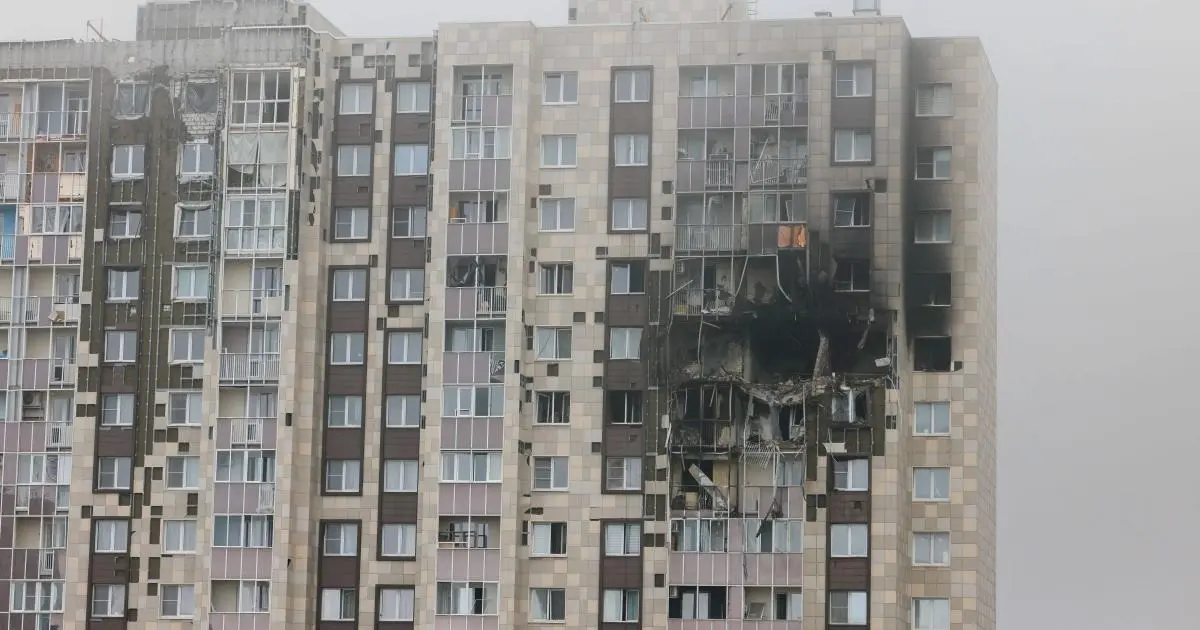
Many Russians harbor deep anxieties regarding the prospect of a secondary military mobilization now that the electoral cycle has concluded. While the Kremlin remains wary of disrupting the fragile illusion of normalcy—particularly as the war increasingly penetrates Russian territory via drone strikes—it appears to favor covert and selective conscription over a formal general call-up. Nevertheless, further escalation remains a distinct possibility. As long as Putin calculates that time remains on his side and that the populace remains pacified by the choreographed unity of the elections, the war will likely continue. In the context of the Kremlin’s strategy, continuation inherently means escalation, both at home and abroad.
The Russian president has already rebuffed a fresh diplomatic push from the United States, choosing instead to accelerate the frequency and intensity of strikes inside Ukraine. Pro-Kremlin foreign policy analysts have openly discussed various non-nuclear and conventional escalatory options, particularly targeting Ukraine’s power infrastructure during the winter months to degrade civilian resilience. For Putin, escalation has solidified as a central mechanism for preserving political authority.
The Machinery of Conflict and Manufactured Urgency
For weeks, numerous indicators have signaled that Putin is preparing for a new phase in the protracted confrontation with Ukraine and the broader West. The Kremlin has systematically cultivated a permanent sense of emergency, utilizing what the late Russian political scientist Gleb Pavlovsky termed the "Russian conflict conveyor belt"—a political machine designed to prevent any cessation of crisis management. This siege mentality requires absolute domestic unity, a dynamic reinforced by the intensification of long-range Ukrainian airstrikes within Russian borders. The necessity for ideological uniformity explains the severity of the crackdown on the Yabloko party, which culminated not only in its electoral ban but also in the arrest of its members and an 11-year prison sentence for party leader Lev Shlosberg. In a political system demanding total ideological alignment, legal antiwar voices cannot be tolerated.
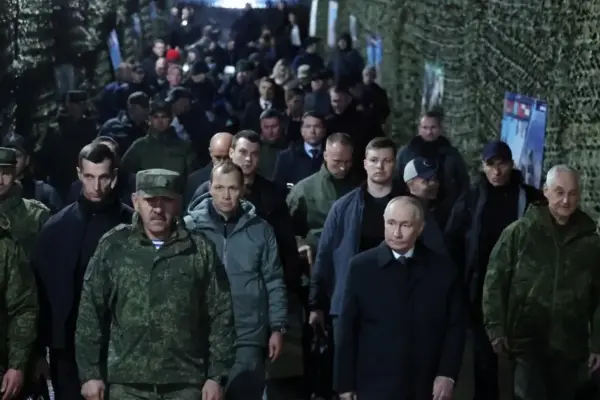
Concurrently, Putin has maintained an unusually high public profile, conducting frequent domestic trips, high-level meetings, and speeches directed at military personnel, youth, scientific communities, and business leaders. In a deliberate provocation directed at Japan, Putin visited a disputed island in the Sea of Okhotsk, known as Iturup in Russia and Etorofu in Japan. Since the summer, state apparatuses have intensified emotional and spiritual mobilization campaigns surrounding the war effort, drawing deeply upon historical and religious symbols.
In August, the Russian Orthodox Church announced the discovery of the remains of Dmitry Donskoy, the 14th-century warrior-prince who famously defeated the Tatars of the Mongol Horde at the Battle of Kulikovo, inside Moscow’s Cathedral of the Archangel. Putin promptly visited the burial site, and portions of the historical relics were dispatched to the front lines to spiritually reinforce Russian combat units. As the war stretches onward, public coping mechanisms increasingly lean toward mysticism, with thousands of believers queuing to view the relics of Saint Spyridon of Trimythous in Moscow during the parliamentary elections. Government-backed religious processions and ultranationalist gatherings, such as the "Russian March" in Moscow, have similarly been deployed to harness spiritual and nationalist fervor in support of the armed forces.
The central question haunting the population remains the definition of a resolution. For most citizens, the ultimate miracle would be the termination of the conflict. However, any exit strategy likely requires external diplomatic engagement, primarily with the United States. The incoming U.S. administration under Donald Trump has signaled a renewed interest in negotiations, potentially seeking a departure from earlier diplomatic models. CIA Director John Ratcliffe’s unannounced visit to Moscow in August appeared to signal exploratory efforts toward establishing backchannel diplomacy reminiscent of Cold War-era negotiations. Yet, forging a permanent framework capable of reconciling both nations remains a formidable challenge. For President Trump, pursuing a diplomatic breakthrough carries domestic political urgency amid a difficult midterm political landscape.
Managing Domestic Strain and the Illusion of Normalcy
At present, the Kremlin operates under the assumption that it possesses sufficient time and resources to sustain the conflict indefinitely. Putin remains unwavering in his conviction. Alongside the controlled Duma elections, the systematic purging of antiwar sentiment is designed to grant the executive branch unconstrained authority. It remains an open question, however, how long the Russian public will continue to underwrite this legitimacy.
Citizens have largely been left to absorb the localized costs of the war, including damaged oil infrastructure, disrupted supply chains, energy shortages, degraded internet services, and the physical risks posed by drone activity. Chronic inflation, budgetary deficits, and stagnant industrial output—outside of the heavily subsidized arms manufacturing sector—continue to strain the national economy. Despite these headwinds, public compliance persists. Interestingly, sociological surveys indicate that while dissatisfaction with the specific trajectory of the military operation has grown, a segment of the population favors intensifying military actions over making territorial concessions. Many citizens view escalated military engagement as a paradoxical path toward ending the exhaustion of a prolonged war.
However, a renewed push for mass mobilization could easily destabilize this fragile equilibrium. Rumors regarding potential mobilization have circulated for weeks, despite the recognition that deploying additional untrained personnel risks exacerbating severe domestic labor shortages and accelerating negative demographic trends, including declining birth rates.
Putin continues to frame the campaign in historical terms of defensive liberation, drawing loose parallels to Soviet military campaigns of the 20th century. Yet, for a conflict branded as a "people’s war," prolonged duration creates structural contradictions. The special military operation has effectively evolved into a personal war waged by the head of state, drawing the populace into direct participation and enforced political compliance. The relentless militarization of the economy and society mirrors the structural overextension that ultimately destabilized the Soviet system. While the population has adapted to these conditions, the sustainability of indefinite militarization remains deeply uncertain.
An Escalatory Cycle on Two Fronts
Escalation within Putin’s Russia operates simultaneously across external and domestic fronts. Domestically, this is manifested through increased political arrests, the expansion of "foreign agent" legislation targeting émigrés with the seizure of financial and property rights, and mounting tax pressures, such as the recent increase in the value-added tax from 20 to 22 percent to fund military expenditures.
International analysts frequently overlook the domestic front, yet internal coercion remains a functional prerequisite for external aggression. Manufacturing and sustaining artificial crises form the core mechanism of Putin’s governance. Yet, the returns on this strategy are diminishing. Official rhetoric has grown increasingly uncompromising, with figures such as parliamentary deputy speaker Pyotr Tolstoy openly advocating for strikes against civilian populations to induce demoralization.
The Kremlin’s reliance on escalating tactics points to structural weakness rather than absolute strength. By binding citizens to the military campaign through electoral participation, the regime implicates the populace, yet this dynamic risks deepening underlying societal fatigue. While large-scale public protests remain suppressed, the prevailing mood resembles the quiet resignation of the late Soviet era—an imitation of normalcy masking profound systemic exhaustion. Facing a crisis of the future without a coherent strategic endpoint, the regime continues to rely on the prolongation of conflict as its primary instrument for political survival, utilizing seasonal elements and ongoing military pressure to stall for time.