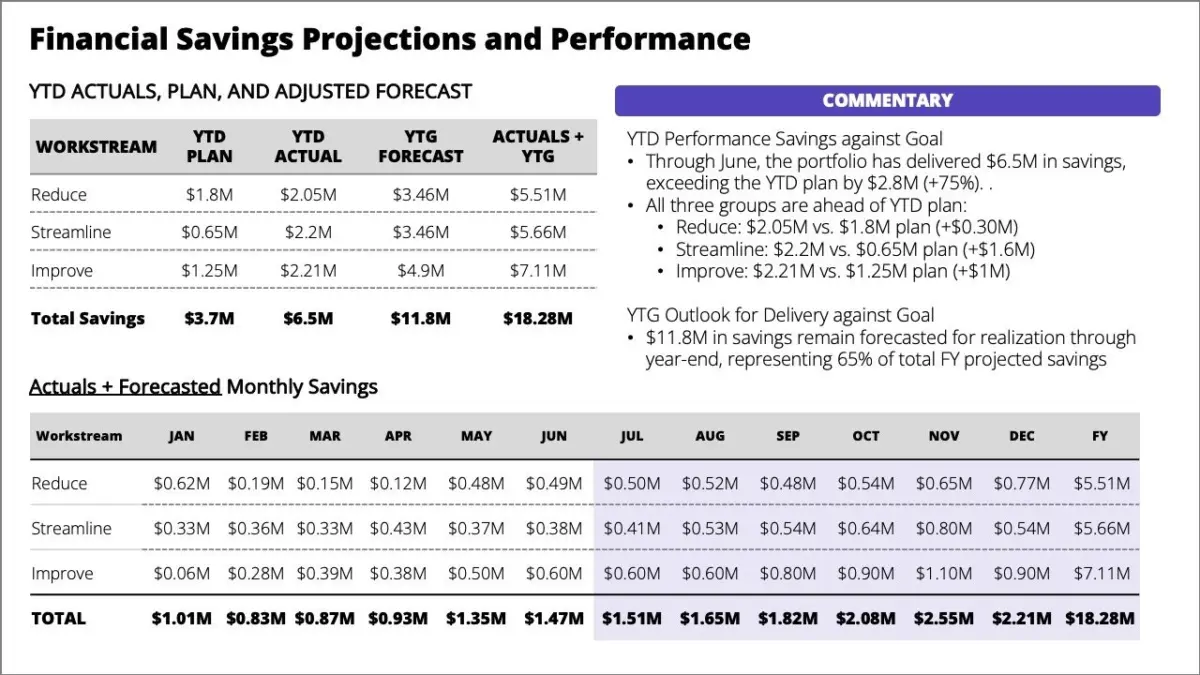
In the modern corporate environment, the executive presentation remains a primary vehicle for strategic alignment, yet it is frequently undermined by poor slide design and cognitive overload. According to recent insights into professional communication, presenting complex data as a static, text-heavy standalone slide often creates more confusion than clarity. While commentary provided on a standalone slide can offer helpful background context, the core message is frequently buried. Instead of grasping the main takeaway immediately, readers are forced to do the heavy lifting themselves, struggling to identify what truly matters and why the information is being presented.
Communication experts emphasize that a strong pre-read document should ideally help leaders arrive at a meeting fully informed and ready for substantive discussion. However, traditional approaches often leave executives frantically scanning through dense tables and bulleted text right up until the meeting begins. This administrative friction spills directly into live settings, where poorly structured slides create immediate communication barriers. When a slide is crowded with busy tables and endless bullet points, audiences are forced to split their attention awkwardly between reading the dense screen and listening to the speaker.
Even when an audience takes the time to read the material in advance, they inevitably spend valuable minutes during the presentation hunting for specific details as the speaker talks, rather than truly engaging with the core message. Professional delivery is far more effective when human attention is deliberately guided. Instead of showing everything at once and overwhelming the room, effective presenters reveal one idea at a time, allowing the narrative to unfold naturally and keeping the audience completely in sync with the speaker’s pacing and intent.
Start with the purpose
To overcome these common communication pitfalls, experts stress that being specific about the operational situation helps significantly to improve slide design. Presenters must begin by asking fundamental questions about what the slide actually needs to achieve, who will be using the material, and in what specific setting the presentation will take place. Once those critical parameters are clearly determined, it becomes infinitely easier to shape a compelling story and choose the right visual format for the audience.
Examining real-world communication challenges reveals how easily messages can get lost in translation. In a recent corporate scenario, the overall message a client wanted to communicate through an original slide was that, although the year-to-date performance was running ahead of the original plan, a substantial amount of hard work remained to successfully achieve the final forecast. The primary action called for in the presentation was to reiterate key organizational priorities to ensure the team remained tightly focused on three essential workstreams, while also establishing a mechanism to quickly escalate any operational blockers that threatened to impede projected savings.
Articulating this underlying goal ahead of time helps communicators determine what stays, what goes, and how to structure the narrative effectively for each unique situation. Without a clear purpose, presentations tend to accumulate extraneous data, turning into cluttered repositories of information rather than dynamic tools for decision-making.
When considering how to deliver this information effectively, communication specialists recommend analyzing the live delivery format first. When presenting in person, a speaker does not need to cram every single detail onto a single view because they maintain complete control over the pacing of the room. Instead of overwhelming the audience by showing everything at once, the content should be broken down into a deliberate sequence where each individual slide supports one specific, highly focused point.
Adopting this phased approach transforms a potentially confusing data dump into an engaging dialogue. As professionals continue to refine how they communicate complex performance metrics and strategic forecasts, moving away from cluttered slides toward purposeful, sequential storytelling remains a vital step in achieving true organizational alignment.