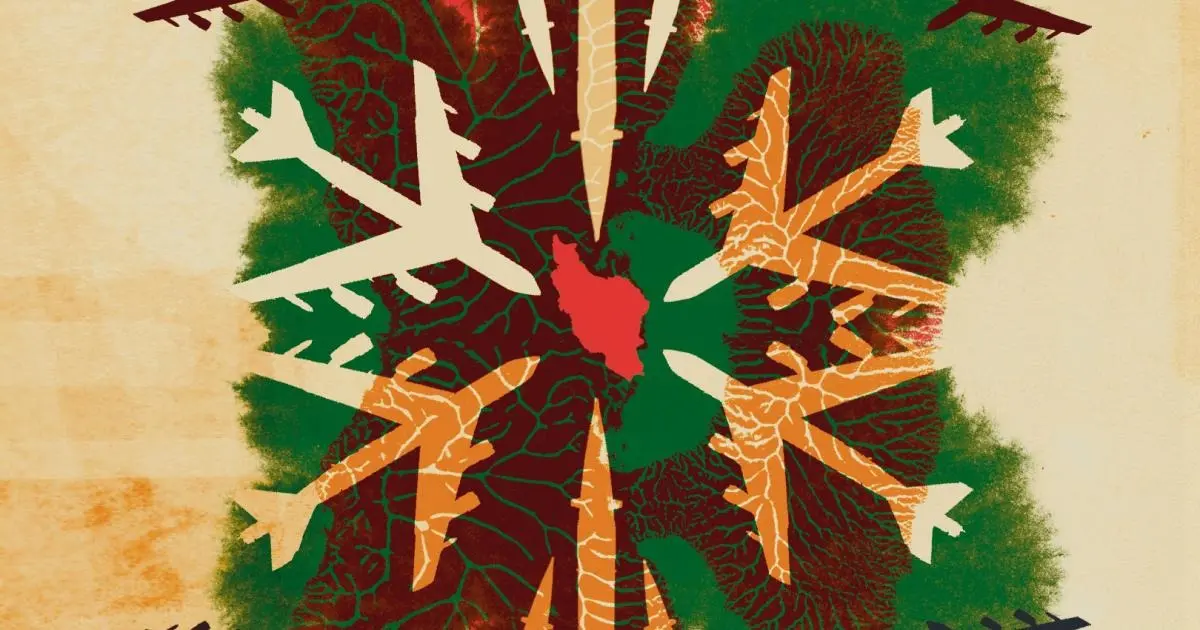
When will the war in Iran end? American officials claim that the answer is soon. “I think the war is going to end immediately after the November election,” declared U.S. President Donald Trump in September, expressing a widespread sentiment within the administration that “they can’t hold out any longer.” Iranian leaders, meanwhile, project a mirrored confidence from Tehran. The Islamic Republic has “brought the most heavily armed army in the history of the world to its knees,” proclaimed Ahmad Vahidi, the commander-in-chief of the Islamic Revolutionary Guard Corps (IRGC), in August.
Outside analysts, however, view these competing declarations with skepticism, arguing that the conflict is far more likely to drag on, eventually concluding with cautious negotiations rather than a definitive military victory. Yet beneath these varying forecasts, a broader consensus has emerged: whether through sudden diplomatic breakthroughs or grinding exhaustion, the fighting will soon be resolved one way or another.
Such thinking is entirely understandable. All wars eventually reach a conclusion, and after months of soaring energy prices and mounting geopolitical anxiety, the global community is intensely eager for this conflict to stop. Yet the unsettling reality on the ground is that the war is nowhere near over.
The two principal belligerents remain fundamentally deadlocked, unable to achieve their maximalist desired goals, yet both feel they are accomplishing enough through a hybrid mix of military and economic tools to make continued fighting worthwhile. The United States cannot successfully topple the Iranian regime, force it to abandon its ballistic missile program, compel it to halt its nuclear development, or stop its extensive support for regional proxy partners. Yet, Washington retains the capacity to continuously degrade Iran’s military infrastructure and severely constrict its national economy.
Conversely, Iran cannot evict the world’s only superpower from the Middle East. Nevertheless, Tehran has demonstrated a persistent ability to damage U.S. regional bases, strike American allies across the Gulf, and severely disrupt international maritime commerce.
Crucially, both states retain the resources needed to sustain the fight indefinitely—and both genuinely believe they have no other choice. Each side operates under the assumption that if they show weakness or let up, the adversary will press forward relentlessly until achieving total humiliation or primary objectives. While periodic talks do occur, a profound deficit of mutual trust poisons the diplomatic well. Both Washington and Tehran suspect that the enemy would simply utilize any temporary ceasefire to regroup, rearm, and resupply before launching a renewed offensive.
The Iranian government harbors deep-seated fears that relinquishing strategic leverage—whether over the Strait of Hormuz, its missile arsenal, or its nuclear program—would leave the state fatally exposed to external pressure later. Washington, on the other hand, worries that sweeping sanctions relief would provide Tehran with the vital economic oxygen and time needed to reconstitute its military capabilities. Meanwhile, Israel looks on with profound anxiety, convinced that any military restraint today will only manufacture a stronger, more dangerous Iran tomorrow. The concrete steps required to escape this debilitating war look perilous precisely because they demand that each adversary temporarily make itself more vulnerable.
Consequently, the war looks set to carry on much as it has. There will likely be no comprehensive geopolitical resolution and no lasting peace treaty. But because the current status quo remains sustainable for each government, and because neither party possesses the overwhelming power to seize a decisive upper hand, there will be no dramatic escalation either. Tehran and Washington will not be decisively defeated, but neither will emerge as the victor.
No Way Out
For the United States, the military campaign was never supposed to unfold this way. When Washington joined Israel in launching direct airstrikes against the Islamic Republic on February 28, American planners anticipated a swift and decisive victory. After all, the two allied nations had already severely degraded Iran’s posture in June 2025, burying or destroying most of its known nuclear facilities and blowing up a vast array of its missile sites. In tandem, Israel had eliminated scores of senior Iranian scientists and more than two dozen top military leaders, while systematically decimating Hezbollah in Lebanon.
Furthermore, Syrian President Bashar al-Assad—a longtime, critical Iranian ally—had recently lost power, and massive domestic protests had just rocked the Iranian government from within. With the U.S. military and the Israel Defense Forces enjoying seemingly uncontested access to Iranian airspace, the regime appeared to many observers to be standing on the precipice of collapse.
In the opening days of the expanded conflict, Israel and the United States assassinated Iranian Supreme Leader Ali Khamenei alongside many of the country’s top military commanders. Yet, predictions that the Islamic Republic would disintegrate proved entirely incorrect. The regime moved swiftly to replace fallen officials and immediately began striking back at its adversaries. Iranian forces blew up American jets, missile launchers, and radar systems stationed at military bases scattered throughout the Persian Gulf. They seized operational control of the Strait of Hormuz, aggressively squeezing commercial shipping flows through the vital chokepoint. Additionally, Iranian forces launched calculated attacks against civilian infrastructure across the Gulf region, making Washington’s regional partners pay a steep price for enabling the joint U.S.-Israeli assault.
American officials have consistently sought to downplay these setbacks, promising the public that the Iranian regime is merely one more targeted strike or punitive sanction away from capitulating. However, it is extremely unlikely that Israel and Washington can force Tehran to compromise on any core strategic issues. They have repeatedly attempted to bomb the regime’s leadership and military programs out of existence, only for Tehran to rapidly rebuild them. It remains difficult to see how future airstrikes can successfully accomplish what past campaigns have failed to achieve.
The United States has naturally added a severe economic dimension to its military assault, piling on crushing sanctions to accompany the naval blockade of Iran’s southern coast and periodic bombings. These measures have undeniably succeeded in constricting Iran’s access to global markets, severely hampering its ability to import essential industrial wares and export key commodities such as oil. Yet this pressure is unlikely to break the regime’s political will.
Alternative overland trade routes and the Caspian Sea complicate any attempt to hermetically seal Iran’s borders, even if these secondary passageways cannot fully compensate for closed naval shipping lanes and dwindling air links. Furthermore, China and Russia have stepped in to provide a variety of consumer goods and valuable military intelligence. While the economic impact of U.S. cutoffs is undeniably real, the government routinely passes the damage directly onto its civilian populace. Tehran achieves this by reducing public subsidies rather than curbing essential spending on the military and security services, which it views as indispensable for defending against external adversaries and crushing internal dissent.
Ordinary citizens must contend head-on with a collapsing national currency and runaway inflation. To everyday Iranians, describing the present situation as sustainable sounds almost obscene. Yet what might be fundamentally unsustainable for Iranian society can prove entirely sustainable for an authoritarian state. The Islamic Republic does not need to protect Iran as a whole from severe economic deterioration; it needs only to protect the specific institutional pillars and political constituencies necessary for its own survival.
U.S. officials may continue to hope that as the Iranian population grows increasingly impoverished, Tehran will experience a sudden change of heart. Yet Iranian leaders genuinely believe they are confronting an existential challenge. In such high-stakes circumstances, leadership cliques are unlikely to regard any level of economic hardship as a definitive breaking point.
Moreover, the regime has endured far worse conditions in the past without blinking, and for much longer periods. From 1980 to 1988, the country fought a devastating war with Iraq that claimed hundreds of thousands of Iranian lives and left the state with hundreds of billions of dollars in infrastructure damage. Yet even that catastrophic trial was not enough to make Tehran quit. In fact, even after successfully expelling Iraqi forces from its own territory, Iran launched a counter-invasion into Iraq, spending six years trying to violently overthrow Iraqi President Saddam Hussein despite deepening domestic suffering. It ultimately required major Iraqi battlefield advances, escalating U.S. military involvement in the Gulf, and a widespread perception that the regional balance of power was shifting sharply against Tehran to bring that historical conflict to a halt.
Naturally, the United States has not played all of its military cards. Washington could theoretically deploy boots on the ground. However, such large-scale land operations would almost certainly result in heavy U.S. casualties and drive global energy prices to catastrophic heights, making them politically infeasible. Alternatively, Washington could launch devastating airstrikes against major civil infrastructure targets, causing generational damage to Iran’s energy network, transportation grids, and communications systems. Yet Tehran would undoubtedly retaliate in kind against American partners stationed in the Gulf, once again triggering a massive spike in global energy costs.
Iran’s regime has frequently celebrated its resilience in the face of relentless U.S. attacks. Nevertheless, its own prospects for decisively defeating the United States look similarly grim. The country cannot easily escalate military pressure because its profound domestic economic distress severely narrows the margin for strategic recklessness. While Iran’s leadership may genuinely believe it can survive prolonged hardship, launching yet another major confrontation with the United States would risk catastrophic internal damage amid an already strained social compact.
Just as importantly, Iranian officials have little reason to believe that dramatic escalation would compel Washington to retreat; it could just as easily trigger a far more destructive and volatile response from an unpredictable U.S. administration. For now, Tehran prefers the safer path of imposing calibrated, manageable costs on the United States, preserving strategic leverage, and testing American resolve without crossing the threshold that would prompt intensive, regime-threatening retaliation.
Even if Tehran were to dramatically escalate hostilities, the Islamic Republic is exceedingly unlikely to triumph. Iran can successfully weaken the United States’ regional footprint and has already forced Washington to spend enormous financial sums—exceeding $40 billion and counting—on the ongoing conflict. Yet the broader U.S. federal budget is measured in trillions of dollars, and Washington maintains a massive stockpile of less sophisticated conventional munitions that it can readily deploy as its advanced precision-guided stocks run low.
While American troops have been lost, the total casualties represent only a tiny fraction of the human cost suffered during the protracted wars in Afghanistan and Iraq. Crucially, the U.S. military can keep its casualty rates relatively low by fighting from a safe distance, launching missiles from far outside Iranian territory.
Strait of Equilibrium
At first glance, the reality that neither Tehran nor Washington can achieve an outright victory might seem to bode well for peace. When warring nations finally realize that total victory is unachievable, they occasionally settle their differences. However, both Iran and the United States harbor vital secondary aims, and both remain convinced that continuing the fight is the best way to secure them.
Washington, for instance, calculates that periodic military strikes will ensure Tehran can never fully regenerate its fractured military or successfully develop operational nuclear weapons. The U.S. strategy relies on striking Iran whenever the regime crosses specific red lines, such as rebuilding a concerning weapons system or quietly resuming uranium enrichment. By maintaining this persistent posture, Washington believes it can keep Iran permanently weakened without assuming the massive political and military risks associated with attempting a full-scale regime transformation.
Iran, for its part, believes that continued fighting will help it rebuild the deterrence it has steadily lost over recent years. Tehran is actively mobilizing regional proxy networks, including allied militias in Iraq and the Houthi movement in Yemen, to keep its adversaries pinned down under fire from multiple fronts. The regime has also demonstrated a newfound willingness to strike first. In July, for example, Iran launched a direct missile attack against a military base in Jordan hosting U.S. personnel, even though no American strike had immediately preceded it.
Furthermore, Tehran has aggressively moved to dominate the Strait of Hormuz. Iranian officials previously regarded shuttering this critical global waterway as an absolute measure of last resort, to be attempted only under the most extreme existential circumstances, delaying such a move until all-out war erupted. Yet within a single day of the current conflict, Tehran proved it could exert effective control over the strait by targeting commercial shipping vessels with drones and missiles, thereby securing an invaluable new source of strategic leverage.
Iran also appears to calculate that continued fighting will help it regain, and perhaps even expand, the regional clout that had seriously waned before the war—a period when Tehran repeatedly failed to deter its rivals and its regional proxies lost considerable influence. This strategic logic explains why, when Israel and the United States struck Iran in February, Tehran immediately widened the geographic battlefield to encompass the entire Middle East, targeting Gulf countries that had spent recent years carefully rebuilding diplomatic and economic relations with the Iranian government. In total, Iran has attacked more than a dozen nations across the region. Its underlying objective is to persuade these neighboring states to pivot away from a security reliance on Washington by demonstrating that partnering with the United States makes them dangerously vulnerable.
While Washington’s and Tehran’s long-term assessments may ultimately prove right or wrong, the immediate reality is that even if both sides stand to gain nothing from continued bloodshed—and even if both privately realize it—they will struggle mightily to reach a lasting resolution. Because Iranian officials firmly believe that their American counterparts are ultimately bent on the total destruction of the Islamic Republic, they do not think they can afford to stop fighting, even if they wanted to.
Washington does not share that existential fear, but it still operates under the conviction that it cannot afford to back down. In the eyes of U.S. officials, offering Iran the concessions it wants most—sweeping sanctions relief and official recognition of the regime’s coercive leverage over the Strait of Hormuz—would mean empowering a dangerous adversary and effectively rewarding military aggression.
In theory, Iran and the United States could resolve these deep-seated concerns through serious diplomacy. But in practice, neither side trusts the other enough to execute lasting, verified tradeoffs. Consider the fate of the memorandum of understanding signed by both sides in June, which was drafted in hopes of halting the war. The diplomatic deal was ostensibly designed to address both countries’ top priorities by reopening the Strait of Hormuz and establishing formal negotiations over Tehran’s nuclear program, in exchange for widespread sanctions relief and an immediate halt to attacks on Iran and its regional partners.
However, it quickly became apparent that U.S. and Iranian officials fundamentally disagreed on the operational details. Washington argued that the agreement meant commercial ships could freely pass through the strait without hindrance, whereas Tehran insisted it retained the sovereign right to dictate the exact manner of transit and impose transit fees. Consequently, Iranian forces resumed firing on commercial vessels traveling near the coastline of Oman rather than Iranian waters, deeply infuriating U.S. officials.
Iran, meanwhile, accused Washington of acting in bad faith by failing to immediately release billions of dollars in frozen national assets and failing to stop Israeli military operations against Hezbollah. Both governments concluded that their adversary was negotiating in bad faith, and the conflict swiftly resumed.
That diplomatic failure does not mean Tehran and Washington will never negotiate again. They will likely maintain an ongoing diplomatic dialogue and may periodically pause the conflict to regroup and reassess. Yet modern history shows that diplomacy and active warfare can occur simultaneously; during the 1950s, for instance, North Korea and the United States engaged in diplomatic talks for years before finally reaching a durable armistice. As long as Tehran and Washington remain both capable of and committed to inflicting pain on each other, the war will not end, regardless of how much they talk.
Neighborhood Watch
The ongoing war against Iran may have settled into a prolonged stasis, but the conflict is fundamentally transforming both the Islamic Republic and the wider Middle East.
Traditionally, Iran has functioned as a complex, multifaceted autocracy with a political order blending clerical authority, elected institutional bodies, powerful security and military agencies, competing patronage networks, and a vibrant civil society. However, the wartime death of Supreme Leader Khamenei eliminated the regime’s paramount unifying figure, severely disturbing the delicate domestic balance of power. The war is now systematically privileging the institutional elements of the state responsible for immediate survival above all else.
This permanent state of conflict will only further elevate Iranians in military uniform over Iranians in tailored suits—and perhaps even over those in clerical garb. The Islamic Republic’s already withered participatory political institutions will likely continue to fade into the background, while the unchecked power of its military and security elites will be increasingly masked by a thinning theocratic cloak.
That does not imply that the non-armed factions of the country’s traditional power structure will be completely devoid of influence. Civilian politicians may still debate whether Iran should pursue diplomatic avenues and assess how much additional economic pain the general population can endure. Yet their ideas will remain entirely at the mercy of the armed elite, whose singular priorities are restoring national deterrence and preserving enough offensive capability to punish Iran’s adversaries.
The country is not about to entirely eliminate its civilian institutions, but a growing number of areas of public and private life are being officially redefined as critical national security issues—including telecommunications, foreign investment, university administration, national media, and economic policy. As a result, these sectors are increasingly falling under the direct command of the security establishment. The regime’s foundational religious ethos will undoubtedly continue, but a clerical establishment that once cultivated the military merely to buttress its own rule may ultimately find itself entirely subordinate to the armed forces.
Meanwhile, the Arab states of the Gulf are urgently reworking their long-term security doctrines. Some aspects of their strategic shifts will likely please Tehran: after decades of striving to keep a heavy U.S. military footprint anchored in the region out of fear that an American withdrawal would leave them defenseless, these Gulf monarchies have concluded that maintaining an overt, close alliance with the United States essentially paints a target on their backs.
Yet the Gulf states are unlikely to forcefully evict Washington from the region. Despite its various shortcomings, the United States remains the only external power capable of providing a meaningful measure of security and military support, and their historical distrust of Iran has only deepened since the war began. Indeed, several Gulf states have actively retaliated against the Islamic Republic as the conflict has expanded.
Instead, these regional governments are settling into a complex strategy of diplomatic hedging. They are actively forging stronger diplomatic and economic linkages with Iran in hopes of persuading Tehran to spare them from further missile and drone attacks. Simultaneously, they are carefully maintaining their vital security and economic ties with Washington. To protect themselves further, these states have accelerated efforts to develop sophisticated domestic missile defense shields, harden critical infrastructure facilities, establish alternative energy export routes, and build up larger strategic reserves of oil, natural gas, and military hardware. The wider region may also attempt to leverage its concurrent ties to both Tehran and Washington to serve as a persistent mediator for the conflict.
One Battle After Another
Wars are, by definition, chaotic and unpredictable endeavors, meaning a future military strike or unexpected event could easily shatter the current fragile equilibrium. As both Washington and Tehran become increasingly comfortable with the established status quo, there is a distinct danger that they might grow overly confident in their respective defenses and choose to escalate hostilities.
Washington, for instance, could easily be tempted to try and force the regime to buckle once and for all through a far more fearsome and sweeping military assault—a move that would inevitably trigger severe global market turmoil and devastating Iranian retaliation across the Gulf. If an errant Iranian missile were to kill large numbers of American service members or if an Iranian cyber or kinetic attack successfully shut down critical Gulf energy infrastructure, the United States might finally opt to deploy ground combat forces or systematically destroy Iran’s national electric grid, placing the survival of the regime in mortal peril.
Conversely, Tehran could be profoundly mistaken in its assumption that it can continue to inflict enormous economic pain on its own populace without consequence. Cascading domestic shortages of essential goods could eventually spark renewed mass civil unrest and elite political defections, making it increasingly difficult for the regime to simultaneously wage war against the United States while maintaining internal control. An apparently manageable domestic deterioration could rapidly transform into something far more dangerous: a critical collapse in the central government’s capacity to govern, rather than merely a dwindling capacity to fight.
Yet, for the time being, the war appears remarkably sustainable. Washington has not achieved any of its original strategic objectives, and it has burned through billions of dollars in expensive precision munitions. Nevertheless, the United States can still easily afford to continue the battle, operating under the firm belief that the political and strategic costs of giving in far exceed the costs of continuation.
Iranian society, meanwhile, faces years of grinding impoverishment, severe economic insecurity, and isolation. Yet the Islamic Republic itself remains internally stable, and its leadership remains convinced that it cannot afford to make any meaningful concessions to its historic adversaries.
Such is the profound paradox of this grinding conflict. Both sides have emerged considerably weaker from the confrontation. Neither can claim a decisive victory. Yet they fight on regardless, driven forward by the reality that they find all available alternatives to be completely unpalatable.