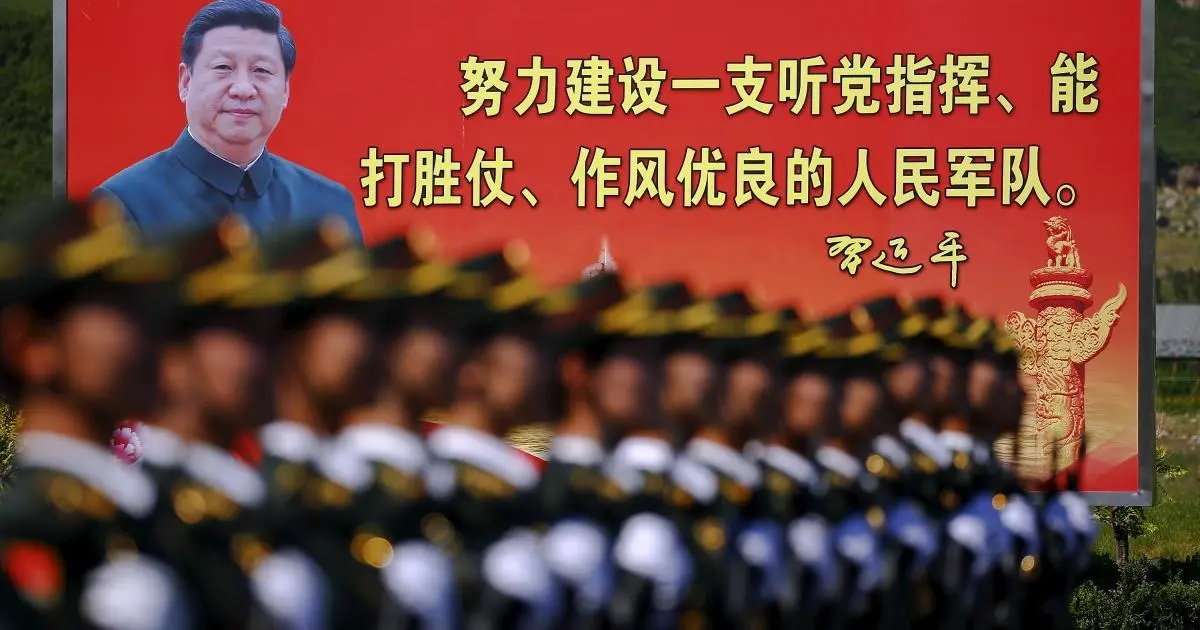
For two decades, political scholars and foreign policy analysts held a near-consensus view on the resilience of the People’s Republic of China. As the twentieth century drew to a close and every communist regime across Europe collapsed under the weight of economic stagnation and political rebellion, the Chinese Communist Party (CCP) managed not only to survive but to enter the twenty-first century with apparent institutional vigor. The prevailing academic theory argued that the party’s extraordinary durability stemmed from the construction of sturdy, long-lasting state institutions. Following the chaotic and unpredictable personalist dictatorship of the Mao Zedong era, the CCP appeared to have established the foundations of a modern, rationalized state. It instituted term limits for its top leadership, embraced a model of collective governance, and increasingly promoted officials based on professional merit rather than ideological fervor alone. These systemic changes were widely believed to have made the regime robust enough to weather both internal shocks and external pressures that had historically destroyed other socialist systems.
However, Chinese leader Xi Jinping has spent the past decade systematically dismantling nearly every institutional safeguard that foreign observers once credited with keeping the party strong. Since rising to power, Xi has dismantled the structural checks built in the post-Mao era, most notably by abolishing presidential term limits in 2018, hollowing out the mechanisms of collective leadership, and deliberately declining to designate an obvious successor. Beyond these structural changes at the very top of the hierarchy, Xi has purged high-level officials at will, targeting domains that were previously thought to possess a degree of institutional insulation, most notably the military.
The scope of these military purges has been dramatic. In January, only months after party leaders officially expelled nine senior military officers, the country’s Ministry of National Defense stunned observers by announcing that General Zhang Youxia and General Liu Zhenli—who until that moment served as the People’s Liberation Army’s most senior uniformed officer and top operational commander, respectively—had been placed under formal investigation. Data compiled by the Center for Strategic and International Studies indicates that since 2022, the party has formally purged three dozen generals and lieutenant generals, while many others have simply vanished from public view without explanation.
In Washington and other Western capitals, many foreign policy observers interpret these rolling purges as glaring evidence of underlying weakness within the Chinese political system. To these analysts, Xi appears as an increasingly autocratic leader consumed by suspicion and obsessed with maintaining an absolute personal grip on power. Under the conventional academic framework—which posits that the party’s true strength lay in the freestanding, predictable institutions built during the post-Mao decades—such sweeping purges are viewed as clear warning signs of profound political fragility and a potential future crackup. Yet, despite the steady elimination of high-ranking officials, the CCP has shown no signs of structural disintegration. On the contrary, as these high-stakes purges have continued unabated, Xi and the party machinery appear to have only consolidated their authority.
Far from weakening its rule, the specific mechanism by which the CCP cleanses its ranks offers a compelling explanation for its historical durability. Within the Chinese political system, a purge is not merely an isolated political event but a continuous, systemic process—one that the party has operated in nearly identical form for a century. This mechanism regularly targets, evaluates, and compels senior cadres to seek clemency in order to retain their political standing. The ultimate objective is not necessarily to eliminate individuals permanently, but rather to reform and reshape them, thereby strengthening the party by enforcing strict obedience and renewed dedication to its ideological cause. CCP leadership firmly believes in the efficacy of this strategy. Xi has enthusiastically embraced the concept of "self-revolution," viewing continuous and permanent rectification as the essential tool that will allow China to escape the unhappy historical fate of the Soviet Union and other defunct socialist regimes. Consequently, what truly threatens the party’s long-term longevity is not the raw count of how many officials have fallen victim to purges, but rather the single structural problem that such internal disciplinary strategies cannot solve—and may even exacerbate: the challenge of political succession. A regime built entirely on permanent self-revolution will ultimately rise and fall on how it answers the question of succession, no matter how effectively it manages to suppress internal decay.
Cure the Sickness, Save the Patient
China’s long history of internal political purges predates the founding of the People’s Republic of China in 1949. Like other revolutionary regimes throughout history, the CCP has occasionally deployed violent purges to violently remove cadres from its ranks. This traditional model of purging—which became synonymous with the brutal actions of Joseph Stalin in the Soviet Union—aims at completely eliminating an individual from the party through incarceration, political exile, or execution, ensuring that the victim never returns to political life. Mao Zedong employed this hardline tactic as early as 1930, when he ordered the execution of more than 700 army officers to demonstrate absolute control over his forces.
Yet what distinguishes the CCP’s continued rule is its reliance on a parallel, uniquely institutionalized method of internal discipline known as rectification. While traditional purges seek to utterly destroy political enemies within the ranks—captured by the Chinese term qingdang, meaning to "cleanse the party"—rectification aims to retain and remold cadres while keeping them safely within the party’s broader orbit, even if their official status is severely diminished. Throughout its century-long history, the CCP has sought to rectify errant cadres far more frequently than it has sought to physically or politically eliminate them.
This approach traces back to December 1929, when Mao put forward a foundational resolution titled "On Correcting Mistaken Ideas in the Party" at a meeting in the village of Gutian, in Fujian province. The resolution explicitly asserted the party’s absolute control over military forces and provided early clues regarding how the organization conceptualized internal discipline. It described its targets not as irredeemable class enemies, but rather as individuals suffering from deviations in their political thinking. According to Mao’s formulation, cadres could suffer from ideological ailments such as a "purely military viewpoint"—a perspective detached from overarching political control—as well as the promotion of ultrademocracy, which lacked proper party authority, and the dangers of bourgeois individualism. Mao’s resolution treated each of these deviations as a treatable sickness that could be cured through a rigorous regimen of public criticism and self-criticism conducted before peers. Crucially, the process attached a fundamental promise to the cure: if party members fully submitted to the ritualistic process, the CCP would retain them rather than destroy them.
As Mao and his followers established a wartime base camp in the northern Chinese area of Yan’an starting in the mid-1930s, leaders turned this concept of rectification into official party doctrine. Party membership exploded from roughly 40,000 in 1937 to 800,000 by 1940, meaning that a vast majority of the organization’s personnel were newcomers who could not yet be fully trusted by veteran leaders. The Rectification Movement of 1942–45 was designed to solve this vulnerability. Under this system, every cadre was required to write a detailed autobiography, measure their personal life against printed self-examination outlines, confess their ideological shortcomings before their local party branch or work unit, and finally be examined, graded, and sorted by the party’s personnel department. In February 1942, Mao summarized this overarching philosophy in a phrase that would echo through decades of party history: "Cure the sickness, save the patient."
None of this administrative and ideological cleansing was gentle. The Yan’an campaign was frequently brutal, marked by psychological torture and resulting in thousands of deaths. Subsequent political campaigns launched over the following decades were often even harsher. However, Mao’s underlying approach fundamentally separated Chinese communism from its ideological relatives. While Stalin swiftly executed unreliable cadres and Polpolt’s regime in Cambodia sent them directly to mass graves, the Chinese strategy frequently focused on retaining cadres and attempting to remold them, while simultaneously generating permanent files detailing their every administrative and political mistake.
The basic procedural framework remains nearly identical today. A party member is singled out for exhibiting some form of political deviation and is compelled to write an exhaustive written account of their ideological shortcomings. This self-assessment is then cross-referenced against critiques provided by colleagues and evaluated against the official records already contained within the individual’s confidential personal dossier. The cadre is subsequently placed on a graded scale of disciplinary sanctions, ranging from no formal action at the mildest end to outright expulsion from the party at the most severe. The vast majority of sanctions fall squarely in the middle of this spectrum, including the issuance of a serious administrative warning or placement on probationary status.
When a final verdict regarding a cadre, government official, or campaign target is issued, that individual—provided they are deemed to have confessed sufficiently—is kept within the party, albeit under conditional terms that remain entirely revocable and dependent on the prevailing political winds. Every single piece of paper generated by this exhaustive process is permanently archived in the official personnel file. This is the exact bureaucratic mechanism that was deployed in 1952 against a village storekeeper who skimmed off the top of procured grain, and it is the same process utilized today for members of the Politburo. China’s most powerful leaders read formal self-criticisms aloud to one another on an annual basis, and their confessions are meticulously documented and attached to their permanent files following the exact template established decades ago in Yan’an. Even as Xi has dramatically expanded the scope of who can be targeted by these mechanisms, the underlying disciplinary machinery has remained fundamentally unchanged.
The ongoing investigations surrounding senior military officers under Xi likely adhere to this established model. General Zhang and General Liu have been placed under formal investigation rather than summarily executed, leaving open the possibility that they may technically remain on the party’s books, even if they are saddled with a significantly thickened personal dossier and relegated to an obscure, meaningless post or sidelined from public life altogether. A comparable outcome was observed in 2023 when former diplomat Qin Gang was removed from his high-profile position as foreign minister; subsequent investigative reporting indicated that Qin retained his party membership but was quietly reassigned to a low-level desk job at the foreign ministry’s publishing house. Even if Zhang and Liu are eventually stripped of their party membership, purging remains the clear exception rather than the norm in contemporary Chinese politics. Data compiled by the Center for Strategic and International Studies shows that of the 101 generals and lieutenant generals identified as having been purged or potentially purged, only 14 had been officially expelled from the party as of February.
Single File
Decades of historical evidence demonstrate that political rectification rarely, if ever, fundamentally alters the deep-seated personal beliefs of targeted cadres. For eighty years, much of it documented in the party’s own internal archives, officials have routinely parroted the required scripts, performed the necessary public contrition, and then quietly reverted to their earlier behaviors the moment a political campaign concluded. The process has become so deeply ritualized that participants quickly learn to recite precisely what examiners and inspectors want to hear.
Yet, the primary objective of this administrative apparatus is not to achieve genuine ideological reform, but rather to produce a standardized document to be sealed inside a confidential dossier. This file contains objective personnel data alongside formal, observable assessments of a cadre’s political shortcomings. It is this extensive paper trail that enables the authoritarian regime to maintain ironclad discipline, even if individual cadres never truly change how they act or think in private.
For officials and other individuals subjected to rectification, the process serves as a high-stakes sorting mechanism that determines who remains in good standing and who has fallen out of favor with the party leadership. Because cadres constantly jockey for professional status and advancement, being targeted by a purge is an exceptional and professionally devastating event. For the vast majority of party members, surviving a rectification process with minimal punishment generates a profound sense of relief—frequently accompanied by a desire to recommit themselves to a forgiving regime—coupled with a persistent, low-level fear that the next political campaign is always just around the corner. When expanded across a membership base of roughly 100 million people, this recurring process produces an internalized discipline within each individual that substantially strengthens the organization’s total grip on power. Every cadre wakes up each morning fully aware that their personal dossier exists and that its contents can be weaponized against them at any moment.
This permanent, standardized, and reopenable record of every party member’s history, personal associations, and vulnerabilities also functions as a sophisticated information system that grants top leaders immense power. Autocratic rulers require vast amounts of reliable information to successfully preempt threats to their rule, and the CCP’s personnel file system provides an irreplaceable channel of intelligence for Beijing’s leadership. While the vast majority of cadres are willing to comply with the party’s directives, the system ensures that for the small minority who fail to demonstrate the proper attitude during a discipline campaign, the party possesses the documented justification to expel or imprison them, effectively neutralizing any threat of internal revolt before it can materialize. High-level defections and political dissent do occasionally occur, but when they do, they are rarely organized and quickly fizzle out under the weight of the security apparatus.
Such extensive record-keeping might reasonably be expected to generate widespread resentment among party cadres, but the administrative process is intentionally designed to diffuse blame and insulate Beijing from direct political backlash. There is no single individual or isolated entity that unilaterally issues a rectification verdict. Instead, temporary party task forces known as work teams are mobilized to draft the initial verdict, local colleagues from the workplace formally endorse it, and a committee at a higher administrative level ultimately ratifies it. The decision passes through enough administrative hands that authorship is effectively aggregated and obscured, ensuring that no single leader or party institution can be held exclusively responsible. Even the targeted cadre, through the act of writing and delivering their own self-criticism, acts as a co-author of the verdict.
Disciplining cadres through rectification also serves as a critical coordination device. The Chinese party-state is a sprawling, decentralized network of bureaucratic agencies, regional power bases, and administrative offices that frequently possess competing interests and must constantly bargain with one another. A rectification campaign is one of the few policy instruments capable of transcending these institutional fissures. Much like the party’s other massive nationwide initiatives, such as the historic one-child policy, cadres understand that full compliance with rectification is mandatory and represents the highest priority for the leadership. Discipline campaigns offer unambiguous professional rewards and punishments, including leniency for officials who demonstrate the correct political attitude and professional purgatory or exile for those who do not. Many cadres who normally benefit from taking advantage of the structural fragmentation in China’s political system know they must drop all other priorities and fall in line with discipline campaigns, providing Beijing with a highly visible mechanism to impose unified national priorities and reinforce party control.
What Discipline Cannot Solve
Chinese history is replete with examples of once-mighty dynasties that gradually weakened from within and eventually collapsed. To prevent this historical outcome, Mao’s primary solution was mass mobilization, based on the belief that only by allowing the broader populace to continuously supervise the government could the state avoid bureaucratic decay. Xi’s modern answer, introduced in 2021 and elaborated upon in subsequent years, is the concept of party "self-revolution." Within this theoretical framework, the cure for the party’s internal ills can only originate from inside the organization itself, rather than from any external force. Ongoing party rectification campaigns require all officials to continuously discipline themselves, while the occasional high-profile purge of senior cadres provides undeniable proof that failure to comply carries severe consequences. This marks the first time the party has explicitly located the primary mechanism of its own long-term survival entirely within its own internal structures.
The political choreography accompanying this strategy has been equally explicit. In the autumn of 2014, while investigations that ultimately felled two senior military leaders were already underway, Xi summoned approximately 400 senior military officers to the exact same hall in the village of Gutian where Mao had issued his foundational resolution on correcting mistaken ideas within the party. State-run media widely publicized the gathering as the "new Gutian conference." Similarly, in 2024, Xi convened military leaders to discuss political work and ideological loyalty at Yan’an, serving as a clear reminder to the ranks that the party views a direct, unbroken line connecting past rectification campaigns to its present strength.
Beneath this heavy historical symbolism lies Xi’s persistent fear that China could ultimately suffer the fate of the Soviet Union. Xi believes that the Communist Party of the Soviet Union allowed its internal disciplinary mechanisms to atrophy, thereby acting as the primary architect of its own sudden demise. Beijing’s ruling elite remains convinced that purges and rectification must continue on a permanent basis if the party is to retain power. Whether or not this historical analysis of the Soviet collapse is entirely accurate, the CCP’s continued political strength suggests that its method of disciplining cadres may indeed explain a significant portion of its institutional durability. Consequently, Xi’s purges should not be measured purely by the number of cadres they ensnare, but rather by whether they continue to produce the files, verdicts, and conditional party retention that keep the organization firmly in control.
Yet, the very processes that strengthen the party also weaken certain instruments of Chinese state power. Senior military commands frequently sit vacant or are staffed by less experienced officers, while future military leaders quickly learn that the safest career record is a thin one devoid of ambitious initiatives. When forced to choose between operational effectiveness and absolute political control, the party has consistently prioritized political control for a century, and it shows no hesitation in making that exact tradeoff today.
Furthermore, China’s reliance on purges and rectification cannot solve the inherent danger of political succession. Rectification produces no institutional mechanism for choosing the next supreme ruler; if anything, by ensuring that no subordinate is allowed to accumulate independent political standing or a broad following, the system makes the emergence of a credible successor even more difficult. Succession, rather than internal discipline, remains the primary structural vulnerability of the political system.
Older generations of CCP leaders, including Mao and Deng Xiaoping, managed to overcome the immense challenge of succession by drawing upon their unassailable authority as revolutionary figures who had personally fought for the party’s survival. Subsequent leaders relied on institutionalized rules—such as term limits, collective leadership structures, and regularized succession timelines—that Xi has summarily dismantled. Xi possesses neither revolutionary foundational authority nor institutionalized term limits, which makes the succession problem particularly acute. The critical moment to monitor Chinese political stability is not when high-ranking generals disappear amid corruption investigations, but rather when the leader who reads their confidential files eventually begins to age out of his role without providing any clear answer as to who will follow him.
The CCP is not on the verge of imminent collapse; the intricate personnel file system exists precisely to prevent elite political fracture, and to date, it has successfully fulfilled that purpose. What is likely to emerge instead is a state that is militarily more cautious or constrained, yet politically stronger than many external assessments suggest. The single greatest source of uncertainty moving forward remains Xi’s eventual succession. Beijing’s own political theorists are watching this dynamic closely, acutely aware that even a brilliantly engineered system of permanent rectification that has sustained the party for a century offers no structural solution to an elite power struggle over who comes next.