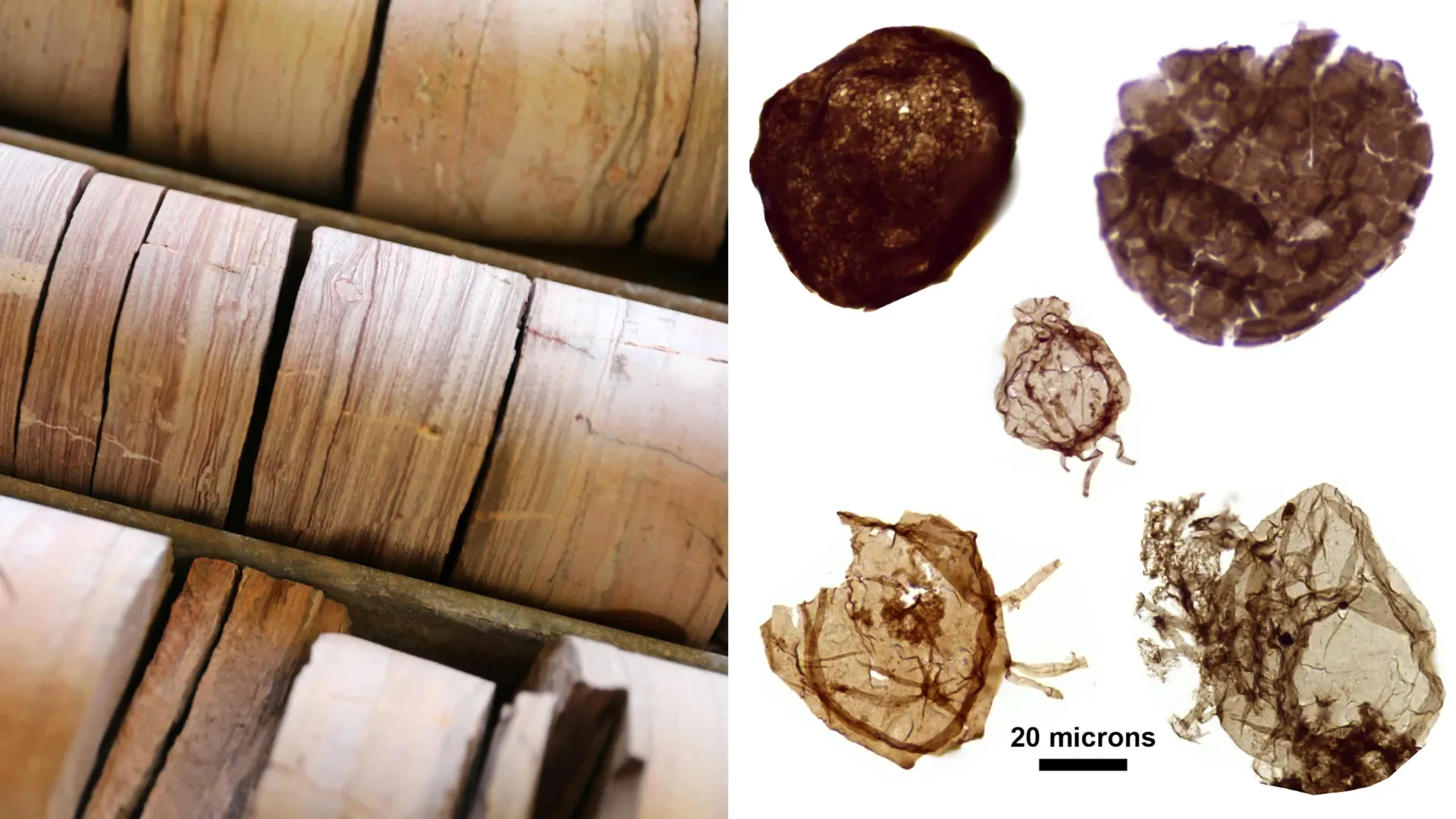
Stored in an open-air warehouse in tropical Darwin, Australia, are dozens of trays containing cylindrical cores of rock, quietly holding secrets that predate complex animal life by more than a billion years. Bored hundreds of metres below the surface by mineral exploration companies decades ago, these geological samples have recently become the focal point of a groundbreaking scientific investigation into how life on Earth made its most transformative evolutionary leap.
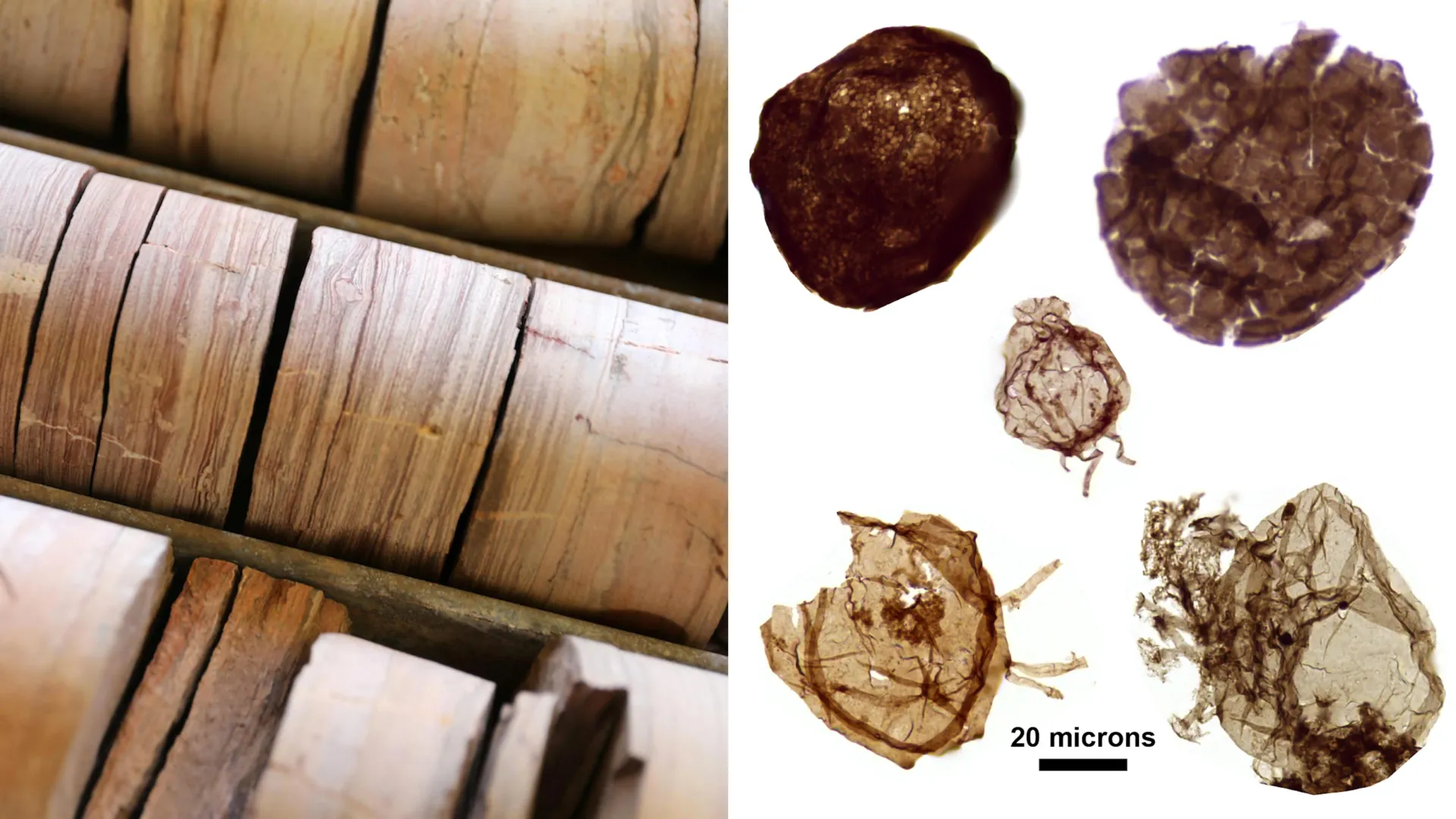
Some of these crucial cores, housed at the Northern Territory Geological Survey, consist of mudstone—a fine-grained sedimentary rock formed from hardened seafloor mud. When mining and exploration companies initially drilled these cores, they were largely unaware of the microscopic treasures locked inside. Within these ancient mudstones lay the microscopic fossilized remains of single-celled organisms that once thrived on the seafloor of an ancient inland sea, a vast marine expanse that covered much of northern Australia more than 1.5 billion years ago.
According to a new study published in the prestigious journal Nature, these remarkably preserved microfossils are providing vital clues to address a longstanding puzzle in evolutionary biology: the origin of eukaryotes. This evolutionary milestone ultimately paved the way for all complex life on our planet, setting the stage for plants, animals, fungi, and, eventually, human observers to study their own deep history.
Small but complex
To understand the magnitude of this discovery, scientists look at the fundamental division of life on Earth. All living organisms can be placed into one of two major categories that are fundamentally different at the cellular level.
Prokaryotes, a group that includes bacteria and archaea, feature a relatively simple cellular organization and exist predominantly as single-celled entities. Eukaryotes, by contrast, possess a radically different and much more complicated cellular architecture. Their cells feature a defined nucleus and a variety of specialized internal structures known as organelles, which perform specific metabolic and structural jobs.
This eukaryotic revolution fundamentally transformed the planet, clearing the path for multicellular organisms, complex ecosystems, and conscious life. Based on extensive genetic observations drawn from living organisms, it is now widely agreed among evolutionary biologists that the last common ancestor of all living eukaryotes resulted from the symbiotic union of at least two distinct prokaryotic microbes: an archaeon and a bacterium.
The earliest direct evidence for eukaryotic life on Earth manifests in the fossilized remains of these early single-celled organisms. When examined under a microscope, they display a distinct level of internal and structural complexity that is conspicuously absent among prokaryotes, yet common among modern eukaryotes.
While eukaryote fossils can be found in sedimentary rock formations around the world dating back at least 1.5 billion years, the specimens discovered in Australia’s Northern Territory hold a special distinction. Dating back as far as 1.75 billion years ago, they represent the oldest currently known eukaryote fossils anywhere on the planet.
Despite this incredible antiquity, the ancient world in which these early eukaryotes first emerged remains shrouded in mystery. Because the geological record from this distant epoch is fragmentary, many fundamental aspects regarding their exact nature, environment, and metabolic requirements have remained stubbornly unknown.
Oxygen — friend or foe?
Among the most persistent debates in evolutionary science is the exact role that atmospheric and dissolved oxygen played during the formative stages of complex cellular life. Many types of modern bacteria can live, thrive, and reproduce in environments entirely devoid of oxygen. However, nearly all eukaryotes alive today depend fundamentally on oxygen for their daily survival.
This reliance stems from aerobic respiration—the biological process of breaking down food molecules using oxygen, which yields the vast amounts of cellular energy that complex life demands to survive and grow. Without the metabolic powerhouse of oxygen-based respiration, the large, energy-hungry cells characteristic of eukaryotes would seemingly struggle to function.
Yet, the traditional assumption that oxygen has always been universally beneficial and necessary for all eukaryotes has come under intense scrutiny in recent years. This paradigm shift follows a series of surprising discoveries regarding enigmatic modern eukaryotes capable of thriving in extreme environments completely devoid of oxygen.
Concurrently, there is mounting geochemical evidence from the global rock record suggesting that when eukaryotes were first evolving, oxygen levels in the Earth’s oceans and atmosphere were likely much scarcer than they are today. During this distant era, oxygen-free marine habitats would have been the planetary norm rather than the exception. Collectively, these observations have challenged the long-held assumption that eukaryotes have depended on oxygen since their very inception.
While genetic studies of living microbes belonging to groups considered closest to the evolutionary ancestors of the first eukaryotes can offer valuable insights into their ancestry, they have limitations. Genetic sequencing of modern species can only reveal so much about long-extinct lineages that vanished eons ago. Only the physical fossil record can provide direct data about these ancient organisms, and only geology can offer an accurate window into the specific chemical conditions of the world they inhabited.
More than 12,000 fossils
To bridge this gap in our understanding, the researchers behind the new Darwin-based study undertook a meticulous and intensive laboratory process. They began by crushing up samples of the ancient mudstone cores stored in the Northern Territory warehouse, subsequently dissolving the rock matrix using specialized chemical treatments.
By analyzing the microscopic organic residue left behind after this dissolution, the research team successfully identified and cataloged more than 12,000 individual fossils. This vast dataset provided an unprecedented statistical foundation for evaluating the distribution and characteristics of early life.
In tandem with examining the fossils themselves, the scientists studied the host mudstones to reconstruct the ancient environments in which the sediments were originally deposited. This geological analysis offered critical insight into the varied habitats occupied by these early eukaryotes, ranging from shallow coastal environments to deeper marine settings. Furthermore, by analyzing the detailed chemistry of the mudstones, the researchers were able to determine with a high degree of confidence whether dissolved oxygen was present in the seawater at the exact time and place the sediments accumulated.
The results of the analysis revealed a clear and consistent pattern. Eukaryote fossils were indeed discovered across a diverse range of environments, stretching from coastal mudflats out into the open sea. However, they were strictly present in samples that had been deposited in oxygenated settings.
Conversely, samples retrieved from ancient oxygen-free environments contained exclusively simple, prokaryotic forms, with no trace of complex eukaryotic cells. This striking spatial and chemical segregation indicates that even the oldest known eukaryotes living on Earth between 1.7 and 1.4 billion years ago relied directly on oxygen-rich niches for their survival.
These empirical data lend substantial support to a long-held scientific hypothesis that oxygen availability played an indispensable, driving role in the early evolution and diversification of eukaryotes. Resolving the precise environmental drivers and ecological context of this major evolutionary leap remains one of the most compelling challenges in the modern life sciences. As researchers continue to analyze these enigmatic ancient microfossils from Australia’s geological archives, the findings promise to shed further light not only on the origins of complex life, but on the broader conditions that make such an evolution possible across the cosmos.