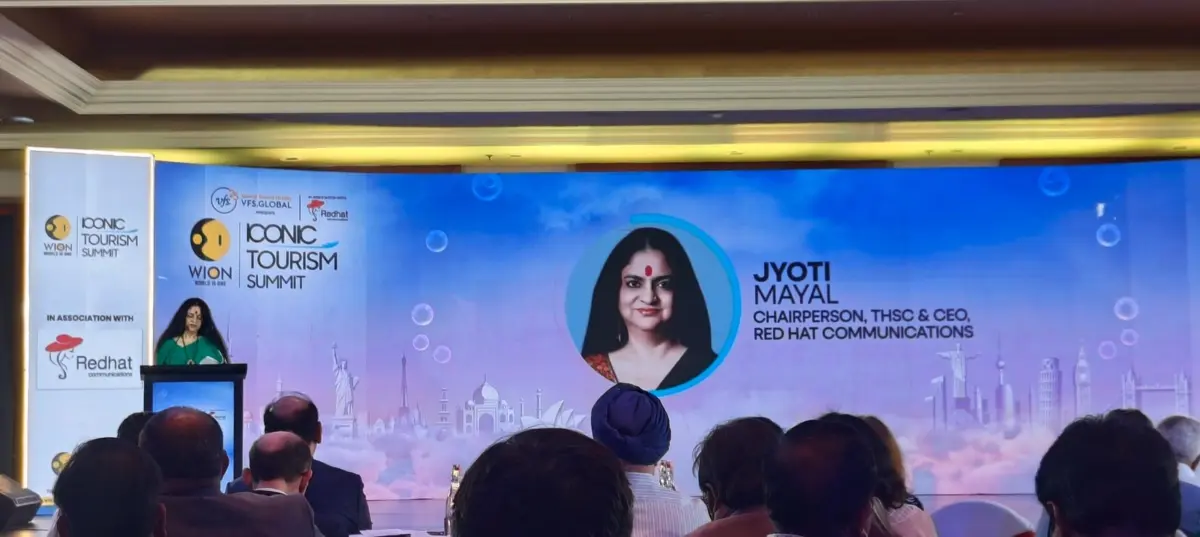
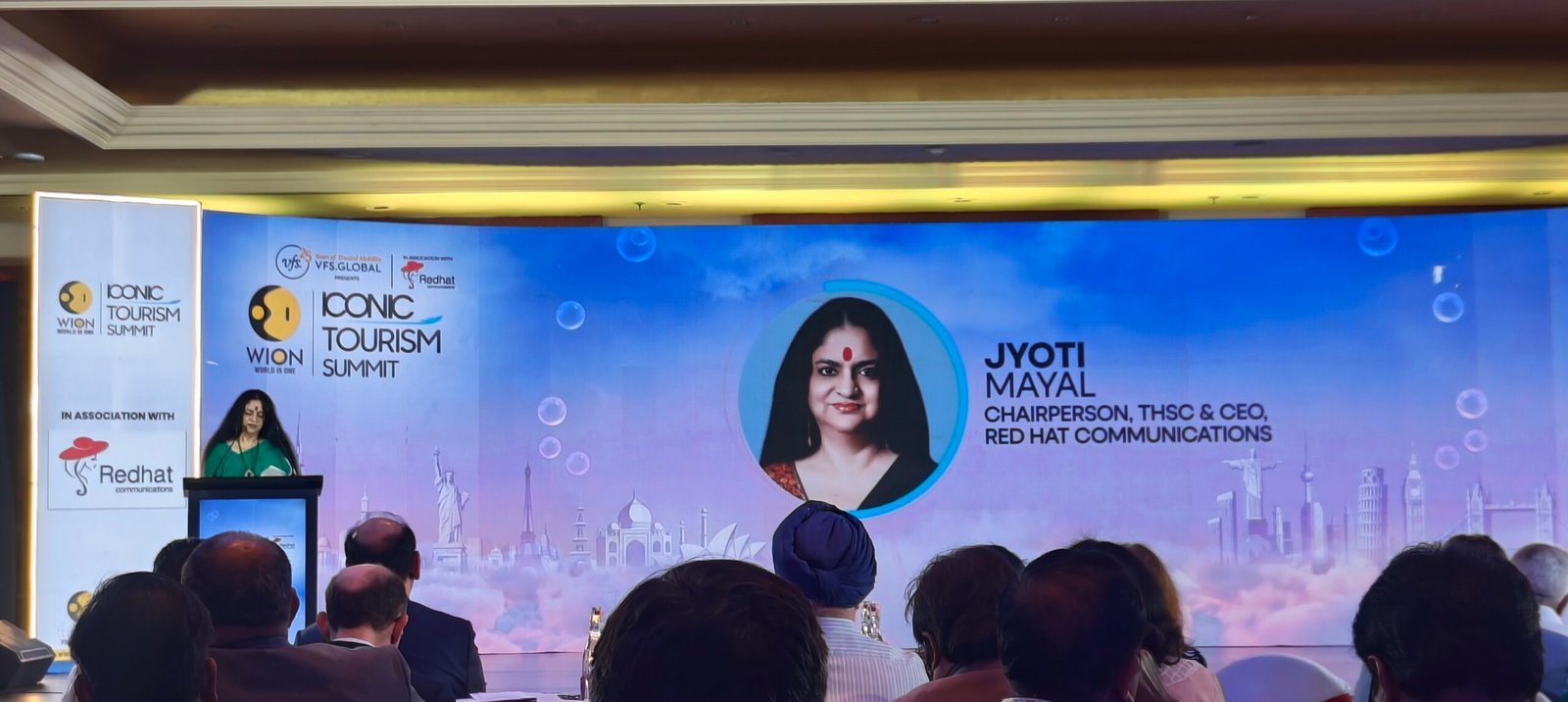
NEW DELHI — In a compelling address that challenged conventional metrics of economic progress, Jyoti Mayal, Chairperson of the Tourism & Hospitality Skill Council (THSC) and CEO of Red Hat Communications, asserted that the future of travel must transcend basic arrival statistics and physical infrastructure. Speaking at the prestigious WION ICONIC Travel & Tourism Summit in New Delhi, Mayal emphasized that the true measure of the industry’s success lies in its ability to curate authentic experiences, economically empower grassroots communities, and foster a genuinely inclusive global ecosystem.
Welcoming an influential gathering of international diplomats, policymakers, industry pioneers, visionary entrepreneurs, and diverse tourism stakeholders, Mayal reflected on the trajectory of the summit. She noted that the event has successfully matured from a modest concept into an indispensable platform for meaningful dialogue, strategic collaboration, and actionable initiatives across the entire travel and hospitality spectrum.
"The strength of this summit lies not in the event itself, but in the quality of the conversations it inspires and the calibre of leaders it brings together," Mayal stated to the assembled delegates. "We are not merely discussing the future of tourism. We are helping shape it."
The summit, hosted in association with Red Hat Communications, convened prominent voices representing travel, hospitality, aviation, and closely linked industries at a critical juncture marked by rapid technological evolution and shifting consumer paradigms.
Tourism is Being Reinvented
Expanding on the current state of the global travel sector, Mayal observed that tourism is no longer merely in a phase of post-disruption recovery. Instead, the entire landscape is undergoing a fundamental reinvention driven by emerging technologies, shifting consumer expectations, and innovative forms of mobility.
"Technology is transforming customer journeys, artificial intelligence is reshaping marketing, service delivery and business operations, while celebrities influence investment decisions and travel behaviour," she explained.
Simultaneously, contemporary travellers are exhibiting significantly higher levels of discernment. The era of standardized mass tourism is steadily giving way to a deep-seated demand for personal enrichment. "Today’s traveller is seeking experiences that are authentic, immersive, purposeful and deeply personal," Mayal remarked.
She pointed out that the modern tourism economy extends far beyond traditional hotels and commercial airlines. It now encompasses a vast network of sub-sectors, including hospitality, aviation, MICE (Meetings, Incentives, Conferences, and Exhibitions), destination weddings, wellness retreats, medical tourism, culinary arts, cultural heritage, entertainment, digital technology, grassroots entrepreneurship, and community-led development initiatives.
The sheer economic scale of India’s travel and tourism market highlights the immense magnitude of this opportunity. According to official data released by the Ministry of Tourism, India recorded 20.22 million international tourist arrivals in 2025. This figure comprised 9.15 million foreign tourist arrivals and 11.07 million Non-Resident Indian (NRI) arrivals. On the outward-bound front, Indian nationals accounted for 32.83 million departures abroad, while domestic tourism demonstrated staggering engagement, with domestic tourist visits reaching approximately 4.29 billion. Furthermore, tourism-related foreign-exchange earnings stood at an impressive approximately ₹2.7 lakh crore.
"These numbers are more than statistics," Mayal emphasized. "They represent livelihoods, entrepreneurship, community development and India’s growing influence in the global tourism landscape."
From Competition to Collaboration
Drawing upon her recent experiences and active participation in the BRICS Women’s Business Alliance, Mayal highlighted a core consensus that emerged from international discussions: the future stability and growth of global tourism will rely heavily on cross-border and cross-sector collaboration.
The international dialogues she engaged in extensively covered artificial intelligence, environmental sustainability, comprehensive destination development, entrepreneurship, women’s economic participation, workforce skilling, and digital transformation.
"The conversation was not about competition. It was about collaboration, shared learning and building stronger tourism ecosystems together," she stated.
Mayal argued that India is uniquely positioned to assume a leadership role in this transformative new phase. This advantageous position is underpinned by the country’s unparalleled cultural diversity, vibrant entrepreneurial energy, ongoing technological innovation, and rapidly expanding physical infrastructure.
The rapid development of new greenfield airports, enhanced regional connectivity initiatives, modern highways, high-speed expressways, and expansive rail networks are vastly improving accessibility to previously remote regions. Simultaneously, specialized sectors such as spiritual and religious tourism, along with tribal and rural tourism, are receiving unprecedented policy attention and investment.
However, Mayal issued a clear cautionary note: infrastructure alone will not define the industry’s future trajectory.
"Experience will," she asserted. "The traveller of tomorrow seeks authenticity over standardisation, connection over consumption and meaning over mere movement."
Putting Local Stories on the Tourism Map
For Mayal, one of India’s most significant untapped tourism opportunities lies within its diverse local communities and their rich, generational stories. Modern travellers increasingly demonstrate a strong desire to interact directly with local residents, understand age-old traditions, experience authentic regional cuisine, and discover unique narratives that cannot be replicated anywhere else in the world.
She painted a vivid picture of how traditional handicrafts can be seamlessly integrated into immersive tourism experiences, how regional cuisines can be transformed into primary destination attractions, and how local storytelling, performing arts, and indigenous crafts can become foundational pillars of the visitor experience.
"When tourism celebrates local identity, everyone benefits," she said. "The traveller gains authenticity, the destination gains distinction, and the community gains prosperity."
This core philosophy closely aligns with broader national development frameworks, such as the "One District, One Product" initiative. Such frameworks can effectively identify and promote distinctive indigenous crafts, culinary specialties, cultural traditions, heritage assets, natural landscapes, holistic wellness practices, and vibrant festivals across every district in the country.
"Every district in India has a story waiting to be told," Mayal noted. Cultivating those local stories into compelling tourism experiences can generate sustainable employment, support grassroots enterprises, preserve endangered heritage, and economically empower vulnerable communities.
"Tourism should not bring visitors to a destination. It should bring opportunity to the people who live there," she added.
The Human Side of Tourism 4.0
Turning her attention to the future of the workforce within the context of Tourism 4.0, Mayal placed profound emphasis on the irreplaceable value of human capital. While acknowledging that artificial intelligence will fundamentally transform the industry by streamlining personalization, supporting complex decision-making, and unlocking new operational efficiencies, she insisted that technology can never substitute for the genuine human qualities that form the bedrock of true hospitality.
"Technology can automate a process, but it cannot replace empathy. Technology provides information, but it cannot create trust. Technology can enhance experiences, but people create memories," she observed.
Consequently, Mayal called for a progressive overhaul of workforce skilling frameworks. Education and training programs must seamlessly combine digital literacy and artificial intelligence proficiency with essential human-centric skills, including advanced communication, creative problem-solving, cultural sensitivity, adaptability, and emotional intelligence.
Highlighting proactive industry measures, she pointed to the Tourism & Hospitality Skill Council’s collaborative efforts with government bodies and industry partners. Among these, she specifically spotlighted an impactful partnership with the Mission Shakti Department in Odisha, designed to train 12,000 women self-help group members over a span of three years. This initiative is structured to unlock viable pathways for female entrepreneurship and sustained economic empowerment.
As tourism footprint expands deeper into rural, tribal, heritage, wellness, and spiritual circuits, local populations must be integrated as active stakeholders and beneficiaries of that growth. "People in these regions should not have to leave their communities in search of opportunity. Opportunity should reach them," she stated.
Five Priorities for the Next Decade
Looking ahead at the strategic horizon, Mayal outlined five foundational pillars that will dictate the evolution of tourism over the coming decade: innovation, sustainability, skills and human capital, inclusivity, and collaboration.
Innovation will demand that the industry aggressively harness artificial intelligence, advanced data analytics, immersive technologies, and comprehensive digital transformation. Sustainability must act as a non-negotiable safeguard to protect fragile ecological and cultural destinations even as visitor volumes expand. Skills and human capital will remain paramount because technology merely supports experiences, whereas people are the ones who create them.
Inclusivity must ensure that women, the younger generation, traditional artisans, independent entrepreneurs, and local community members actively participate in and benefit from the sector’s economic expansion. Finally, synergistic collaboration between government authorities, private industry leaders, academic institutions, financial investors, technology providers, and grassroots stakeholders will remain completely essential.
Reflecting on her extensive tenure within the tourism and hospitality sector, Mayal reiterated a foundational truth: "Tourism succeeds when people succeed." She tied the ultimate success of the industry not to superficial visitor metrics, but to thriving local communities, prosperous entrepreneurs, robust female participation, conserved cultural heritage, and travellers who return home enriched with meaningful memories.
Concluding her comprehensive address at the WION Iconic Summit, Mayal urged stakeholders to adopt a broader, more holistic understanding of what constitutes genuine success in travel and tourism.
"The future will not be shaped by those who simply respond to change. It is shaped by those who lead it," she affirmed, expressing her unwavering confidence that India is primed to take a pioneering role in the next chapter of global tourism.
She left the international delegation with a final guiding thought, reminding them that the true value of tourism growth should never be calculated exclusively through arrivals, revenue generation, or concrete infrastructure.
"It should be measured in lives improved, communities empowered, heritage preserved and dreams realised."