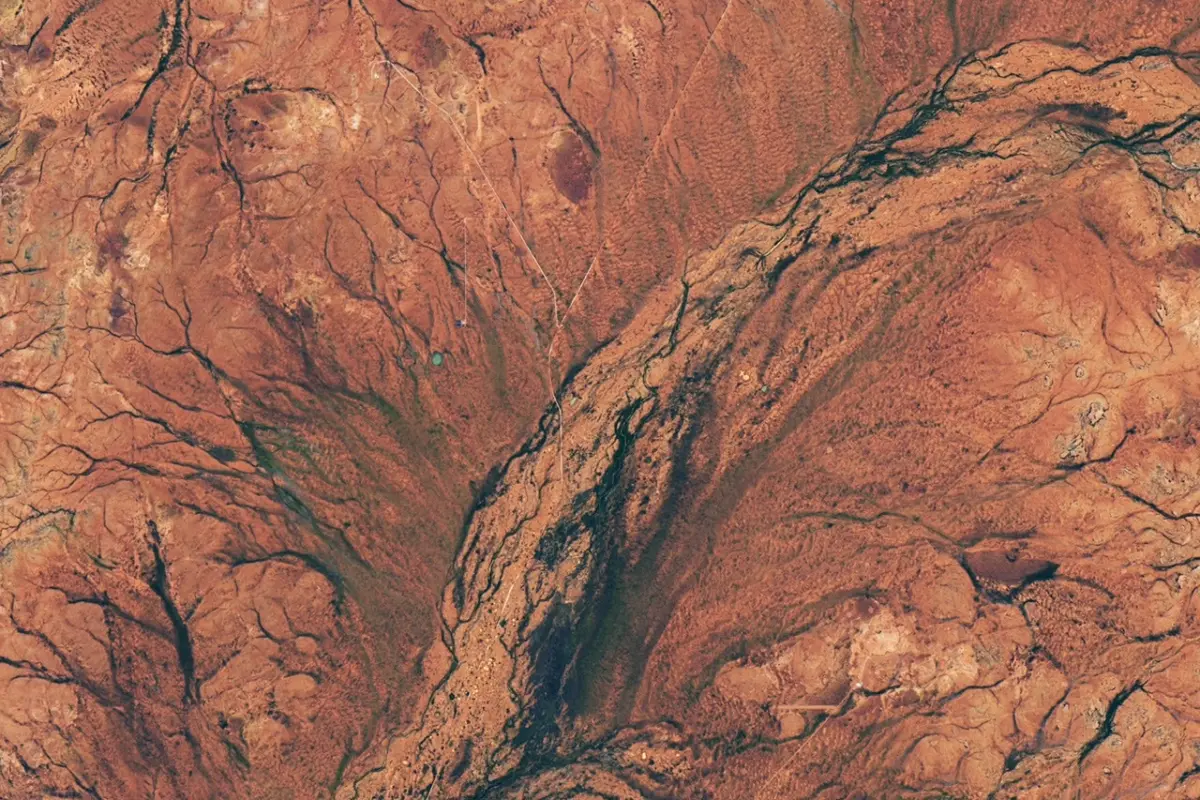
Arid shrublands across Western Australia underwent a dramatic and breathtaking transformation in the late austral winter of 2026, bursting with a profusion of wildflowers that splashed vivid colors across the rusty ochre landscape. Following several months of wetter-than-normal weather earlier in the year, long-dormant seeds buried deep within the soil awakened all at once, producing sweeping carpets of blooms that local experts believe could represent the finest floral display the region has witnessed in nearly two decades.
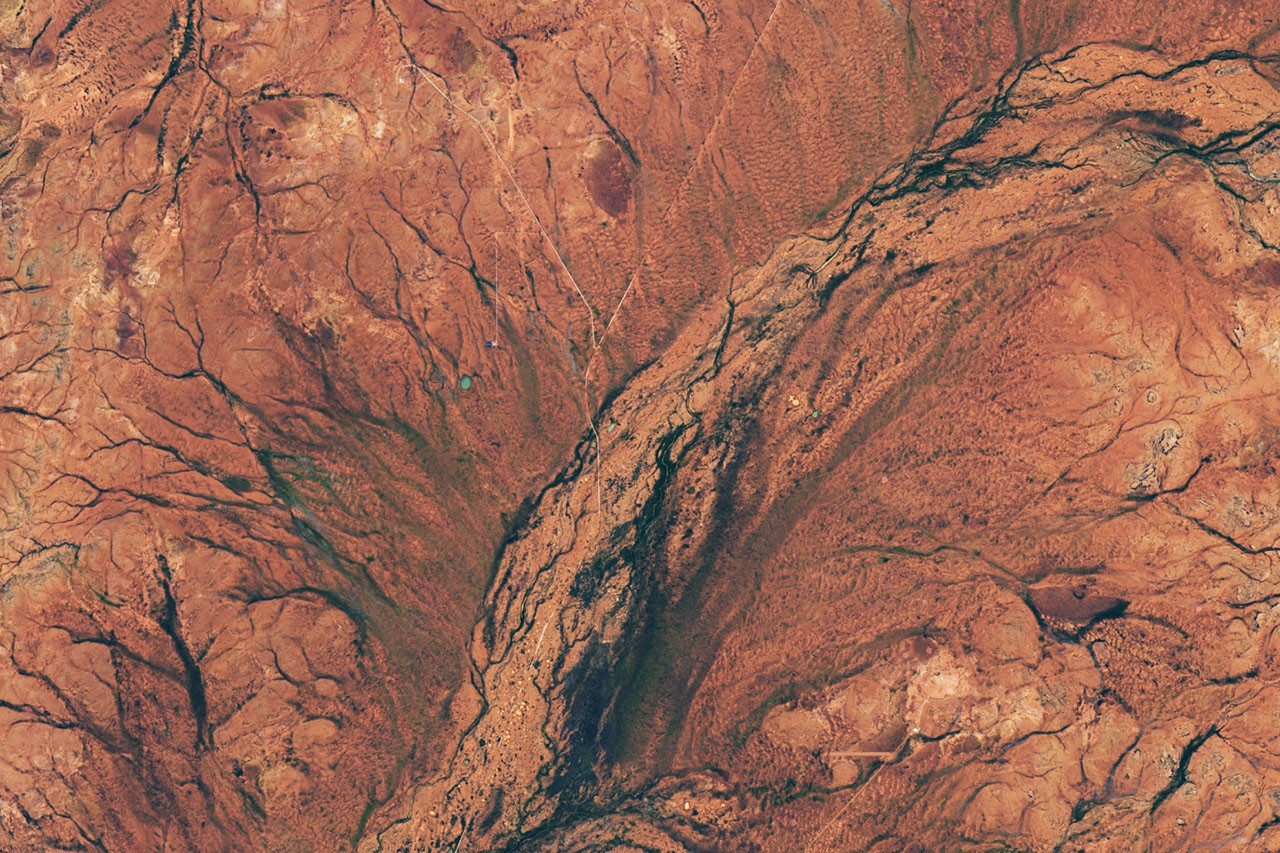
The striking transformation was captured from space using the Operational Land Imager (OLI) aboard the NASA-USGS Landsat 8 satellite. Side-by-side satellite comparisons vividly contrast the verdant, bloom-filled landscape of late August 2026 with the significantly drier conditions recorded during the same period in 2025. This remote expanse lies approximately 600 kilometers north of Perth within the Murchison region, a sprawling territory that serves as one of Western Australia’s primary pastoral areas for grazing sheep and cattle. The local vegetation typically consists of hardy grasses, saltbush, and the slow-growing evergreen mulga tree, which are well-adapted to harsh, dry conditions.
Every so often, however, cyclical shifts in weather bring forth a rich variety of wildflowers that temporarily redefine the ecosystem. According to Australia’s Bureau of Meteorology, the 2026 winter season was defined by rainfall totals that reached above average levels in June, followed by precipitation that was classified as very much above average in August. These conditions were driven by a series of active cold fronts sweeping steadily through the area. The resulting moisture acted as a vital catalyst, rousing a diverse mix of native flora to bloom across the expansive outback, including on remote lands managed for scientific research.

Among the areas experiencing the floral surge was a radio astronomy site managed by the Commonwealth Scientific and Industrial Research Organisation (CSIRO), Australia’s national science agency. The unexpected botanical display included several threatened plant species, which the observatory’s grounds have serendipitously helped monitor and protect on land that was formerly designated for pastoral use.
Though the stunning spectacle underfoot has momentarily stolen the public imagination, the facility—officially known as Inyarrimanha Ilgari Bundara, the CSIRO Murchison Radio-astronomy Observatory—is primarily dedicated to looking upward and outward into the depths of deep space. At the remote Murchison site, CSIRO operates several advanced antenna arrays designed to observe, map, and catalog celestial objects across the southern sky. To protect these sensitive astronomical instruments from interference, the facility is strategically situated within a strictly regulated "radio quiet" zone. Within this designated area, terrestrial communications and electronic devices are carefully controlled and minimized to limit electromagnetic interference that could disrupt deep-space observations.

The Murchison observatory is part of a broader network of scientific facilities and telescopes managed by CSIRO in Australia that have historically played critical roles in international space exploration, supporting NASA missions from the earliest days of spaceflight to the modern era. For instance, the renowned Murriyang radio telescope, located in Parkes, New South Wales, famously tracked Mariner 2—history’s first successful planetary science mission—back in 1962. Decades later, it served as a vital receiving station for the historic Apollo 11 mission to the Moon in 1969.
In addition to the Parkes telescope, CSIRO manages and operates the Canberra Deep Space Communication Complex. This facility stands as one of only three nodes comprising NASA’s global Deep Space Network, a vital telecommunications infrastructure that supports interplanetary spacecraft missions and gathers essential radar and radio astronomy data. Continuing this legacy of international collaboration, both the Parkes and Canberra facilities provided crucial tracking and communication support for NASA’s Artemis II mission in April 2026, anchoring Australia’s enduring partnership in the exploration of the solar system while its desert landscapes bloom anew beneath the southern skies.