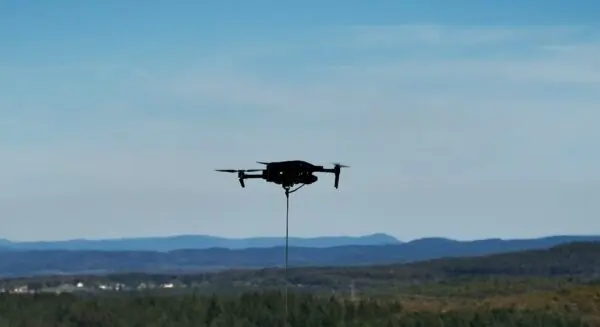
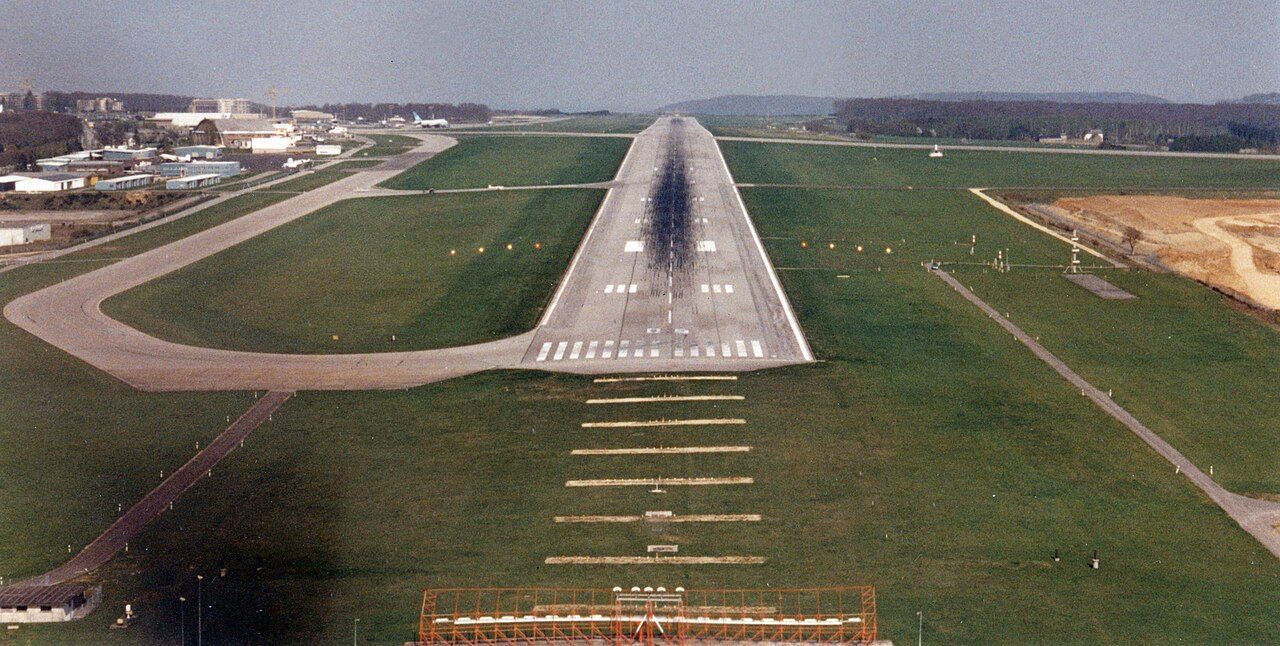
Unauthorized drone activity temporarily halted flight operations at Luxembourg Airport on the night of September 18, forcing the diversion of 19 incoming flights and triggering a swift, coordinated government response to secure the nation’s primary aviation hub.
According to the Luxembourg government, unidentified and unauthorized unmanned aerial systems (UAS) were visually observed operating in the airspace around Findel, the location of the international airport. Out of an abundance of caution and to prioritize the safety of passengers, flight crews, ground personnel, and aircraft, airport officials immediately shut down the local airspace.
The disruption brought commercial air traffic to a standstill for several hours. Normal flight operations eventually resumed at approximately 1:20 a.m. on September 19. Officials cleared the airfield to reopen only after conducting two comprehensive safety inspections that confirmed no immediate risks remained to aviation safety.
The airport’s operator, lux-Airport, reported that the rogue aircraft were first detected hovering near the perimeter of the facility before moving directly over the active airfield. While the airspace was successfully cleared and operations restarted, the operator warned passengers that residual delays could persist as commercial airlines worked to restore their normal flight schedules and reposition aircraft and crews.
Government Coordinates Investigation
In response to the security breach, Luxembourg promptly activated its interministerial drone assessment group to manage the crisis. Prime Minister Luc Frieden convened high-level meetings with Defense and Mobility Minister Yuriko Backes, Interior Minister Léon Gloden, and representatives from various security and aviation agencies involved in monitoring and safeguarding the nation’s skies.
Despite intensive coordination, authorities stated that the information gathered during the initial hours of the incident did not support any definitive conclusions. Investigators continued to review collected data and radar tracks in close collaboration with foreign partners to piece together the events of the night.
In the immediate aftermath, the government acknowledged that it had not identified the drones, who was operating them, or where they had been launched. Furthermore, officials released no information regarding a potential motive behind the incursions.
To bolster national monitoring capabilities, officials deployed additional detection resources on September 20, which included specialized equipment supplied by international allies. Around the same time, the national police investigated several subsequent reports regarding suspected drones spotted in various parts of Luxembourg’s airspace.
However, subsequent reviews determined that these later reports did not necessitate an operational emergency response. Investigators concluded that many of the reported sightings were likely misidentified navigation lights originating from ordinary, crewed commercial aircraft rather than unauthorized drones.
A subsequent government update issued on September 21 confirmed that the interministerial assessment group remained fully active. Authorities stated they are continuing to closely monitor the skies and analyze all incoming security data.
Why the Incident Matters
The temporary shutdown of Luxembourg Airport highlights the vulnerability of critical infrastructure to unauthorized drone activity, demonstrating how safety protocols can severely impact a major aviation hub even in the absence of a physical collision or a confirmed hostile act. Luxembourg Airport is not only a vital passenger link for the grand duchy but also serves as the critical home base for major cargo carrier Cargolux, making any disruption to its schedule economically significant.
This incident mirrors a broader trend across Europe, where numerous major airports have faced similar closures due to unexplained drone sightings. Over the course of late 2025, facilities in Copenhagen, Oslo, Munich, Brussels, and Liège were forced to temporarily suspend flight operations amid waves of mysterious UAS activity.
These events have occurred against a backdrop of heightened security measures across European aviation facilities. Security agencies have stepped up vigilance around critical infrastructure in response to the ongoing war in Ukraine and wider geopolitical concerns regarding potential hostile drone operations. Nonetheless, European and local officials have explicitly emphasized that there is currently no evidence linking the Luxembourg sightings to Russia, Ukraine, or any other state actor. Because authorities have not yet pinpointed an operator or established a motive, the official investigation remains wide open.
The disruption also underscores the technical and logistical challenges inherent in confirming drone sightings near busy airports. While Luxembourg successfully integrated advanced detection assets following the initial closure, the subsequent confusion caused by conventional aircraft being mistaken for drones illustrates the difficulty security forces face in verifying civilian airspace reports in real time.