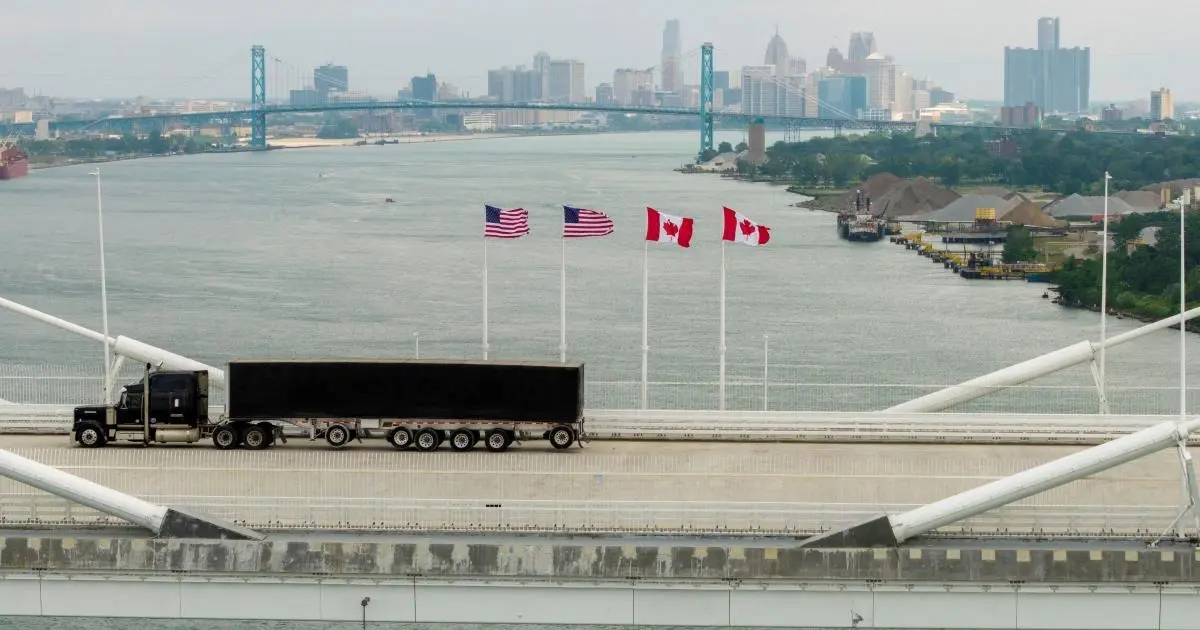
The foundational pillars of United States global power are facing an unprecedented challenge from within, as aggressive trade policies and abrasive rhetoric directed at Canada and Mexico strain decades of close diplomatic and economic relations. In geopolitics, friendly relations with immediate neighbors enhance national security, promote mutual economic prosperity, and provide a stable framework for managing complex transnational challenges. Conversely, weak or alienated neighbors often export trouble.
Today, citizens and leaders in Canada view high U.S. tariffs and dismissive rhetoric branding their nation as a prospective "51st state" as direct assaults on their economic stability and national independence. Meanwhile, in Mexico, the resurgence of economic coercion and explicit threats of military intervention have reawakened deep historical anxieties regarding external hegemony.
The modern North American partnership was forged over generations of deliberate diplomacy and strategic alignment. During the nineteenth century, U.S. foreign policy was primarily focused on its home continent, where Washington competed fiercely with France, Mexico, Russia, Spain, the United Kingdom, and indigenous populations for territorial dominance. However, as the United States emerged as a dominant global power in the twentieth century, successive generations of strategists began to take North American stability for granted, pivoting Washington’s primary focus toward Europe, the Asia-Pacific, and the Middle East.
It was not until the closing years of the Cold War that U.S. leadership explicitly recognized the vital need to reinvest in continental relations. Ronald Reagan famously articulated this strategic rationale when launching his presidential campaign in 1979, stating that the key to future security lay in Canada and Mexico becoming much stronger and integrated partners, adding that it was time to stop treating the closest neighbors as foreigners.
Geopolitics is fundamentally rooted in geography, and the continental positioning of the United States grants it an extraordinary advantage over every other major global power. Competitors such as China and Russia must navigate complex relationships with 14 separate neighbors each, many of whom harbor lingering historical resentments from past conflicts. Furthermore, both nations depend heavily on vulnerable maritime chokepoints to secure access to the world’s oceans. India, similarly, shares borders with six neighbors, including a nuclear-armed rival.
In stark contrast, the United States shares secure borders with two stable democracies and enjoys unobstructed maritime access across two vast oceans. Close cooperation with Canada and Mexico fortifies homeland security, stimulates cross-border investment, drives technological innovation, and sustains a massive shared market rich in natural resources and human talent. This cooperative triad has historically proven essential in combating transnational criminal networks, managing migration flows, and safeguarding shared ecosystems, including clean air, water, and wildlife habitats.
A safe, resilient, and adaptive North America serves as the indispensable baseline for broader U.S. global strategy. Washington is inherently best positioned to navigate an unpredictable and uncertain international landscape when the United States, Canada, and Mexico present a unified front. Yet, aggressive trade tactics and diplomatic bullying risk alienating America’s most natural and reliable partners, systematically dismantling a precious geopolitical asset: a secure continental power base.
CONTINENTAL VISION
The historical roots of this continental perspective trace back to William Seward, who served as U.S. secretary of state from 1861 to 1869. Seward was among the first American statesmen to fully comprehend that amicable relations with immediate neighbors would exponentially multiply the nation’s global influence. He famously asserted that controlling the North American continent was synonymous with holding the controlling interest in the world.
During negotiations for the purchase of Alaska in 1867, Seward observed that the acquisition of Alaska and the Aleutian Islands extended a friendly hand toward Asia. He similarly pursued the acquisition of Greenland, Iceland, Hawaii, and various Caribbean territories, believing these outposts would secure the oceanic approaches to the North American mainland.
At the same time, Seward recognized that national power could be expanded just as effectively through robust economic integration as through territorial expansion. He fiercely opposed European imperial conquests and had strongly condemned the 1846–1848 Mexican-American War. Following the conclusion of the American Civil War in 1865, Seward actively blocked Generals Ulysses S. Grant and Philip Sheridan from launching an invasion of Mexico to depose the Habsburg archduke installed by French forces. Seward reasoned that an unprovoked military intervention would permanently poison Mexican-U.S. relations and that the Mexican people were fully capable of expelling the foreign interloper themselves—a prediction realized when Mexican forces defeated the imperial regime in 1867.
Seward pursued a similarly diplomatic approach toward the northern neighbor. In 1867, the British government united its North American colonies to form the Canadian Confederation, driven in part by concerns that Washington might launch a retaliatory invasion following London’s covert assistance to the Confederacy during the Civil War. Seward chose the peaceful path of international arbitration to resolve outstanding wartime claims against the United Kingdom.
Seward’s ultimate vision was a North American union built upon voluntary association rather than military coercion or conquest. He maintained a profound faith in the magnetic, attractive power of American democratic ideals and commerce, which he believed would serve as a natural force pulling neighboring sovereign states together.
Although the restoration of Mexican President Benito Juárez in 1867 and the contemporaneous creation of the Canadian Confederation opened the door toward a democratic and economically integrated North America, Seward’s grand vision faded in subsequent decades as American policymakers redirected their focus westward, neglecting relations with neighbors to the north and south.
A SEARCH FOR STABILITY
By the dawn of the twentieth century, the United States had grown accustomed to taking continental harmony for granted. The outbreak of the Mexican Revolution in 1910 shattered that illusion of security. A decade of intense civil conflict, characterized by cross-border raids on American towns and the seizure of U.S. property by revolutionary factions, forced Washington to dispatch two separate military expeditions into Mexico, narrowly avoiding a prolonged military quagmire.
The geopolitical vulnerability of America’s southern flank was underscored in 1917, when imperial Germany issued a secret proposal to the Mexican government—intercepted and decoded by British intelligence—promising military assistance to help Mexico recover Arizona, New Mexico, and Texas if it sided with Berlin in the event of U.S. entry into World War I.
Relations eventually stabilized following the emergence of a consolidated, one-party political system in Mexico during the 1920s. As political scientists have noted, Washington accepted Mexican political autonomy under pragmatic conditions: as long as Mexico did not directly threaten U.S. security, Washington refrained from interference. Maintaining domestic stability in Mexico took precedence over challenging its closed economy, prickly nationalism, or imperfect democratic institutions. This tacit arrangement endured for roughly half a century, facilitating practical bilateral cooperation, such as the Bracero Program between 1942 and 1964, which granted temporary guest-worker permits to approximately 4.6 million Mexican laborers to fill critical shortages in American agriculture and railway industries.
Concurrently, the twentieth century witnessed Canada’s steady transition from a British dominion to an independent sovereign partner and vital military ally. Throughout the 1920s and 1930s, the United States and Canada expanded critical infrastructure, constructing bridges and tunnels to accelerate bilateral commerce. U.S. Secretary of State Cordell Hull successfully negotiated landmark reciprocal trade agreements with Ottawa in 1935 and 1938.
Following World War II, Canadian forces fought alongside Americans in the Korean War, and Ottawa became a staunch proponent of the North Atlantic Treaty Organization (NATO), the General Agreement on Tariffs and Trade (GATT), and the broader postwar international order. In the 1950s, the two nations jointly constructed the St. Lawrence Seaway and established an extensive radar network across the Arctic to monitor potential strategic missile threats. In 1965, the neighbors signed the Automotive Products Trade Agreement, creating an integrated, duty-free market for motor vehicles.
TIES THAT BIND
The velocity of North American economic integration accelerated significantly during the Reagan administration. President Ronald Reagan’s outreach to Canadian Prime Minister Brian Mulroney encouraged Mulroney to propose a comprehensive free trade agreement in 1985. This was a politically hazardous undertaking for Mulroney, as many Canadians harbored deep-seated anxieties about economic dependency on Washington. Nevertheless, proponents argued that formal rules were necessary to discipline arbitrary U.S. trade practices and stimulate investment. The two nations finalized the pact in 1987, and the U.S. Congress approved it the following year, effectively turning the 1988 Canadian general election into a national referendum on the trade deal, which Mulroney won.
In Mexico, President Carlos Salinas, who assumed office in 1988, recognized that a similar accord could rescue his country from severe debt crises, declining energy revenues, and the structural stagnation of its state-dominated economy. Seeking to spur comprehensive reform, Salinas took the bold initiative of proposing a bilateral free trade agreement to President George H. W. Bush in 1990.
Canada joined the negotiations in 1991, culminating in the signing of the North American Free Trade Agreement (NAFTA) in 1992. For Washington, NAFTA represented far more than a commercial pact; it was a cornerstone of historical reconciliation with Mexico, addressing long-standing grievances stemming from the territorial losses of 1848. Mexico sought to anchor its economic, social, and political modernization through international legal protections for investment, fair competition, and intellectual property.
President George H. W. Bush championed NAFTA as an indispensable pillar of post-Cold War strategy, describing it in 1992 as the dawn of a new era that would prepare the United States for future global challenges. His successor, President Bill Clinton, successfully steered NAFTA through a contentious congressional approval process with robust bipartisan support. Clinton further solidified Washington’s commitment to continental stability by extending a massive emergency financial rescue package to Mexico during the 1950-peso crisis in 1995 to prevent systemic financial contagion from spreading north. Following the terrorist attacks of September 11, 2001, President George W. Bush launched subsequent initiatives to secure rapid, frictionless transit for commercial goods across both borders.
BETTER TOGETHER
While critics of NAFTA initially warned that American manufacturing jobs would flee to Mexico in pursuit of lower wages, those catastrophic predictions failed to materialize. Instead, the agreement proved to be an extraordinary economic and strategic success. By 2000, six years after NAFTA’s implementation, U.S. unemployment dropped to 3.8 percent—its lowest level in decades—while inflation receded, productivity climbed, and real wages increased across multiple sectors.
The pact catalyzed massive capital investment in modernized railways, energy pipelines, electrical grids, and automated border systems, forging highly efficient regional manufacturing supply chains. Total merchandise and service trade between the United States and Canada surged from $169 billion in 1988 to approximately $900 billion, while U.S.-Mexican trade expanded from under $100 billion to nearly $1 trillion.
Cross-border investment fueled this historic expansion. U.S. direct investment in Canada rose from $61 billion prior to NAFTA to roughly $750 billion, while Canadian investment in the United States climbed from $27 billion to nearly $500 billion. Similarly, American direct investment in Mexico surged from $15 billion to a range of $130 billion to $150 billion, with Mexican business investments in the United States climbing from $1 billion to $50 billion. Because the United States remains the destination for up to 60 percent of Canadian imports and 40 percent of Mexican imports, sustained economic growth among America’s neighbors directly translates into heightened demand for U.S. goods—a multiplier effect significantly larger than that provided by more distant trading partners.
Furthermore, NAFTA’s architects anticipated that generating economic opportunities within Mexico would alleviate migratory pressures. Although initial economic disruptions in the 1990s saw the Mexican-born U.S. population rise to nine million by 2000, net migration from Mexico dropped to zero by 2010, transforming Mexico into an essential operational partner in southern border management.
Efforts by the Trump administration to dismantle NAFTA during its first term ultimately resulted in its renegotiation, culminating in the United States-Mexico-Canada Agreement (USMCA), which took effect in 2020. While the updated pact modernized provisions for digital commerce and introduced formal labor-dispute mechanisms, its rigid regional content rules for automotive manufacturing strained global competitiveness, while reduced protections for foreign investors began to erode confidence in legal predictability.
REPAIRING THE RIFT
Although the USMCA formally remains in force through 2036, the underlying spirit of the North American partnership faces severe strain. The current reluctance by Washington to extend the trade framework, combined with unpredictable unilateral trade policies, has injected profound uncertainty into long-term capital investments across Canada and Mexico. The imposition of steep tariffs on Canadian automobiles, steel, aluminum, iron, lumber, and pharmaceuticals under national security pretexts has deeply alienated a nation that has served as an integrated military and industrial partner for over a century.
The fragmentation or institutional weakening of these vital alliances would constitute a profound strategic miscalculation. Together, the three North American democracies represent a population approaching half a billion people within a growing demographic profile. Boasting advanced technological capabilities, a highly skilled workforce, integrated infrastructure, and comprehensive energy self-sufficiency spanning oil, natural gas, and renewables, the continent possesses an unrivaled geopolitical hand.
To preserve and enhance this strategic asset, Washington must move past hostile trade measures and recommit to deep cooperation with Ottawa on Arctic sovereignty, critical mineral extraction, and technological innovation. Similarly, the United States must actively assist Mexico in consolidating its democratic institutions, strengthening the rule of law, and combating entrenched criminal enterprises through advanced intelligence sharing.
From William Seward to Ronald Reagan, successive generations of American statesmen recognized that a strong, secure, and cooperative North America serves as the ultimate strategic anchor for the United States. Restoring a constructive continental partnership will require moving away from zero-sum economic strategies and returning to mutual respect, ensuring that the United States maintains its foundational power base in an increasingly uncertain world.