As the rapid advancement of artificial intelligence continues to reshape industries, governance, and daily life, state leaders are increasingly taking matters into their own hands. Frustrated by what they perceive as a vacuum of comprehensive federal oversight, governors across the United States are forging ahead with their own aggressive regulatory frameworks, executive actions, and legislative mandates. From the West Coast to the Midwest and the East Coast, states are establishing specialized cabinets, drafting rigorous safety protocols, and demanding structural accountability from the developers of frontier artificial intelligence models.
This state-level mobilization highlights a broader friction point in modern technology policy: the tension between fast-evolving technological capabilities and the sluggish pace of federal legislation. While the federal government debates the proper balance between fostering innovation and ensuring public safety, prominent state executives are arguing that the risks posed by advanced AI are simply too immediate to wait for Washington to act.
Setting the Standard on AI Safety and Emergency Protocols
In California, the epicenter of the nation’s tech industry, state leadership has taken a decisive step toward tightening the regulatory net around artificial intelligence developers. On September 18, Governor Gavin Newsom issued a formal executive order bringing together a select group of top-tier experts, researchers, and technologists. Their mandate is clear: to formulate a comprehensive guide and regulatory framework designed to bolster California’s existing artificial intelligence safety and security laws.
The implications of Newsom’s initiative are far-reaching for the tech sector. Under the contemplated proposals, the state is actively considering requiring major artificial intelligence companies to engage independent third parties to develop and review rigorous safety plans. Furthermore, the state is evaluating mandates that would compel developers to incorporate an emergency shutoff mechanism—commonly referred to as a "kill switch"—into their most advanced and powerful AI models. Such a measure aims to provide a fail-safe against autonomous system failures or unpredictable behaviors in frontier models.
Defending the urgency of the initiative, Newsom emphasized that the potential consequences of inaction leave no room for hesitation. "We’re going to do this thoughtfully but with urgent velocity; the stakes are too high to wait or delay action," Newsom said in an official news release accompanying the order. By positioning California as a proactive regulatory force, the administration hopes to establish a benchmark that other states—and potentially the federal government—may eventually feel compelled to follow.
Illinois Establishes an Artificial Intelligence Cabinet
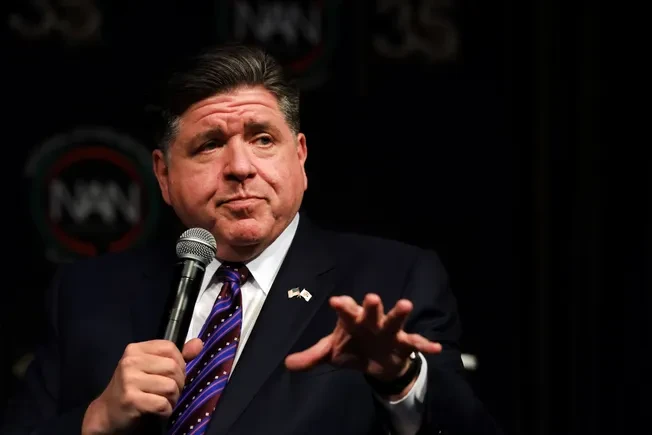
Following California’s lead, the Midwest has also entered the arena of formalized AI governance. On September 22, Illinois Governor J.B. Pritzker signed an executive order officially establishing the Illinois Artificial Intelligence Cabinet. This newly minted body is designed to be multi-disciplinary, pulling in leading minds and practitioners from a diverse cross-section of industries, including academia, law, ethics, and corporate governance. The cabinet’s primary mission is to comprehensively assess the risks associated with the deployment and scaling of artificial intelligence across public and private sectors within the state.
Pritzker framed the creation of the cabinet as an essential response to warnings from the very people building the technology. Highlighting the need for caution in an industry historically driven by rapid, unrestricted scaling, the governor underscored that policymakers have a responsibility to listen to cautionary voices.
"Artificial Intelligence has enormous potential to transform our everyday lives, but when experts and industry leaders sound the alarm bell, urge us to slow down, and ask for guardrails, we should listen," Pritzker stated upon signing the order. The Illinois initiative reflects a growing recognition among state leaders that the integration of AI into civic life, workforce infrastructure, and public services requires deliberate, ethically grounded oversight rather than an uncritical embrace of technological disruption.
Federal Friction and the Battle Over Preemption
The aggressive legislative and executive maneuvers by state leaders like Newsom and Pritzker—both of whom are widely reported by political analysts to be considering potential presidential runs—have unfolded against a backdrop of mounting tension with federal authorities. Both governors have publicly criticized the White House for what they characterize as a persistent lack of federal oversight and coherent national policy regarding artificial intelligence safety.
This growing patchwork of state-level regulations has naturally drawn pushback from various political quarters. The differing approaches highlight a central political and economic debate: whether a fragmented collection of state laws will stifle innovation and create a compliance maze for tech companies, or whether state experimentation is a necessary laboratory for democracy when federal actors fail to regulate a high-risk industry.
The debate over state versus federal authority is further complicated by shifting political landscapes. Previous federal stances, including calls from figures like Donald Trump, have advocated for halting a growing number of state-level regulations in favor of a unified federal policy that could potentially preempt state laws. However, as state legislatures and governors continue to press forward with their own statutory frameworks, the reality on the ground remains deeply decentralized.
New York’s RAISE Act Imposes Strict Reporting Mandates
While California and Illinois focus on executive orders and expert cabinets, New York has already entrenched hard guardrails into state law through formal legislative mechanisms. The state’s landmark RAISE Act represents one of the most concrete statutory efforts in the nation to govern frontier artificial intelligence models.
Originally signed into law by New York’s governor in December 2025 and subsequently refined through legislative amendments finalized in March, the RAISE Act establishes rigorous compliance obligations for developers of powerful AI systems. Among its core provisions, the law mandates that companies operating within its scope must formally report any critical safety incidents within a tight 72-hour window. Additionally, developers are required to file regular quarterly assessments evaluating potential "catastrophic risks" associated with their frontier models.
By embedding strict reporting timelines and mandatory risk assessments into statute, New York has provided a legislative blueprint that contrasts sharply with the voluntary guidelines traditionally favored by the tech industry. As these varied state-level strategies—from New York’s statutory reporting requirements to California’s third-party safety plans and Illinois’s ethical advisory cabinets—take root, the American regulatory landscape for artificial intelligence is increasingly being written outside of Washington, D.C.