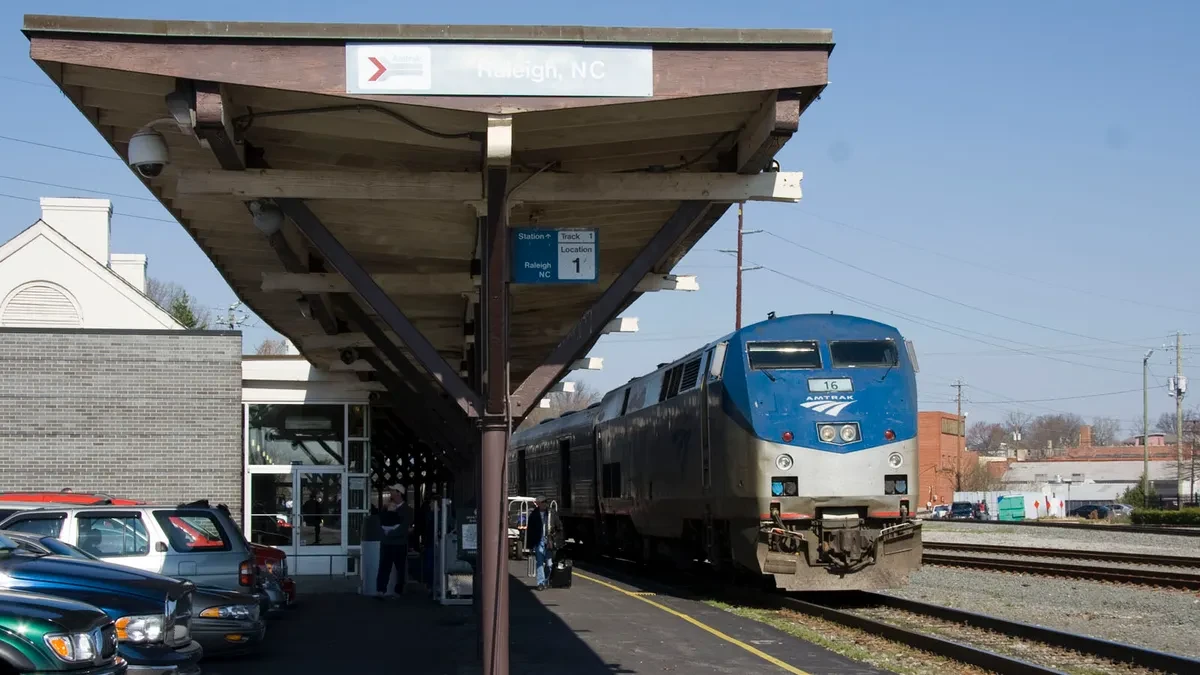
As transportation authorities look for sustainable ways to ease highway congestion and modernize regional mobility, passenger rail development along the East Coast continues to gain significant momentum. A major initiative connecting North Carolina and Virginia is moving steadily forward, promising to reshape how travelers move between the two states while addressing long-standing bottlenecks in the freight rail network.
The S-Line project, which will establish a vital high-performance rail connection between Richmond, Virginia, and Raleigh, North Carolina, represents one of the most ambitious regional infrastructure efforts in the American Southeast. According to the North Carolina Department of Transportation (NCDOT), the comprehensive rail modernization initiative is designed to fundamentally relieve train congestion along existing freight corridors. By separating and optimizing passenger and freight traffic, the project will clear the operational path for North Carolina and Virginia to schedule significantly more frequent passenger train trips, offering commuters, business travelers, and tourists a reliable alternative to driving.
A Strategic Partnership and Freight Realignment
The foundation of the S-Line project rests on a critical segment of infrastructure formerly owned exclusively by CSX, a major freight rail operator. Recognizing the strategic value of the corridor, the transportation departments of both North Carolina and Virginia took the decisive step of purchasing the right-of-way for a substantial portion of the line running between Petersburg, Virginia, and Raleigh. This acquisition allowed public agencies to secure direct control over the pathway, paving the way for targeted engineering, track upgrades, and expansion.
The physical transformation of the corridor officially kicked off in 2024 with a ceremonial groundbreaking in Raleigh, marking the transition from years of conceptual planning to active construction and development. State transportation planners have emphasized that the acquisition and subsequent upgrades are not merely about adding passenger capacity; they are essential for smoothing out the operational friction that occurs when passenger and freight services compete for the same physical track space.
Federal backing has proven crucial in advancing the corridor toward reality. The Federal Railroad Administration (FRA) has obligated vital funds for the initiative, a milestone process that involves a formal, project-specific agreement between the United States Department of Transportation and the North Carolina Department of Transportation. This federal commitment underscores the broader national push toward revitalizing intercity rail networks.
This funding follows closely on the heels of other major regional investments. In April, the U.S. Department of Transportation awarded nearly $300 million dedicated specifically to the Piedmont Corridor, which runs between Raleigh and Charlotte, North Carolina. That funding package was earmarked to eliminate nine dangerous grade crossings, install critical double-track segments to increase capacity and fluidity, and implement advanced trespassing prevention measures to enhance overall corridor safety.

Federal officials have highlighted the cooperative nature of these infrastructure wins. FRA Administrator David Fink pointed to the strong institutional alignment driving the region’s rail renaissance in a public statement regarding the progress.
"This milestone is a testament to the strong partnership between the Federal Railroad Administration, Amtrak, and NCDOT in advancing the S-Line and the earlier announced Piedmont Line corridors," Fink said. "Through close collaboration, we are delivering vital investments that will modernize passenger rail and create a new Golden Age of Rail for the people of North Carolina."
Fostering Transit-Oriented Communities and Multimodal Mobility
Beyond the immediate benefits of faster trains and reduced rail traffic congestion, the S-Line project is serving as a catalyst for comprehensive community planning and economic development. The North Carolina Department of Transportation is currently leading the planning efforts for transit-oriented development along a sprawling 95-mile section of the rail corridor.

This targeted planning spans several key municipalities and communities, including Apex, Franklinton, Henderson, Norlina, Raleigh, Sanford, Wake Forest, and Youngsville. By aligning local land-use policies with the arrival of enhanced passenger rail service, these localities hope to encourage sustainable growth, walkable commercial and residential spaces, and vibrant downtown centers that capitalize on easy access to clean transportation.
Integral to this transit-oriented approach is the inclusion of community mobility hubs designed specifically for these designated cities and towns. These hubs are intended to seamlessly stitch together various modes of travel, bridging the gap between intercity rail service and local mobility needs. By facilitating vital first- and last-mile connections, the hubs will provide commuters and visitors with practical alternatives to private automobiles, incorporating essential infrastructure such as secure bike parking and local transit integration.
As engineering work, federal oversight, and local planning efforts continue to align, the S-Line project stands as a cornerstone of modern transportation planning in the region. By modernizing physical tracks, reducing freight-passenger conflicts, and embedding sustainable mobility hubs into the fabric of growing communities, North Carolina and Virginia are laying the groundwork for a more connected, resilient, and transit-friendly future.