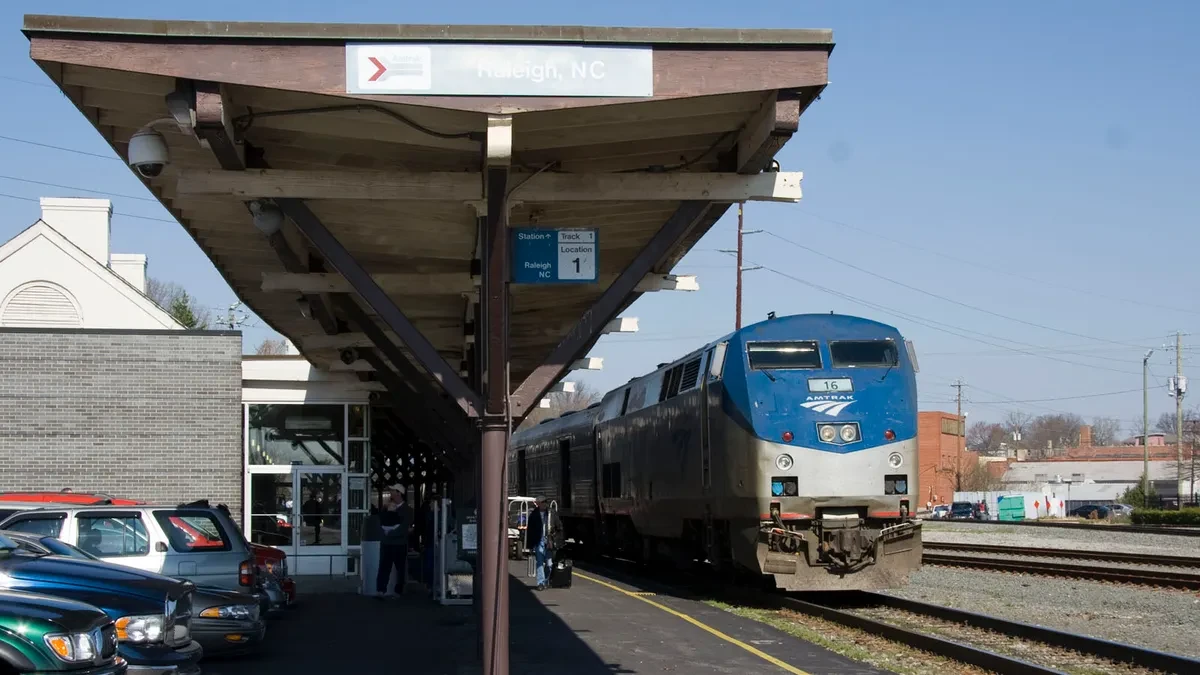
A major infrastructure initiative aimed at transforming passenger rail travel in the American Southeast is pressing forward, promising to reshape transportation links between North Carolina and Virginia. The ambitious undertaking focuses on the S-Line, a vital rail corridor historically used for freight that is now being revitalized to handle a surge in modern passenger demand. According to the North Carolina Department of Transportation, the infrastructure project is designed to fundamentally relieve train congestion along existing shared corridors, thereby clearing the way for both state departments of transportation to schedule significantly more frequent passenger train trips for travelers moving through the region.
The strategic importance of the S-Line project stems from its capacity to connect critical economic and population centers. Specifically, the initiative bridges the gap between Richmond, Virginia, and Raleigh, North Carolina, establishing a high-performance passenger rail route that bypasses slower, more congested freight-only pathways. By modernizing and expanding this historic right-of-way, transportation planners hope to forge a reliable, high-speed backbone for the entire mid-Atlantic and southeastern rail network, providing a viable alternative to highway travel and fostering regional economic growth.
Dive Insight: The Path From Freight Corridor to Passenger Hub
The S-Line is fundamentally a CSX-owned freight rail line, making its transformation into a modern passenger corridor a complex logistical and financial undertaking. Recognizing the long-term potential for regional mobility, the states of North Carolina and Virginia proactively purchased the right-of-way for a crucial portion of the line stretching between Petersburg, Virginia, and Raleigh. This foundational land acquisition laid the groundwork for actual construction, which officially broke ground in 2024 at a ceremony held in Raleigh.
The primary operational benefit of the S-Line project remains the relief of chronic congestion on existing freight rail corridors. For decades, passenger and freight trains have shared the same tracks, leading to scheduling conflicts, delays, and capacity limits. By establishing a dedicated or heavily upgraded passenger pathway, the project will enable North Carolina and Virginia to schedule a much higher frequency of passenger train trips, meeting growing consumer demand for reliable rail transit, according to announcements from the North Carolina Department of Transportation.
Financial backing for these sweeping improvements has been solidified through federal channels. The Federal Railroad Administration has officially obligated crucial funding for the initiative, a vital regulatory and administrative step that involves a formal, project-specific agreement between the United States Department of Transportation and the North Carolina Department of Transportation. This federal commitment builds upon prior financial infusions into the broader regional network. In April, the U.S. Department of Transportation awarded nearly $300 million specifically for the Piedmont Corridor between Raleigh and Charlotte, North Carolina. That funding package was earmarked to eliminate nine dangerous grade crossings, install critical double-track segments to improve traffic flow, and implement advanced trespassing prevention measures to enhance overall corridor safety.
Federal rail officials have emphasized the collaborative nature of these achievements and their broader significance for the nation’s transportation infrastructure. Highlighting the cooperative spirit behind the initiative, FRA Administrator David Fink pointed to the strong institutional alignment driving the work forward.

"This milestone is a testament to the strong partnership between the Federal Railroad Administration, Amtrak, and NCDOT in advancing the S-Line and the earlier announced Piedmont Line corridors," FRA Administrator David Fink said in a statement. "Through close collaboration, we are delivering vital investments that will modernize passenger rail and create a new Golden Age of Rail for the people of North Carolina."
Beyond the steel tracks and signaling systems, the vision for the S-Line encompasses comprehensive community planning and local economic development. The North Carolina Department of Transportation is actively leading planning efforts for transit-oriented development along a 95-mile-long section of the rail corridor. This extensive geographic planning footprint touches numerous municipalities, including Apex, Franklinton, Henderson, Norlina, Raleigh, Sanford, Wake Forest, and Youngsville.
As part of this localized development strategy, the planning framework incorporates community mobility hubs within these participating cities. These hubs are designed to seamlessly integrate various modes of transportation, facilitating smooth first- and last-mile connections for commuters and travelers alike. By incorporating multimodal options and dedicated bicycle parking facilities into the transit-oriented development plans, state and local planners aim to create sustainable, accessible community centers that leverage the economic momentum of the returning passenger rail service.