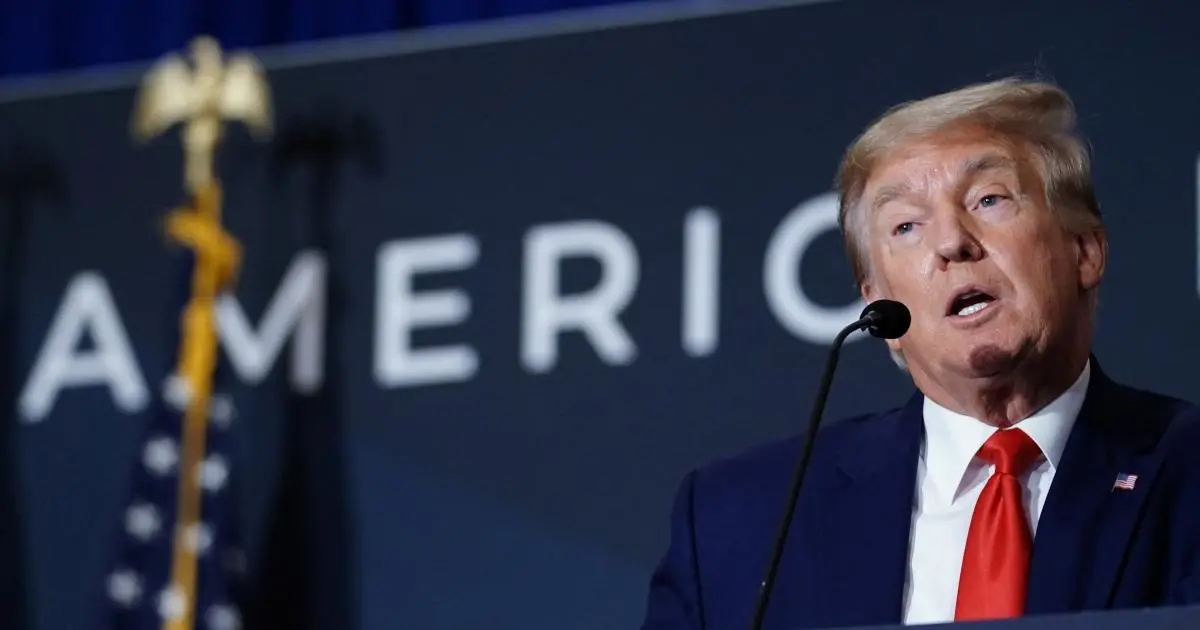
Critics from across the political spectrum have long disparaged U.S. President Donald Trump’s "America first" brand of statecraft, and for good reason. Under this banner, Washington has frequently alienated traditional allies, appeased formidable great-power rivals, launched yet another troubled war of choice in the Middle East, and blundered into wide-ranging trade wars that have significantly worsened the United States’ domestic affordability crisis.
Yet, as the debate intensifies over what the next administration’s foreign policy framework should look like, Democrats and Republicans alike must be careful not to throw the baby out with the bathwater. Trump is fundamentally right to recognize that U.S. strategy is in desperate need of an overdue overhaul. Most of his foundational instincts are sound and align closely with structural changes unfolding across the international system and shifting currents in American public opinion. His "America first" foreign policy is a symptom, rather than the primary cause, of global disarray and a broader public disillusionment with the political establishment. Many U.S. voters have grown deeply fatigued by the country’s chronic overreach abroad and the persistent affordability crisis weighing heavily at home. Trump successfully tapped into these widespread grievances by promising to scale back costly international entanglements and revive domestic manufacturing sectors and factory jobs.
These are undoubtedly worthy policy goals, but Trump’s execution has badly missed the mark. He has initiated new conflicts while mostly failing to resolve old ones, and his aggressive tariffs have fueled domestic inflation while doing little to successfully resuscitate the manufacturing base. Moreover, Trump has implemented these course corrections with marked incompetence, frequently making policy by executive impulse, gutting the professional diplomatic corps, relying heavily on an inexperienced inner circle, and prioritizing personal loyalty over empirical facts.
The central challenge ahead is not to reflexively restore the status quo of the past. While liberal internationalism long served the United States well, it did so during an era that effectively no longer exists. Instead of entirely burying the core concepts of "America first," Trump’s eventual successor should salvage its best, most pragmatic elements and implement them with greater administrative competence. The next evolution of U.S. foreign policy should successfully marry the realist impulses that shape "America first" with the enduring liberal causes at the heart of the American experience. That composite strategy would see Washington pare back its sprawling commitments abroad, reach across ideological dividing lines to work pragmatically with great-power rivals, operate through nimble and targeted coalitions, and repair the fractured social contract and ailing democracy at home. Foreign policy ultimately starts at home; only by redressing the socioeconomic discontent that has cleaved the body politic into hostile camps can the country recoup the bipartisan centrism and democratic vitality needed to anchor purposeful and steady statecraft.
OUT OF THE MIRE
Two tectonic geopolitical shifts are driving the international system toward a historic turning point. Power is rapidly shifting from West to East and from North to South, fueled by the ascent of large developing countries such as Brazil, China, India, Indonesia, and Nigeria. While the United States and its democratic allies—assuming they manage to maintain functional partnerships—will remain an influential bloc, they are no longer a preponderant one. As this diffusion of global power simultaneously stokes geopolitical rivalries, ordinary Americans are growing weary of endless entanglement in a fragmenting world.
At the same time, technological advances driven by the digital age have steadily undermined the social contract of the industrial era, hollowing out the middle class in the process. As broadly shared prosperity has given way to deepening economic insecurity and rising inequality, stark political cleavages have emerged along socioeconomic, educational, and rural-urban lines. Liberal democracy is in retreat worldwide, including within the United States, where the centrist, bipartisan compact that historically anchored U.S. statecraft has effectively collapsed.
Enter Donald Trump. By the time U.S. forces completed their withdrawal from Afghanistan in 2021, more than 70 percent of Americans deemed the two-decade war a strategic failure. Speaking directly to an electorate fed up with never-ending conflicts in the Middle East, Trump pledged "no more wars" during his reelection campaign. He began his second term by using military force sparingly. A single-night air campaign against Iran’s nuclear installations in June 2025 and a swift, in-and-out raid to seize Venezuelan President Nicolás Maduro in January 2026 initially succeeded in their narrow aims. However, emboldened by these low-cost wins, Trump proceeded to launch a full-scale war against Iran in February 2026. By planning for a short conflict and getting bogged down in a protracted one, he fell squarely into the very trap he had sworn to avoid.
Given that the United States repeatedly finds itself mired in errant conflicts, Congress urgently needs to reassert its constitutional obligations to formally approve acts of war and oversee strategic retrenchment. The bar for engaging in major conflicts outside the core strategic regions of Europe and East Asia should remain exceptionally high. It is past time for Washington to return to its traditional geopolitical vocation: acting as a great-power balancer to preserve stability in the strategic heartland. American strategy toward Europe and East Asia has been a steady and cost-effective success, facilitating great-power peace since 1945. The roughly 150,000 U.S. troops still stationed across these core theaters represent a wise investment in extending that historic track record.
A strategic retrenchment from the Middle East and other peripheral zones does not mean a comprehensive geopolitical retreat, but it does require relying far more heavily on diplomacy and economic engagement rather than military intervention. When the use of force is genuinely required to counter threats to U.S. interests or allies, Washington should generally limit itself to supporting regional partners while relying primarily on special operations forces and surgical strikes. As it seeks to end its addiction to military force, Washington could take a page from Beijing’s playbook: China has successfully expanded its influence and maximized its leverage in the global South not through armed intervention, but through targeted investments, trade, and the Belt and Road Initiative, the largest infrastructure undertaking in modern history.
As the United States refocuses its attention and resources on maintaining stability in Asia and Europe, it can nonetheless lighten its strategic load by rebalancing its alliances. Trump made notable headway by pushing traditional allies to shoulder a fairer share of their own defense burdens, leading NATO members and Asian partners to substantially increase their defense budgets. Yet, true to form, Trump has marred these successes by taking actions that corrode decades of hard-earned trust, such as floating threats to acquire Greenland and repeatedly demeaning allied leaders in public.
Allies are vital force multipliers. Rather than alienating them, the United States should hold them even closer as they build up their respective military capabilities. Washington should work collaboratively with allied defense industries and military planners to design a new division of labor, establish clear force levels, and set realistic timetables to meet mutual security goals. The network of U.S. defense pacts is poised to grow stronger as its allies strengthen themselves, but only if this rebalancing occurs with mutual consent, foresight, and respectful treatment of partners.
SPHERE FACTOR
Adjusting U.S. strategy to the onset of a multipolar world also entails building upon Trump’s recognition that regional spheres of influence are making a formidable comeback. As power diffuses across the international system, Washington is neither willing nor financially able to single-handedly oversee all the world’s main strategic theaters. Instead, major powers within each theater will inevitably play a more prominent role in guiding regional integration projects, shaping regional security orders, and providing local public goods.
For decades, mainstream American policymakers routinely denounced the very concept of spheres of influence. As recently as 2021, then-Secretary of State Antony Blinken dismissed the notion as "a recipe for an international system that falls apart." Yet, since its founding era, the United States has fiercely prioritized establishing and defending its own sphere of influence in the Western Hemisphere. During the Cold War, Washington tacitly granted the Soviet Union a buffer zone in Eastern Europe while firmly entrenching its own zones of control in Western Europe, Northeast Asia, and the Middle East.
Trump has recognized this enduring double standard. The 2025 National Security Strategy formally endorses a reassertion of U.S. dominance in the Western Hemisphere while calling on other sovereign states to assume primary responsibility for their own respective regions. Furthermore, Trump has exhibited a long-overdue regard for the strategic interests of other great powers and shown appropriate caution regarding the overextension of U.S. commitments into their immediate backyards. He effectively precluded the possibility of Ukraine’s entry into NATO, fully aware that membership would run directly afoul of Russia’s legitimate security interests and dangerously overextend the alliance. He has also actively sought ways to reduce tensions in East Asia by pausing certain arms sales to Taiwan and canceling specific military exercises with South Korea.
However, even if Trump is right to herald the return of regional spheres of influence, he has frequently acted with self-defeating excess. In the Western Hemisphere, his administration has alienated Canada, treated Venezuela almost like a U.S. colony, economically strangled Cuba, ordered legally questionable strikes against boats accused of drug trafficking, and pursued erratic rhetoric regarding geographic landmarks. Instead of cultivating a benign sphere of influence that naturally attracts neighbors and promotes regional stability, Trump has often constructed a malign sphere of coercion that prompts neighboring countries to run for cover.
Trump has created a similar mess across other international theaters. Even if his decision to close NATO’s door to Ukraine was prudent, he has failed utterly to convince Moscow to end its war of aggression against its neighbor, leaving a stable security order in Europe entirely out of reach. Moreover, while regional integration offers the best statistical bet for creating the stronger Europe that Trump claims to desire, his administration has actively backed far-right political parties that are fundamentally hostile to the European Union. Trump’s approach to East Asia remains similarly muddled; while he holds high-profile summits with Chinese leader Xi Jinping and expresses ambitions to do the same with North Korean leader Kim Jong Un, his broader administration lacks a coherent, long-term strategy for China or Northeast Asia as a whole.
The diffusion of global power makes a more regionalized world inevitable. To maintain international order within that reality, the United States will need to work constructively with China, Russia, and other regional heavyweights. Trump’s successors will need to salvage his defective efforts to help guide this complex transition. Washington must exercise a restrained and lawful brand of hegemony in the Western Hemisphere, strictly respecting the sovereignty of its neighbors and pursuing mutual economic gains. Such an approach would encourage other global powers to adopt similar restraint within their own neighborhoods. To that end, Washington should grant Moscow and Beijing more diplomatic breathing room in exchange for their readiness to exercise strategic restraint locally. Both capitals might well adopt a less coercive stance toward their immediate neighbors if the United States were to meaningfully reduce its own military footprint and strategic designs along their rimlands.
It will be particularly vital for the United States to work alongside China—its only true peer competitor—to de-escalate bilateral tensions without encouraging broader Chinese expansionism. On one hand, Washington must make realistic allowances for growing Chinese power and ambition, recognizing that a stable new regional order in Asia can only endure if the reigning global hegemon and the rising challenger reach an accommodation regarding the distribution of power and influence. On the other hand, Washington cannot permit aggressive actions against regional neighbors. The United States must walk a delicate line between prudent accommodation and dangerous appeasement, with the ultimate long-term goal of establishing a multilateral system of regional governance anchored broadly by China but accepted by its surrounding neighbors.
UNTIED NATIONS
Trump’s 2025 National Security Strategy embraces what it terms "flexible realism," a pragmatic foreign policy doctrine aimed at establishing stable working relations with all nations without imposing domestic democratic or social changes that differ widely from their historical traditions. This willingness to work across ideological boundaries serves as an important corrective to the rigid "democracy versus autocracy" framework that largely guided the Biden administration’s foreign policy. The United States must navigate the international system as it actually exists, rather than as Washington would prefer it to be. Trump is right to reach out to autocracies and set aside the zealous, often counterproductive promotion of democracy abroad.
This flexible realism also entails recognizing the necessity of forming bespoke coalitions of the willing to supplement the United Nations and other large multilateral institutions. When it comes to preventing or resolving major armed conflicts, the UN has largely been relegated to the sidelines. Concurrently, domestic support for formal multilateralism has evaporated within Washington, with Republicans in particular embracing a deep hostility toward institutionalized international commitments.
Flexible coalitions are already emerging as the vehicles of choice for resolving modern geopolitical crises. A prime example was the 2015 nuclear deal with Iran, negotiated collectively by China, France, Germany, Russia, the United Kingdom, and the United States. Similarly, Oman, Pakistan, and Qatar have led diplomatic efforts to mediate between Iran and Washington, while a coalition comprising Egypt, Saudi Arabia, the United Arab Emirates, and the United States has worked tirelessly to end Sudan’s devastating civil war.
Yet, even if Trump’s brand of realism marks a necessary course correction, its execution has been deeply flawed. His outreach to Xi Jinping and Russian President Vladimir Putin occurs in erratic fits and starts, lacking clear, consistent strategic objectives. Washington’s unilateralism and fondness for ad hoc arrangements have also been pushed too far. While the UN system falls woefully short of managing major security disputes, it plays an irreplaceable role in humanitarian relief, global health coordination, and climate change mitigation. By slashing humanitarian assistance and withdrawing from key bodies like the World Health Organization and the Paris climate agreement, Trump has severely hobbled effective global initiatives. Furthermore, while his signature coalition—the Board of Peace—carries theoretical potential, it was thrown together haphazardly, resulting in an initial mission to pacify and govern Gaza that has proven to be an utter failure.
Whoever succeeds Trump should continue his pragmatic efforts to work with autocratic governments, but that outreach must be guided by clear strategic objectives, foster genuine geopolitical stability, and rely on the sustained, professional work of career diplomats rather than a small handful of financiers. Experienced U.S. diplomats must thoroughly prepare for high-level summits and identify concrete deliverables with their foreign counterparts, treating these gatherings as critical opportunities to advance global stability.
Greater reliance on flexible coalitions of the willing is fundamentally the right move, but those coalitions must be properly structured for their intended purpose. The Board of Peace, for example, currently includes over 25 members, featuring countries that carry little diplomatic weight, such as Kosovo, Mongolia, and Paraguay. Instead, such a board should function as a dedicated concert of great powers—both democratic and autocratic—tasked with managing acute crises and building international consensus on global governance. Unlike the UN Security Council, which is frequently paralyzed by vetoes, this steering group could forgo rigid binding rules and formal charters, striving instead for consensus through the give-and-take of professional diplomacy.
Even as it establishes a great-power steering group to handle core security challenges, Washington should resume supporting the UN system to advance broader human welfare. The World Food Program, the World Health Organization, and the Paris climate agreement may be imperfect, but Washington should endeavor to make them more effective rather than undermining them. When the United States defects from global commitments, other nations quickly follow; France, Sweden, and the United Kingdom all slashed their own foreign assistance budgets after Washington gutted its spending. The United States must act as a leader, not a laggard, on issues of human welfare. Doing so is not merely a matter of altruism, as the United States will ultimately have to grapple directly with millions of migrants fleeing failing states, emerging pandemics, and the escalating dangers of climate change.
Finally, although the United States should continue practicing ideological pluralism and working constructively with autocracies, that pragmatic outreach must be paired with a robust revitalization of democracy at home. Americans have little choice but to learn to live comfortably in a politically diverse world, but they should do so while upholding the original version of U.S. exceptionalism: serving as a compelling democratic exemplar. Americans should not abandon their foundational aspiration to bend the arc of history toward freedom, but instead of seeking to foist democracy onto foreign societies by force, they should pursue that mission by refurbishing their own domestic experiment and proving conclusively that representative government can outperform autocratic alternatives.
IT STARTS AT HOME
The powerful antiestablishment wave that carried Trump to power in both 2016 and 2024 is animated by deep domestic discontent regarding the quality of life at home, at least as much as it is driven by fatigue over foreign overreach. A substantial portion of Trump’s voter base feels left behind by rapid automation and globalization, economically displaced by immigration, and sidelined by shifting progressive social and cultural norms. Trump has responded directly to these anxieties by cracking down on immigration and aggressively targeting diversity, equity, and inclusion initiatives. At the absolute center of his domestic agenda is his enduring pledge to rebuild the American middle class. As he campaigned for reelection in 2024, Trump promised that higher tariffs would transform the United States back into a manufacturing powerhouse replete with plentiful factory jobs.
Trump is entirely right to want to tame economic inequality, scale back some of the systemic excesses of globalization, and secure vital supply chains for critical goods. However, blunt protectionism will not revive the manufacturing sector. Automation, rather than free trade, is the primary structural cause of the decades-long decline in manufacturing employment. Despite years of aggressive tariffs and industrial policy interventions, manufacturing jobs have continued to disappear, and the rate at which machines replace human labor will only accelerate as firms increasingly integrate artificial intelligence. Roughly 80 percent of the U.S. workforce is already employed in the service sector, and the vast majority of these workers will not be returning to factory production lines. In the meantime, Trump’s broad tariffs, compounded by supply chain disruptions stemming from conflicts in Ukraine and the Middle East, have significantly increased the domestic cost of living—proving to be a central political vulnerability for Republicans heading toward upcoming midterm elections.
Instead of promising to claw back manufacturing jobs that are gone for good, the next administration should focus on training American workers for the jobs of the future. The public sector must work hand-in-hand with private industry to fashion an education and employment ecosystem fit for the digital age. In the decades ahead, most Americans will work in information technology, data processing, education, finance, health care, travel, hospitality, leisure, and retail. As artificial intelligence continues to disrupt labor markets across diverse sectors, workers will urgently need transferable skills that allow them to adapt. Expanding worker retraining programs, investing heavily in the ailing public school system, and improving access to community colleges will do far more than tariffs to rebuild the middle class, serving as essential first steps toward forging a new domestic social contract. A credible plan for getting working-class Americans back on their feet is critical to repairing the nation’s democracy and steadying its overarching statecraft.
Even if the Democratic Party regains control of one or both chambers of Congress in upcoming midterm elections—a scenario that appears increasingly likely—they will likely struggle to fundamentally alter Trump’s established course. He routinely bypasses Congress on most issues, but particularly on matters of foreign policy, where the legislative branch historically wields limited constitutional leverage.
Consequently, Americans have little practical choice but to weather the remainder of the Trump era while attempting to limit domestic damage by defending democratic norms at home. Yet, preparing adequately for the next administration requires drawing the correct lessons from this turbulent presidency. Trump has successfully begun implementing a much-needed overhaul of U.S. grand strategy, but he remains incapable of translating those sound instincts into coherent, sustainable policy. It will ultimately fall to his successor to better align U.S. grand strategy with a rapidly changing world, restoring the strategic judgment and administrative competence that have been glaringly absent during Trump’s time in charge.