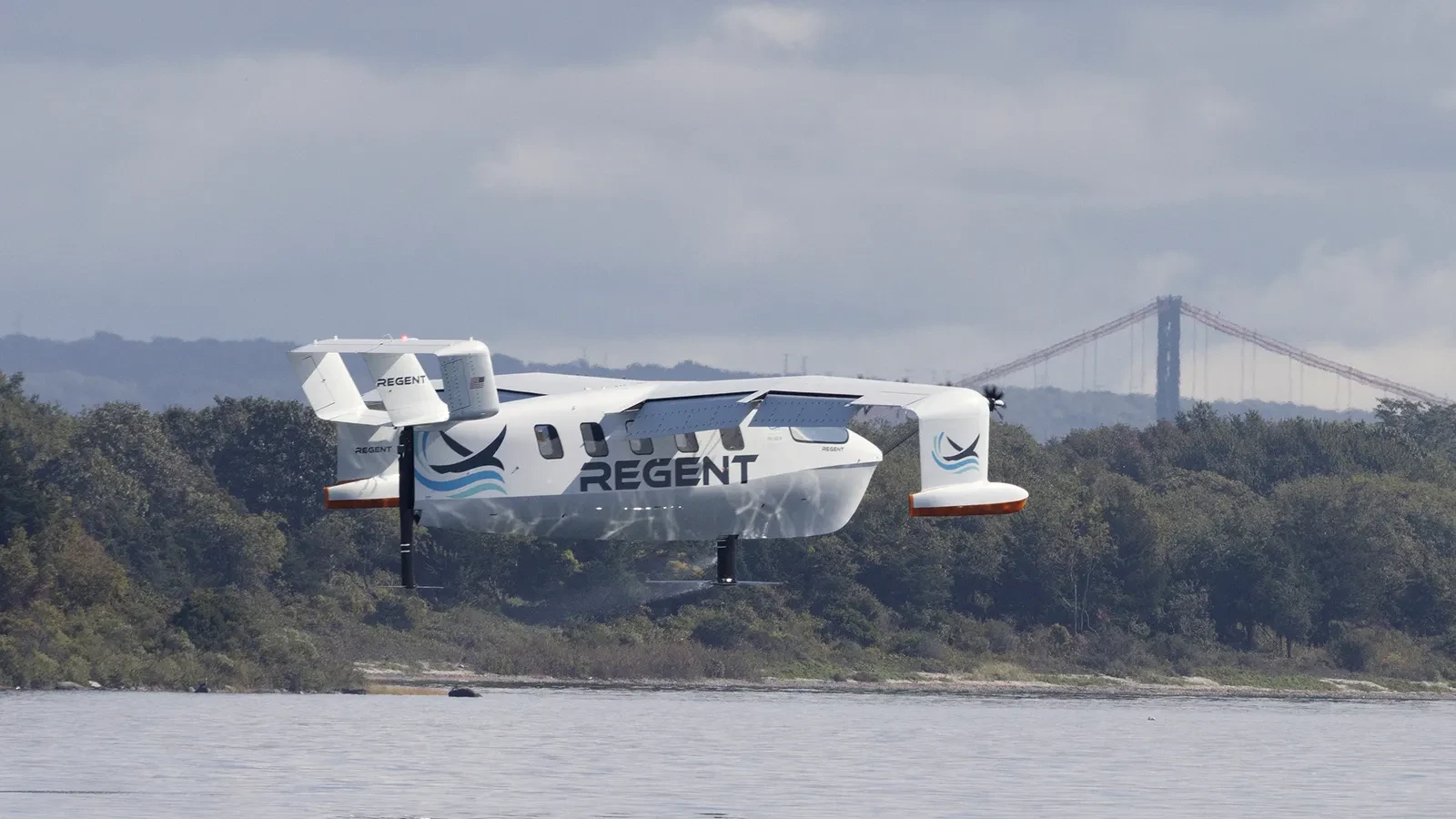
More than 600 invited guests looked on from a flotilla of vessels as Regent Craft’s electric-powered Viceroy seaglider prototype rose gracefully 30 feet above Narragansett Bay off the coast of Rhode Island, marking a significant milestone for the burgeoning field of alternative maritime and coastal transit. The event, held on September 30, 2026, served as the fifth test flight for the passenger-carrying prototype, showcasing a futuristic transportation concept that merges elements of high-speed boating, hydrofoiling, and low-altitude aviation.
As the craft prepared for takeoff, Regent co-founder and CEO Billy Thalheimer narrated the action for the expectant crowd over the public address system. "Here we have the Viceroy prototype accelerating, and watch as we pick up some speed," Thalheimer said as the vessel surged forward. "Those foils [are] lifting the hull out of the water and just being effortless."
The demonstration drew a high-profile audience consisting of customers, prospective buyers, suppliers, and leaders from the aviation, defense, and finance sectors. Two large ferry boats chartered for the event carried the bulk of the guests, while accredited journalists observed the test flight from a smaller accompanying boat positioned closer to the action.

Operating the craft during the demonstration was a licensed maritime captain, supported by a watch officer stationed alongside in the cockpit. According to a Regent spokesperson, each test flight is meticulously designed to evaluate the vessel’s performance and operational capabilities as the company moves steadily toward securing formal U.S. Coast Guard certification. Because the vehicle generally maintains a flight altitude of no more than 30 to 40 feet above the water’s surface, it operates entirely outside the traditional airspace regulated by the Federal Aviation Administration. Nonetheless, company executives noted that the FAA has maintained a cooperative and consultative relationship with Regent throughout the development process.
The Viceroy is a 12-passenger, fully electric vessel engineered to operate across three distinct modes depending on its speed and environment. At low speeds near docks and harbors, the craft floats and maneuvers directly on its hull like a conventional boat. Once it clears the immediate harbor area and gains open water, it transitions smoothly onto hydrofoils, lifting the main body clear of the water to reduce drag. Finally, as it accelerates further, the vessel takes complete flight on a dynamic cushion of air maintained just above the water’s surface. According to Regent’s technical specifications, the craft is capable of reaching top speeds of up to 180 miles per hour and boasts a range of up to 180 miles on a single charge.

The scientific principle behind the craft’s flight is known in aviation and aerodynamics as the "ground effect." This aerodynamic phenomenon occurs when an aircraft or wing operates very close to a fixed surface, such as the ground or the ocean. The air and pressure distortions trapped between the lifting surfaces and the underlying surface generate a substantial increase in aerodynamic lift and a reduction in aerodynamic drag. Regent officially classifies its creations as "wing-in-ground effect craft," positioning them as an entirely new category of commercial vehicle designed specifically to bridge the gap between high-speed ferries and regional turboprop aircraft.
The commercial potential for such vessels has drawn intense interest from coastal municipalities, private ferry operators, and transportation entrepreneurs worldwide. Larry Wirsing, Regent’s vice president of programs, discussed the expansive market potential with reporters at the event. "We’ve actually mapped out pretty much every coastal community in the world where we think the market segment is," Wirsing said. He emphasized that journeys ranging from approximately 20 to 200 miles represent prime economic and operational opportunities for the Viceroy, offering a fast, zero-emission alternative to congested coastal highways and circuitous land routes.
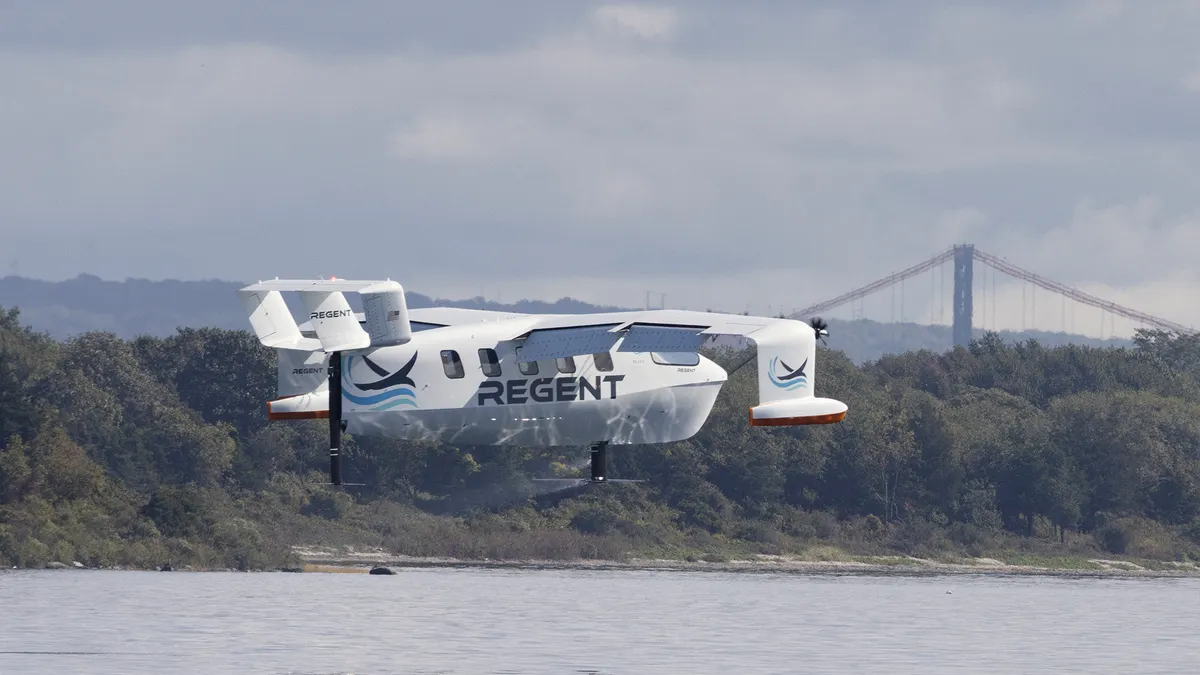
The flight demonstration coincided with the official opening of Regent’s massive new manufacturing facility in North Kingston, Rhode Island. The 255,000-square-foot production plant opened its doors just a day prior to the flight, though the sprawling industrial space had to be temporarily cleared of the stages, seating arrangements, and catering tables utilized for the post-flight presentation and celebrations. Looking ahead, Regent has set an ambitious commercial timeline, aiming to deliver the first production models of the Viceroy seaglider to waiting customers as early as late 2027. Following initial rollouts, the company plans to scale manufacturing operations progressively until it reaches a sustained production volume of 75 Viceroy vessels annually.
In addition to the flagship passenger vessel, Regent also used the event to demonstrate its smaller autonomous drone craft, known as the Squire. Operating under principles similar to the larger seaglider, the Squire does not carry human passengers and is currently being developed to serve a diverse array of specialized commercial and defense applications, further expanding Regent’s footprint in the advanced maritime mobility sector.