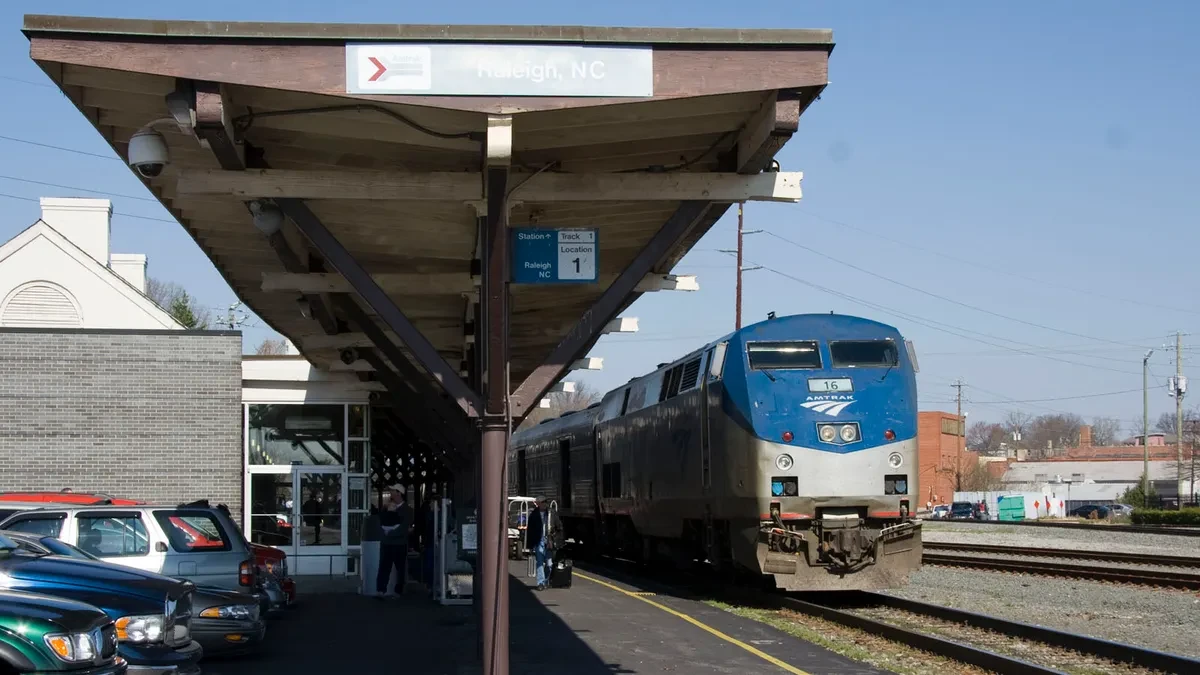
The ongoing development of the vital S-Line rail corridor is moving forward with strong federal backing, marking a major milestone in ongoing efforts to reshape passenger and freight transportation across the American Southeast. Designed to link Richmond, Virginia, and Raleigh, North Carolina, the ambitious multi-state rail project aims to dramatically alleviate persistent train congestion while paving the way for faster, more frequent, and more reliable passenger rail services between the two rapidly growing states.
Originally a freight-dominated rail corridor owned by CSX, the S-Line has been the focus of unprecedented multi-state cooperation. Recognizing the immense potential for transforming regional mobility, the transportation departments of both North Carolina and Virginia took the decisive step of purchasing the right-of-way for a crucial portion of the line stretching between Petersburg, Virginia, and Raleigh. Momentum for the initiative visibly accelerated when officials officially broke ground on the project during a ceremony held in Raleigh.
According to statements from the North Carolina Department of Transportation (NCDOT), the primary objective of the S-Line project is to relieve severe congestion on existing, heavily burdened freight rail corridors. By separating and optimizing traffic flows, the infrastructure overhaul will clear the necessary operational capacity for North Carolina and Virginia to schedule a significantly higher frequency of passenger train trips. This expansion is expected to serve as a cornerstone for modernizing regional travel, offering commuters, business travelers, and tourists a viable, high-speed alternative to congested interstate highways.
Federal Funding and Strategic Partnerships
The progression of the S-Line has been heavily supported by crucial federal commitments, most notably through the Federal Railroad Administration (FRA). The FRA officially obligated substantial funding for the initiative, a vital administrative and financial step that involves executing a formal, project-specific agreement between the United States Department of Transportation and the North Carolina Department of Transportation.
This latest financial alignment follows closely on the heels of other major federal investments in the region’s rail infrastructure. In April, the U.S. Department of Transportation announced nearly $300 million in dedicated funding for the Piedmont Corridor, which connects Raleigh and Charlotte. That separate yet complementary funding package was designated to eliminate nine dangerous grade crossings, install critical double-track segments to enhance two-way train flow, and implement advanced security measures focused on trespassing prevention.
Federal rail leaders have praised the collaborative approach taken by state and federal entities to bring these projects to fruition. FRA Administrator David Fink highlighted the cooperative spirit driving the initiatives in a recent statement regarding the ongoing work.

"This milestone is a testament to the strong partnership between the Federal Railroad Administration, Amtrak, and NCDOT in advancing the S-Line and the earlier announced Piedmont Line corridors," Fink stated. "Through close collaboration, we are delivering vital investments that will modernize passenger rail and create a new Golden Age of Rail for the people of North Carolina."
Transit-Oriented Development and Community Mobility
Beyond the immediate railway tracks and signaling systems, the S-Line project is serving as a catalyst for comprehensive community planning and urban development. The North Carolina Department of Transportation is currently leading extensive planning efforts aimed at fostering transit-oriented development along a 95-mile-long section of the rail corridor.
This planning umbrella encompasses numerous municipalities situated along the route, including Apex, Franklinton, Henderson, Norlina, Raleigh, Sanford, Wake Forest, and Youngsville. By aligning municipal growth with the anticipated arrival of frequent, reliable rail service, local leaders hope to encourage sustainable residential and commercial development that reduces automobile dependency and fosters walkable, vibrant communities.

As part of this broader vision, the planning framework also incorporates the creation of dedicated community mobility hubs within these participating cities and towns. These multimodal facilities are designed to seamlessly integrate various forms of transportation, offering smooth first- and last-mile connections for travelers. By incorporating features such as enhanced pedestrian pathways, local transit connections, and secure bike parking facilities, the mobility hubs aim to ensure that the economic and convenience benefits of the S-Line extend deeply into the surrounding neighborhoods and regional communities.