Around 2.5 to 2 billion years ago, Earth underwent the largest chemical transformation ever recorded at its surface. As oxygen began accumulating in the atmosphere for the very first time, it set in motion a vast cascade of environmental and geological changes. These ancient shifts eventually helped make possible the rise of complex, multicellular organisms—including the plants and animals that populate our world today—about half a billion years ago.
As atmospheric oxygen levels increased, enormous amounts of microbial material were rapidly buried beneath the seafloor. That massive burial process trapped organic carbon deep within rocks, leaving behind an unusual and highly distinctive isotopic signature. For decades, many geologists and geochemists have interpreted that specific signature as definitive evidence that Earth’s global carbon cycle became dramatically unbalanced on a planetary scale during a turbulent period of planetary evolution.
A Famous Signal From Early Earth
Evidence supporting that global interpretation has traditionally come from drill cores—long, solid cylinders of rock pulled from deep underground—recovered from ancient marine sediments in Karelia, Russia, and the Francevillian Basin in Gabon. However, a new study led by researchers at the California Institute of Technology (Caltech) is now raising fundamental questions about whether the Russian evidence actually records a planetwide event, or if scientists have been misinterpreting a purely local phenomenon.
"One major debate centers on an unusual carbon-isotope signal that has often been interpreted as evidence of a worldwide environmental change," says Nivedita Thiagarajan, a senior scientific researcher at Caltech who works in the laboratory of John Eiler, the Robert P. Sharp Professor of Geology and Geochemistry and Ted and Ginger Jenkins Leadership Chair of the Division of Geological and Planetary Sciences.
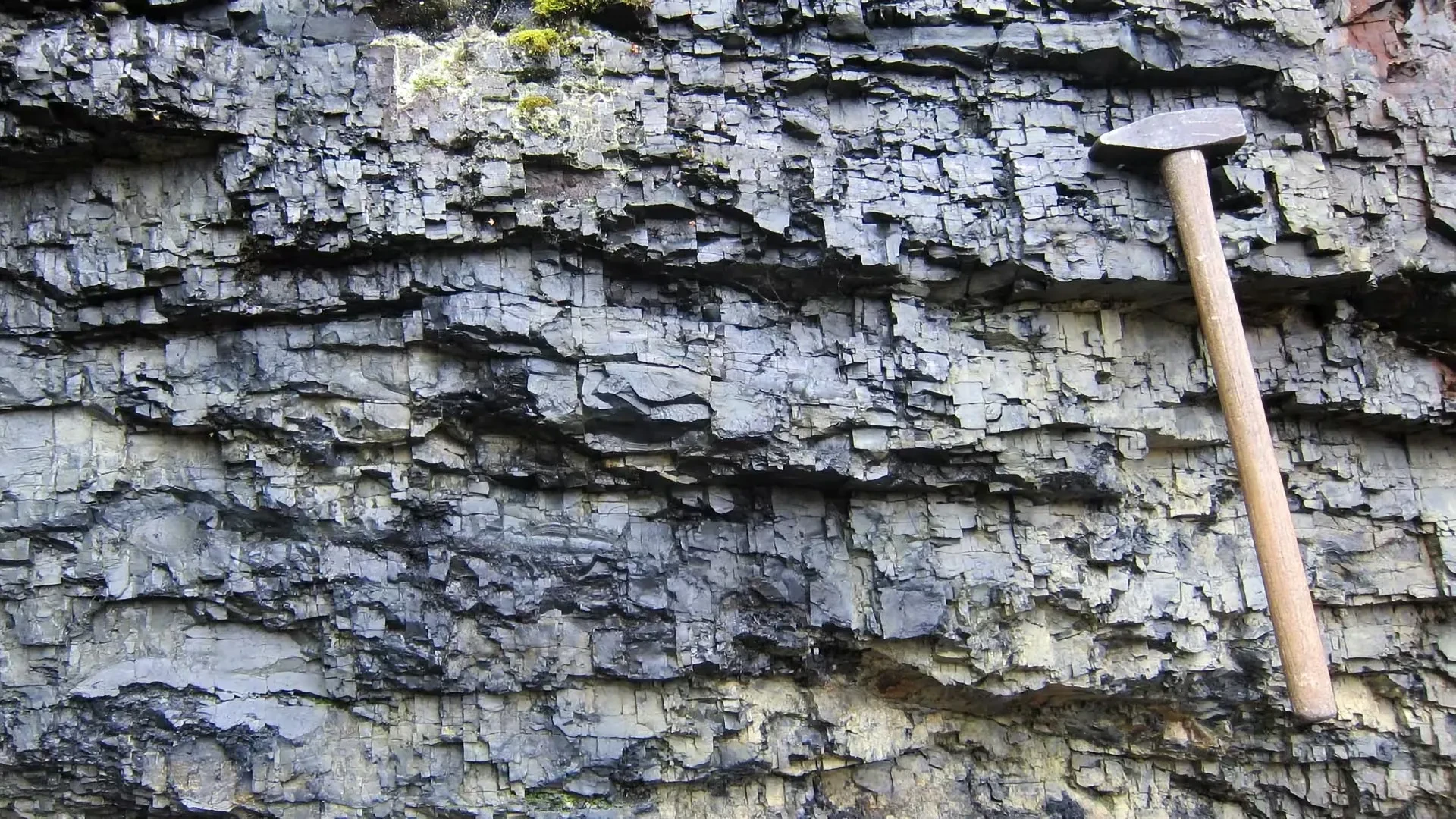
"We studied gases trapped in microscopic pockets within rocks from the Zaonega Formation in Karelia, Russia, one of the world’s oldest known fossil oil fields, and found that the carbon-isotope signal at this key site can be explained by local phenomena that occurred in a several-hundred-square-kilometer sedimentary basin rather than across the entire globe," Thiagarajan explains.
Thiagarajan serves as the lead author of a recent paper published in the scientific journal Geology. The study details how the research team successfully reconstructed the complex sequence of environmental and thermal changes preserved in Karelia’s ancient rocks following the planet’s first major increase in atmospheric oxygen.
Carbon isotopes—which are simply heavier or lighter forms of the same chemical element—provide scientists with vital clues about the origins of biological material that accumulated billions of years ago. By measuring the relative amounts of these isotopes preserved within drill cores, researchers can construct a detailed historical record of ancient environmental change, operating somewhat analogously to how a forester reads the growth rings of an ancient tree.
An unusual carbon signal found in both the Zaonega Formation and rocks from Gabon is widely known in the geological community as the Shunga-Francevillian event. For generations, scientists have frequently pointed to this specific isotopic anomaly as prime evidence that Earth experienced a major global disruption of its carbon cycle roughly 2 billion years ago.
"Earth, in a way, went crazy during that time interval when oxygen appeared in the atmosphere. What we are trying to assess are the causes and consequences of Earth oxygenation," explains Aivo Lepland, a researcher at the Geological Survey of Norway (NGU) in Trondheim and a co-author on the new study. "This information is archived in the rocks, so, in order to study what happened, you have to study rocks."
Gases Trapped for 2 Billion Years
To examine the Shunga-Francevillian event from an entirely new analytical perspective, the researchers examined drill cores stored securely at the Geological Survey of Norway. Specifically, they focused their investigation on microscopic gases sealed tightly inside fluid inclusions—tiny pockets of liquid and gas trapped within mineral crystals—from samples originating in the Zaonega Formation that are exceptionally rich in pyrobitumen.
The Zaonega Formation was once part of an ancient marine sedimentary basin. Pyrobitumen itself is an insoluble form of organic carbon that develops naturally when buried crude oil, or kerogen, which serves as a primary source material for natural gas, is subjected to intense, prolonged heating deep below the Earth’s surface.
The collaborative project took shape after Lepland arrived at Caltech to spend a sabbatical. He brought with him a fresh, comprehensive collection of isotope measurements derived from gases trapped inside Zaonega rocks, data that had not yet been fully analyzed or interpreted within the context of modern geochemical models.
At the same time, Thiagarajan and Eiler had recently finished unrelated research measuring precise isotope ratios in modern and ancient natural gases. That foundational work had helped them develop a broader, more robust framework for understanding the complex chemical pathways through which natural gas forms and evolves in sedimentary basins.
When the researchers combined their two complementary sets of expertise and analytical data, a distinctly different explanation for the enigmatic ancient isotope signatures began to emerge.
Magma, Methane, and Microbes
Rather than pointing to a sweeping global catastrophe or a planetwide destabilization of the carbon cycle, the research team proposes a localized, highly dynamic sequence of events. They suggest that a massive sheet of magma forcefully intruded through thick layers of marine sediment at the Zaonega Formation, which at the time lay submerged beneath a prehistoric ocean.
The intense heat radiating from the underground magma warmed surrounding sediments that were densely packed with organic material. That thermal cooking process generated substantial quantities of hydrocarbons, including methane and propane gases. These newly formed gases then migrated upward through the overlying sediment column, eventually reaching specialized communities of microbes living near the ancient seafloor that thrived by consuming methane.
Those seafloor microbes subsequently produced biological mass carrying a characteristically light carbon isotope signature, which could adequately explain the unusual chemical signal preserved in the rocks today.
The physical temperature evidence gathered by the team strongly supports this proposed scenario. The researchers successfully identified a large thermal gradient within the strata, with temperatures reaching approximately 350 degrees Celsius right beside the ancient magma intrusion, while falling off to about 72 degrees Celsius at an ancient seafloor asphalt spill located roughly 300 meters higher up in the column.
"This chain of geological and biological processes can account for the unusual carbon-isotope signal recorded at the Zaonega Formation," Thiagarajan notes. "It was interesting to see that some of the same signatures that we observe in modern oil and gas basins are also there and preserved in 2-billion-year-old samples."
While the researchers emphasize that they cannot completely rule out minor contributions from other concurrent processes, their empirical results clearly indicate that the carbon isotope anomaly preserved at Zaonega was driven primarily by events confined within the local sedimentary basin, rather than by a sweeping global disturbance.
"Because Zaonega is a reference site for the Shunga-Francevillian event, our findings raise important questions about whether it should be considered a worldwide event," Thiagarajan says.
Testing the Theory in Gabon
With the findings from the Russian site established, the logical next step for the international research team will be to determine whether this same localized geological and biological explanation can successfully account for the similar isotope signal found thousands of miles away in Gabon.
To test this hypothesis, the researchers plan to analyze new samples collected through the GOE-DEEP project, an international scientific initiative co-funded by the International Continental Scientific Drilling Program. The overarching goal is to ascertain whether local geological processes similar to those identified in Russia also shaped the Gabonese rock record during the same critical geological epoch.
During the summer of 2025, Lepland spent four months on the ground in Gabon actively coordinating a major drilling campaign. The newly recovered rock cores arrived safely at the Geological Survey of Norway in February and are currently scheduled to be sampled later this year by a large, multidisciplinary team of international researchers representing institutions across 18 countries.
"Now we can really put things together by doing a similar type of study on the Gabonese rocks to compare the two sites," Lepland says, emphasizing the collaborative nature of the ongoing work. "This is how science moves forward."
The published research paper in Geology is formally titled "Paleoproterozoic thermogenic hydrocarbon generation, Zaonega Formation, Russia." Additional co-authors contributing to the study include Florian Eichinger of Hydroisotop GmbH, a specialized natural isotope analysis laboratory operating in Germany, and Anthony Prave of the University of St. Andrews in Scotland.