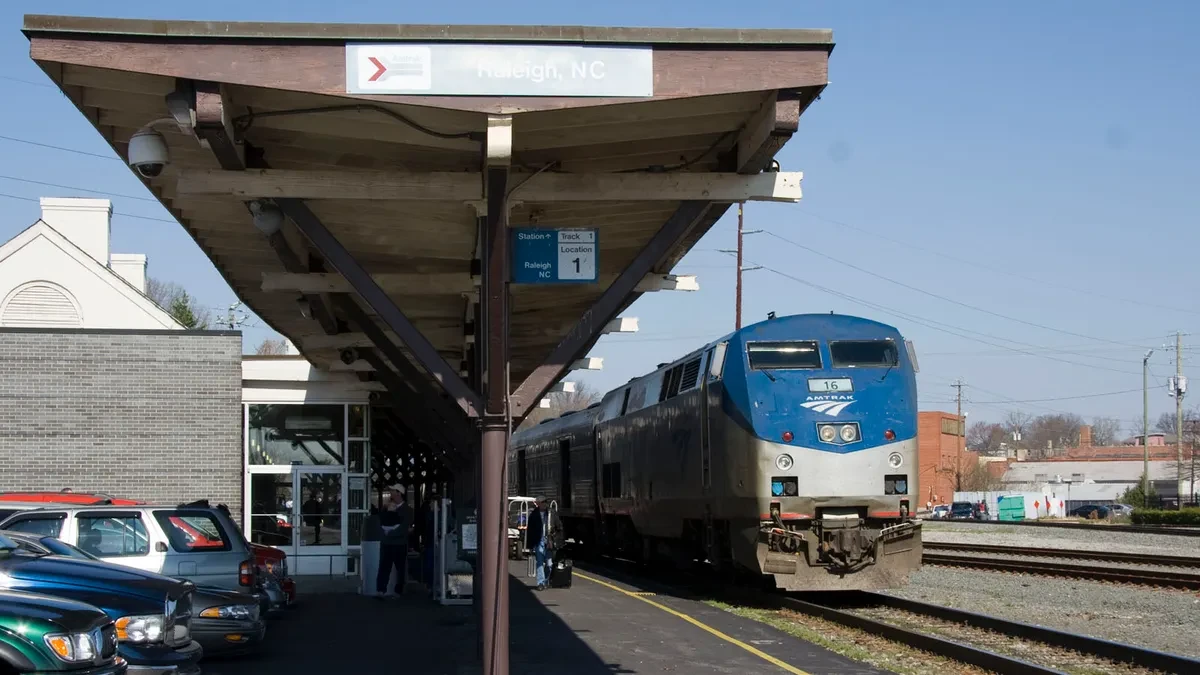
A transformative passenger and freight rail initiative is moving forward along the East Coast, promising to reshape transportation infrastructure between North Carolina and Virginia. The ambitious undertaking focuses on the revitalization and modernization of the S-Line, a crucial rail corridor originally owned by CSX. By acquiring the right-of-way for a vital segment of the line and securing vital federal backing, transportation officials in both states are laying the groundwork for a more connected, efficient, and frequent passenger rail network.
The project is designed to address longstanding bottlenecks that have constrained rail capacity across the region. According to the North Carolina Department of Transportation, the corridor improvements will significantly relieve train congestion on existing freight routes. More importantly, the upgrades will clear the path for North Carolina and Virginia to schedule more frequent passenger train trips, offering travelers a reliable and appealing alternative to highway driving.
Dive Brief:
The S-Line project represents a major milestone in regional infrastructure development, centered on a 95-mile-long section of the rail corridor stretching between Petersburg, Virginia, and Raleigh, North Carolina. The journey toward realizing this vision took a decisive step forward when the two states jointly purchased the right-of-way for a portion of the line. Momentum continued to build when officials officially broke ground on the project in Raleigh, marking the transition from planning to active development.
Federal backing has been instrumental in keeping the initiative on track. The Federal Railroad Administration has officially obligated crucial funding for the corridor, a formal step that involves establishing a written, project-specific agreement between the United States Department of Transportation and the North Carolina Department of Transportation. This latest financial commitment builds upon earlier federal investments designed to modernize the broader southeastern rail network. In April, the U.S. Department of Transportation awarded nearly $300 million specifically for the Piedmont Corridor between Raleigh and Charlotte, North Carolina. That funding targeted critical safety and efficiency upgrades, including the elimination of nine grade crossings, the installation of double-track segments, and enhanced trespassing prevention measures.
Federal rail leaders have praised the collaborative effort required to advance these large-scale corridor transformations. In a statement regarding the ongoing progress, Federal Railroad Administration Administrator David Fink emphasized the significance of the partnership driving the initiative forward.
"This milestone is a testament to the strong partnership between the Federal Railroad Administration, Amtrak, and NCDOT in advancing the S-Line and the earlier announced Piedmont Line corridors," Fink said. "Through close collaboration, we are delivering vital investments that will modernize passenger rail and create a new Golden Age of Rail for the people of North Carolina."

Beyond the physical track improvements and scheduling enhancements, state transportation planners are looking at the broader economic and community development impacts of the S-Line. The North Carolina Department of Transportation is currently leading comprehensive planning for transit-oriented development directly along the 95-mile rail corridor. This planning encompasses several communities along the route, including Apex, Franklinton, Henderson, Norlina, Raleigh, Sanford, Wake Forest, and Youngsville. As part of these efforts, the state is incorporating community mobility hubs within these cities to facilitate seamless multimodal transportation, establish reliable first- and last-mile connections, and provide adequate bike parking infrastructure for modern commuters.
Dive Insight:
To fully appreciate the scope of the S-Line project, it is necessary to examine the history and operational challenges of the corridor itself. The S-Line is historically a CSX-owned freight rail line that once served as a primary artery for movement through the region. Over the decades, however, shifting traffic patterns, growing populations, and the dominance of automotive and long-haul trucking left parts of the line underutilized or constrained by outdated infrastructure. By stepping in to acquire the necessary right-of-way, North Carolina and Virginia demonstrated a proactive approach to regional mobility, recognizing that revitalizing dormant or freight-only rail assets is often the most cost-effective way to expand modern passenger service without laying completely new track through entirely greenfield environments.
The logistics of modernizing a freight-heavy corridor for high-performance passenger rail require careful coordination among state agencies, federal regulators, private freight railroads, and passenger carriers like Amtrak. Freight trains and passenger trains operate under very different scheduling demands and speed profiles. Freight traffic is typically heavier, slower, and less strictly bound to fixed timetables, whereas passenger rail requires high reliability, predictable scheduling, and higher maximum operating speeds. By resolving existing bottlenecks, adding infrastructure like double-track segments where necessary, and separating conflicting movements, the S-Line project will ensure that both freight commerce and passenger mobility can coexist smoothly on the same regional network.

The economic implications for the municipalities situated along the 95-mile corridor are substantial. Transit-oriented development, as planned by the North Carolina Department of Transportation, aims to concentrate housing, retail, and employment opportunities around accessible transit nodes. Towns such as Wake Forest, Apex, Sanford, and Henderson stand to benefit from increased foot traffic, reduced local traffic congestion, and new opportunities for sustainable economic growth. By designing the stations and surrounding areas with community mobility hubs in mind, planners are ensuring that the new rail service does not operate in isolation. Instead, the stations will function as central nodes where travelers can easily transition between trains, buses, local micro-mobility options like bicycles, and pedestrian pathways.
This holistic approach to transportation planning reflects a broader national shift toward investing in sustainable, high-capacity infrastructure. As metropolitan areas across North Carolina and Virginia continue to experience rapid population growth and urban sprawl, highway expansion alone has proven insufficient to manage mounting traffic demands. Rail transit offers a high-capacity solution capable of moving large volumes of people quickly and safely, while simultaneously reducing carbon emissions associated with long-distance automobile commuting.
The synergy between the S-Line project and previously funded initiatives, such as the improvements along the Piedmont Corridor between Raleigh and Charlotte, highlights a coordinated strategy to build a comprehensive, state-of-the-art rail network across North Carolina. With federal funds officially obligated, state agencies actively engaged in local planning, and construction milestones already underway, the vision of a faster, more frequent, and thoroughly modernized passenger rail connection between Raleigh and Richmond is steadily becoming a reality. As engineering and development continue to advance, the initiative stands as a prime example of modern infrastructure investment at work, bridging historical rail assets with the future needs of growing southeastern communities.