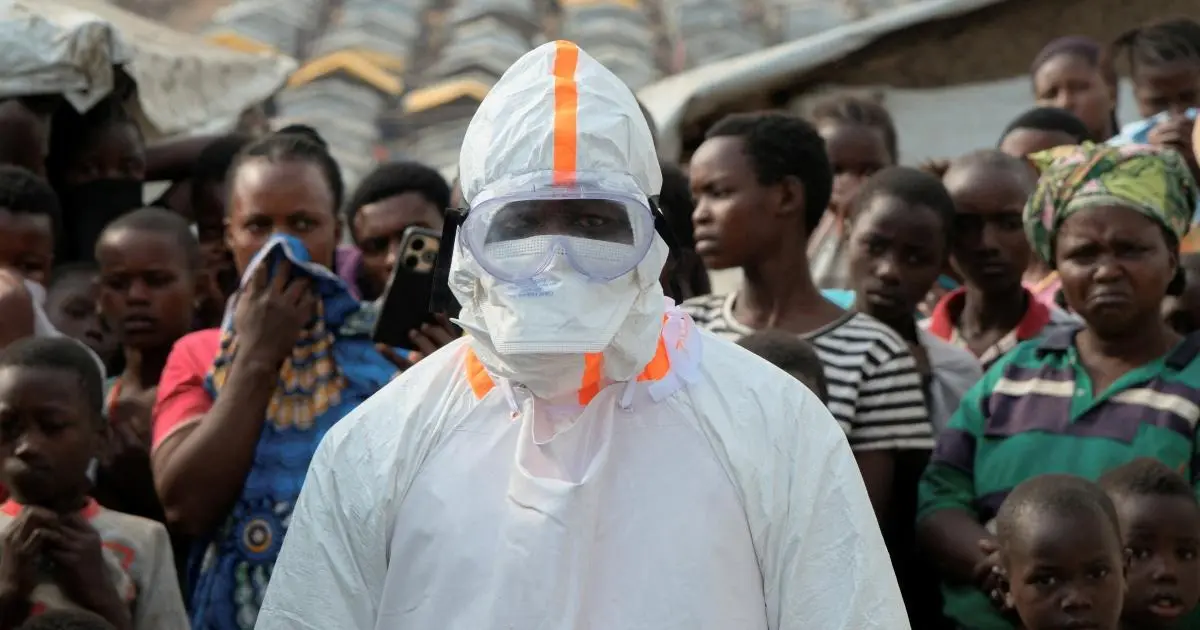
The ongoing Ebola outbreak in the Democratic Republic of the Congo has laid bare profound vulnerabilities in the architecture of global health security. For health officials and institutions worldwide, few infectious disease threats are as familiar or as thoroughly studied as Ebola. First identified in northern Congo, then known as Zaire, in 1976, the virus has triggered 16 distinct outbreaks within the country and dozens more across the broader region over the past five decades.
While Ebola remains exceptionally lethal, decades of accumulated medical expertise have equipped governments and healthcare professionals with reliable protocols to diagnose the disease, track its transmission, and halt its spread when detected early. Despite this hard-won knowledge, the current epidemic—which has claimed more than 3,500 lives across the DRC since the beginning of the year—has already surpassed all previous outbreaks in the country’s history as the deadliest and fastest-spreading event on record. Despite recent, hard-fought signs of operational progress, international responders remain far from achieving containment.
This systemic failure to swiftly contain the current Ebola crisis carries ominous implications for the world’s readiness to confront future biological threats. Naturally occurring pathogens are emerging with increasing frequency. During the four years of the Biden administration, health authorities recorded 12 outbreaks of Ebola and Marburg—a related and equally lethal member of the filovirus family—compared to just five during the preceding four-year term. The current Trump administration faces an even steeper trajectory, having already contended with five outbreaks in less than two years.
Compounding this natural surge is a rising structural risk of accidental or deliberate pathogen releases. The global research community has experienced a post-COVID-19 boom in high-containment laboratories handling dangerous biological agents. Simultaneously, rapid advancements in artificial intelligence have dramatically lowered the technical barriers required to engineer novel viruses. Earlier this month, the American AI firm Anthropic disclosed five instances where researchers utilized its Claude software to explore avenues that could support biological weapons development, including the creation of bird flu variants capable of evading human immunity. These findings validate longstanding concerns that advanced AI models could inadvertently or maliciously lower the threshold for bad actors to access or design dangerous pathogens.
At the same time, the global health apparatus has been eroded by policy shifts and funding contractions, most notably under the Trump administration, which enacted sweeping cuts to domestic and international disease surveillance and outbreak preparedness programs. However, structural fragility has long predated these recent policy changes. Global threat monitoring networks suffer from persistent blind spots, inconsistent funding mechanisms routinely delay critical vaccine development, and most nations chronically underinvest in foundational, comprehensive primary healthcare systems. While major donor governments and international bodies typically mobilize financial resources only after an emergency breaks out, this reactive scramble is fundamentally ill-suited to managing fast-moving biological threats—a reality starkly demonstrated by the ongoing struggle to contain Ebola. When a novel or less-familiar pathogen eventually emerges, the international community will need to be drastically better prepared.
THE CRISIS IN CONGO
The current epidemic in the Democratic Republic of the Congo likely originated at least eight months ago. Residents in Mongbwalu, a small community located in the country’s northeastern territory, reported entire households succumbing to an unidentified illness as early as January. The virus circulated unchecked for months before the Congolese government, working in coordination with the World Health Organization, managed to officially identify the source of the outbreak by mid-May. By that time, hundreds of infections had already been documented across multiple communities throughout the DRC, alongside two confirmed cases in neighboring Uganda.
While some delay in detection is understandable given the remote geography of the initial deaths, ongoing regional conflict, and the relative rarity of the outbreak’s specific driver—the Bundibugyo virus—the unprecedented geographic spread achieved before detection points to a distressing conclusion: the global health system is growing less equipped, rather than more, to manage biological threats.
Four months after the official confirmation of the outbreak, frontline responders from the Congolese government, the WHO, and the Africa Centres for Disease Control and Prevention continue to face immense hurdles in bringing the epidemic under control. The fatality rate hovers around 50 percent, significantly higher than recorded in previous outbreaks driven by the Bundibugyo strain. Furthermore, data showing that 60 percent of deaths between mid-July and late August occurred outside of formal health facilities strongly indicates that official statistics undercount the true toll of illnesses and deaths, while the virus continues to circulate beyond the reach of public health interventions.
Despite recent signs of operational progress, WHO Director-General Tedros Adhanom Ghebreyesus has issued stark warnings. He noted that if the current epidemiological trajectory persists, the total death toll could ultimately surpass the devastation of the 2014–2016 West Africa Ebola epidemic, which infected nearly 30,000 people and claimed more than 11,000 lives.
The United States’ withdrawal from the WHO and the concurrent dissolution of the U.S. Agency for International Development have severely undermined the operational capacity of both the WHO and the Congolese government to mount an effective response. Nicholas Enrich, a career civil servant who briefly directed USAID’s global health portfolio during the early months of the Trump administration, documents in his book Into the Wood Chipper his efforts to persuade politically appointed USAID leaders to reinstate frozen contracts for Ebola response operations following an outbreak in Uganda that began in January 2025.
Although the administration maintained that these programs had been restarted, prominent former USAID partner organizations, including the International Rescue Committee and Oxfam, publicly confirmed that Washington completely defunded its public health initiatives in eastern Congo in 2025. Additionally, the administration terminated the majority of USAID’s health security personnel, dissolved a specialized National Security Council biodefense directorate established in the wake of the 2014 West Africa crisis, and left the leadership post at the congressionally mandated White House Office of Pandemic Preparedness and Response Policy vacant for an entire year. Staff reductions also hit the U.S. Centers for Disease Control and Prevention hard, eliminating thousands of positions—including entire branches within the agency’s Global Health Center—while restricting direct communication channels with the WHO. Sidelined by these sweeping cuts and administrative constraints, the global health apparatus stood by as Ebola circulated quietly for four months before international experts and partner organizations could sound the alarm.
The White House has consistently defended its actions, arguing that the policy changes have not impaired disease detection or containment efforts. In May, a White House spokesperson asserted that USAID restructuring had rendered the broader global health apparatus more efficient and responsive. Nevertheless, independent observers note a direct correlation between the closure of field offices, the dismissal of experienced technical staff, the termination of vital disease surveillance partnerships, and the unprecedented severity of the current epidemic. In recent months, Washington has attempted to reverse course by filling vacant posts and committing over $500 million in emergency assistance to the Ebola response—outpacing contributions from any other single nation. However, these reactive measures prove vastly more expensive and markedly less effective when the underlying health infrastructure has already been systematically dismantled by prior aid cuts.
A STRUGGLING SYSTEM
Even more alarming than the contraction of U.S. financial and technical support are the systemic vulnerabilities exposed across the broader international health architecture. Capturing an emerging outbreak within its first days or weeks remains the single most critical factor for rapid containment. Yet the current crisis demonstrates that existing early-warning and diagnostic protocols are fundamentally inadequate.
For decades, public health systems have relied on targeted assays designed to detect specific, anticipated pathogens in high-risk zones—such as testing for Zaire ebolavirus in the DRC or hantavirus in Argentina. This rigid framework was structurally vulnerable to failure. When health workers in northeastern Congo encountered the mysterious illnesses earlier this year, they possessed Ebola diagnostics on hand, but the tests were not calibrated to recognize the Bundibugyo species.
As viruses mutate and infected travelers cross international borders into less-monitored regions, unusual strains will inevitably continue to emerge. Simply scaling up the production of legacy diagnostic tools is economically and logistically unfeasible; these tests are frequently expensive and require specialized laboratory training to administer properly.
Once transmission was established in the DRC, local government officials and nongovernmental organization responders should have been positioned to collaborate closely with affected populations. Instead, deep-seated fear and community distrust have fueled hundreds of physical attacks against health workers and medical facilities, severely restricting response teams’ ability to identify infected individuals and implement quarantine and prevention measures.
These obstacles are compounded by the crushing burden of co-endemic health crises. Millions of Congolese citizens continuously contend with malaria, measles, and severe malnutrition—with malaria alone claiming more than 20,000 lives in 2024. Yet international resources and multilateral institutional attention typically materialize only when an infectious disease with global epidemic potential, such as Ebola, threatens high-income nations. This stark disparity breeds natural skepticism among local populations toward international containment campaigns that ignore their day-to-day health realities. Furthermore, because early symptoms of Ebola closely mimic common endemic illnesses like malaria and fever, many patients delay seeking care until their disease is advanced, increasing their own mortality risk and maximizing opportunities for onward transmission.
Regional insecurity has compounded these operational challenges. Eastern Congo has experienced chronic armed conflict for decades, with violence along the borders of Uganda and Rwanda intensifying significantly in recent years. An estimated nine million Congolese citizens have been forcibly displaced, with many fleeing to neighboring nations or overcrowded camps lacking adequate water, sanitation, and basic healthcare infrastructure. These camps already struggle with high rates of malaria, measles, and cholera, creating a dangerous breeding ground for potential Ebola transmission. Armed violence continuously endangers frontline public health workers and severely disrupts the supply chains necessary to deliver medical equipment to the northeast. While political leaders acknowledge that instability hampers containment efforts, public health experts emphasize that until a durable peace is achieved, systems must adapt by developing robust supply transport protocols, stockpiling personal protective equipment, forging closer ties with trusted local leaders to disseminate accurate health messaging, and maintaining resilient water and sanitation services for displaced populations.
One of the few positive developments in the current response has been the relatively rapid acceleration of vaccine candidates targeting the Bundibugyo virus. The first vaccine dose in a Phase 1 clinical trial was administered within 12 weeks of the outbreak’s official confirmation—twice as fast as the timeline achieved during the 2014 West Africa crisis. This speed was largely enabled by long-term investments made by the United States and European governments in institutions like the Coalition for Epidemic Preparedness Innovations, a public-private partnership, alongside regional research bodies such as the Uganda Virus Research Institute. These entities had previously established laboratory infrastructure, stored critical biological materials, and cultivated scientific networks specifically to mobilize during emergencies.
Despite this relative velocity, however, translating these trial candidates into widespread public immunizations will still require months. Immediate containment efforts remain entirely reliant on traditional public health interventions, such as rigorous contact tracing and patient isolation, which demand massive, well-coordinated workforces. Experts emphasize that vaccine development must accelerate further, but the existing global funding model is not designed for proactive speed; resources almost universally arrive only after a crisis has fully materialized. Scientific capabilities to design and test vaccines against the Bundibugyo virus existed prior to the current outbreak; what lacked was sustained financial backing and political prioritization.
FILLING IN THE GAPS
The ongoing Ebola epidemic has exposed critical deficiencies in the international community’s readiness to address even predictable public health emergencies. The next biological threat could be infinitely more complex. Last month, a study published in Science detailed the first successful synthesis of an entire, functional viral genome using artificial intelligence. Shortly thereafter, Anthropic confirmed that researchers across multiple jurisdictions were utilizing its models in ways that could facilitate widespread biological harm. In the near future, malicious actors could leverage AI to engineer novel pathogens explicitly designed to evade human immune responses and existing medical countermeasures.
This crisis must serve as a definitive wake-up call, echoing the impact of the 2014 West Africa epidemic. That historical crisis galvanized the United States and international partners to invest heavily in research and development, yielding life-saving vaccines that have since helped suppress subsequent outbreaks. It compelled the U.S. government to establish specialized biodefense response frameworks and construct 13 specialized biocontainment units domestically to safely treat patients infected with high-consequence pathogens. It also prompted the African Union to launch the Africa CDC in 2017, fundamentally enhancing the continent’s autonomous capacity to manage regional health emergencies.
Today, governments, private sector enterprises, and multilateral institutions possess a parallel opportunity to reinforce global health security. Part of the solution relies on technological innovation. The same advancements in artificial intelligence that heighten biosecurity risks also empower nations to construct advanced national surveillance architectures capable of rapidly detecting known and unknown biological threats, while expediting the design of diagnostics, therapeutics, and vaccines.
The U.S. government holds the financial capacity and strategic incentive to pioneer such a system domestically within the coming years, with the long-term objective of international expansion. Realizing a global system, however, would require binding international agreements on financing to ensure participation from critical nations like the Democratic Republic of the Congo, alongside navigating diplomatic hurdles with countries like China, which has historically withheld complete epidemiological data regarding the origins of the COVID-19 pandemic. Nevertheless, an early-warning monitoring network that covers a significant majority of the globe would still represent a massive improvement over current monitoring frameworks.
Scaling vaccine development likewise demands increased financial commitments and sustained political will. Organizations like CEPI are pioneering proactive research models focused on developing medical countermeasures targeted at entire viral families, allowing rapid adaptation when specific pathogens trigger outbreaks. Yet these initiatives require long-term funding and time. The World Bank and the WHO estimate that an annual investment of approximately $10.5 billion is required to maintain a comprehensive global pandemic preparedness and response architecture, with roughly $2 billion specifically dedicated to research, manufacturing capacity, and equitable access to countermeasures. While substantial, this financial outlay is dwarfed by the economic cost of unchecked contagion; the COVID-19 pandemic alone inflicted an estimated $14 trillion in damages on the U.S. economy. Governments must lead cross-border collaborations focused on transparent information sharing, distributed manufacturing plans for medical products, and streamlined regulatory pathways, while partnering with technology firms to harness AI for accelerated vaccine design.
Finally, responsibilities must be clearly delineated across local, regional, and multilateral health institutions. National governments, supported by international partners when necessary, must prioritize foundational healthcare to protect populations from endemic threats like malaria and measles. Regional bodies such as the Africa CDC, which maintain greater institutional accountability to member states than global agencies, should take the lead on cross-border surveillance and communication networks. At the multilateral level, the WHO must refocus strictly on its core mandate of providing technical guidance on cross-border health threats and coordinating international response efforts, rather than diluting its limited personnel and budget across an unmanageable array of general health issues.
The current ad hoc global health system relies too heavily on the United States to mobilize personnel and resources during every acute emergency. That structure has struggled to contain the DRC’s Ebola epidemic, and it will be pushed to the breaking point when a less familiar, highly transmissible pathogen emerges. Constructing a robust global health infrastructure before that crisis arrives remains an urgent imperative for the international community.