The second Trump administration’s National Security Strategy has fundamentally upended decades of transatlantic relations, declaring bluntly that "the days of the United States propping up the entire world order like Atlas are over." This profound shift in sentiment has animated much of American foreign policy over the past two years, and Washington’s approach to Europe has proven to be no exception. The consequences of this doctrinal pivot have rippled across the continent, forcing European capitals to confront a reality where American security guarantees and economic leadership can no longer be taken for granted.
The friction has manifested across multiple geopolitical fronts. In 2025, the United States abruptly suspended its military aid to Ukraine, leaving European nations to scramble and fill a massive financial and material void. Just months later, in May of that same year, Washington announced it would unilaterally pull 5,000 troops out of Germany. President Donald Trump has further strained the alliance by threatening to seize Greenland—the sovereign territory of a fellow NATO member—and vowing to levy punitive tariffs against any European nation that opposed the maneuver. The fracturing of the transatlantic security umbrella was laid even barest in February, when the United States and Israel launched military strikes against Iran without consulting or warning European powers. Consequently, European nations were left to face the severe economic and energy consequences of the regional war largely on their own.
Europe’s Push for Autonomy and Its Persistent Vulnerabilities
Europe has not stood idly by amid this sustained diplomatic and economic onslaught. When the United States withdrew its financial backing for Ukraine in 2025, European capitals immediately stepped in to bridge the gap. During the diplomatic standoff over Greenland, when European countries faced the threat of steep tariffs, they successfully convinced President Trump to back down by threatening massive retaliatory trade measures of their own.
Beyond crisis management, the continent has quietly begun to deepen and diversify its external relationships. The European Union established a landmark $168 billion defense-loan scheme, bringing in Canada as its first non-European member. Earlier this year, the EU finalized the largest trade agreement in its history with India and successfully signed a long-delayed economic partnership with the South American trading bloc Mercosur.
These proactive measures represent an encouraging departure from the bureaucratic indecisiveness for which the EU has frequently been criticized. Yet, despite its leaders’ newfound rhetorical and policy commitment to strategic self-sufficiency, Europe remains deeply dependent on the United States. In fact, some of the continent’s very attempts to stand on its own feet have inadvertently reinforced its reliance on Washington.
European defense planning, command structures, nuclear deterrence, and military enabling systems still fundamentally rely on American capabilities. Increased defense spending across the continent frequently translates into the direct purchase of American weapons systems. As of 2025, the United States supplied more than half of the EU’s liquefied natural gas imports to compensate for severed Russian energy pipelines. Furthermore, many of the continent’s most promising technology firms continue to migrate across the Atlantic to New York or San Francisco in search of capital and scale.
This continued dependence has, in turn, severely weakened Europe’s diplomatic and economic credibility with emerging countries that are actively seeking new security, technology, and economic partnerships. For decades, the European value proposition to the rest of the world relied heavily on the continent’s special relationship with Washington. As long as the United States underwrote European security and welcomed Europe’s deeper integration into the global economy, that offer carried immense weight.
Now that Washington treats both security and trade arrangements as purely transactional and negotiable, the old formula no longer holds. The weaker the transatlantic relationship becomes, the more Europe desperately needs other nations for export markets, raw materials, defense industrial capacity, and solidarity against geopolitical coercion. Yet, paradoxically, its ongoing dependence on Washington diminishes its ability to convince those very countries of its worth as an independent and reliable partner. Europe urgently requires a better offer, one grounded solidly in its own indigenous capabilities rather than those of its mercurial and increasingly distant ally.
Offer Expired
For generations, European countries have successfully presented themselves as global leaders on issues such as environmental protection, consumer safety, and high regulatory standards. To neighboring countries, Europe dangled the powerful carrot of membership in or close association with the EU. Beyond its immediate neighborhood, it promised developmental and humanitarian partnerships through a sprawling network of aid programs managed by the EU and individual member states. Until recently, these terms were exceptionally appealing: 13 countries have joined the EU since 2004, and more than 140 nations have accepted some form of developmental assistance from European programs.
Historically, this architecture functioned because the United States upheld the underlying security and economic order that made European outreach possible. European Union aspirants could rest assured that Washington would underwrite the continent’s defense through NATO. Meanwhile, non-European countries could rely on a predictable, U.S.-led rules-based economic order that facilitated easy access to European aid, consumer markets, and capital investments.
However, the ongoing U.S. retrenchment has accelerated the emergence of a much more bellicose, "might makes right" global disorder in which entirely different national needs have risen to the fore. Countries across the globe are now urgently seeking hard security partnerships to shore up their military defense capabilities, stable trade relationships to protect against economic warfare, and alternative financing to make up for deep Western aid cuts and surging government borrowing costs.
Consider the trajectory of Ukraine. When Kyiv first turned toward Europe in the early 2010s, it did so primarily because of the prosperity and modernization that economic integration promised. Today, however, Ukraine desperately needs advanced intelligence and heavy weaponry to fend off Russian aggression—resources that Europe can effectively deliver only by leaning on American supply chains and systems. For other nations similarly seeking robust security assistance and defense cooperation, dependence on such a fickle and shifting partner remains a profound liability.
Similarly, international partners hit by Washington’s aggressive tariffs desperately need access to reliable, open markets to export the goods and services that were once destined for the United States. Yet, rather than stepping up as a champion of global free trade, Europe has felt compelled to defend its own domestic economies instead of opening its markets to struggling developing nations. For instance, the European Commission drastically increased tariffs on steel and reduced quotas for duty-free imports, effectively blocking countries like India, South Korea, and Turkey from selling into the European market precisely when those nations were frantically searching for alternatives to the American market.
Other developing nations desperately need substantial financing for vital infrastructure projects and the global energy transition. While Europe possesses the financial firepower to help meet these critical needs, its institutional commitments take far too long to be translated into completed, on-the-ground projects. Furthermore, just as in the security sector, the sudden withdrawal of U.S. participation has left European initiatives adrift. Joint Group of Seven packages designed to finance clean energy buildouts in countries like Indonesia, South Africa, and Vietnam suffered severe setbacks when Washington abruptly withdrew its financial support in 2025.
Despite these hurdles, Europe has lately demonstrated an impressive capacity to rise to the occasion. In 2025, EU member states boasted a combined annual military expenditure of approximately $461 billion. While this figure trails the United States’ staggering $954 billion defense budget, it comfortably outpaces China’s $336 billion and Russia’s $190 billion. When the United States wound down its direct military aid to Ukraine in 2025, European governments stepped up to cover most of the financial shortfall and have since committed to sustaining Kyiv’s war effort through 2027.
The continent also commands an established defense industrial base, two permanent seats on the United Nations Security Council, and formidable nuclear forces. Partners just beyond the EU’s core add even more strategic weight: Ukraine contributes a battle-tested army and an exceptionally innovative domestic drone industry, while Turkey maintains NATO’s second-largest army alongside critical geopolitical access to the strategically vital Black and Mediterranean Seas.
There is similar cause for cautious optimism in the realms of trade and finance. The EU’s comprehensive 2026 trade agreement with India successfully removed nearly all tariffs for both parties, reduced nontariff trade barriers, and streamlined temporary labor mobility for professionals between India and Europe. Meanwhile, the EU’s Global Gateway investment program—Europe’s ambitious answer to China’s Belt and Road Initiative—surpassed its $335 billion mobilization target well ahead of schedule. These individual successes clearly demonstrate that Europe possesses the foundational potential to present global partners with a far more compelling offer. Yet, much of that potential remains frustratingly unfulfilled.
The Agony of Self-Defeat
Europe possesses substantial assets across the domains of security, trade, and finance, but it chronically lacks the internal political cohesion needed to bundle them into a comprehensive, attractive package that can woo foreign partners and bolster its own strategic autonomy. When Europe could comfortably fall back on unyielding U.S. leadership within international institutions such as the World Trade Organization and NATO, internal disunity was a manageable problem. American military commanders not only supported but actively organized European defense, while U.S.-backed rules governing global commerce opened foreign markets to European exports, heavily reducing the need for painstaking bilateral negotiations. Deprived of that overarching leadership, the continent has been left to grapple with its own deep-seated internal fragmentation.
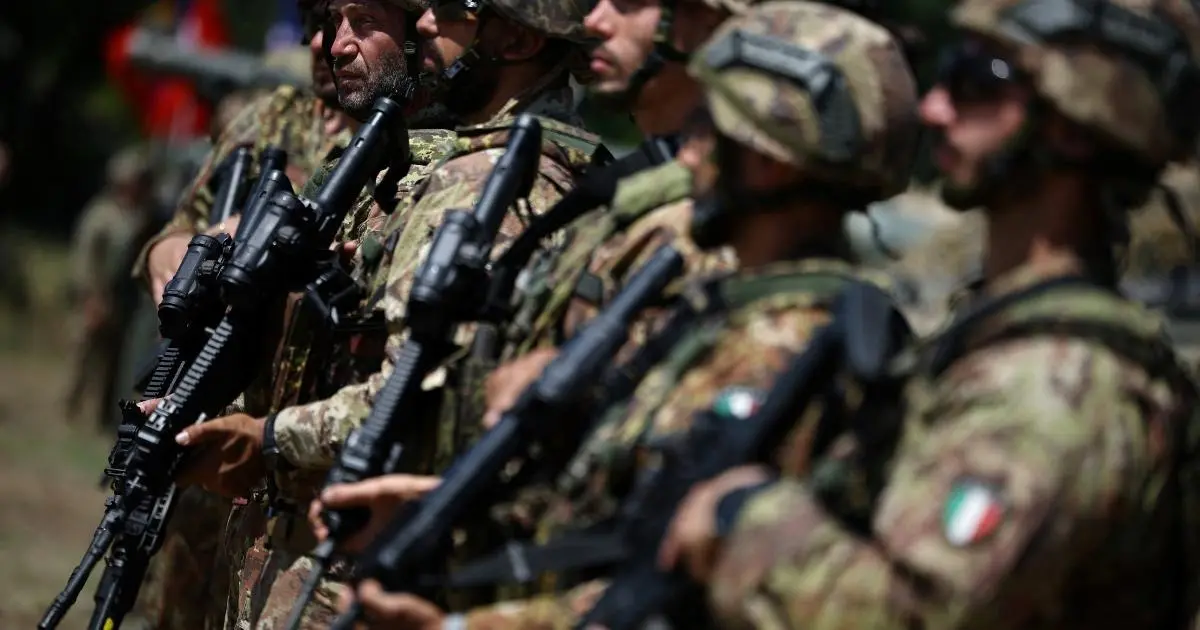
Nowhere is that fragmentation more glaring than in the realm of security. Although European leaders have repeatedly committed to improving the continent’s collective defense in response to Washington’s wavering commitment to NATO, national defense budgets, industries, and military forces remain stubbornly compartmentalized. As individual governments prioritize negotiating favorable contracts for domestic firms and local constituencies, intergovernmental conflicts inevitably arise: joint defense projects collapse, procurement efforts overlap wastefully, and redundant research and development programs squander precious public resources.
These persistent frustrations have frequently driven European nations to simply purchase off-the-shelf U.S. military systems instead of building indigenous capabilities. The EU’s newly minted Security Action for Europe loan program aims to reverse this counterproductive trend by financing member states’ joint purchases of European-made military equipment. However, loans alone will neither overcome deeply ingrained distributional conflicts nor magically create unified command structures, operational standards, and shared logistics.
On the trade front, Europe does negotiate with a single, unified voice. However, many major trade agreements must subsequently be ratified by each individual member state, leaving them completely at the mercy of domestic political lobbies—ranging from powerful agricultural unions to automotive associations—that seek to protect local markets at the direct expense of the continent’s broader collective interest. More than a decade after Canada and the EU negotiated the Comprehensive Economic and Trade Agreement, for instance, just 17 of the bloc’s 27 member states have fully ratified it. Similarly, the 2026 trade deal with Mercosur, which had been in the works for decades, was immediately met with fierce political and legal resistance from individual member states and their representatives within the European Parliament.
When it comes to international finance, Europe certainly does not lack capital, but it channels its monetary resources through a byzantine labyrinth of EU instruments, member-state development agencies, national banks, and constantly shifting flagship initiatives. International partners are left to navigate an administrative morass of funding sources, each burdened by its own unique procedures, bureaucratic timelines, and conditionalities. In Ghana, for example, Europe’s presence is fractured across separate EU programs, member-state bilateral agencies, the European Investment Bank, and distinct Global Gateway initiatives. When Trump administration cuts to the U.S. Agency for International Development hit Accra, a more unified and coordinated Europe could have made its financial assistance far more visible, usable, and politically credible.
Many of these structural challenges significantly predate the recent U.S. retrenchment. However, they were far less damaging to Europe’s external relationships as long as Washington continued to underwrite an imperfect but generally stable global order. Now that reliable U.S. leadership is no longer guaranteed as part of the European geopolitical package, these internal divisions loom much larger and more threateningly for potential international partners.
Help Yourself
The United States is not the only great power that has proven willing to weaponize its economic and industrial chokepoints. Beijing and Moscow have frequently used their dominance over critical supply chains coercively to achieve geopolitical aims. Europe’s central dilemma is that its urgent attempts to reduce exposure to Russian and Chinese supply vulnerabilities too often result in an increased dependence on the United States.
Weaning the continent off Russian pipeline gas meant aggressively buying American liquefied natural gas. Procuring critical rare-earth elements outside of China’s tightly controlled supply chains requires close cooperation with Washington on critical mineral exploration. When Beijing weaponized its demand for French cognac by imposing punitive duties on the liquor in late 2024, the French industry’s best alternative was the U.S. market—until the Trump administration abruptly slapped tariffs of its own on the product. A genuinely enticing and reliable offer to global partners must be built on economic ties and industrial capabilities that are not beholden to shifting American political whims.
To construct such an independent offer, Europe must first substantially reduce its reliance on U.S. defense commitments and equipment, steadily evolving into a more equal, self-reliant partner within a reformed NATO. While Europe is unlikely to fully replace the United States as a global security guarantor, it must develop the capacity to offer third countries viable security partnerships, sustained regional deterrence, and the operational ability to act with strategic coherence when American priorities abruptly shift elsewhere.
The continent can begin this transition by working faster and more pragmatically with its current friends. Since 2022, Poland has aggressively procured South Korean tanks, howitzers, aircraft, and rocket artillery; more recent bilateral agreements have moved far beyond simple off-the-shelf purchases toward deep technology transfers that enable local production, servicing, and repair capabilities directly within Poland. Similarly, Japan has joined forces with Italy and the United Kingdom to develop a highly advanced next-generation combat aircraft through the collaborative, treaty-based Global Combat Air Programme. The EU-India Security and Defense Partnership signed earlier this year also provides a robust framework for practical cooperation spanning maritime security, emerging technologies, and the defense industrial base. Europe should aggressively build on this pragmatic approach, leveraging the unique strengths of its diverse partners to benefit both their security and its own.
European dependence, however, extends well beyond the traditional security sphere. Europe possesses the population scale, capital markets, elite universities, industrial base, and regulatory capacity required to be a dominant global tech power. Yet, a persistent lack of later-stage venture capital financing, fragmented digital product markets, and acute shortages of specialized technical talent and computing power have far too often driven European entrepreneurs—including the founders of high-tech leaders like Hugging Face, Arm, and Wise—to start, expand, or publicly list their companies in the United States.
These innovative firms might easily be persuaded to remain anchored in Europe if founders could rely on deep domestic investments and access to a truly single European market. At present, however, only a tiny percentage of European pension fund assets are invested in venture capital. While the EU has announced a series of new initiatives designed to boost venture funding, the bloc still lacks anything comparable in scale to the largest American financial funds.
The much harder tasks ahead involve fully integrating European capital markets, drastically reducing regulatory friction between member states, and dismantling stubborn barriers to cross-border investment and commerce. A unified, continent-wide financial system and consumer market would make domestic investment infinitely more attractive, keeping Europe’s most promising innovators from crossing the Atlantic in desperate search of funding and customers. A competitive technological apparatus would grant Europe not only control over the leading technologies it produces but also the institutional ability to offer international partners a viable, independent alternative to the U.S. innovation ecosystem.
Europe must also systematically reduce its severe energy and raw-material dependencies. As the recent conflict involving Iran has vividly demonstrated, acute exposure to volatile fossil fuel markets can heavily damage overreliant economies. While the International Energy Agency has noted that renewable energy infrastructure has partly insulated European economies from truly disastrous fossil fuel price shocks, the lingering risk of severe shortages in refined petroleum products—especially diesel and jet fuel—serves as a daily reminder of the continent’s ongoing reliance on energy imports over which it lacks domestic control.
Integrated regional energy markets offer a proven pathway to prevent such vulnerabilities from forcing sudden, humiliating U-turns in foreign policy. Following Russia’s full-scale invasion of Ukraine in February 2022, Germany—which in 2021 had imported more than half of its natural gas from Russia—initially opposed a strict embargo on Russian oil and gas before reversing its position just months later. When Russian gas supplies subsequently stopped flowing entirely, Berlin was spared catastrophic shortages and a far more severe economic crisis largely thanks to neighboring European countries that stepped forward to provide vital emergency energy supplies.
The continent appears to have learned the correct lessons from that turbulent episode: the European Commission’s 2026 legislative work program explicitly commits to building a genuine Energy Union through massive electric grid upgrades and the systematic removal of cross-border bottlenecks. The more resilient Europe’s domestic energy system becomes, the more reliable and attractive a partner the continent will be to the outside world.
When it comes to critical raw materials, however, Europe has virtually no realistic hope of achieving complete domestic self-sufficiency. The European Commission’s planned Critical Raw Materials Centre will gather vital market intelligence, coordinate joint purchasing, and facilitate strategic stockpiling, but demand-side management alone cannot produce the physical raw materials the continent requires. Europe could instead initiate the construction of a robust global network of partner countries by actively creating favorable conditions for targeted investments in mines and mineral refineries across Africa, the Americas, and Asia. Because mines, processing plants, and heavy transport infrastructure require long planning horizons amid volatile commodity prices, joint multilateral actions could make these ventures significantly more financially attractive and less risky, while guaranteeing a stable, secure market for the minerals produced.
Finally, Europe urgently requires the credible institutional ability to retaliate when Beijing or Washington attempts to economically choke it. Europe’s halting response to recent U.S. tariff threats exposed just how difficult it can be to forge rapid consensus among European powers in favor of economic retaliation. Nevertheless, the bloc possesses a remarkably powerful tool at its disposal: the Anti-Coercion Instrument created in 2023. This comprehensive bundle of economic countermeasures—including tariffs, sweeping restrictions on imports and exports, and limitations on access to EU public procurement, foreign direct investment, and intellectual property rights—essentially permits European nations to weaponize other countries’ dependence on economic interactions with the EU.
Expanding this mechanism into a global framework that pools the resources of non-European partners for more potent joint retaliatory measures would not magically solve every geopolitical problem for Europe and its allies. However, it could swiftly convert some of Europe’s strongest economic assets into a partnership offer backed by real, enforceable security benefits.
New World, New Friends
Europe’s historic relationship with the United States was founded on shared democratic values, deep mutual reliance, and robust strategic reciprocity. That foundational partnership enabled European nations to focus successfully on rebuilding their shattered economies after the Second World War and constructing enduring institutions designed to avert future devastating wars on the continent. The profound tumult of the last two years has cruelly revealed that Europe grew complacent, taking the immense, steady benefits of that transatlantic relationship entirely for granted.
Today, the continent faces vastly different geopolitical threats than it did 80 years ago, and it can no longer count on the United States to ride to its rescue. Rather than mourning the loss of its traditional partner in Washington, Europe must forge new relationships built on the clear-eyed recognition of a different kind of mutual reliance: the reality that most nations across the globe have little hope of successfully resisting great-power coercion if they attempt to go it alone.
Building these new strategic partnerships to deliberately reduce European dependence on the United States does not mean shutting Washington out entirely. Both sides would still derive considerable mutual benefit from continued security cooperation through NATO, sustained bilateral trade and investment, and participation in an integrated international financial system. Cooperation with the United States would remain genuinely valuable, but it would no longer be treated as an absolute, irreplaceable necessity. Ultimately, Europe will secure vastly better terms and negotiations from the Trump administration and its successors if it can negotiate confidently from a position of foundational strength, securely undergirded by a diverse network of reliable global partnerships.
Those new partnerships will certainly not emerge overnight, nor will a newly minted international coalition instantly become a unified strategic actor on the world stage. However, a dramatically improved, self-reliant European offer will firmly set that coalition on the correct path. As with all vital historical endeavors, the hardest and most important part is simply getting started.