By DRONELIFE Features Editor Jim Magill
When designing modern uncrewed aerial vehicles, engineers face a persistent engineering compromise: balancing the need for a robust, feature-rich control system against the absolute necessity of keeping weight and aerodynamic drag to a minimum. For manufacturers building small unmanned aerial systems—particularly first-person-view (FPV) drones heavily utilized across both military and commercial sectors—every single gram added to the airframe directly impacts flight performance, agility, and operational endurance.
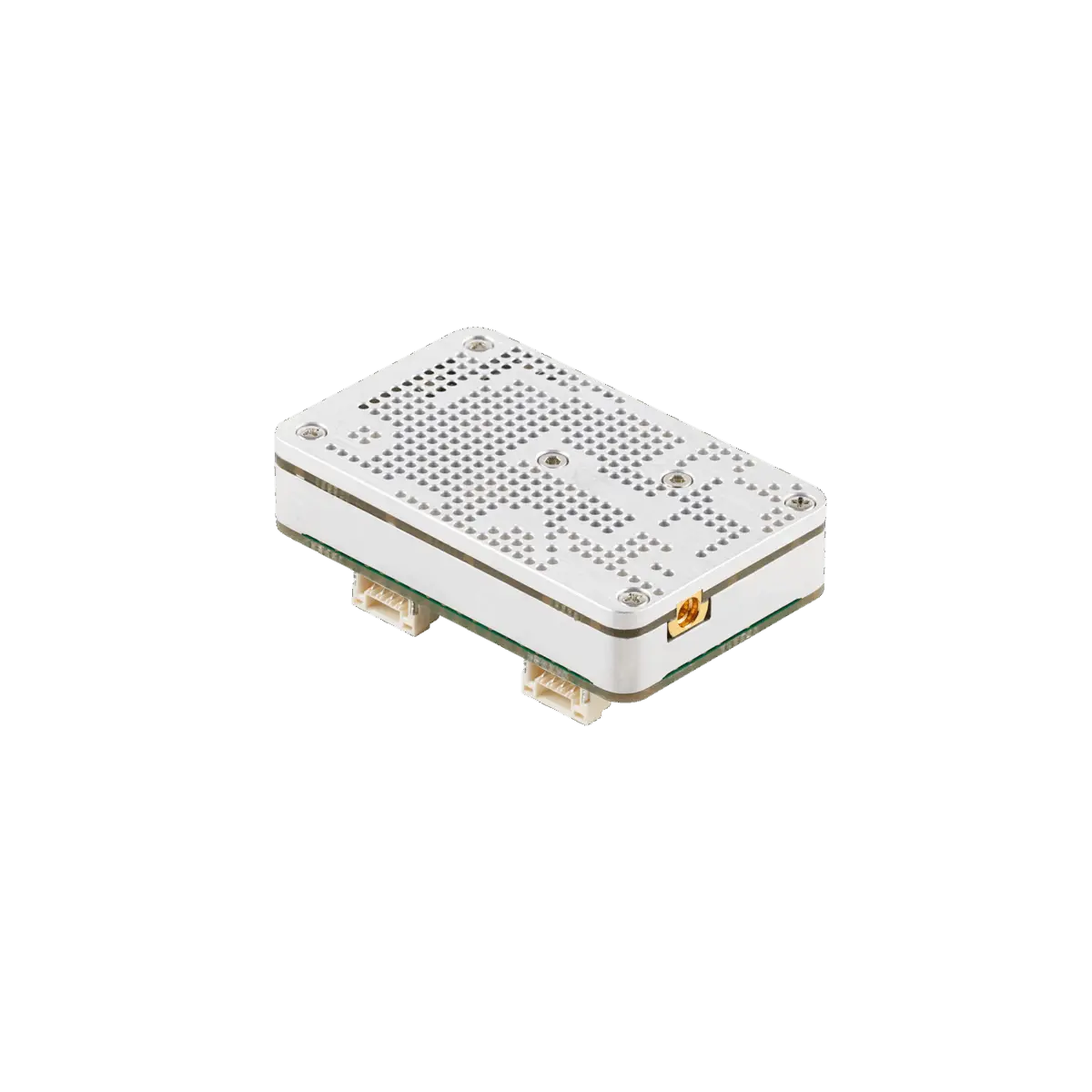
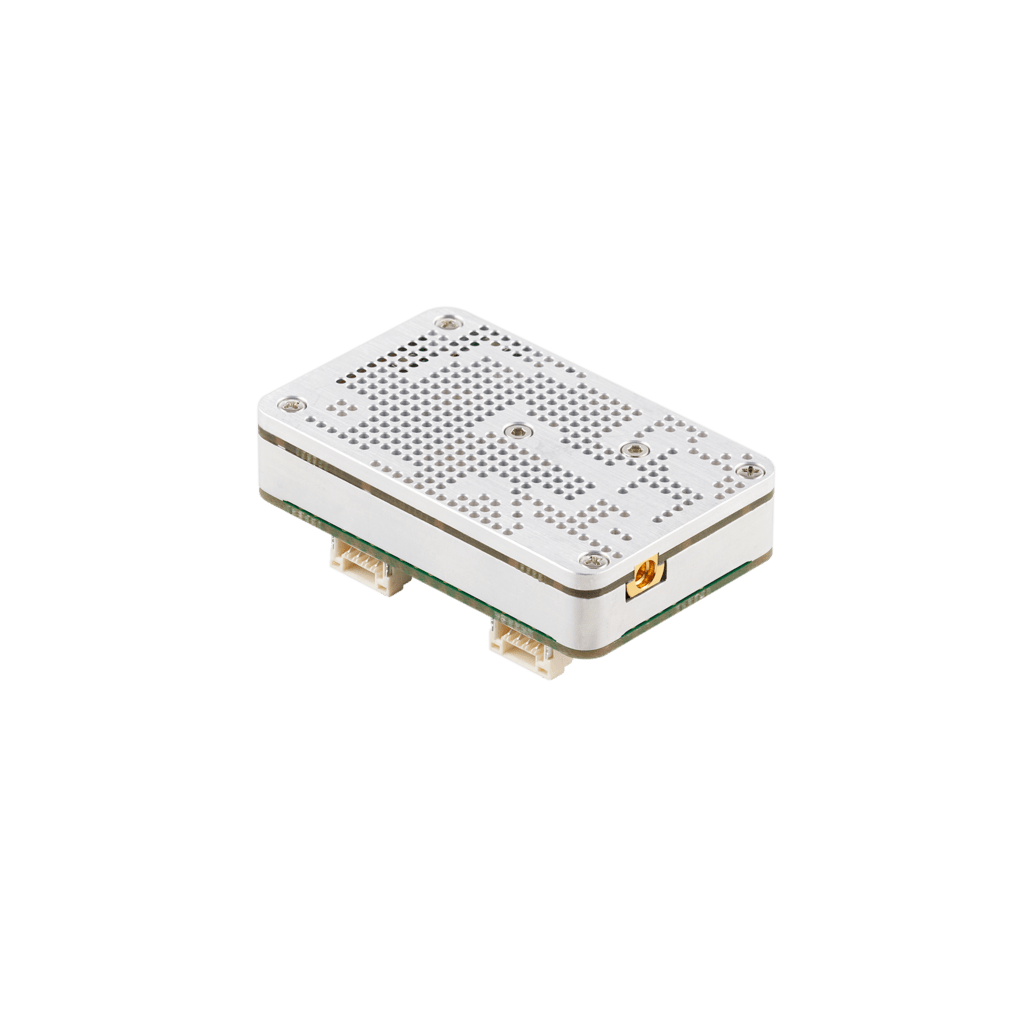
Addressing the intricate challenge of packing full-scale capabilities into a minimal form factor, Marina del Rey, California-based Doodle Labs has officially introduced its new Nano² radio. Weighing in at a mere 48.3 grams, the lightweight communication system packs advanced 2×2 multiple-input multiple-output (MIMO) capabilities into a footprint nearly identical to the company’s previous Nano radio. Crucially, it manages this miniaturization while retaining advanced features such as cross-band frequency agility and self-healing mesh networking.
Amol Parikh, co-CEO of Doodle Labs, noted the immense technical hurdles involved in engineering advanced hardware for small robotics. Working in hardware development carries a notorious reputation in the technology sector, encapsulated by the industry adage that hardware is inherently difficult. Shrinking complex electrical components down to micro-sizes frequently forces engineers to sacrifice crucial capabilities, specialized connectors, or ease of integration.
“We work in hardware and there is a saying in the hardware space that ‘hardware is hard.’ And it’s definitely true,” Amol Parikh, Doodle Labs co-CEO, said in an interview. “Shrinking things down can often come at the sacrifice of capabilities, of certain types of connectors, ease of integration, things like that.”
Despite these obstacles, Doodle Labs has carved out a distinct niche in the uncrewed systems ecosystem. The company designs and manufactures high-performance, long-range, and resilient connectivity solutions tailored specifically for the robotics and drone industries. According to Parikh, the size, weight, and power consumption—widely known throughout the aerospace and defense sectors as SWaP—of Doodle Labs’ specialized radios make them exceptionally well-suited for demanding aerial platforms.
By designing radio systems capable of delivering high data throughput for high-fidelity video feeds over extremely long distances, the company has ensured its products remain adaptable for both tactical military deployments and demanding commercial applications. On the defense front, Doodle Labs and a close industry partner have been selected to participate in the Pentagon’s Drone Dominance campaign. The company is actively preparing for its industrial-grade mesh radios to be deployed as a core communications backbone for the initiative.
This milestone deepens Doodle Labs’ longstanding relationship with the United States military, which spans several years. The foundation of the company’s current technology stack traces back to the production of the Mini Mesh Rider Radio, a compact mobile ad-hoc network router engineered explicitly for drone and robotics original equipment manufacturers. Developed initially for the U.S. Army under the sponsorship of the Department of Defense’s Defense Innovation Unit (DIU), the Mini established a new benchmark for tactical connectivity.

“Our radio that we were able to develop for them covers multiple frequency bands, which is really hard to do in a small package, and it provides that long-range, highly reliable connectivity,” Parikh said. “And actually, a lot of the development that we bring in is now on the software and capability side, building off of these really small radios.”
At the same time, company leadership maintains a steadfast commitment to serving commercial markets alongside defense contracts. Doodle Labs operates with a distinctly dual-use philosophy, leveraging its commercial roots as a foundational pillar of its corporate identity while continuing to support a wide array of civilian opportunities.
Operating in Contested Environments
In engineering its robust radio systems for military deployment, Doodle Labs has prioritized resilience against adverse conditions and heavily contested electronic warfare environments. Historically, communication systems for small FPV drones have relied heavily on analog connectivity or, in some cases, specialized fiber-optic links. Both approaches carry distinct operational advantages as well as severe inherent limitations.
Relying on traditional analog transmissions presents major tactical vulnerabilities, as adversaries can easily intercept or jam signals if the operating frequency is identified. In modern operational theaters, transmitting critical, highly confidential information from reconnaissance or tactical strike drones requires robust electronic protection.
“There’s a real trade-off in sticking with analog,” Parikh explained. When an adversary knows the exact frequency at which a drone communicates with its operator, the signal can be intercepted or jammed with relative ease. “When you think about the highly critical and confidential information that is being transmitted from these drones in actual contested environments, that’s a real trade-off.”
To overcome these vulnerabilities, a growing number of drone operators have transitioned toward digital-based connectivity solutions, a domain where Doodle Labs has established market leadership. Migrating to digital platforms allows operators to expand their fleets into larger, coordinated swarms operating over a decentralized mesh network. It simultaneously delivers significantly higher fidelity, superior video quality, and vastly enhanced throughput capabilities.
Recognizing an industry-wide hurdle, company officials realized that creating a miniaturized iteration of their highly capable radio architecture could dramatically ease the transition to digital communications for producers of small FPV drones.
Because many FPV platforms utilize standardized frames with tightly constrained, predesignated interior spaces, hardware integration can be intensely challenging. Doodle Labs successfully re-architected its Mini platform to feature a smaller X and Y footprint, ensuring it could comfortably fit onto standard drone rail plates. Significantly, the engineering team achieved this reduction without sacrificing any of the advanced capabilities inherent to the larger units.
Commercial Use Case Challenges
While military operators face active electronic interference and jamming on the battlefield, commercial drone users encounter a different yet equally frustrating set of connectivity obstacles. Parikh noted that Doodle Labs has engineered its proprietary Sense software product specifically to address these commercial-grade hurdles. Sense offers advanced interference-avoidance technology designed to operate seamlessly in conjunction with the company’s multi-band Mesh Rider Radios.
“What we’re really doing is taking advantage of the fact that we house multiple frequency bands in every radio. We hold more range of spectrum per radio than any other digital radio supplier,” Parikh said.
Under regulatory frameworks established by the Federal Communications Commission, commercial drone operators are restricted to using a limited selection of unlicensed radio frequencies for telemetry and video transmission. Crowded frequency bands frequently cause severe signal interference, particularly for commercial operators flying missions within dense, congested urban environments.
Utilizing Doodle Labs’ Sense technology allows operators to dynamically navigate and optimize their transmissions within available single frequency bands, minimizing disruption.
“One of those is the Wi-Fi band at 2.4 gigahertz,” Parikh said. “There’s also 900 megahertz and 2.4 gigahertz and 5.8 gigahertz, which all now give us more optionality. We have different radios available in all of those, and we have one radio that covers both 900 megahertz and 2.4 gigahertz.”
The operational landscape for drone users is shifting at an unprecedented pace, driven by sweeping market realignments—such as the withdrawal of DJI hardware from substantial portions of the commercial sector—alongside looming regulatory updates from both the Federal Aviation Administration and the FCC.
From the perspective of Doodle Labs’ leadership, the underlying technology is advancing rapidly to meet these demands. While defense clients navigate active, hostile contested environments, civilian operators face passive interference that remains a significant challenge for modern enterprise drone fleets.