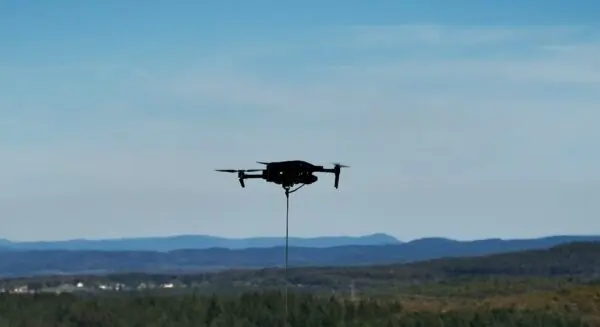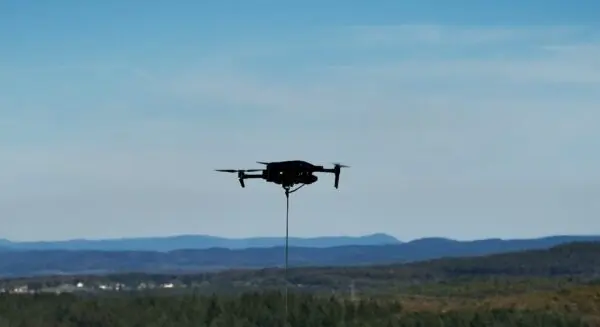
A high-stakes legal battle playing out before the U.S. Court of Appeals for the D.C. Circuit could fundamentally redefine the regulatory powers of the Federal Communications Commission, with profound implications for the commercial drone industry. At the heart of the matter is whether the federal agency holds the legal authority to restrict, limit, or revoke telecommunications equipment and hardware authorizations that it has previously approved, particularly when national security concerns are invoked.
The ongoing judicial scrutiny comes at a critical crossroads for the Unmanned Aircraft Systems (UAS) sector. The FCC is currently weighing a sweeping regulatory proposal that would prohibit the continued importation and marketing of specific foreign-produced drones and critical drone components that have already cleared federal authorization procedures. Because the legal principles being tested in court mirror the mechanisms proposed for foreign-manufactured unmanned aircraft, the outcome of the current federal lawsuit could establish a vital legal precedent for the future of commercial and industrial drone operations across the United States.
Hikvision Challenge Tests Limits of Federal Regulatory Reach
The legal challenge, designated as Hikvision USA, Inc. v. FCC (No. 25-1274), centers on oral arguments heard by a three-judge panel at the D.C. Circuit. The judicial panel overseeing the case comprises Judges Srinivasan, Millett, and Garcia. The litigation was initiated by Hikvision, a major global video surveillance manufacturer, which is formally challenging a specific component of a 2025 FCC order regulating equipment designated on the agency’s official Covered List—a roster of telecommunications and video surveillance hardware deemed to pose an unacceptable risk to U.S. national security.
At the core of the dispute is a newly established regulatory procedure implemented by the FCC. This specific rule allows the Commission to modify or restrict equipment authorizations that were granted to manufacturers in the past. In its written legal briefs submitted to the court, the FCC describes the mechanism as a targeted regulatory tool. According to the agency, the procedure enables the Commission to limit previously issued authorizations for covered equipment solely to prohibit its continued importation and marketing within the United States. Significantly, the framework as currently written does not outright prohibit the continued use of devices that are already owned and operated by end-users.
Hikvision is aggressively challenging the FCC’s statutory authority to adopt and enforce this retroactive restriction rule. Lawyers for the company argue that the agency is overstepping its congressional mandate by clawing back authorizations that were legally granted under established administrative processes. Conversely, the FCC maintains that it possesses broad inherent and statutory authority under federal law to address evolving national security risks through its comprehensive equipment authorization program. The agency asserts that this authority must necessarily include the power to limit, restrict, or revoke existing authorizations when geopolitical tensions or security assessments dictate a change in federal posture.
A Direct Connection to the FCC’s Proposed Drone Restrictions
While the Hikvision litigation directly concerns video surveillance and telecommunications hardware, the jurisdictional questions being deliberated by the D.C. Circuit share an identical structural foundation with recent regulatory moves targeting the commercial drone industry. The legal dispute arrives precisely as the FCC evaluates a parallel regulatory framework that could soon govern a vast array of foreign-produced unmanned aircraft systems operating or entering the U.S. market.
On July 21, the FCC officially opened a formal proceeding under PS Docket No. 26-189, inviting public comments and industry feedback on a far-reaching proposal. This initiative targets specific foreign-produced UAS and critical UAS components. Under the terms of the proposal, the agency is exploring mechanisms that would effectively prohibit the continued importation and marketing of certain previously authorized foreign-manufactured drones and their essential subcomponents. To fall under the scope of the proposed restriction, the equipment must satisfy two primary criteria: it must be included on the FCC’s Covered List, and it must meet the agency’s proposed technical definitions for "military-grade UAS and UAS critical components."
The deliberate inclusion of the phrase "previously authorized" creates an unmistakable and direct bridge between the Hikvision litigation and the unfolding drone policy. The Hikvision case directly challenges the FCC’s foundational authority to restrict previously granted equipment authorizations for items listed on the Covered List. Concurrently, the FCC’s drone proposal seeks to apply that exact same operational logic—restricting the continued importation and marketing of previously authorized foreign-produced UAS and components that also happen to reside on the Covered List.
Furthermore, there is a key operational nuance shared between both regulatory efforts that has captured the attention of drone industry stakeholders and legal experts alike. The FCC’s drone proposal explicitly notes that the prospective restrictions would not prohibit current operators and commercial enterprises from continuing to use drone equipment that they already own and fly. This distinction mirrors the precise legal framework defended by the FCC in the Hikvision litigation, where the agency contends that it can lawfully cut off future importation and domestic marketing channels without needing to order a disruptive recall or ban on devices already active in the field.
Broader Implications for the Unmanned Systems Industry
Although the D.C. Circuit case strictly involves telecommunications and surveillance equipment rather than unmanned aerial vehicles, its final resolution will carry immense weight for administrative law and federal oversight. The court’s ruling will not automatically settle every complex legal question surrounding the FCC’s broader UAS proposal, nor will it single-handedly dictate the future of foreign-made drone utilization in American airspace.
Nevertheless, the timing of the litigation places the very boundaries of the FCC’s authority over previously authorized Covered List equipment directly before a federal appeals court. This judicial review is happening at the exact moment the Commission is moving to apply that contested regulatory framework directly to foreign-produced drones and drone components. As the legal arguments conclude and the D.C. Circuit prepares to issue its decision, manufacturers, commercial operators, and regulatory compliance experts across the aviation and technology sectors remain closely attuned to a ruling that could reshape how federal agencies manage national security risks within commercial supply chains.