NEW DELHI — With negotiations for the landmark India-European Union free trade agreement having officially concluded in January 2026, the diplomatic and economic focus is rapidly pivoting away from negotiating tables and moving straight toward implementation. As governments, businesses, and institutions grapple with the realities of turning broad trade liberalisation into tangible economic benefits, the conversation has centered on a critical question: how can a macro-level geopolitical pact deliver practical, everyday value to enterprises and citizens on both sides?
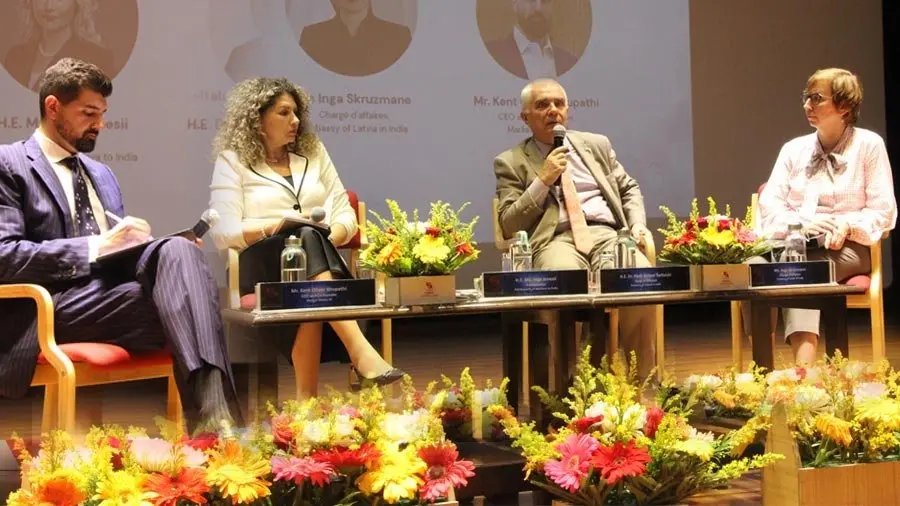
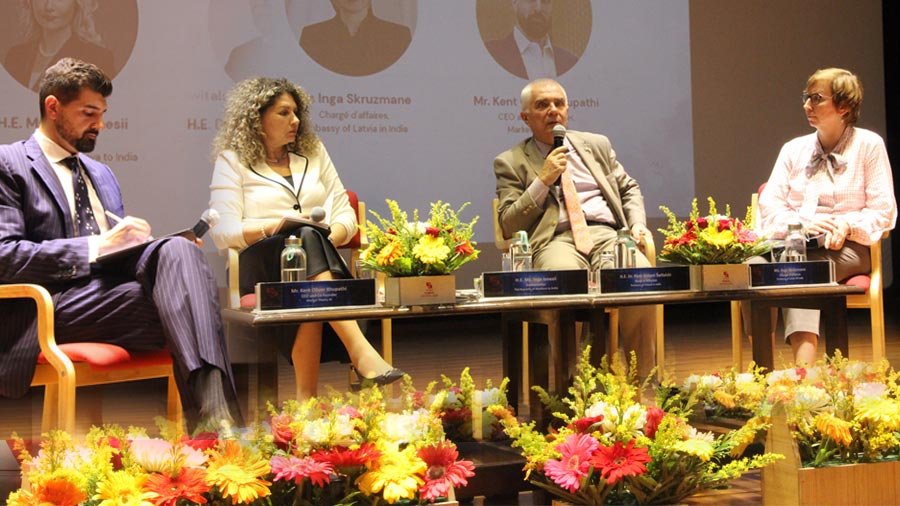
This pressing inquiry served as the bedrock of the India–EU Diplomatic Dialogue, an event organized by Diplomatist Magazine and hosted at Symbiosis International (Deemed University). Bringing together high-ranking diplomats from Moldova, Poland, and Latvia, the panel discussion examined the multifaceted pathways through which the newly solidified trade framework could translate into heightened foreign investment, technological innovation, enhanced physical and digital connectivity, and deeply rooted strategic engagement.
Moderated by Kent Oliver Bhupathi, CEO and co-founder of Market Theory AI, the panel featured a diverse trio of European perspectives: H.E. Inga Ionesii, Ambassador of the Republic of Moldova to India; Dr Piotr Antoni Świtalski, chargé d’affaires a.i. of the Republic of Poland in India; and Ms Inga Skrūzmane, Chargé d’affaires at the Embassy of Latvia in India.
Together, the three diplomats laid out complementary strategic frameworks. Moldova brought valuable lessons learned from deep economic integration with the EU single market; Poland placed a heavy emphasis on bilateral strategic cooperation, advanced technologies, and robust supply chain connectivity; and Latvia narrowed in on tariff reductions, the empowerment of smaller businesses, and cross-border digital innovation.
Learning from Moldova’s Integration Experience
Opening the substantive portion of the dialogue, Kent Oliver Bhupathi directed his first question to Ambassador Inga Ionesii, asking what India might learn from Moldova’s unique experience in negotiating and successfully implementing its comprehensive trade agreements with the European Union.
Ambassador Ionesii responded by emphasizing that the principal lesson lies in clearly recognising the sheer scale of economic opportunity generated by securing predictable access to a significantly larger, unified market. Drawing directly from Moldova’s historical trajectory under the Deep and Comprehensive Free Trade Area (DCFTA), she explained that closer structural integration acts as a powerful catalyst, encouraging domestic businesses to dramatically upgrade their production standards, diversify their export portfolios, and expand their overall industrial capacity.
Furthermore, she underscored that such comprehensive trade accords can systematically underwrite foreign direct investment and facilitate crucial technology exchanges, ultimately enabling emerging economies on both sides to bolster their institutional capabilities and economic resilience.
However, Ionesii’s analysis offered a measured qualification to the widespread enthusiasm surrounding trade liberalisation. She noted that the true net benefits of any trade pact do not materialise automatically; rather, they depend entirely on how proactively businesses and institutional frameworks choose to utilize the market access and opportunities placed at their disposal.
Elevating India-Poland Strategic Ties to Practical Cooperation
Shifting the geographical focus toward Central Europe, the moderator turned to Dr Piotr Antoni Świtalski, asking what the next logical steps should be in translating the burgeoning India-Poland strategic partnership—originally established in 2024—into concrete, everyday commercial and diplomatic cooperation.
Dr Świtalski asserted that strengthening bilateral ties between Warsaw and New Delhi would inevitably reinforce the broader, overarching architecture of the India-EU relationship. Expressing strong optimism, he voiced his desire to see high-level political momentum directly fuel economic cooperation, setting an ambitious target to double current bilateral trade—which he estimated to be approximately US$6 billion—well before the turn of the decade in 2030.
To achieve this ambitious goal, the Polish diplomat identified several high-priority sectors ripe for joint development, including defense cooperation, space exploration, artificial intelligence, cutting-edge high technologies, and the burgeoning green economy. Significantly, Dr Świtalski placed special emphasis on the nature of these prospective commercial ventures, noting that modern Polish enterprises are actively seeking genuine, collaborative partnerships with Indian corporate counterparts rather than simply treating the South Asian nation as a transactional export market.
The conversation subsequently pivoted toward the specific hurdles faced by smaller enterprises. Bhupathi asked Ms Inga Skrūzmane what tools and measures, stretching far beyond mere tariff reductions, are fundamentally required to help Indian and Latvian small and medium-sized enterprises (SMEs) extract maximum value from the trade agreement.
Ms Skrūzmane identified verified market information and direct commercial contacts as absolute prerequisites for success. She explained that smaller businesses must navigate unfamiliar regulatory frameworks, decode local consumer behaviors, and deeply understand the unique commercial culture of potential foreign partners before they can safely expand. To bridge these gaps, she strongly encouraged firms to actively participate in specialized trade exhibitions and cultivate direct business-to-business networks, arguing that sustainable commercial trust can only be forged through face-to-face engagement.
Her insights highlighted a persistent practical bottleneck in international commerce: even when legal and tariff barriers are systematically dismantled, smaller firms frequently remain unable to capitalize on new horizons simply because they lack the institutional navigational tools to find reliable partners in unfamiliar territories.
Connectivity: The Physical Infrastructure Behind Trade
Expanding the scope of the dialogue beyond regulatory frameworks and tariffs, Dr Świtalski introduced a vital physical dimension to the discussion: the absolute necessity of robust, reliable supply chain connectivity. He argued compellingly that the ultimate global competitiveness of trade depends just as much on the physical efficiency and security of international transport corridors as it does on favorable customs duties.
Drawing attention to recent geopolitical disruptions and vulnerabilities in West Asia, Dr Świtalski illustrated how unexpected chokepoints and longer, forced shipping detours can severely inflate delivery times, escalate logistics costs, and strain delicate commercial relationships. In response to these vulnerabilities, he issued a call for greater international focus on ambitious logistical projects, such as the India-Middle East-Europe Economic Corridor (IMEC), alongside potential future extensions reaching northward toward the Baltic and Nordic regions, as well as Moldova.
In addition to maritime and land routes, the Polish diplomat underscored the critical role of robust air connectivity. He suggested that establishing stronger, more direct passenger and cargo flight links would provide indispensable backing for frequent business travel, corporate mobility, and tighter commercial integration. This intervention effectively broadened the panel’s mandate, shifting the analytical focus from abstract trade rules to the hard infrastructure required to make those rules practically operational.
Finding New Horizons for Traditional Products
The panel discussion also delved into the micro-level realities of promoting sector-specific opportunities and traditional goods within diverse, highly competitive international consumer markets.
Addressing Ambassador Ionesii, the moderator inquired about Moldova’s strategic roadmap for promoting its historic wine-making heritage within the vast and complex Indian market. Ionesii acknowledged that existing high import duties in India presented a distinct near-term challenge for Moldovan winemakers, but outlined ongoing, proactive efforts to introduce the nation’s signature beverages directly to key Indian distributors through targeted participation in major domestic trade exhibitions.
Citing recent corporate delegations that took part in trade showcases in Mumbai, she confirmed that Moldovan producers remain firmly committed to presenting their high-quality offerings to local consumers and forging durable, long-term relationships with potential Indian partners. This practical case study vividly demonstrated how market access, aggressive promotional campaigns, and local distributor partnerships must operate in seamless tandem if traditional export products are to secure a permanent, sustainable foothold in an overseas market.
Green Technology: Transitioning from Exports to Joint Ventures
Turning back to the imperative of sustainable development, Bhupathi asked Dr Świtalski to pinpoint specific avenues where India and Poland could significantly deepen their bilateral cooperation in the fields of clean energy and green technologies.
Dr Świtalski pointed to a dynamic ecosystem of Polish companies actively working in pioneering fields such as hydrogen production, green ammonia development, and advanced lithium-ion battery recycling. He noted that these firms are actively scouting for strategic investment opportunities and co-development partnerships with forward-thinking Indian counterparts. Furthermore, he highlighted lucrative collaborative prospects within space technology and the manufacturing of advanced medical equipment, specifically calling out AI-enabled diagnostic tools as a frontier ripe for joint innovation.
These concrete examples powerfully reinforced the evolving distinction between conventional, one-way commodity exports and deep, integrated technological collaboration. Modern cross-border partnerships allow forward-looking companies to pool their complementary intellectual capabilities, co-create sophisticated technological solutions, and actively participate in each other’s domestic innovation ecosystems.
Digital Cooperation and the Promise of Artificial Intelligence
In the final thematic segment of the panel, Ms Skrūzmane was invited to outline the most promising digital and technological opportunities bridging the Indian and Latvian economies.
The Latvian diplomat expressed immense admiration for India’s globally renowned Unified Payments Interface (UPI) digital payments infrastructure, citing it as an inspiring benchmark of large-scale financial innovation. She identified artificial intelligence and comprehensive digitalization as primary domains for future bilateral cooperation, noting the real-world success of a Latvian-founded software enterprise currently operating within India and successfully servicing over 10,000 domestic Indian business entities.
This real-world example served as a clear reminder that contemporary bilateral cooperation need not be restricted strictly to physical goods moving across international borders. Modern digital services, software platforms, and technology-driven businesses are equally capable of establishing robust cross-border footprints, weaving a complex web of commercial linkages that transcend traditional trade definitions.
At the same time, Ms Skrūzmane candidly acknowledged that the rapid proliferation of artificial intelligence introduces sensitive regulatory, ethical, and security questions that demand rigorous international cooperation, positioning AI as an area where joint regulatory frameworks and bilateral technological partnerships will prove exceptionally valuable.
A Partnership Built on Implementation
As the wide-ranging panel discussion drew to a close, a consistent, overarching theme crystallized across all contributions: while the conclusion of the India-EU free trade agreement represents an extraordinary diplomatic milestone and a crucial institutional foundation, its ultimate historical legacy and economic impact will be defined entirely by the effectiveness of its execution.
Ambassador Ionesii reiterated the foundational necessity of domestic economic reforms and steady institutional capacity-building. Dr Świtalski advocated for enhanced physical connectivity, high-level strategic alignment, and deep technological co-development. Meanwhile, Ms Skrūzmane underscored the irreplaceable value of transparent market information, direct business contacts, and targeted institutional support systems designed specifically to empower smaller enterprises.
Taken together, the insights offered by the European diplomats suggested that the next critical phase of India-EU cooperation will demand synchronized action across multiple operational fronts. These include helping commercial enterprises successfully navigate unfamiliar regulatory landscapes, upgrading regional transport and logistics networks, facilitating cross-border investment flows, and co-authoring the future of green technology, digital services, and advanced manufacturing.
The dialogue successfully underscored the immense analytical value of examining the multifaceted India-Europe relationship through the distinct economic lenses of individual European nations. While their specific economic profiles, geographical footprints, and immediate national priorities naturally vary, Moldova, Poland, and Latvia each offered pragmatic, grounded perspectives on how closer bilateral and multilateral cooperation can be effectively realized on the ground.
The primary challenge facing policymakers and business leaders alike is no longer the drafting of trade frameworks, but the conversion of the theoretical promise of trade liberalisation into enduring, productive relationships spanning institutions, corporations, and everyday citizens. Within that deliberate transition from diplomatic agreement to tangible implementation lies the ultimate opportunity to render the modern India-EU partnership considerably more resilient, deeply innovative, and geopolitically consequential.