In a significant milestone for both long-range aviation and international sports regulation, Alaska’s premier drone research program has successfully completed a 1,000-kilometer test flight carrying chilled human blood samples. The operation was conducted on behalf of the International Testing Agency (ITA), the independent organization responsible for investigating doping among athletes at the Olympic Games and other major international competitions.
The ambitious mission spanned nearly nine hours, testing the limits of whether large, long-range uncrewed aerial systems can transport sensitive biological materials across vast distances without suffering thermal degradation or structural compromise.
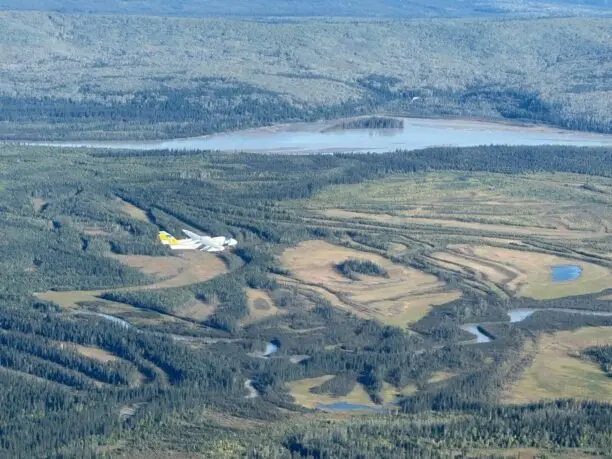
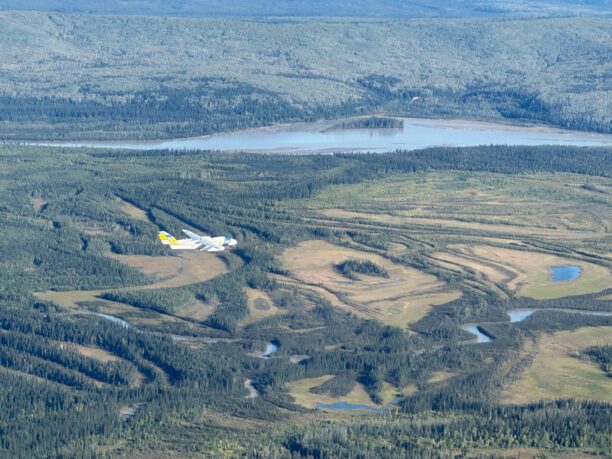
The flight took place on August 19, 2026, utilizing a Windracers ULTRA aircraft operated by the Alaska Center for Unmanned Aircraft Systems Integration (ACUASI), which operates under the University of Alaska Fairbanks (UAF) Geophysical Institute. The journey began and ended at the Nenana Municipal Airport, covering an impressive total distance of 1,000 kilometers—equivalent to roughly 621 miles—over the course of 8 hours and 47 minutes.
To ensure the integrity of the experiment, staff members from the Interior Region EMS Council collected blood samples from a group of volunteers the previous day at the UAF campus. Each participating volunteer provided two distinct samples, a methodological necessity that allowed laboratory analysts to rigorously compare baseline conditions before transport against the state of the samples upon their return.
The operational success of the flight relied on a collaborative coalition of specialized organizations. ACUASI supplied the heavy-duty flight platform and vital aviation expertise. Meanwhile, Sysmex America, the United States subsidiary of the Japan-based medical diagnostics corporation Sysmex Corp., provided the specialized diagnostic equipment utilized in the pipeline. Once the flight concluded, the Institute of Doping Analysis and Sports Biochemistry located in Dresden, Germany, handled the final sample analysis.
Cathy Cahill, director of ACUASI, praised the precision and capability of the flight crew following the successful landing. The competency of ACUASI pilots is truly outstanding, Cahill noted, emphasizing that the ability to mobilize quickly, establish operational readiness, and execute complex, time-sensitive missions highlights the maturity of modern uncrewed aviation. In emergency scenarios or critical logistics operations, she added, reliability is paramount, and missions of this scale cannot be entrusted to amateurs.
Windracers ULTRA Platform and Flight Profile
The international partnership behind the test was first forged when the ITA contracted ACUASI for the evaluation, brought together by drone manufacturer Windracers, the firm that builds the ULTRA aircraft utilized for the mission. ACUASI currently maintains two of these twin-engine airframes in its fleet, assets defined by their robust specifications and versatility in harsh northern environments.
The Windracers ULTRA boasts a substantial 31-foot wingspan, translating to roughly 9.4 meters, and offers an impressive operational range of approximately 600 miles, or 966 kilometers. With a cargo capacity of 200 pounds, or 91 kilograms, and three dedicated cargo drop doors, the aircraft is engineered for heavy lifting and logistical utility. Furthermore, the platform is designed to operate seamlessly from unpaved surfaces, including dirt, grass, ice, or standard tarmac, making it uniquely suited for the rugged terrain of the Alaskan interior.
Timing served as the critical backbone for the entire operation, dictating a strict sequence of events that left no room for logistical error. The protocol began with the initial blood draw, followed immediately by strict cold storage protocols, careful labeling, and ground transport from Fairbanks to Nenana. From there, ground crews managed aircraft preparation, cargo loading, and the eventual launch of the long-range flight.
Throughout the journey, stringent protocols were maintained to safeguard the integrity of the procedure. The transported samples carried no personally identifying information whatsoever, and they were not evaluated for doping infractions or underlying medical conditions during the test. Nevertheless, because the mission served as a proof of concept for anti-doping enforcement, an unbreakable chain of custody had to be maintained from the moment of collection until the final analysis.
Drone Blood Sample Delivery for Anti-Doping Enforcement
For sports regulators, the successful integration of uncrewed aircraft into the anti-doping supply chain represents a potential paradigm shift in how samples are managed worldwide. Athletes want something efficient, something they can trust, explained Neil Robinson, head of the ITA Science and Medical Department.
Robinson detailed the physical security measures implemented during the flight, noting that the samples were secured within sealed containers and loaded directly into the cargo hold of the drone. Everything is thoroughly documented, Robinson said, adding that flight tracking capabilities allow agencies to monitor the aircraft in real time, assuring stakeholders that the drone remains on course and has not landed prematurely in an unauthorized field.
The ITA’s exploration of drone technology is not entirely unprecedented, though the Alaska deployment represents a massive scaling up of previous efforts. The agency ran its first exploratory drone-delivery testing in 2022 in Doha, Qatar, in collaboration with a Swiss drone company and the Qatari anti-doping laboratory. That initial proof of concept consisted of three short quadcopter flights covering distances of up to 20 kilometers, or roughly 12 miles. Even at that limited scale, each flight successfully cut travel time by approximately half compared to traditional ground courier services.
By comparison, the expansive Alaska test allowed the ITA to evaluate transport logistics across a vastly greater distance and within a far more demanding environmental setting. There are not many drones like this in the world with this cargo capacity, Robinson observed. These drones are of great interest to us because we can fly much larger distances, opening up new possibilities for remote testing venues.
Looking forward, Robinson anticipates a broader operational adoption of uncrewed aircraft for medical and anti-doping samples alike. Drones can potentially offer reduced financial costs compared to crewed aircraft while simultaneously granting anti-doping officials the agility to respond much faster to logistical challenges. The core interest is to use the world of sport as a controlled model to pioneer the shipping of biological samples, Robinson said. While he noted that global implementation may not happen immediately, he expressed confidence that the technology will be ready in the near future.
Rural Healthcare Applications in Alaska
Although the recent test focused specifically on athletic blood samples, the broader implications of the research extend deeply into the realms of routine medical testing, public health research, and the transport of various biological materials across isolated regions. Cahill framed the wider opportunity explicitly in the context of remote Alaskan communities where access to centralized laboratories is severely limited by geography and weather.
If we can have nurses go into a community and take samples, send them back for analysis, determine what medications are needed and get that sent back to the community before the nurses leave, that is a huge benefit for getting people the care they need in the location where they are, Cahill explained. Such a capability could dramatically reduce turnaround times for diagnostics in bush communities, transforming healthcare delivery across the Last Frontier.
The University of Alaska Fairbanks holds a distinguished position within the national aviation landscape as one of just nine Federal Aviation Administration-designated unmanned aircraft systems test sites in the United States. Through ACUASI, the institution manages and operates this specialized designation, maintaining multiple active test locations across the country to support the advancement of autonomous and uncrewed flight technologies.