Leaders from twelve nations converged on Rovaniemi, Finland, for the European Arctic Summit, confronting a stark geopolitical reality: the High North is no longer a remote, frozen periphery guarded by its own harsh environment. Instead, it has rapidly transformed into a complex geopolitical theater where trade, energy, national security, and technological competition increasingly intersect.
Addressing the gathering, German Chancellor Friedrich Merz described the Arctic as a definitive “geopolitical hotspot,” while Finnish Prime Minister Petteri Orpo emphasized that the region has fundamentally evolved into an integral pillar of European security. The summit underscored a profound shift in how world capitals view the northernmost latitudes, driven by the rapid transformation of the Arctic landscape and the receding ice that has long shielded the region from large-scale commercial and military exploitation.
Climate Change Rewriting Arctic Geography
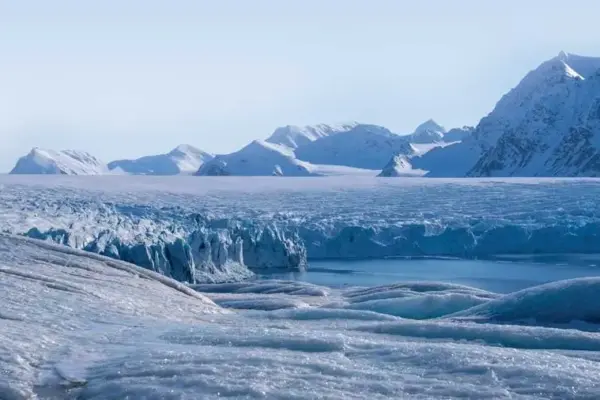
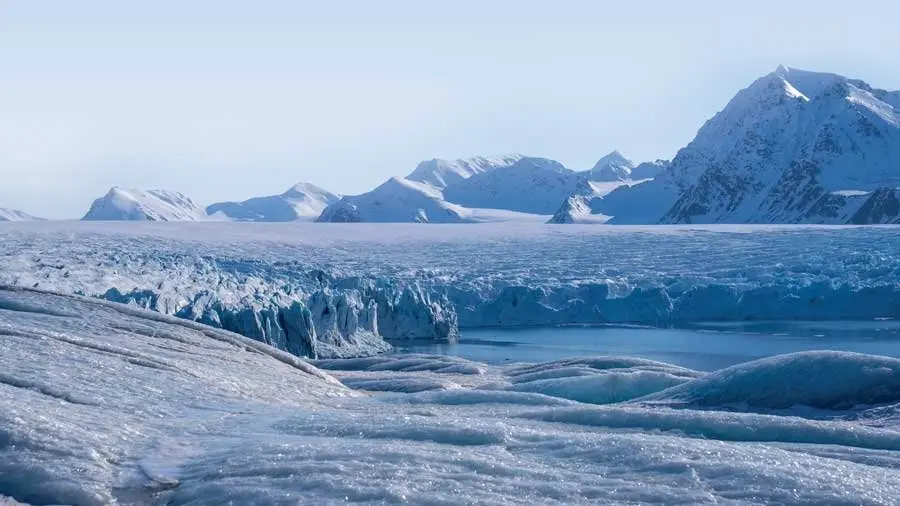
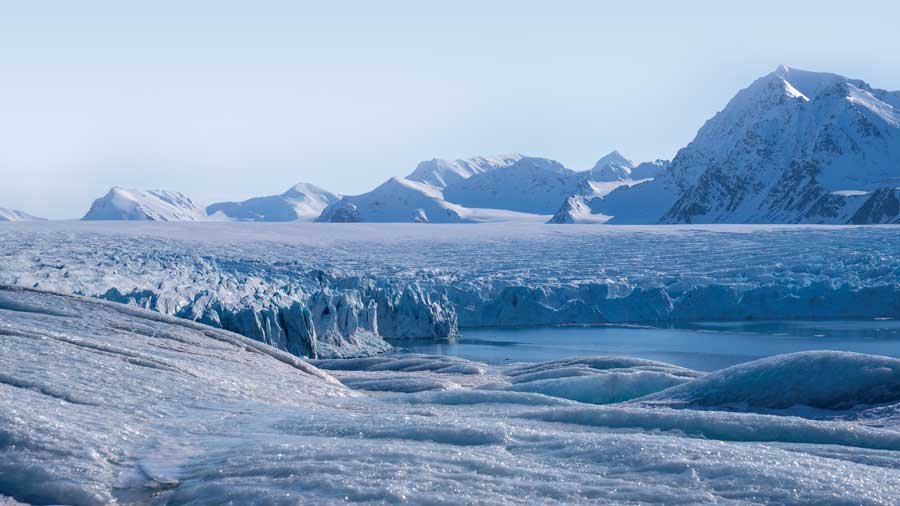
For centuries, the Arctic’s greatest defense against sustained human activity, commercial shipping, and military build-up was its punishing, frozen geography. Today, that natural barrier is steadily eroding.
Scientific observations and estimates indicate that the Arctic is warming nearly four times faster than the global average. Data from organizations such as the National Oceanic and Atmospheric Administration (NOAA) and its annual Arctic Report Card show that Arctic sea ice continues to decline persistently in both geographic extent and overall thickness. End-of-summer sea ice coverage now tracks significantly lower than historical averages, while durable multi-year ice is continuously being replaced by younger, thinner seasonal ice.
This environmental shift has created a striking geopolitical paradox: what the world steadily loses in ice, sovereign states and commercial entities gain in physical access. Vast areas that remained inaccessible for the vast majority of the year are steadily becoming navigable for longer seasonal windows. The exploitation of vast resource deposits is transitioning from theoretical possibility to logistical feasibility, and entirely new maritime trade routes are emerging to connect European and Asian markets.
The Northern Sea Route: Russia’s Strategic Arctic Corridor
At the center of this maritime revolution is the Northern Sea Route (NSR), which runs along Russia’s vast Arctic coastline from the Kara Gate to the Bering Strait. The route represents the shortest possible maritime connection between Northeast Asia and Northern Europe, drastically cutting transit times compared to traditional southern pathways.
For decades, the NSR remained largely a theoretical concept hindered by ice, unpredictable weather, and a lack of infrastructure. Today, however, it operates as an active corridor for international commerce. Transit voyages through the route increased from 43 in 2022 to approximately 79 in 2023, before climbing to a record 97 voyages in 2024. Cargo volumes transported along the corridor have mirrored this upward trajectory, rising from roughly 34 million tonnes in 2022 to 36.3 million tonnes in 2023, and reaching nearly 38 million tonnes in 2024.
Despite this steady growth, the composition of this traffic remains specialized. The majority of the vessels utilizing the route are not standard container ships, but rather specialized tankers and cargo carriers dedicated to transporting oil, liquefied natural gas, minerals, and essential industrial supplies to northern settlements and massive Russian extraction projects, such as those on the Yamal Peninsula.
The Suez Canal Comparison
While the traffic figures demonstrate that the Arctic is moving well beyond the experimental phase, experts caution against exaggerating its immediate economic impact. It remains a persistent misconception that Arctic routes are prepared to replace traditional shipping arteries like the Suez Canal anytime soon.
The Suez Canal routinely handles more than 20,000 vessel transits annually, carrying an estimated 12 to 15 percent of total global trade. By contrast, the Northern Sea Route recorded fewer than 100 transit voyages during its busiest year on record. In terms of sheer cargo volume and commercial capacity, there is simply no comparison between the two.
Nevertheless, the true significance of Arctic shipping extends far beyond raw volume numbers. Its primary value lies in offering a viable alternative to the handful of traditional, highly vulnerable maritime chokepoints—namely the Suez Canal, the Bab el-Mandeb strait, the Strait of Hormuz, and the Strait of Malacca. Recent disruptions in the Red Sea, persistent instability across the Middle East, and broader geopolitical frictions have repeatedly exposed the fragility of these conventional global supply chains. Consequently, the Arctic functions less as a direct competitor to traditional trade lanes and more as a strategic hedge against systemic crises elsewhere in the world.
Russia’s Greatest Advantage: Icebreakers
Russia possesses an inherent geographical advantage in the High North, needing export flexibility for its energy markets in Asia at a time when sweeping Western sanctions continue to disrupt traditional trade patterns. However, geography alone does not secure the corridor. Technology and specialized infrastructure amplify Moscow’s advantage.
Unlike conventional maritime regions, Arctic sea lanes require dedicated escort vessels, robust search-and-rescue capabilities, advanced navigation systems, satellite monitoring networks, deep-water ports, and specialized heavy infrastructure. Russia has spent decades systematically building and maintaining these critical capabilities.
Moscow currently commands the world’s largest icebreaker fleet and stands uniquely alone as the only nation possessing nuclear-powered icebreakers, including the formidable Arktika, which is specifically engineered to operate in the thickest and most punishing Arctic ice. Meanwhile, the United States lags significantly behind in this crucial domain. Recognizing this wide capability gap, European states have begun actively discussing coordinated icebreaker programs. During the Rovaniemi summit, Kaja Kallas, Vice-President of the European Commission, explicitly highlighted the urgent need to bolster European icebreaking capacity to meet the security and logistical demands of the region.
The Resource Race Beneath the Ice
Shipping logistics only partly explain the escalating global focus on the Arctic. According to assessments by the United States Geological Survey, the region may harbor approximately 13 percent of the world’s undiscovered conventional oil reserves and roughly 30 percent of its undiscovered natural gas reserves.
Beyond hydrocarbons, critical minerals have become equally prominent in discussions surrounding the High North. Rare earth elements, lithium, nickel, cobalt, graphite, and copper are indispensable components for electric vehicles, advanced battery storage systems, renewable energy infrastructure, semiconductors, and high-tech defense applications. In the modern global economy, control over these critical mineral deposits translates directly into enduring geopolitical influence.
Greenland, the United States, and Strategic Geography
This scramble for resources and strategic positioning helps explain why Greenland has emerged as one of the most critical territories in the entire Arctic framework. During her visit to Greenland, European Commission President Ursula von der Leyen announced a substantial 200 million euro investment package designed to support connectivity, hydropower development, critical raw materials extraction, local infrastructure, and sustainable economic growth. The package was widely interpreted as much more than a routine economic initiative; it was a deliberate geopolitical signal.
During the Cold War, Greenland served as a foundational pillar of North American early-warning architecture. Even today, the strategic Pituffik Space Base remains an indispensable installation for missile warning, missile defense, and comprehensive space surveillance. Recent policy debates in Washington regarding Greenland’s future underscore its enduring relevance to broader national security calculations.
China’s Arctic Ambitions and the Polar Silk Road
As competition intensifies, external powers are seeking to establish a firm foothold in the region. China formally describes itself as a “near-Arctic state” and has steadily emerged as one of the most influential external actors in the High North, expanding its footprint through scientific research initiatives, infrastructure partnerships, and exploratory shipping ventures.
Beijing’s primary motivations in the Arctic include mitigating its strategic vulnerability known as the "Malacca Dilemma" and securing vital natural resources to fuel its industrial and technological ambitions. Through its self-styled “Polar Silk Road” initiative, Beijing has sought to integrate Arctic shipping lanes into the broader framework of the Belt and Road Initiative. In 2026, Chinese commercial entities successfully tested the Northern Sea Route with container vessels to evaluate its long-term commercial viability, signaling that Beijing’s presence in the region is enduring and structural.
Militarization of the High North
Alongside expanding economic and commercial opportunities, the Arctic is undergoing a pronounced process of rapid securitization.
Russia has systematically reopened Soviet-era military installations, modernized its network of Arctic bases, expanded northern airfields, and strengthened its Northern Fleet to protect vital strategic assets, including nuclear-powered submarines operating beneath the ice cap.
Participants at the Rovaniemi summit openly identified this aggressive Russian military posture as a major regional challenge, while also expressing mounting concern over China’s deepening footprint in the High North. Following the historic accessions of Finland and Sweden, virtually the entire European sector of the Arctic is now integrated into NATO. The alliance has responded to the shifting security landscape by increasing the frequency of Arctic military exercises, enhancing intelligence, surveillance, and reconnaissance operations, and sharpening its strategic focus on northern defense. The joint declaration issued at the conclusion of the summit formally urged the European Union to assume a much more strategic, assertive, and proactive role in the governance and defense of the Arctic.
The ongoing retreat of the Arctic ice cap stands as one of the most consequential geopolitical developments of the twenty-first century, driven fundamentally by the cascading effects of global climate change. Russia is actively leveraging its geography, specialized infrastructure, and unique maritime technology to expand commercial corridors. Beijing views the region as an essential future trade artery and a reservoir of critical strategic resources. The United States increasingly interprets Greenland and the High North through the uncompromising lens of national security, while European capitals work to redefine the Arctic as a vital strategic frontier and a reliable alternative to traditional maritime chokepoints.
No international treaty was signed to formally reopen the Arctic, and no single summit declared it the new center of gravity for global politics. The melting ice achieved that transition independently.