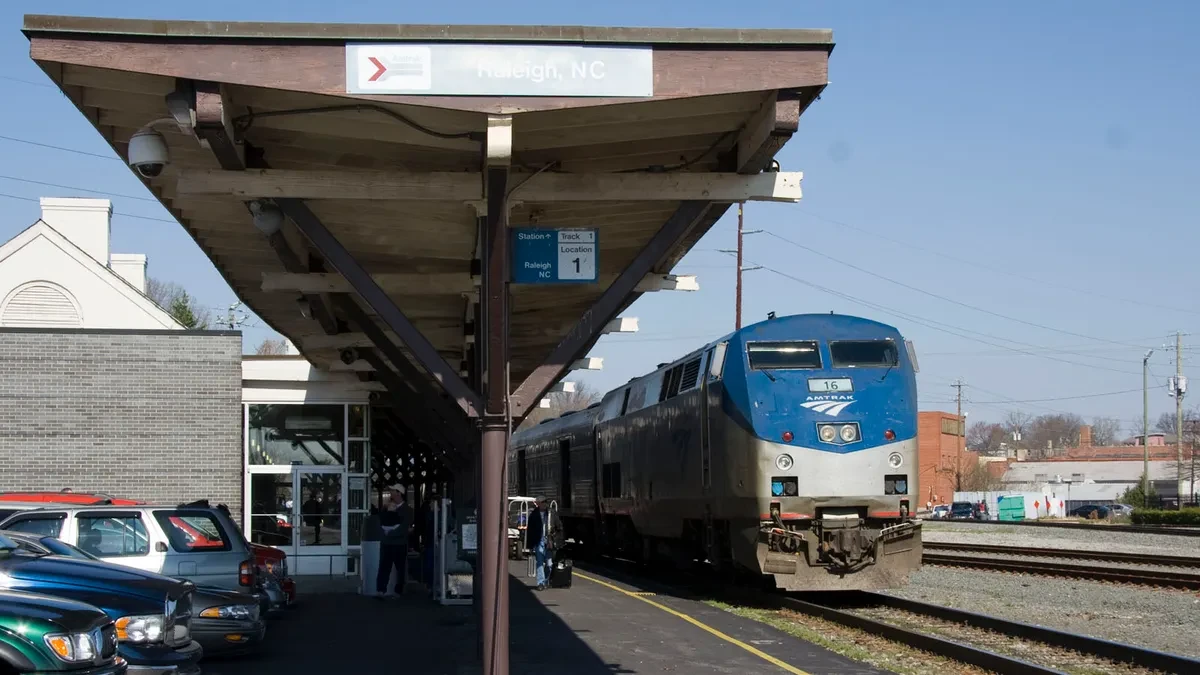
A major infrastructure initiative aimed at transforming regional rail travel along the East Coast is moving forward, promising to reshape transportation options for communities spanning from Virginia to North Carolina. The multi-phase effort centers on the vital S-Line project, a strategic rail corridor designed to relieve chronic train congestion, significantly enhance travel times, and allow state transportation officials to schedule a much higher frequency of passenger train trips.
The scope of the undertaking highlights a growing emphasis on modernizing rail infrastructure to meet the demands of expanding populations in the Southeast. According to the North Carolina Department of Transportation, the corridor improvements will address long-standing capacity constraints that have historically forced passenger and freight trains to compete for limited track space. By upgrading the infrastructure, both North Carolina and Virginia intend to unlock new possibilities for intercity rail travel, offering residents and visitors a reliable, efficient alternative to highway driving.
The origins of the transformative project trace back to strategic acquisitions of critical right-of-way properties. The S-Line itself is a freight rail line originally owned by CSX. Recognizing the potential to repurpose and upgrade portions of the corridor for high-speed and higher-frequency passenger service, the transportation departments of North Carolina and Virginia moved to secure the necessary land. Specifically, the two states purchased the right-of-way for a key portion of the line stretching between Petersburg, Virginia, and Raleigh, North Carolina. Momentum officially picked up on the ground when officials broke ground on the project in Raleigh.
Funding and regulatory backing have played an essential role in advancing the corridor from the planning phase into active development. The Federal Railroad Administration formally obligated the funds required to support the initiative, a crucial procedural and financial step that involves a written, project-specific agreement executed between the United States Department of Transportation and the North Carolina Department of Transportation.

This financial commitment builds upon a broader federal push to modernize rail networks across the region. In a related development earlier in the year, the U.S. Department of Transportation awarded nearly $300 million to support the Piedmont Corridor, which connects Raleigh and Charlotte. That substantial investment was earmarked for critical safety and efficiency upgrades, including the elimination of nine grade crossings, the installation of double-track segments to allow trains to pass one another smoothly, and enhanced trespassing prevention measures along the route.
Federal and state leaders have repeatedly emphasized the cooperative nature of these infrastructure investments. Federal Railroad Administration Administrator David Fink highlighted the close coordination required to bring the projects to fruition. In a statement addressing the ongoing progress, Fink noted that the milestone stands as a clear testament to the strong, enduring partnership between the Federal Railroad Administration, Amtrak, and the North Carolina Department of Transportation as they work to advance both the S-Line and the previously announced Piedmont Line corridors. Through such close collaboration, transportation authorities are delivering vital investments designed to modernize passenger rail and usher in what officials frequently describe as a new era of rail transportation for the people of North Carolina and the broader region.

Beyond the immediate operational benefits of reducing congestion and adding train frequencies, the S-Line project is serving as a catalyst for comprehensive community planning and economic development. The North Carolina Department of Transportation is currently leading planning efforts for transit-oriented development along a substantial 95-mile section of the rail corridor. This comprehensive planning initiative encompasses numerous municipalities and communities situated along the route, including Apex, Franklinton, Henderson, Norlina, Raleigh, Sanford, Wake Forest, and Youngsville.
As part of this broader vision for sustainable growth and regional connectivity, the planning framework incorporates the creation of community mobility hubs in these designated cities and towns. These hubs are designed to facilitate seamless multimodal transportation by integrating various modes of travel, supporting crucial first- and last-mile connections for commuters and travelers, and incorporating amenities such as secure bike parking facilities. By aligning infrastructure investments with local land-use planning, state and local leaders hope to foster vibrant, walkable communities centered around reliable public transit, ensuring that the modernization of the S-Line delivers long-term economic and environmental benefits for the entire region.