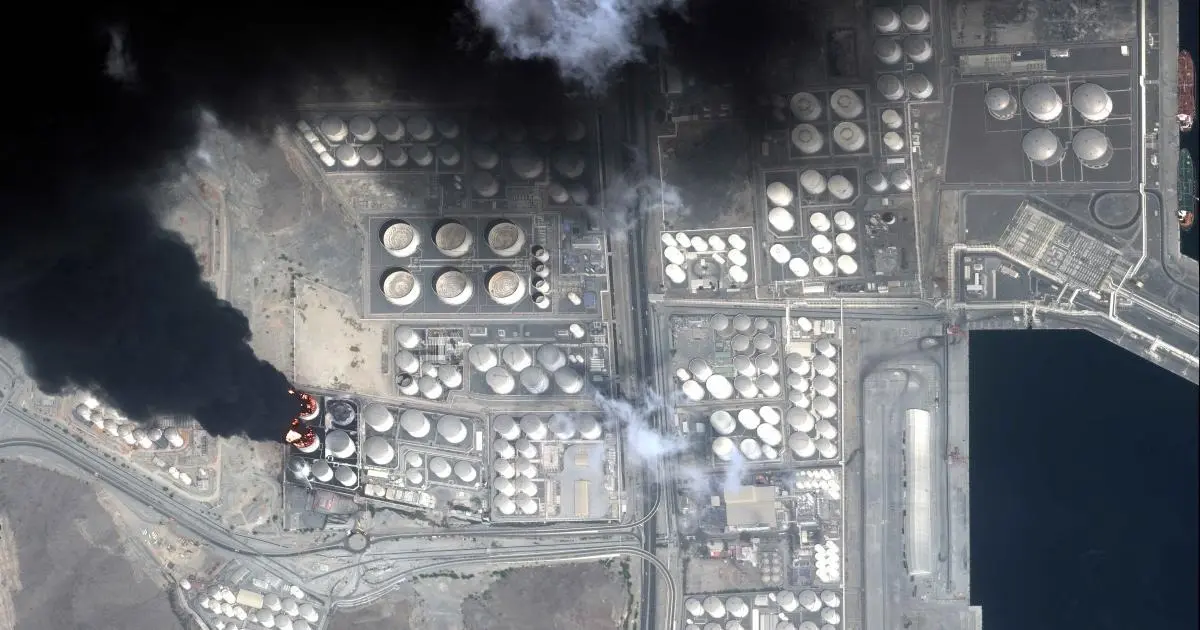
On July 17, an Iranian missile struck the Muwaffaq Salti Air Base in Jordan, leaving three American soldiers dead and four others wounded. The precision of the strike immediately drew the attention of military analysts, but in the weeks that followed, U.S. intelligence officials uncovered a more troubling reality: Tehran had not acted alone. Before the attack, Iranian forces received high-resolution satellite images of the base, granting them critical intelligence to aid their targeting. Following the strike, additional imagery was supplied to help Iran assess the damage and refine its tactics for future operations. These crucial intelligence feeds came from Chinese entities.
China is far from alone in quietly assisting Iran’s regional military campaigns. Moscow has similarly played an active role in helping Tehran locate and strike American and allied positions across the Middle East. Just two days before a March 27 attack on the Prince Sultan Air Base in Saudi Arabia—an assault that wounded 12 American personnel—14 Russian spy satellites passed overhead. U.S. officials subsequently concluded that Moscow had funneled vital satellite intelligence to Iran to facilitate its precision strikes. Beyond intelligence sharing, Moscow has supplied Tehran with advanced weapons and military expertise. This includes upgraded versions of Iranian drones that have been battle-tested and refined in the war in Ukraine, as well as the deployment of Russian engineers helping Iran develop supersonic cruise missiles designed to evade sophisticated U.S. and Israeli air defenses.
Neither Russia nor China has directly entered the active war between Iran and the United States. Crucially, they have not needed to. By providing targeted intelligence, military technology, essential components, and robust economic and diplomatic backing, Beijing and Moscow are supplying Tehran with everything it requires to sustain its military objectives without formally joining the conflict.
When the United States entered this broader conflict, it did so with foundational structural advantages that its adversaries initially lacked: a vast network of formal international allies, established military bases, institutionalized intelligence-sharing arrangements, long-standing defense partnerships, and highly interoperable forces spanning Europe, the Middle East, and Asia. Yet, as the conflict has developed, many of Washington’s traditional partners have shown deep reluctance to formally associate themselves with the U.S. campaign. Some have denied the United States specific forms of military access, at least temporarily, while others have publicly resisted American calls to help secure vital maritime chokepoints such as the Strait of Hormuz.
This dynamic illustrates a striking shift since security analysts first classified Russia, China, Iran, and North Korea as an "axis of upheaval" in Foreign Affairs two years ago. The U.S. adversaries initially possessed a looser, seemingly weaker network of cooperation, while Washington anchored a far stronger one. However, after years of coordinating to help Russia sustain its war effort in Ukraine, the members of this axis are successfully learning how to make their network function effectively in new geopolitical theaters. They are fine-tuning their mutual cooperation to ensure their partners remain resilient—and increasingly dangerous to the United States—while successfully limiting their own national costs and direct risks. Washington, conversely, risks creating operational and diplomatic friction within many of its own partnerships rather than deepening them, threatening to squander its network advantages just as its adversaries are learning to maximize theirs.
Sources of Upheaval
Much has fundamentally changed since 2024. Most visibly, the United States itself has transformed into an internal source of global instability. The Trump administration has actively challenged long-standing international institutions, strained traditional alliances, and embraced a heavily transactional approach to foreign policy. By upending established trade agreements, questioning the sovereignty of traditional allies such as Canada and Denmark, and deliberately cultivating a foreign policy of stark unpredictability, Washington has altered the diplomatic landscape. The administration has simultaneously pursued improved relations with China, North Korea, and Russia while attempting to squeeze and weaken Iran. Despite these diplomatic overtures, these actions have done nothing to loosen the strategic ties binding the United States’ adversaries together.
Early in the Trump administration, U.S. officials expressed quiet hope that normalizing relations with Moscow might drive a wedge between Russia and the broader axis. Yet President Donald Trump’s frequent expressions of warmth toward the Kremlin have failed to open any meaningful gaps with Beijing, Pyongyang, or Tehran. From Moscow’s perspective, the administration has consistently proven unable to deliver a viable negotiated settlement on Ukraine, and any Trump-driven rapprochement with Washington remains fragile. The U.S. Congress continues to maintain intense pressure on Russia, and a future U.S. administration is widely expected to adopt a much harsher posture.
More fundamentally, attempts to peel members away from the axis misunderstand the core forces holding the coalition together. Its member states share a deep, foundational objection to an international order they view as permanently enshrining Western dominance at their direct economic and strategic expense. More pointedly, they unite in their fierce opposition to the extraordinary power the United States holds to constrain, isolate, and punish them, and potentially to threaten the survival of their ruling regimes. Recent high-profile U.S. actions have only rekindled these acute anxieties. The U.S. capture of Venezuelan leader Nicolás Maduro and the targeted killing of Iranian Supreme Leader Ali Khamenei have reinforced long-standing fears in Beijing, Moscow, Pyongyang, and Tehran regarding unilateral American interventionism and regime security.
While axis nations may rhetorically moderate their anti-American posturing when it serves tactical diplomatic purposes, their underlying motivation to systematically reduce their vulnerability to American power remains entirely intact. The Trump administration’s own deep skepticism toward the traditional international order will do nothing to reassure capitals in the axis network. On the contrary, Washington’s efforts to foster a more coercive and transactional global environment only serve to elevate the strategic value of their partnerships. As international rules and multilateral institutions constrain states less and raw geopolitical power matters more, countries actively seek out reliable partners to help blunt economic sanctions, secure access to critical technologies, compensate for individual military weaknesses, expand their room for independent maneuver, and resist international isolation. Axis cooperation is continually evolving to meet these demands.
New Regions, New Problems
When Russia launched its full-scale invasion of Ukraine in 2022, cooperation among the four adversarial nations was relatively straightforward to map. Iran provided Russia with explosive drones, while North Korea sent vital artillery ammunition, ballistic missiles, and eventually combat troops. China quickly emerged as Moscow’s most critical economic and industrial lifeline, purchasing sanctioned Russian oil while supplying the essential machine tools, microelectronics, and dual-use components required to sustain and expand Russian military production. In return, Russia began transferring increasingly sophisticated military technology back to its partners.
Although these initial exchanges were highly consequential, they could largely be understood as a series of distinct bilateral transactions centered almost exclusively on supporting Russia’s war in Ukraine. Today, however, that characterization is increasingly outdated. Cooperation has evolved to become deeply networked and strategically geared toward solving new military and geopolitical problems across entirely different regions.
Russia’s domestic drone program illustrates this transformation. While Iran initially sold its Shahed loitering munitions directly to Moscow and subsequently helped establish domestic manufacturing facilities inside Russia, Moscow did not merely replicate what it received. Russian engineers incorporated advanced Chinese electronic components and continually modified the drones’ navigation systems, communication links, explosive payloads, propulsion methods, and battlefield tactics in direct response to Ukrainian air defenses. Newly formed specialized military units fed these successful technological modifications straight back into the industrial production cycle, generating an exceptionally rapid rate of battlefield adaptation.
Last year, Russia established its Unmanned Systems Forces—a dedicated drone and robotics branch of the armed forces—to formally institutionalize this cycle. This combination of domestic adaptation and multi-nation axis partnership has proved remarkably effective. Russia’s latest jet-powered Geran drones, for instance, are significantly faster, carry heavier explosive payloads, and are far harder for Ukrainian air defense forces to intercept than earlier propeller-driven variants.
Crucially, these Russian technological improvements do not remain confined within Russia; they actively circulate through the broader axis network. For Iran, the military technology that originally flowed northward to Russia is now returning in more advanced forms, accompanied by valuable tactical advice drawn directly from Russia’s brutal experience on the Ukrainian battlefield. If these advanced, jet-powered Russian drones make their appearance in the Middle East—an outcome military experts view as highly probable—future Iranian attacks on U.S. regional forces and critical energy infrastructure will become substantially harder and costlier to defend against.
North Korea and China are also reaping tangible benefits from this shared ecosystem. According to recent intelligence reports out of Ukraine, Russia struck a cooperative deal to help North Korea significantly expand its own production of Shahed-type drones. North Korean engineers have gained critical technical expertise from working inside Russia’s massive Yelabuga drone manufacturing complex, and North Korean troops deployed alongside Russian forces have acquired firsthand combat experience in integrating unmanned aerial systems into modern, multi-domain warfare. Similarly, Chinese military personnel have received specialized training in modern drone warfare from Russian forces, while Chinese component suppliers are gaining invaluable, real-world performance data on how their technologies hold up under intense combat conditions. Beijing is thus deriving substantial strategic insights from an evolutionary cycle of drone warfare that originated with Iranian technology and was subsequently refined on the battlefields of Ukraine.
The Model Can Travel
Two years ago, it remained an open question whether the burgeoning partnerships among the four members of the axis could outlast the specific war that accelerated their formation. Analysts questioned whether the relationships would lose momentum if the conflict in Ukraine eventually concluded and Moscow no longer relied heavily on Iranian drones, North Korean munitions, or Chinese economic and technological backing.
Yet the war has done far more than create an immediate operational necessity for cooperation; it has provided a concrete proof of concept for what these nations can accomplish collectively, achieving outcomes far beyond what any single country could manage on its own. Ukrainian defensive operations, sweeping Western sanctions, ongoing U.S. military supplies, and persistent diplomatic isolation have all proven noticeably less effective against Moscow than they would have been had Russia been forced to operate in complete isolation. By actively helping one another withstand external pressure, the axis countries collectively raise the cost and difficulty for the United States and its allies to compel changes in their behavior.
Iran is now demonstrating that this cooperative model is easily transportable to other global friction points. Russia’s operational support for Tehran has been highly meaningful yet carefully bounded. Even while fighting its own intense war of attrition in Ukraine, Moscow has found effective ways to help Iran strike American targets and sustain its regional campaigns through diplomatic cover and material assistance, all while deliberately stopping short of actions that could drag Russia into a direct military confrontation with the United States. China has exercised even greater public caution, but its steady sharing of dual-use electronics and its continuous purchases of discounted Iranian oil have similarly enhanced Tehran’s systemic ability to withstand U.S. economic and military pressure.
This calculated restraint is not evidence of a weakening axis; rather, it is a defining operational feature of how these partnerships function. With the striking and notable exception of North Korean soldiers deployed directly to fight on Russia’s behalf, the axis countries have generally avoided fighting one another’s direct wars. Instead, they provide targeted political backing, economic lifelines, intelligence sharing, advanced technology, and limited military assistance whenever doing so clearly advances their individual national interests at a manageable level of risk.
Furthermore, the ongoing conflicts in Ukraine and the Middle East have taught the axis another vital lesson: supporting a fellow member does not merely strengthen the direct recipient. Armed conflict in one regional theater can actively create unexpected strategic opportunities for partners elsewhere. Iran’s actions threatening the closure of the Strait of Hormuz, for example, sent international oil prices soaring, delivering an immediate financial windfall to energy-rich Russia while prompting Washington to temporarily ease certain restrictions on Russian petroleum exports. Iran’s regional war thus unintentionally generated critical financial resources that Moscow could redirect to sustain its own military machine.
Similarly, before launching major military actions involving Iran, the United States was forced to redeploy key military assets, including vital air and missile defense batteries, away from the Indo-Pacific region and into the Middle East. As the fighting prolonged, U.S. forces committed two active aircraft carriers to the Middle Eastern theater, leaving the Indo-Pacific temporarily devoid of carrier strike group presence. China derives immediate operational freedom from a thinned U.S. military posture in the western Pacific and grows less vulnerable as crucial U.S. munitions stocks are drawn down. If Washington settles into a prolonged, open-ended strategy of containing Iran—reminiscent of its containment policy toward Iraq throughout the 1990s—Beijing could enjoy the persistent strategic advantages of those military diversions for years to come.
Do No Further Harm
The collective experience of the axis of upheaval demonstrates that the sheer size and traditional strength of a geopolitical network matter very little if its member states cannot successfully convert their individual capabilities into coordinated, collective power. The United States and its allies undeniably start from a position of considerable structural advantage: possessing far greater economic and technological resources, more capable professional militaries, and an incomparably larger network of institutional allies and partners. The central strategic question is which network can ultimately make better and more disciplined use of its available assets.
That fundamental challenge starts with visionary leadership. For decades, the United States championed an international order explicitly designed to forbid wars of conquest, protect freedom of the seas, maintain a generally open global economic system, and allow populations to exercise basic democratic rights, even where authoritarian regimes persisted. Washington coupled this strategic vision with an implicit, highly attractive bargain: any sovereign nation that wished to join and respect the rules of the order could do so, receiving tangible benefits ranging from reliable trade relations and diplomatic preferences to formal security alliances.
For states that actively rejected this open international order—much as the axis countries do today—the institutional benefits were far fewer and the punitive penalties considerable. The United States routinely sanctioned, pressured, and occasionally went to war against rogue states, while actively resisting the establishment of rival geopolitical blocs like the communist network of the Cold War. U.S. foreign policy was historically built on the seemingly uncontroversial premise that Washington should befriend like-minded democracies and treat them better than revisionist rejectionists.
The Trump administration, however, has at times demonstrated an inclination toward the exact opposite approach. The U.S. ambassador to China recently disclosed that President Trump offered to sell advanced weapons to Beijing while simultaneously stalling critical arms sales to democratic Taiwan. The president has repeatedly expressed far greater personal interest in and affection for North Korea’s authoritarian dictator, Kim Jong Un, than for South Korea’s democratically elected president, Lee Jae-myung. The administration has also intermittently pressured Ukraine to cave in its existential war of survival against unprovoked Russian aggression, while making threats against longstanding regional partners like Oman. Such erratic policy moves both strengthen the strategic hand of the axis countries and actively erode the internal cohesion of the very network best positioned to confront them.
Doing no further harm would mark a constructive starting point in dealing with the formidable challenge posed by the axis. Beyond halting self-defeating policies, Washington should actively help its partners grow stronger and more resilient. Just as the axis nations are actively assisting one another in working around sweeping sanctions, preserving access to critical technologies and microelectronics components, and sustaining their economies under acute pressure, the United States must deliberately aid its own network. This requires strengthening vital supply chains running exclusively through trusted allies, sharing advanced technology safely, and encouraging international partners to assume greater responsibilities for their own regional security.
Washington must take careful care, however, not to transfer defense responsibilities faster than its allies can realistically develop the industrial and military capabilities to assume them—and to avoid doing so in ways that erode trust, military interoperability, and strategic coordination. Otherwise, the United States and its individual allies could become tactically more capable on paper while remaining collectively less effective in practice.
The United States should also urgently reverse domestic and foreign policies that directly undercut its own alliance network. Sweeping tariffs and other unilateral protectionist measures frequently harm allied economies and damage their domestic industrial bases. Expressing a public desire to acquire allied territory or attempting to undermine democratically elected allied political leaders does not build a more capable international security network. Instead, Washington must project clear strategic vision and steadfast leadership to its friends, steering away from jarring unpredictability and bullying transactionalism.
Even if the United States successfully changes course and repairs its diplomatic foundations, American and allied policymakers must prepare themselves for a long, protracted struggle. As the difficult and ultimately unsuccessful regime-change efforts in Iran demonstrated, there are no simple shortcuts to besting the axis countries, whether acting collectively or individually. This contest of global networks will be fought across multiple domains and geographic regions, with immense geopolitical stakes riding on the ultimate outcome. The United States and its democratic allies possess the full structural capacity to prevail; they now need to consistently demonstrate the collective will to do so.