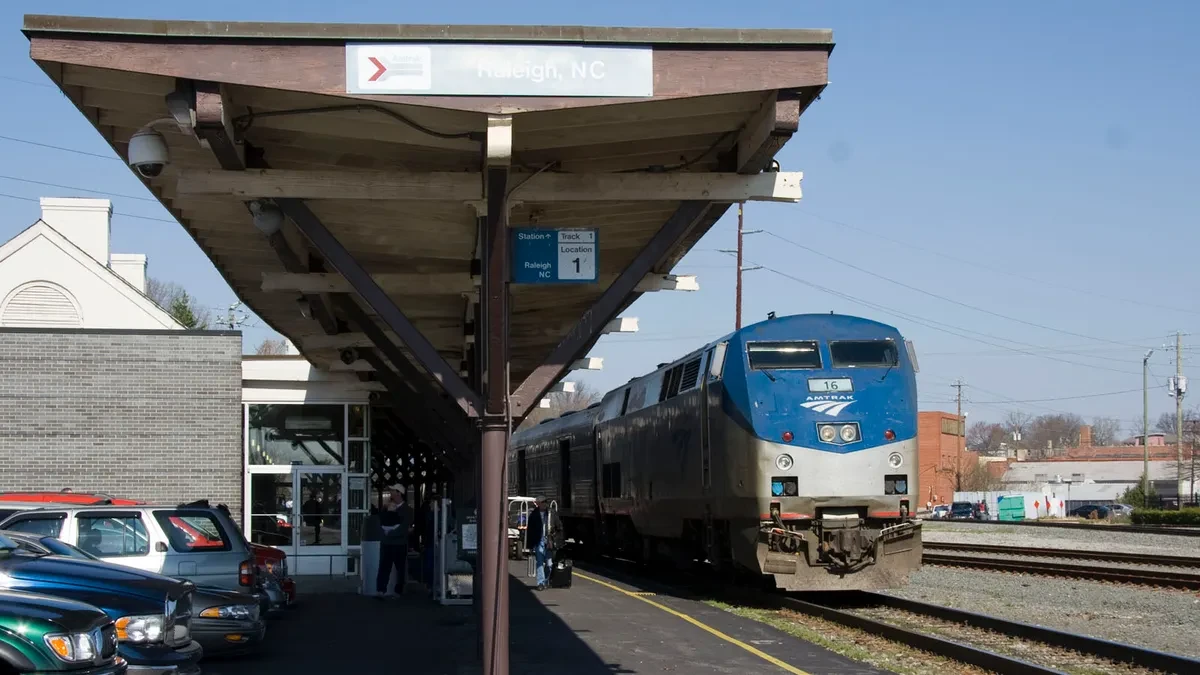
The ongoing transformation of the American passenger rail network has reached a significant milestone, promising to reshape travel between North Carolina and Virginia. The ambitious S-Line project, designed to connect Richmond, Virginia, and Raleigh, North Carolina, continues to press forward with the backing of state and federal transportation agencies. According to the North Carolina Department of Transportation (NCDOT), the vital infrastructure initiative is engineered to relieve persistent freight train congestion while simultaneously unlocking the capacity for both states to schedule more frequent, reliable passenger train trips for the traveling public.
At the heart of the initiative is a historically freight-dominated rail corridor originally owned by CSX. Recognizing the immense potential to enhance regional mobility and economic vitality, North Carolina and Virginia proactively purchased the right-of-way for a critical portion of the line stretching between Petersburg, Virginia, and Raleigh. Momentum for the corridor culminated in a formal groundbreaking ceremony held in Raleigh, marking the physical beginning of a multi-year engineering and construction effort that has drawn close national attention as part of a broader renaissance in American rail travel.
The project addresses a longstanding bottleneck in the Mid-Atlantic transportation network. For decades, passenger rail services operating between the Southeast and the Northeast have had to share heavily utilized freight corridors, leading to scheduling constraints, potential delays, and limited daily frequencies. By separating passenger operations onto dedicated or significantly upgraded infrastructure along the S-Line, the initiative will drastically improve operational efficiency. The resulting capacity gains will allow the NCDOT and the Virginia Department of Transportation to introduce robust, predictable schedules that better meet the demands of modern commuters, business travelers, and tourists alike.

Federal backing has proven instrumental in keeping the massive infrastructure undertaking on schedule. The Federal Railroad Administration (FRA) has obligated critical funding for the corridor, a formal regulatory step that involves a binding, project-specific agreement executed between the United States Department of Transportation and the North Carolina Department of Transportation. This federal commitment builds upon prior financial injections into the region’s rail network. Notably, the U.S. DOT awarded nearly $300 million earlier in the year specifically for the Piedmont Corridor, which connects Raleigh and Charlotte, North Carolina. That funding package was targeted at eliminating nine hazardous grade crossings, installing vital double-track segments to smooth out traffic flows, and implementing advanced safety measures focused on trespassing prevention.
Federal rail leadership has consistently praised the collaborative framework driving these southeastern improvements. FRA Administrator David Fink emphasized the cooperative nature of the undertaking in a recent statement regarding the ongoing rail modernization efforts. Fink noted that the milestone stands as a clear testament to the strong, enduring partnership shared among the Federal Railroad Administration, Amtrak, and the NCDOT as they work in tandem to advance both the S-Line and the previously announced Piedmont Line corridors. Through such close, continuous collaboration, federal and state agencies are delivering vital investments designed to modernize passenger rail infrastructure and usher in what proponents have enthusiastically termed a new Golden Age of Rail for the people of North Carolina and the broader region.

Beyond the immediate transportation and engineering benefits associated with laying tracks and adjusting signaling systems, the S-Line project is also serving as a catalyst for comprehensive community planning and economic development. The North Carolina Department of Transportation is actively leading a coordinated planning initiative focused on transit-oriented development directly along a 95-mile-long section of the rail corridor. This comprehensive planning sweep encompasses numerous vibrant communities, including the municipalities of Apex, Franklinton, Henderson, Norlina, Raleigh, Sanford, Wake Forest, and Youngsville.
As part of this forward-thinking regional strategy, local and state planners are designing community mobility hubs tailored to each participating city. These hubs are intended to seamlessly integrate diverse modes of transportation, offering residents and visitors efficient first-mile and last-mile connections, enhanced pedestrian pathways, and secure bicycle parking facilities. By synchronizing regional passenger rail service with local transit networks and community-scale urban planning, the S-Line project aims to stimulate sustainable economic growth, reduce overall highway congestion, and foster more connected, accessible communities across the corridor for generations to come.