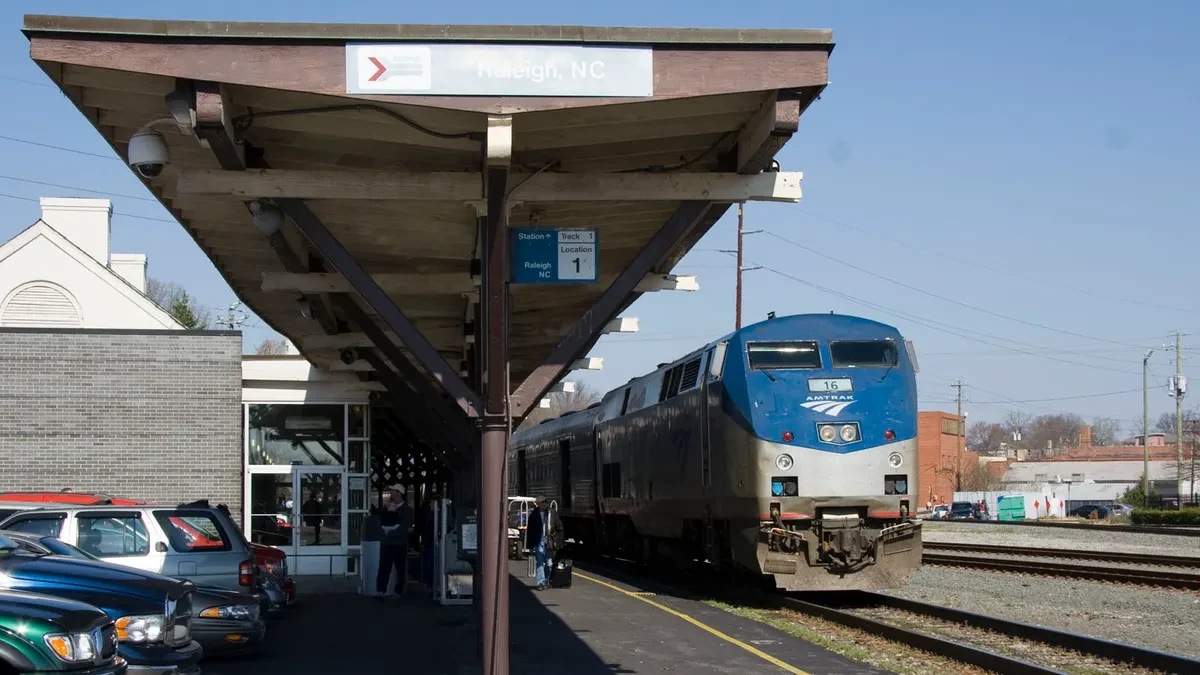
As transportation authorities look for sustainable ways to ease highway congestion and modernize infrastructure, passenger rail development along the East Coast continues to gain momentum. A critical milestone in this ongoing movement centers on the ambitious S-Line project, an initiative designed to link Richmond, Virginia, and Raleigh, North Carolina, with faster, more reliable, and more frequent passenger train service. According to recent announcements from the North Carolina Department of Transportation (NCDOT), the corridor project will substantially relieve train congestion and allow both North Carolina and Virginia to schedule significantly more frequent passenger train trips for travelers across the region.
The S-Line initiative represents a major step forward for intercity travel, promising to reshape how commuters, business travelers, and tourists move between the two neighboring states. By separating passenger services from heavy freight bottlenecks, transportation planners aim to unlock new levels of efficiency and reliability that have long eluded the corridor.
Dive Brief: Understanding the S-Line Initiative
The S-Line is historically a freight rail line currently owned by CSX. Recognizing the strategic value of the corridor for future passenger mobility, the states of North Carolina and Virginia took the decisive step of purchasing the right-of-way for a vital portion of the line stretching between Petersburg, Virginia, and Raleigh. This foundational acquisition paved the way for physical construction, marked by an official groundbreaking ceremony held in Raleigh.
The overarching goal of the project is to relieve persistent congestion on existing freight rail corridors. By establishing dedicated or optimized pathways for passenger trains, North Carolina and Virginia will be equipped to schedule a higher frequency of daily departures. This increased capacity is expected to attract more riders to rail, reducing highway traffic and offering a dependable alternative to driving along the busy Interstate 95 corridor.
Funding for the corridor has moved steadily through federal channels, most notably with the Federal Railroad Administration (FRA) obligating the necessary financial support. This crucial administrative step involves executing a written, project-specific agreement between the United States Department of Transportation (US DOT) and the North Carolina Department of Transportation, locking in the partnership required to see the multi-year infrastructure undertaking through to completion.
This financial commitment follows closely on the heels of other major rail investments in the region. In April, the US DOT awarded nearly $300 million for the Piedmont Corridor, which connects Raleigh and Charlotte, North Carolina. That funding package was earmarked to eliminate nine dangerous grade crossings, install critical double-track segments to improve traffic flow, and implement robust trespassing prevention measures to enhance overall safety along the western route.

Federal rail leaders have praised the collaborative framework driving these regional improvements. FRA Administrator David Fink highlighted the cooperative spirit behind the initiative in a recent statement regarding the funding and development milestones.
"This milestone is a testament to the strong partnership between the Federal Railroad Administration, Amtrak, and NCDOT in advancing the S-Line and the earlier announced Piedmont Line corridors," Fink said. "Through close collaboration, we are delivering vital investments that will modernize passenger rail and create a new Golden Age of Rail for the people of North Carolina."
Dive Insight: Broad Community Impacts and Transit-Oriented Development
Beyond the immediate benefits of faster tracks and reduced freight delays, the S-Line project is serving as a catalyst for broader community planning and economic development. The North Carolina Department of Transportation is actively leading planning efforts focused on transit-oriented development (TOD) along a 95-mile-long section of the rail corridor.

This comprehensive planning touches numerous communities along the route, including Apex, Franklinton, Henderson, Norlina, Raleigh, Sanford, Wake Forest, and Youngsville. By aligning municipal growth with the anticipated arrival of enhanced passenger rail service, these localities hope to foster walkable, mixed-use neighborhoods that center around transit stations, making it easier for residents to live, work, and travel without relying exclusively on personal automobiles.
As part of this transit-oriented vision, the planning initiative also incorporates the creation of community mobility hubs within these designated cities and towns. These hubs are designed to facilitate seamless multimodal transportation, establishing crucial first- and last-mile connections for passengers. By integrating local bus services, ridesharing drop-off zones, secure bicycle parking, and pedestrian pathways, the hubs will ensure that travelers can easily transition from trains to other modes of local transit.
With federal backing secured, right-of-way acquired, and planning well underway for the surrounding station areas, the S-Line project continues to progress from a long-term vision into a tangible infrastructure reality. As construction and coordination advance between federal, state, and local partners, the corridor stands to redefine passenger rail travel throughout the Southeast, laying the groundwork for a more connected and efficient regional transportation network.