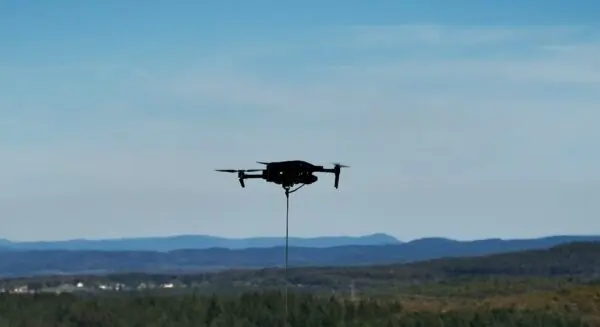
Amazon’s ambitious plans to scale its commercial drone delivery network are hitting significant turbulence. As the retail giant works toward a sprawling nationwide rollout, its proposal to establish a drone delivery hub in Westborough, Massachusetts, has ignited fierce opposition from local residents, municipal boards, and federal lawmakers alike. The unfolding dispute underscores a fundamental tension in the rapidly growing commercial unmanned aerial vehicle (UAV) sector: while companies secure broad federal clearance to operate in the national airspace, gaining the hard-fought acceptance of the communities directly beneath those flight paths remains a formidable and complex hurdle.
The friction in Massachusetts intensified significantly when four prominent members of the state’s congressional delegation formally demanded a rigorous site-specific environmental review before Amazon is permitted to launch drone operations from its proposed Westborough facility. Senators Elizabeth Warren and Ed Markey, joined by Representatives Jim McGovern and Lori Trahan, sent a joint letter calling for comprehensive environmental assessments and structured opportunities for public comment. At the heart of their demand is the argument that the Federal Aviation Administration’s (FAA) generalized nationwide environmental evaluations fail to capture the distinct ecological and demographic realities of New England.
Lawmakers pointed out a glaring oversight in the FAA’s broader regulatory review: none of the 23 site-specific assessments cited by the agency to justify its nationwide approach took place in New England. Consequently, the congressional delegation emphasized that critical local variables—such as higher population densities, dense forests, expansive wetlands, variable regional weather patterns, and localized daylight conditions—demand a tailored, meticulous environmental study.
Beyond general environmental concerns, the lawmakers also raised serious safety questions regarding battery-fire risks. They highlighted an unsettling incident from October 2025 in Arizona, where an Amazon delivery drone collided with a crane, causing its lithium battery to ignite. Citing this hazardous event, the congressional leaders formally requested written responses from both Amazon and the FAA by October 29, pressing them to clarify whether a dedicated, site-specific environmental assessment will be conducted before any commercial drone deliveries take off in Westborough.
Amazon’s proposal centers on utilizing its existing commercial facility located at 64 Otis Street. Under current projections, the proposed hub could eventually handle up to 1,000 package deliveries per day. The service is designed to transport lightweight packages—weighing up to five pounds—within a 7.5-mile radius of the distribution center. However, translating this operational blueprint into reality has proven vastly more complicated than mapping out flight radiuses on paper.
Local Concerns Meet Federal Authority
The Westborough dispute brings to the forefront a classic jurisdictional tug-of-war between federal aviation oversight and local municipal authority. Under the current regulatory framework, the FAA holds exclusive jurisdiction over the national airspace, granting authorization for commercial drone operations and establishing air navigation rules. At the same time, local municipalities retain traditional authority over applicable land use, zoning requirements, and building permits.
According to the official project documentation provided by the Town of Westborough, residents living near the proposed Otis Street hub have voiced an array of profound concerns. These range from the sheer frequency of daily flights and the mapping of low-altitude flight corridors to operating hours, neighborhood privacy, physical safety, and potential environmental disruption. The pushback has even manifested in legal challenges; several local residents have formally contested the town’s preliminary classification of Amazon’s drone operations as a permissible "accessory use" of its existing warehouse facility.
This local legal battle is moving through municipal channels. The town’s Zoning Board of Appeals scheduled a public hearing to address the accessory use challenge, while the Planning Board continued its ongoing site-plan review hearings.
Compounding the pressure on the federal level, the FAA’s overarching environmental review process is facing coordinated judicial challenges from outside Massachusetts as well. A coalition comprising 15 states—including Massachusetts—along with Harris County, Texas, formally filed a petition for review in the U.S. Court of Appeals for the Second Circuit. This legal challenge targets the FAA’s July decision to adopt a nationwide Programmatic Environmental Assessment and a Finding of No Significant Impact regarding drone package delivery. The petitioning states argue that the federal agency failed to adequately examine and account for the cumulative environmental consequences that will accompany a massive, nationwide expansion of low-altitude commercial drone traffic.
While the FAA maintains that its nationwide programmatic assessment can support future operational approvals, its own administrative guidance acknowledges that individual projects may still necessitate supplemental, site-specific environmental reviews. Massachusetts lawmakers are forcefully demanding that the FAA apply that standard to the Westborough facility.
Amazon Has Faced Similar Opposition Elsewhere
The resistance encountered in Westborough is far from an isolated incident. Across the country, Amazon’s Prime Air division has repeatedly collided with skeptical communities, vocal residents, and cautious local governments as it attempts to scale its delivery infrastructure.
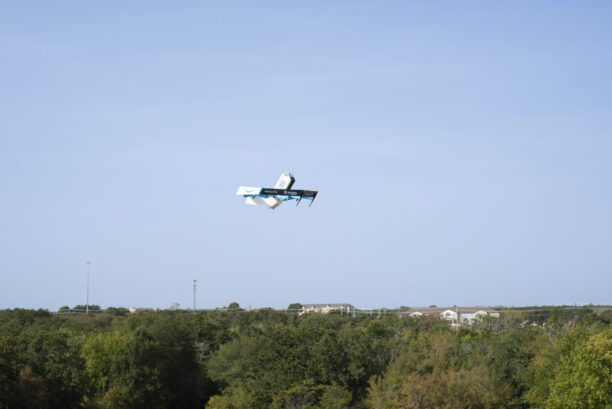
In Westborough specifically, local sentiment was starkly illustrated by an independent community survey that garnered more than 1,200 responses. A staggering 92% of the survey participants registered their opposition to the proposed drone delivery facility.
Long before establishing its sights on Massachusetts, Amazon experienced intense community friction in Texas. In College Station, residents living near the company’s original delivery site frequently complained about persistent drone noise disrupting their neighborhoods. As Amazon sought to expand its footprint there, municipal officials formally petitioned the FAA to carefully weigh local grievances. Ultimately, Amazon chose to wind down its College Station drone delivery service, citing an expiring real estate lease and a strategic corporate shift toward embedding drone delivery operations directly within existing, larger fulfillment and distribution facilities.
Similarly, when Amazon launched a new drone delivery service in Richardson, Texas, it immediately confronted widespread neighborhood complaints regarding frequent, low-altitude flights over residential areas. The company attempted to mitigate the backlash by making operational adjustments, which included modifying flight paths and increasing the minimum cruising altitude for outbound flights to 225 feet. According to municipal updates from the City of Richardson, Amazon also redirected specific flight tracks over commercial zones and reduced the frequency of flights passing over a local neighborhood greenway.
Despite these modifications, community friction persisted. Local residents staged public protests against the low-flying, noisy delivery drones, highlighting the deep-seated nature of the discontent. Similar debates over noise pollution, safety hazards, and potential impacts on local wildlife also marked the regulatory approval process for a proposed Amazon drone facility in Nampa, Idaho, where the local planning and zoning board ultimately approved the project despite intense public pushback.
These varied cases demonstrate that Amazon’s rollout strategy has yielded vastly different outcomes depending on the region—ranging from successful operational compromises and route adjustments to entrenched, bitter opposition and canceled deployments.
Community Acceptance as Drone Delivery Scales
The stakes for Amazon and the broader commercial delivery sector are exceptionally high. The retail giant has aggressively pursued an ambitious expansion timeline, outlining strategic plans to introduce Prime Air drone delivery to approximately 500 communities across the United States.
For everyday residents living within target delivery zones, however, the day-to-day reality of drone delivery can feel vastly different from the experience of a customer ordering a package. While a consumer enjoys the convenience of rapid aerial delivery, entire neighborhoods must contend with the recurring reality of repeated overflights, visual clutter, and persistent low-level mechanical noise—often without ever ordering a drone-delivered item themselves.
For commercial operators, this dynamic creates a unique operational challenge that extends far beyond meeting technical airworthiness standards and securing federal regulatory approval. Companies must navigate the delicate terrain of social license and local public relations.
The FAA’s own regulatory guidance explicitly emphasizes the importance of meaningful community engagement, noting that commercial drone operators must remain fully compliant with applicable local land use regulations and actively engage the communities that are directly affected by their daily flight operations.
As the situation in Westborough demonstrates, the ultimate fate of individual delivery hubs remains highly uncertain. Amazon continues to press forward in pursuit of the necessary municipal and regulatory clearances, while local residents, municipal boards, and federal representatives continue to scrutinize every facet of the proposal. As the commercial drone delivery industry pushes deeper into suburban and urban landscapes, the growing divide between federal authorization and local community acceptance stands out as one of the defining challenges of the modern logistics era.