By Miriam McNabb
The United States Department of Defense is doubling down on its push for autonomous aerial warfare capabilities, setting the stage for the next major evolution of the Pentagon’s flagship Drone Dominance Program. Officials have officially detailed a sweeping $450 million Phase III initiative aimed at acquiring approximately 60,000 one-way attack drones. At the same time, program leadership has announced a schedule adjustment for a parallel competition focusing on reusable bomber drones, shifting the much-anticipated Gauntlet 2.5 evaluation window to early November.
Both developments underscore an accelerating push by military planners to expand domestic manufacturing ecosystems, bypass traditional, sluggish defense procurement timelines, and flood the force with low-cost, high-impact autonomous systems. As geopolitical tensions shift toward high-tech, attritable warfare, the Pentagon is systematically lowering cost barriers while drastically raising technical expectations for defense contractors and technology startups alike.
Phase III Targets 60,000 Drones and Mass Production
At the heart of the latest push is the Phase III Request for Solutions (RFS), a massive solicitation designed to procure approximately 60,000 one-way attack drones out of the gate, with built-in procurement options that could expand total orders by an additional 40,000 units. The sheer scale of the initiative reflects a fundamental change in military doctrine, moving away from exquisite, multi-million-dollar weapon systems toward disposable, attritable mass capable of overwhelming modern air defenses.
The initial block of roughly 60,000 drones will be split evenly across two distinct mission profiles: Deep Strike and Close-Quarters Battle. To enforce strict fiscal discipline and ensure affordability at scale, the government has instituted firm fixed pricing structures. Deep Strike drones are capped at a target price of $5,000 per unit, while Close-Quarters Battle systems are set at $3,000 per unit. These figures explicitly exclude munitions and specialized supporting equipment, focusing the financial constraints purely on the airframes and baseline guidance systems.
The solicitation period for Phase III closed on October 12, 2026, setting the industry up for the subsequent Gauntlet III testing phase, which is provisionally slated for March 2027. However, before companies reach that testing milestone, they must clear exceptionally high hurdles regarding manufacturing capacity and supply chain resilience.
Unlike earlier phases of the Drone Dominance Program, Phase III heavily penalizes boutique manufacturing approaches by demanding verified industrial output. Applicants are required to prove they can scale production to deliver at least 8,000 drones within a tight five-month window. Furthermore, participating vendors must demonstrate the clear potential to scale beyond 100,000 units annually if called upon by military leadership.
The competitive landscape for Phase III has also been significantly tightened to filter out underprepared entrants. Ten proven winners from the Gauntlet II cycle have been granted entry into an expedited procurement process, bypassing certain baseline checks. Meanwhile, new applicants face a rigorous vetting gauntlet involving comprehensive initial reviews and mandatory flight demonstrations.
Ultimately, government evaluators expect to invite no more than 14 individual companies to advance to the critical production stage. From that select group, up to four vendors in each mission category may ultimately secure coveted prototype delivery orders, setting the stage for large-scale military integration.
Higher Technical Expectations and Edge Autonomy
Beyond sheer manufacturing volume, Phase III introduces a vastly more demanding operational environment that tests the absolute limits of current autonomous technology. As electronic warfare and sophisticated signal jamming become standard features of modern battlefields, the Pentagon is demanding capabilities that function independently of traditional command-and-control links.
For Deep Strike missions, military planners are looking for rugged, resilient drones capable of operating reliably across extended operational ranges of 15 to 20 kilometers. Crucially, these systems must retain their operational effectiveness in contested environments where satellite navigation, such as GPS, and standard communication links are actively disrupted, degraded, or entirely denied.
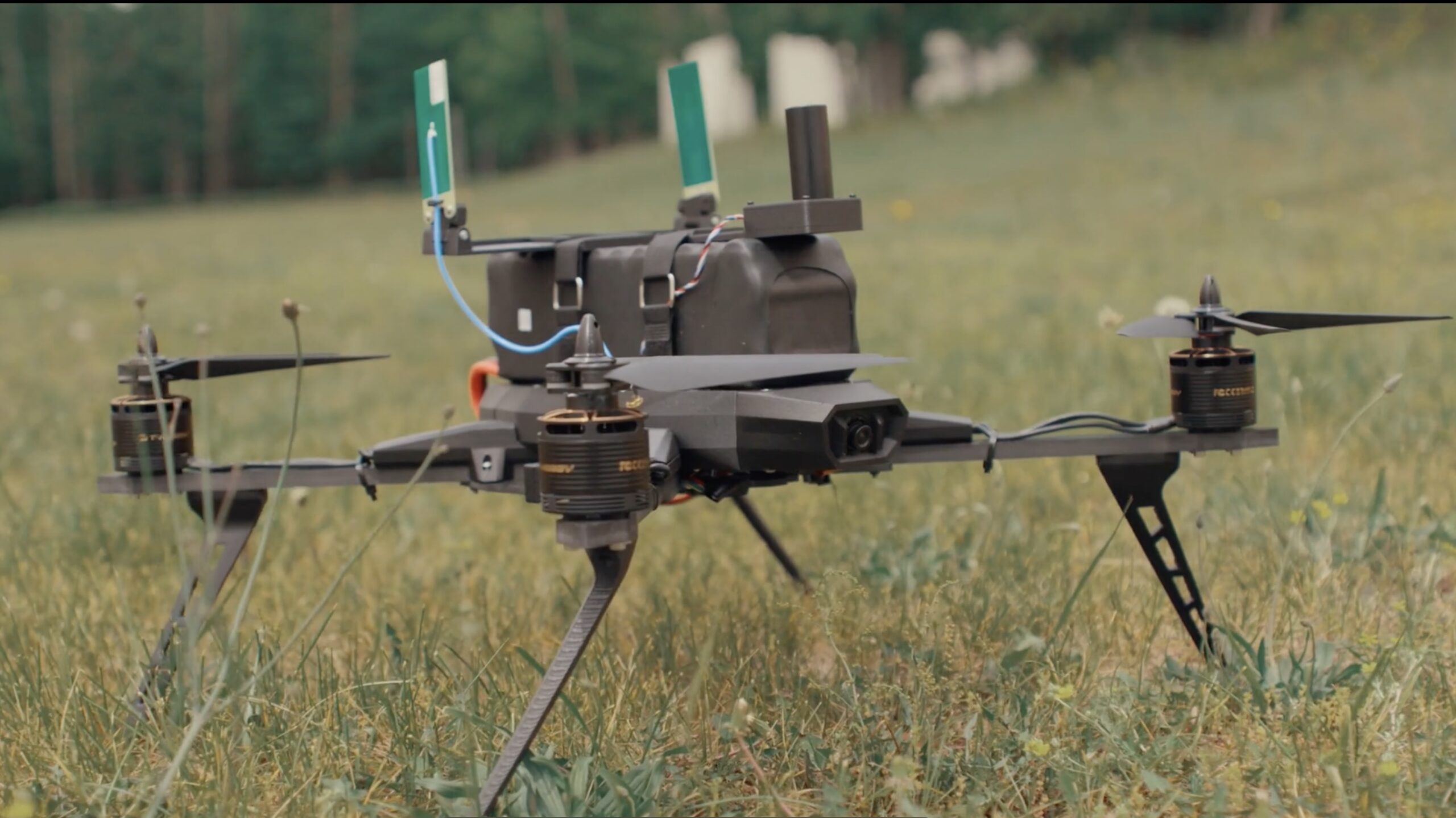
To achieve this, desired technical capabilities include advanced automated target recognition, robust GPS-independent optical or inertial navigation systems, and swarm-like control features that allow a single human operator to manage multiple aircraft simultaneously. By reducing the cognitive load on the operator, the military aims to make deep strike operations more efficient and scalable.
In contrast, Close-Quarters Battle systems place a premium on rapid deployment, portability, and maneuverability within confined, complex environments such as urban canyons or dense indoor structures. The solicitation actively favors compact, highly portable airframes that enable operators to quickly unpack, initialize, and seamlessly switch between multiple aircraft during fast-moving engagements.
Interoperability is another critical focal point for Phase III. The program strongly encourages the implementation of standardized interfaces connecting the drones, their payloads, and ground control systems. While complete plug-and-play interoperability remains a preferred guideline rather than a strict mandatory threshold in certain areas, Phase III does mandate significantly greater physical and electrical compatibility between the aircraft and their assigned munitions.
Manufacturers will be judged through a holistic evaluation framework that weights performance metrics, direct feedback from military operators, payload effectiveness, verified production capabilities, and strict supply chain compliance. In alignment with national security directives aimed at reducing foreign dependencies, the solicitation states a clear and unwavering preference for systems whose components are sourced and manufactured primarily within the United States.
Gauntlet 2.5 Postponed Until November
While the one-way attack drone initiative moves rapidly through its procurement cycle, the Drone Dominance Program is adjusting its timeline for other classes of autonomous aircraft. Program leadership recently announced the postponement of Gauntlet 2.5, a specialized competition specifically dedicated to evaluating reusable bomber drones.
Originally scheduled to take place throughout October at the expansive military testing grounds in Camp Grayling, Michigan, the evaluation event has been pushed back and is now expected to commence in early November. According to an official update published on the program’s announcements page on October 9, the schedule adjustment was initiated to provide participating vendors and military evaluators with an optimized testing environment. The administrative update did not cite any major technical failures or specific obstacles as the cause for the delay, framing it instead as a logistical optimization.
Gauntlet 2.5 represents a vital broadening of the Drone Dominance Program’s overall scope. While one-way attack systems are built for single-use attrition, reusable bomber drones are engineered to carry heavier, more versatile payloads, execute precise strikes, and successfully return to base for rapid turnaround and subsequent sorties.
The Pentagon previously signaled strong interest in this capability by inviting 17 distinct companies to participate in the reusable drone evaluation stream, allocating approximately $32 million to fund initial prototype orders and competitive fly-offs.
From Testing to Procurement
The current acceleration of the Drone Dominance Program follows closely on the heels of the conclusion of Gauntlet II in September, which successfully identified top-performing systems across both the Deep Strike and Close-Quarters Battle categories.
The overarching program itself stands as a collaborative multi-agency effort, jointly executed by the Defense Innovation Unit and the Test Resource Management Center. Meanwhile, administrative heavy lifting and contracting authority are being managed by the Naval Surface Warfare Center Crane, ensuring streamlined oversight across the Department of Defense.
The Phase III solicitation clearly illustrates a broader philosophical shift across the American military establishment. The focus has decisively transitioned away from protracted development cycles toward demanding performance thresholds matched with unprecedented production pacing. As the upcoming rounds of testing approach, the central question for the defense industrial base will not merely be whether innovative startups can build advanced autonomous aircraft in laboratories, but whether they can deliver them at the massive scale and velocity that the Pentagon demands.