As metropolitan transit agencies across the United States continue to grapple with the long-term structural shifts brought on by the COVID-19 pandemic, leaders from three of the nation’s largest public transportation systems are sharing innovative strategies to overcome severe revenue shortfalls, secure long-term funding, and modernize their networks for a changing urban landscape.
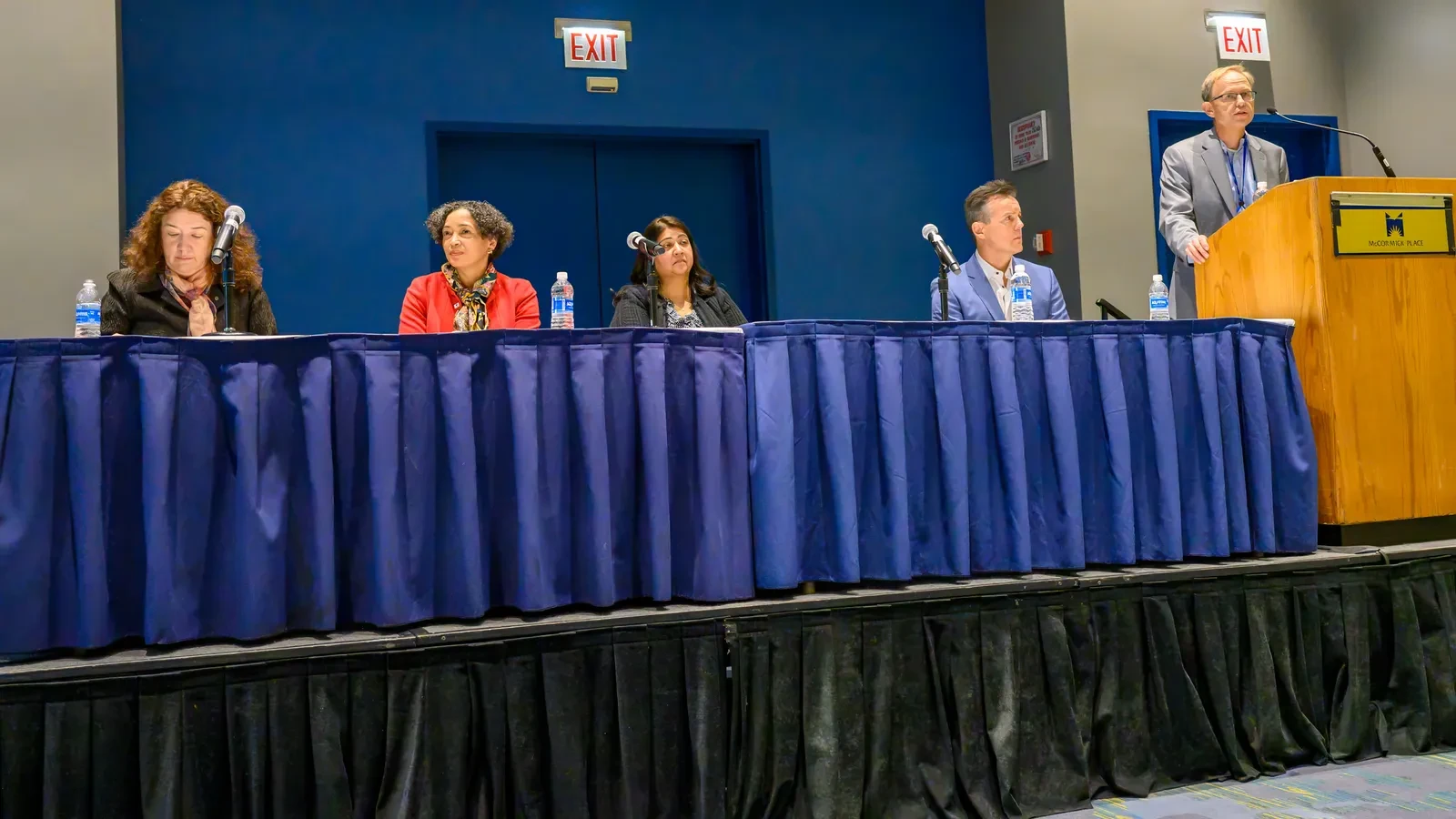
The approaches taken by transit authorities in Chicago, New York, and Seattle took center stage during an October 5 panel session at the American Public Transportation Association (APTA) TransForm conference in Chicago. Amid permanently altered commuting patterns and persistent budgetary pressures, these transit leaders detailed how proactive legislative engagement, bold policy implementation, and visionary infrastructure engineering are helping put their respective systems on a much stronger financial and operational footing.
Saving Chicago from a Fiscal Cliff
In the heart of the Midwest, the Chicago transit network—encompassing the Chicago Transit Authority (CTA), Metra commuter rail, and Pace suburban bus services—faced an alarming financial horizon.
"In 2023, we all saw the crisis coming," recalled Thomas McKone, the chief financial officer and treasurer for the Chicago Transit Authority.
Without targeted financial intervention, the region’s comprehensive transit apparatus projected a staggering budget gap of more than $770 million by 2026, a deficit that threatened to balloon to an unsustainable $1.2 billion by 2027. Like many urban transit agencies nationwide, the reality of the post-pandemic era forced leadership to confront a hard truth.
"From where we were sitting, we were highlighting the value of transit and the essentiality of the services and the system that we provide," McKone explained during the panel. "It’s clear that ridership was not going to return to those pre-pandemic levels, at least not in the short term."
Faced with this impending shortfall, the Regional Transportation Authority (RTA) of Northern Illinois warned as early as 2022 that the system would inevitably confront punishing outcomes without outside intervention. The options on the table were grim: steep fare increases, drastic reductions in service frequency and geographic coverage, or a combination of both that would disproportionately impact everyday riders who depend on public transit for employment, healthcare, and education.
To avert a cascading regional mobility crisis, transit officials took their case directly to the state legislature. In crafting potential solutions, state lawmakers cast a wide net for inspiration. According to McKone, legislators examined not only domestic examples of transit funding and governance reform but also looked closely to European models to see how successful regional transit systems are structured, funded, and sustained.
This collaborative lobbying and policy evaluation ultimately yielded a landmark legislative package providing $1.5 billion in vital funding for public transportation agencies across the region, alongside crucial policy support for transit-oriented development. Furthermore, the Illinois legislature restructured the governance of the Chicago region’s transportation management under the newly established Northern Illinois Transit Authority, creating a more cohesive framework designed to streamline operations and secure long-term financial stability.
New York’s Congestion Pricing Pays Off
Further east, the Metropolitan Transportation Authority (New York MTA) pursued a radically different yet equally ambitious revenue mechanism to secure its financial future: congestion pricing.
Born out of a state law passed back in 2019, the controversial program was fundamentally designed to achieve two primary objectives: alleviate chronic traffic congestion in Manhattan’s bustling central business district and generate a reliable, dedicated revenue stream to modernize and maintain the MTA’s vast transit network. Over the subsequent years, the initiative had to weather significant political storms, successfully fending off a series of legal challenges as well as overt hostility from the Trump administration.
Despite the fierce debates that preceded its rollout, the real-world results of the policy have begun to change the narrative.
"Before the program launched, there were fears that the businesses would shutter and that the sky would fall," MTA Chief Financial Officer Jai Patel told the audience during the APTA panel session.
However, none of those dire predictions materialized. Patel noted that in the immediate aftermath of the program’s implementation, the regional economy remained remarkably resilient and strong. Furthermore, the operational and environmental benefits quickly became apparent to daily commuters and residents alike. Transit ridership across the metropolitan system ticked upward, while a host of negative urban externalities—including vehicle noise complaints, traffic crashes, personal injuries, and traffic-related fatalities—saw notable decreases.
Financially, the program has delivered precisely what planners hoped it would. Patel emphasized that congestion pricing has fully met its projected revenue targets while simultaneously costing less to operate than initial administrative projections had anticipated. For the MTA leadership, the initiative stands as a testament to effective public administration. The program, Patel remarked, serves as "proof that government can do things better and bigger."
Seattle: Trains Across the Water
On the West Coast, Sound Transit tackled its transit challenges not through financial restructuring or traffic policies, but through groundbreaking engineering designed to expand regional connectivity across challenging geographic barriers.
In March, the transportation agency achieved a historic milestone by launching the world’s first light rail floating bridge. This engineering marvel successfully carried passenger trains across the waters of Lake Washington, seamlessly connecting downtown Seattle with the eastside communities of Mercer Island, Bellevue, and Redmond, Washington. Known as the Crosslake Connection, this new segment immediately transformed regional mobility, pushing light rail ridership to more than 160,000 daily passengers, according to Victoria Baecher Wassmer, deputy CEO for finance and business administration at Sound Transit.
The roots of this massive regional expansion stretch back to a 2008 voter-approved ballot measure that authorized Sound Transit to construct the foundational light rail line while simultaneously expanding regional express bus and commuter rail services. To maintain and grow these capital-intensive projects, the agency relies on a diversified stream of public funding, including sales and use taxes, excise taxes, car rental taxes, and property taxes.
"The strong financial policies and management practices show that we’re responsible stewards of taxpayer resources," Wassmer noted during the panel discussion.
The tangible benefits of these investments have been clearly visible during major civic events. Wassmer pointed to Seattle’s hosting of FIFA World Cup matches as a prime example of the system’s robust capacity, noting that the events drove record-shattering ridership numbers. On July 6 alone, the transit system recorded an extraordinary 312,000 boardings in a single day, a figure she described as truly remarkable for the regional network.
Looking ahead, Sound Transit is maintaining its momentum with an ambitious system expansion plan stretching through 2052, a vision initially bolstered by a 2016 voter-approved ballot initiative.
"We’re going to be nearly doubling our track miles, and we’re going to be making some changes in our commuter rail, and we’re adding bus rapid transit," Wassmer explained.
While macroeconomic pressures, specifically rising inflation costs, have forced the agency to carefully manage its financial roadmap—resulting in the thoughtful deferral of certain lower-priority elements—agency updates reaffirm that all core light rail expansion projects are actively moving forward to meet the long-term transportation needs of the Pacific Northwest.