By Jim Magill
In the fast-paced and constantly evolving world of business, getting in on the ground floor of an emerging trend is frequently cited as the ultimate key to success. This holds true even for companies whose primary business is manufacturing flying vehicles. For Ben Harris, founder and chief executive officer of Casselberry, Florida-based Harris Aerial, securing that ground-floor entry meant launching an enterprise dedicated to the specialized manufacture of heavy-lift drones at a time when the broader commercial market was utterly dominated by small, lightweight unmanned aerial vehicles designed primarily for aerial photography and videography.
Reflecting on those early days, Harris recalls launching his venture out of a collegiate apartment while pursuing his graduate studies at the University of Central Florida. The year was 2014, a milestone period that coincided closely with the commercial release of early consumer platforms like the DJI Phantom 1. It was an era when the public consciousness was first grasping the potential of drones as novel devices capable of capturing striking visual imagery from the sky. However, Harris recognized that carving out a sustainable path in the rapidly expanding unmanned aerial vehicle market would require identifying a distinct, underserved segment rather than competing directly in the crowded consumer photography space.
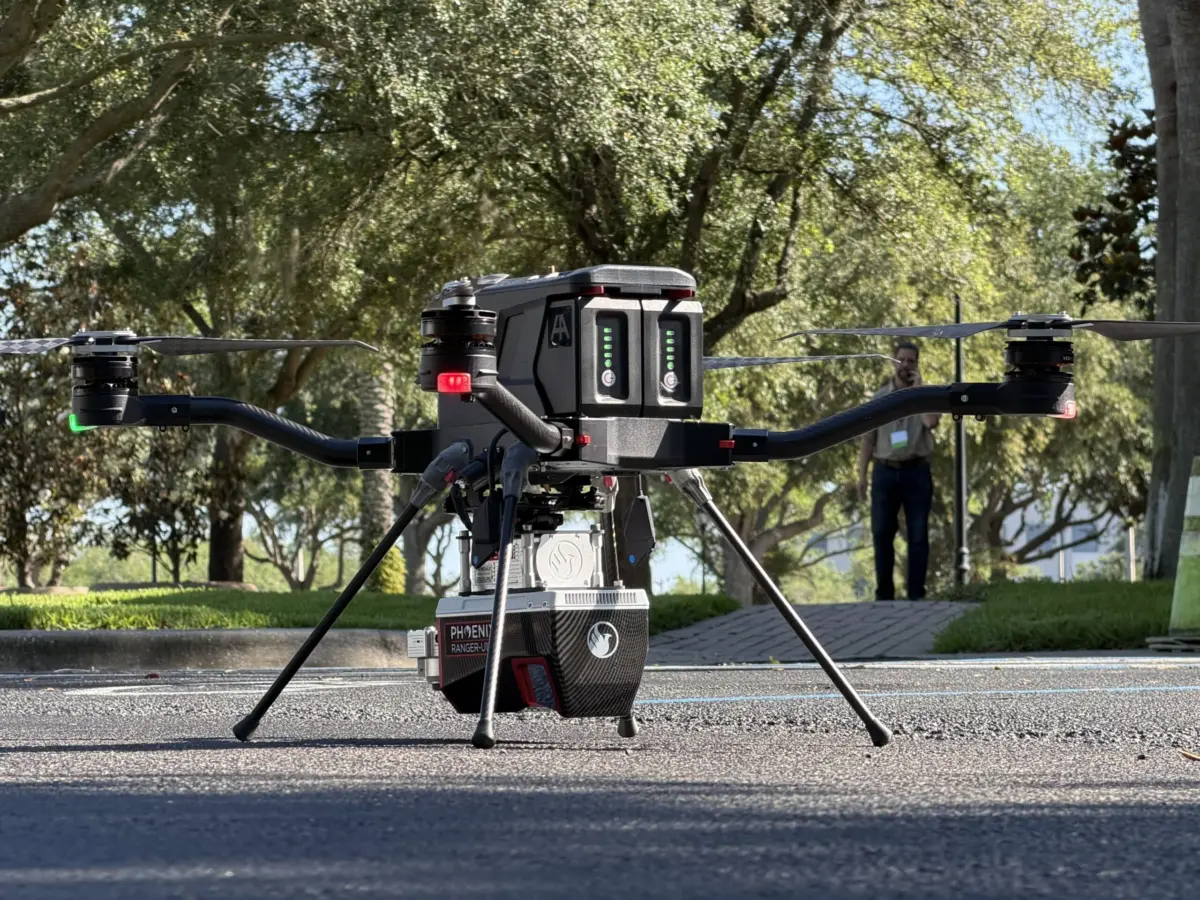
That realization led him directly to the heavy-lift sector. Back then, Harris noted, there simply were no established players focusing intensely on that specific category, prompting his company to zero in on the heavy-lift market and large-frame aircraft designs. As an illustration of this focus, Harris Aerial’s flagship platform, the H6, boasts a maximum payload capacity of 8 kilograms, translating to roughly 18 pounds.

Building such specialized machinery from scratch presented extraordinary challenges, particularly given Harris’s background at the time. As a graduate student embarking on an ambitious manufacturing endeavor, he possessed no formal engineering training in the intricate art of designing and building complex aerial systems. Describing his journey, Harris noted that he is one hundred percent self-taught. While acquiring technical knowledge through independent study has arguably become more accessible today with the proliferation of artificial intelligence tools, the landscape in 2014 looked vastly different. Back then, artificial intelligence as it is known today did not exist, and instructional information regarding how to construct advanced drones was virtually nonexistent on YouTube or anywhere else across the broader internet.
Undeterred by the lack of readily available blueprints or tutorials, Harris and his early collaborators turned to open-source technology. Utilizing open-source Arduino circuit boards alongside open-source autopilot software, the team began the painstaking process of building functional drones from the ground up.
The early prototyping phase involved experimenting with Chinese-made airframes. However, as hands-on testing progressed, the team encountered numerous operational pitfalls and design limitations inherent in those imported structures. Dissatisfied with the performance and quality of the components coming from overseas, Harris and his colleagues transitioned to developing their own proprietary designs utilizing computer-aided design software. Eventually, this evolution culminated in the establishment of localized manufacturing operations for their own airframes right in the Orlando area.
Operating without the cushion of venture capital financing for seed money, Harris and his team relied heavily on financial support from family and friends. Through this conservative approach, they successfully bootstrapped the company into existence, transforming a modest graduate school project into an enduring enterprise.
From those humble beginnings, Harris Aerial has steadily evolved into one of the United States’ premier producers of American-made heavy-lift drones. Today, the company operates as a comprehensive, full-service original equipment manufacturing enterprise, managing the entire lifecycle of its products from initial design and physical manufacturing to specialized client training and technical consulting.

In-House Production Process
A cornerstone of Harris Aerial’s operational strategy lies in its robust in-house production capabilities. By leveraging advanced manufacturing techniques such as industrial 3D printing and computer numerical control milling—an automated process utilizing computer-controlled rotating cutting tools to precisely remove material from solid blocks—the company produces a vast array of its own proprietary parts and equipment.
Elaborating on these capabilities, Harris explained that the company utilizes 3D printing extensively for rapid prototyping. Furthermore, Harris Aerial maintains its own CNC mills on-site, handling the complete milling process for all aluminum, brass, and stainless-copper parts internally. This precision manufacturing infrastructure extends to cutting the specialized molds and plates required to press and cure carbon fiber into durable, mission-specific structural components.
According to Harris, maintaining this level of production in-house provides a distinct operational advantage. It allows the company to rapidly create prototypes, push new concepts into production, and conduct rigorous testing and validation without falling victim to the logistical bottlenecks frequently associated with relying on third-party fabricators.
Sticking to Business Plan

Despite the temptation to expand into adjacent commercial sectors, Harris Aerial has maintained a strict adherence to its original business plan, which calls for the company to focus exclusively on its manufacturing roots rather than branching out into becoming a drone service provider.
Explaining the rationale behind this deliberate corporate boundary, Harris noted that the decision is rooted in a fundamental identity as a manufacturer coupled with a desire to respect the commercial interests of their customer base. The company deliberately avoids stepping on the toes of its clients or competing for service contracts that rightfully belong to the organizations purchasing the equipment for commercial deployment. Consequently, the leadership team has consistently chosen to focus entirely on selling reliable hardware and providing dedicated support for the systems they build.
Operating as a specialized, small-scale manufacturer also affords Harris Aerial the unique flexibility to tailor the construction of its drones to meet the distinct requirements of individual customers. While the company maintains established base models, its engineering framework supports a wide variety of diverse sensor integrations. For specialized entities such as research laboratories and specialized commercial enterprises developing proprietary sensors, Harris Aerial frequently undertakes custom sensor development and offers specialized engineering services designed to seamlessly integrate any specialized payload onto its established aerial platforms.
Expanding its product portfolio to capture broader market segments, Harris Aerial recently introduced the H4C, a versatile mid-size platform slated to enter active manufacturing during the first quarter of 2027. This new aerial vehicle successfully bridges the gap by combining a compact, highly portable footprint with the heavy-lift capabilities that have long defined the company’s larger aircraft.
The forthcoming model is projected to outperform similarly sized competitor platforms in both payload capacity and sustained flight duration. Highlighting its competitive edge, Harris noted that the H4C’s four-kilogram payload capacity remains unmatched within the current United States market, while its flight time offers a dramatic margin when compared against alternative platforms like the Freefly Astro, nearly tripling the endurance of comparable systems.

Anticipating strong commercial demand, Harris projects that the H4C will achieve higher production and sales volumes compared to its larger counterparts within the company’s portfolio. Its balanced size and practical form factor make it exceptionally appealing to a wider audience across the commercial drone sector.
As commercial and defense sector customers increasingly pivot away from foreign-produced aerial technology in favor of domestically manufactured alternatives, American drone OEMs like Harris Aerial are well-positioned to capitalize on these shifting market dynamics.
Addressing the regulatory environment, Harris emphasized that National Defense Authorization Act compliance continues to evolve and tighten, making domestic base of operations an essential asset within the American drone marketplace. This regulatory reality is especially pronounced for manufacturers marketing their systems to Department of Defense customers and other federal agencies.
For companies striving to secure contracts within the federal and defense sectors, maintaining a domestic corporate footprint is no longer just a preference; it is an absolute prerequisite for doing business at that level. Through careful adherence to its manufacturing focus, rigorous in-house production standards, and strategic alignment with domestic compliance requirements, Harris Aerial continues to solidify its distinct niche in the landscape of American drone manufacturing.