By DRONELife Features Editor Jim Magill
In the fast-paced world of technology and commercial enterprise, getting in on the ground floor of an emerging trend is frequently cited as the ultimate key to success. This principle holds true even for a company whose entire business model revolves around manufacturing flying vehicles. For Ben Harris, the founder and chief executive officer of Casselberry, Florida-based Harris Aerial, securing that ground-floor advantage meant carving out a distinct path in a rapidly expanding unmanned aerial vehicle (UAV) market. While many early entrepreneurs rushed to build consumer-friendly devices, Harris deliberately set his sights on an underserved and technically demanding sector: heavy-lift drones.
Reflecting on the company’s origins, Harris recalls launching his enterprise while still navigating the demands of graduate school. "I actually started the company in my grad school college apartment in 2014," Harris said in an interview. This timeline coincided with a pivotal era in consumer drone technology, marked by the release of early iconic models like the DJI Phantom 1. During this period, the broader public perception of drones was rapidly shifting, as these aerial devices emerged onto the global stage as accessible tools primarily utilized for capturing captivating aerial photography and videography.
However, Harris recognized early on that launching a viable and sustainable drone manufacturing business would require far more than following the consumer photography trend. To stand out in a burgeoning marketplace, his company needed to identify and dominate its own specialized niche. Rather than competing in the crowded consumer space, Harris looked toward the industrial and commercial potential of larger aircraft. "Back then we focused on the heavy-lift sector because there were none," he explained. "We focused on the heavy-lift market and drones with large frames."

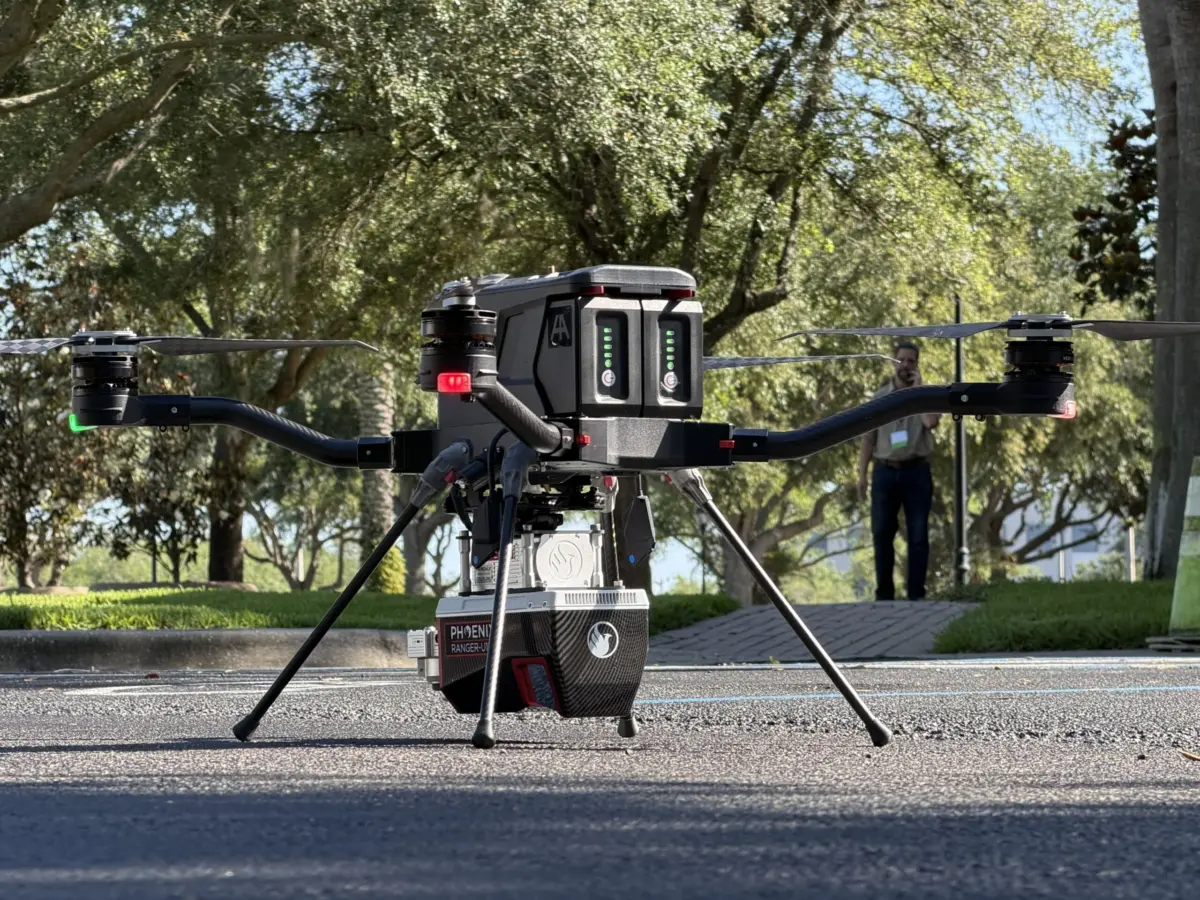
This early strategic focus laid the foundation for the company’s flagship fleet. For instance, Harris Aerial’s prominent H6 model was engineered to handle substantial workloads, boasting a maximum payload capacity of 8 kilograms, which translates to approximately 18 pounds. This capability immediately positioned the firm as a serious contender for industrial applications requiring more than just a lightweight camera platform.
Building a heavy-lift manufacturing enterprise from scratch required immense perseverance, particularly given Harris’s background at the time. As a graduate student at the University of Central Florida, he possessed no formal engineering training in the specialized disciplines of designing and constructing complex UAV systems. "I’m 100% self-taught," Harris said. He notes that while acquiring such technical skills has become significantly more accessible today due to advanced artificial intelligence tools and an abundance of online tutorials, the landscape in 2014 looked vastly different. "That’s not hard to say anymore, with all the AIs of the world, but back then there was no AI and there was pretty much no information on how to build drones on YouTube or anywhere on the internet."
Undeterred by the lack of readily available resources, Harris and his early collaborators utilized open-source Arduino circuit boards and open-source autopilot software to begin building custom drones from the ground up. The prototyping phase involved rigorous trial and error. Initially, the team experimented with commercially available airframes sourced from overseas manufacturers. As they tested these platforms, they quickly encountered structural and mechanical limitations. Recognizing the pitfalls and shortcomings of these foreign-made airframes, the team transitioned to designing their own proprietary computer-aided design (CAD) software. This pivotal shift eventually enabled them to establish local manufacturing operations for their airframes right in the Orlando area.
Operating without the cushion of venture capital financing for seed money, Harris and his team relied heavily on personal perseverance and financial backing from family and friends. Through this conservative approach, they successfully bootstrapped the company into a fully functioning enterprise. From those modest beginnings in a college apartment, Harris Aerial has systematically evolved into one of the United States’ premier producers of American-made heavy-lift drones. Today, the business operates as a comprehensive original equipment manufacturer. "We’re a full-service drone OEM company from design to manufacturing, training and consulting," Harris noted.

In-House Production Process
A cornerstone of Harris Aerial’s operational strategy is its robust in-house production process. By leveraging advanced manufacturing technologies such as 3D printing and computer numerical control (CNC) milling, the company maintains strict control over the creation of numerous critical parts and equipment. CNC milling, an automated manufacturing process that utilizes computer-controlled rotating cutting tools to precisely remove material from a solid block, allows for exacting tolerances in structural components.
"We do a lot of 3D printing for prototyping. We have our own CNC mills in-house and we do all the milling of all of our aluminum, brass and stainless-copper parts in-house," Harris detailed. Furthermore, the company’s precision manufacturing capabilities extend to cutting the specialized molds and plates utilized to press and cure carbon fiber into bespoke structural parts.
Maintaining these capabilities under one roof provides the firm with a distinct competitive advantage in the marketplace. According to Harris, this in-house production infrastructure empowers the company to rapidly iterate on designs, fabricate new prototypes, and conduct testing and validation procedures efficiently, entirely avoiding the delays and logistical bottlenecks often associated with relying on third-party fabricators.
Sticking to Business Plan
Despite the temptation to expand into adjacent commercial sectors, Harris Aerial has maintained a steadfast commitment to its original business plan, deliberately choosing to stick strictly to its manufacturing roots rather than branching out into becoming a drone service provider.

Explaining the rationale behind this strategic boundary, Harris emphasized respect for the company’s customer base. "The real reason for that is not because we don’t want to, it’s just because we’re a manufacturer at our core, and we don’t want to step on our clients’ toes and take work that rightfully belongs to those who buy our equipment to use it for those kinds of service contracts," he stated. Consequently, the company has consistently resolved to focus exclusively on building high-grade hardware and providing dedicated support for the equipment it sells.
Operating as a specialized, small-scale manufacturer also affords Harris Aerial the flexibility to tailor the construction of its drones to satisfy the unique requirements of individual clients. While the company offers reliable base models, its engineering framework supports a diverse array of sensor integrations. For specialized entities such as research laboratories and technological developers working with custom sensors, Harris Aerial provides dedicated custom sensor development and engineering services to ensure seamless integration onto its aerial platforms.
The company’s product portfolio continues to evolve with market demands. Recently, Harris Aerial announced the addition of the H4C, a mid-size platform designed to bridge the gap between compact footprints and heavy-lift performance. Scheduled to begin manufacturing in the first quarter of 2027, the H4C packages the heavy-lift characteristics of the company’s larger aircraft into a more portable form factor.
Harris anticipates that the new model will surpass competing platforms in its specific weight class regarding both lifting capability and endurance. "I think its payload capability of four kilograms is unmatched right now in the U.S. market. Its flight time, when you compare it to the Freefly Astro, is almost triple," he noted. Because of its versatile size and broad commercial appeal, Harris expects the H4C to emerge as a higher-volume product compared to the heavier aircraft in the company’s portfolio.

This product evolution coincides with a significant shift in the broader unmanned systems industry. As commercial operators and defense sector customers increasingly prioritize the procurement of domestically manufactured drones over foreign-produced alternatives, U.S.-based original equipment manufacturers are uniquely positioned to capture growing market share.
Regulatory standards and compliance frameworks are also playing a vital role in shaping purchasing decisions. "NDAA-compliance is something that is continuing to evolve and get more strict and being American-based is really important in the U.S. drone market," Harris observed. This regulatory environment is particularly influential for businesses marketing their technologies to Department of Defense customers and various federal agencies. Emphasizing the necessity of domestic operations for securing government contracts, Harris concluded, "If you’re trying to sell to that market, which we are, you have to be a U.S.-based company, otherwise you just don’t do business with them."