By DRONELife Features Editor Jim Magill
In the fast-paced world of commercial and defense technology, getting in on the ground floor of an emerging trend is frequently cited as the ultimate key to success. This principle holds true even for a company whose primary business is manufacturing flying vehicles. For Ben Harris, founder and CEO of Casselberry, Florida-based Harris Aerial, securing that early foothold meant launching an enterprise dedicated to the heavy-lift sector at a time when the broader unmanned aerial vehicle (UAV) market was overwhelmingly dominated by small, lightweight consumer devices designed primarily for aerial photography and videography.
Reflecting on the company’s origins, Harris recalls launching the enterprise in a modest college apartment while pursuing his graduate studies at the University of Central Florida back in 2014. Coinciding roughly with the commercial release of early consumer platforms like the DJI Phantom 1, that era marked the initial emergence of drones into the public consciousness as accessible gadgets capable of capturing crisp pictures and sweeping cinematic videos. While many aspiring entrepreneurs rushed to capitalize on the booming consumer photography market, Harris recognized early on that a startup aiming to build a sustainable manufacturing business would need to carve out a distinct, underserved niche within the rapidly expanding UAV landscape.
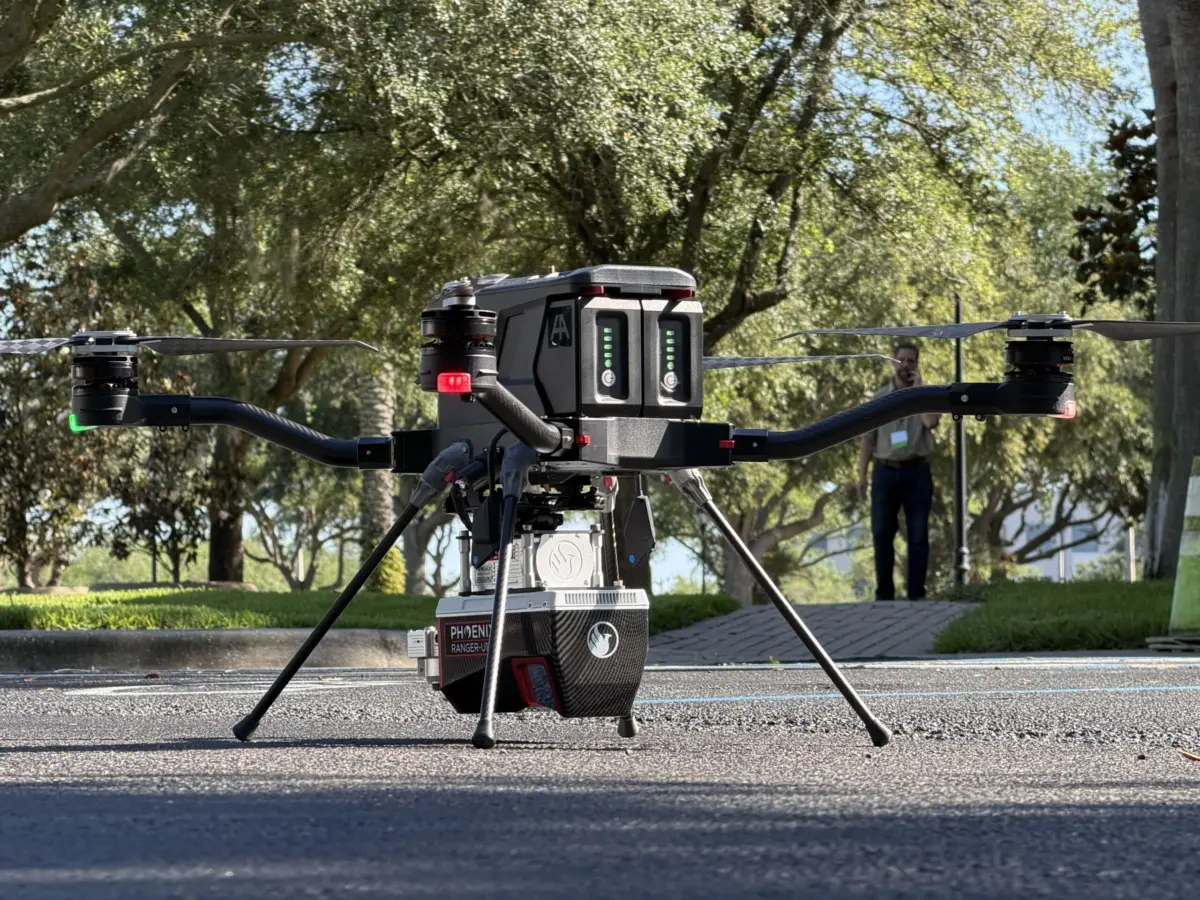
Rather than competing in the crowded consumer photography space, Harris deliberately turned his attention toward heavier industrial applications. Back then, he notes, the heavy-lift sector was virtually unoccupied, leaving a wide-open market for specialized drones featuring larger, more robust airframes capable of carrying substantial payloads. This foundational strategy led to the development of the company’s flagship fleet, including the H6 model, which boasts a maximum payload capacity of 8 kilograms—roughly equivalent to 18 pounds.

When he first embarked on this venture, however, Harris possessed no formal engineering training in the specialized disciplines of designing and building complex aerial platforms. As he readily admits, he is entirely self-taught. While acquiring technical skills independently is perhaps more commonplace today given the proliferation of artificial intelligence tools, online tutorials, and video guides, the landscape in 2014 looked vastly different. At the time, advanced AI tools were not widely accessible, and comprehensive information on how to construct heavy-duty drones from scratch was scarce to non-existent on YouTube or across the wider internet.
Undeterred by the lack of readily available blueprints or institutional backing, Harris and his early collaborators began experimenting with open-source hardware, utilizing Arduino circuit boards paired with open-source autopilot software to build functional prototypes from the ground up. During the initial prototyping phase, the team experimented with Chinese-made airframes. However, as they tested these imported structures in real-world scenarios, they quickly encountered numerous design pitfalls, structural limitations, and other shortcomings that failed to meet their operational standards.
Driven by these frustrations, the team transitioned to designing their own proprietary airframes using computer-aided design (CAD) software. Eventually, this iterative design process culminated in the establishment of local manufacturing operations right in the Orlando area, allowing the company to control every stage of production from the ground up. Operating without the benefit of venture capital financing or large-scale seed money, Harris and his team relied entirely on personal savings and financial contributions from family and friends, successfully bootstrapping the enterprise into existence through sheer perseverance and resourcefulness.
From those humble beginnings around a graduate student’s apartment, Harris Aerial has steadily evolved into one of the United States’ premier producers of American-made heavy-lift drones. Today, the enterprise functions as a comprehensive, full-service Original Equipment Manufacturing (OEM) company, managing everything from initial product design and precision manufacturing to specialized client training and technical consulting.

In-House Production Process
A cornerstone of Harris Aerial’s operational strategy is its robust in-house production capability. By utilizing advanced manufacturing techniques such as 3D printing and computer numerical control (CNC) milling, the company is able to fabricate a significant portion of its own specialized parts, components, and equipment directly on-site. CNC milling, an automated manufacturing method driven by computer-controlled rotating cutting tools, enables the precise removal of material from solid metal blocks to craft high-tolerance mechanical parts.
As Harris explains, the firm leverages 3D printing extensively for rapid prototyping, allowing engineering teams to quickly test new ideas and iterate on designs. Furthermore, the company houses its own CNC mills to execute the precision machining of all structural aluminum, brass, and stainless-copper components in-house. This comprehensive manufacturing ecosystem also encompasses the cutting of specialized molds and plates utilized in pressing and curing carbon fiber into structural drone parts.
Maintaining these advanced production capabilities entirely in-house yields profound strategic advantages for a specialized hardware manufacturer. According to Harris, this integrated approach allows the company to rapidly create prototypes, push new innovations into production, and complete rigorous testing and validation cycles without falling victim to the costly delays and bottlenecks commonly associated with third-party fabricators.
Sticking to Business Plan
Despite the temptation to expand into adjacent sectors as the drone industry matured, Harris Aerial’s core business plan remains firmly anchored in its manufacturing roots. The company has consistently resisted the urge to branch out into becoming a downstream drone service provider, choosing instead to focus exclusively on hardware production and customer support.

The reasoning behind this strategic boundary is straightforward and rooted in professional respect for the company’s clientele. Harris points out that the decision is not driven by a lack of capability, but rather by a deliberate commitment to avoid competing with their own customers. Because many clients purchase Harris Aerial equipment specifically to execute commercial service contracts, stepping into the service arena would mean stepping on their toes and taking work that rightfully belongs to the operators who invest in the hardware. Consequently, the company has always chosen to focus strictly on selling reliable hardware and backing it up with comprehensive technical support.
Operating on a relatively small manufacturing scale also grants Harris Aerial the distinct flexibility to customize the construction of its drones to satisfy the exact requirements of individual customers. While the company maintains established base models, its platforms are engineered to support a diverse array of specialized sensor integrations. For research laboratories and specialized commercial entities developing unique sensors for niche applications, Harris Aerial frequently undertakes custom sensor development and engineering services. These tailored solutions help clients seamlessly integrate whatever specialized payload they require onto a stable, heavy-lift platform.
Expanding its product ecosystem further, the company recently introduced the H4C, a versatile mid-size platform designed to bridge the gap between compact footprints and heavy-lift performance. Scheduled to begin active manufacturing in the first quarter of 2027, this new aerial vehicle successfully marries a more compact physical footprint with the robust lifting capacity that has long defined the company’s larger aircraft.
The new model is projected to significantly outperform similarly sized competitor platforms in both payload capacity and overall flight duration. Harris highlights that the H4C’s impressive payload capability of four kilograms is virtually unmatched within the current United States drone market. Moreover, when evaluated against comparable alternatives such as the Freefly Astro, the H4C delivers a flight time that is nearly triple that of the competing model.

Anticipating strong demand across various operational sectors, Harris expects the H4C to outpace its larger portfolio cousins in terms of production volume and sales. Due to its balanced size and versatile form factor, the mid-size platform boasts a much broader market appeal, positioning it to become a high-volume product for the Florida-based manufacturer.
This expanding product line arrives at a time when commercial and defense sector customers are increasingly pivoting away from foreign-produced UAVs in favor of domestically manufactured alternatives. As regulatory requirements and supply chain security concerns tighten, American drone manufacturers like Harris Aerial are uniquely positioned to reap the benefits of this shifting market dynamic.
Compliance with National Defense Authorization Act (NDAA) guidelines continues to evolve, growing progressively stricter across government procurement channels. In this environment, maintaining a domestic base of operations has become a critical advantage in the U.S. drone market. This reality is especially pronounced for manufacturing enterprises marketing their technologies to Department of Defense customers and other federal agencies, where domestic provenance is non-negotiable.
For companies operating in this sensitive space, domestic manufacturing is not merely a marketing preference; it is an absolute prerequisite for doing business. As Harris emphasizes, if an enterprise is attempting to sell into that tightly regulated federal market—a domain that Harris Aerial actively serves—being a U.S.-based company is mandatory. Without that domestic foundation, participation in those critical sectors simply is not possible.