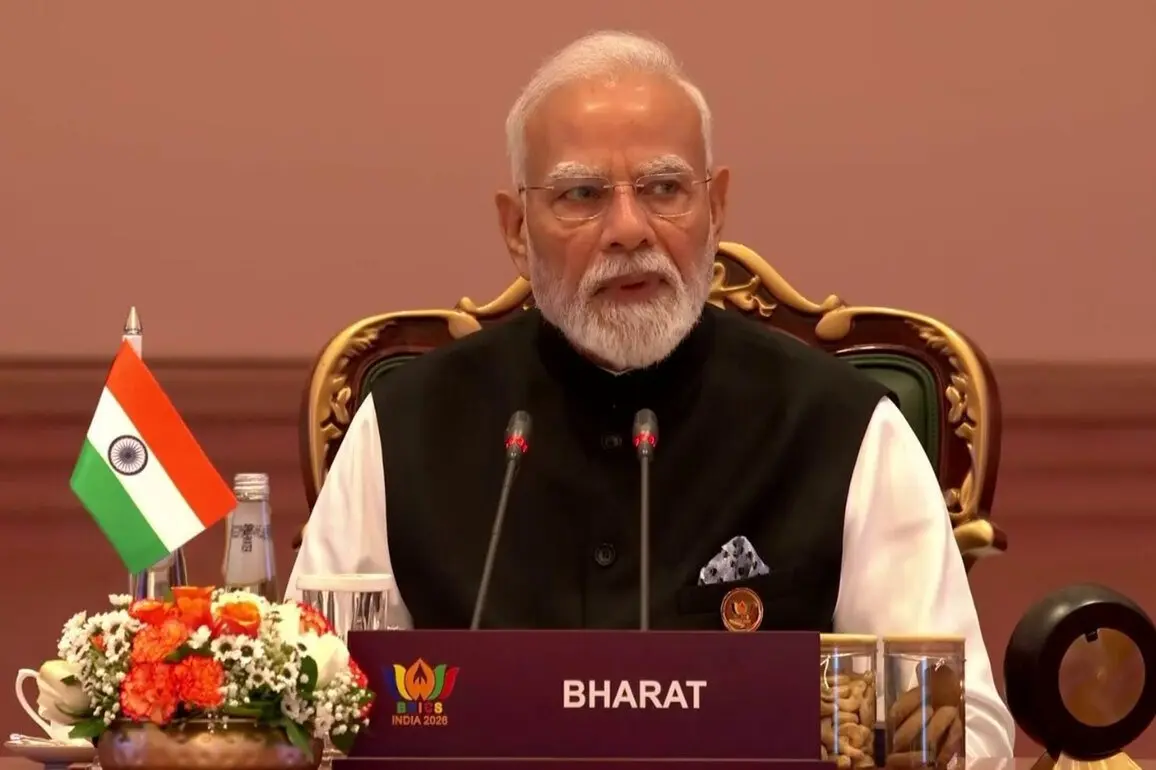
The BRICS Summit 2026, hosted in New Delhi on September 12-13 under the overarching theme “Building for Resilience, Innovation, Cooperation and Sustainability,” has concluded with significant diplomatic milestones. The high-profile gathering drew intense global attention not only for its scale but also for the high-level participation of key world leaders, including Chinese President Xi Jinping and Russian President Vladimir Putin. Equally critical was the presence of Iranian President Masoud Pezeshkian, whose attendance came against the backdrop of ongoing tensions and conflict in West Asia.
One of the most notable and unexpected achievements of the New Delhi Summit was the ability of member states to bridge deep-seated divisions and unanimously adopt a joint declaration addressing the West Asia conflict. This diplomatic breakthrough was far from guaranteed. Just months prior, during the BRICS Foreign Ministers’ meeting held in May 2026, sharp acrimony was openly visible between Iranian Foreign Minister Abbas Araghchi and UAE Minister of State for Foreign Affairs Khalifa Shaheen Al Marar. That friction had paralyzed the bloc, making a consensus joint statement entirely elusive at the time. In this context, India’s successful navigation of these geopolitical fault lines to secure a unified declaration stands out as a major diplomatic victory for New Delhi’s presidency.
Adding to the diplomatic momentum on the sidelines of the summit, Iranian President Masoud Pezeshkian held a high-level meeting with the Crown Prince of Abu Dhabi, Sheikh Khaled bin Mohamed bin Zayed Al Nahyan. This encounter marked the most significant high-level diplomatic contact between Iran and the UAE in the aftermath of the West Asia conflict, especially given the relative absence of major bilateral talks between the two nations prior to the summit.
Beyond regional security concerns, the New Delhi Declaration addressed broader international economic grievances. It expressed deep concern over the rising tide of unilateral tariffs, protectionism, and restrictive economic sanctions. The declaration reaffirmed the indispensable role of the Global South in the contemporary international landscape and underscored the commitment of BRICS nations to articulating the collective concerns and priorities of developing economies.
The declaration explicitly stated that BRICS countries will continue playing a pivotal role in voicing the concerns and priorities of the Global South, as well as promoting a more just, sustainable, inclusive, representative, and stable international order based firmly on international law.
New Delhi Declaration and Trade in Local Currencies
On the critical economic front of trade in local currencies, the New Delhi declaration adopted a pragmatic, measured approach. Rather than forcing an aggressive or uniform monetary overhaul, the text acknowledged ongoing efforts while respecting national economic sovereignty and priorities.
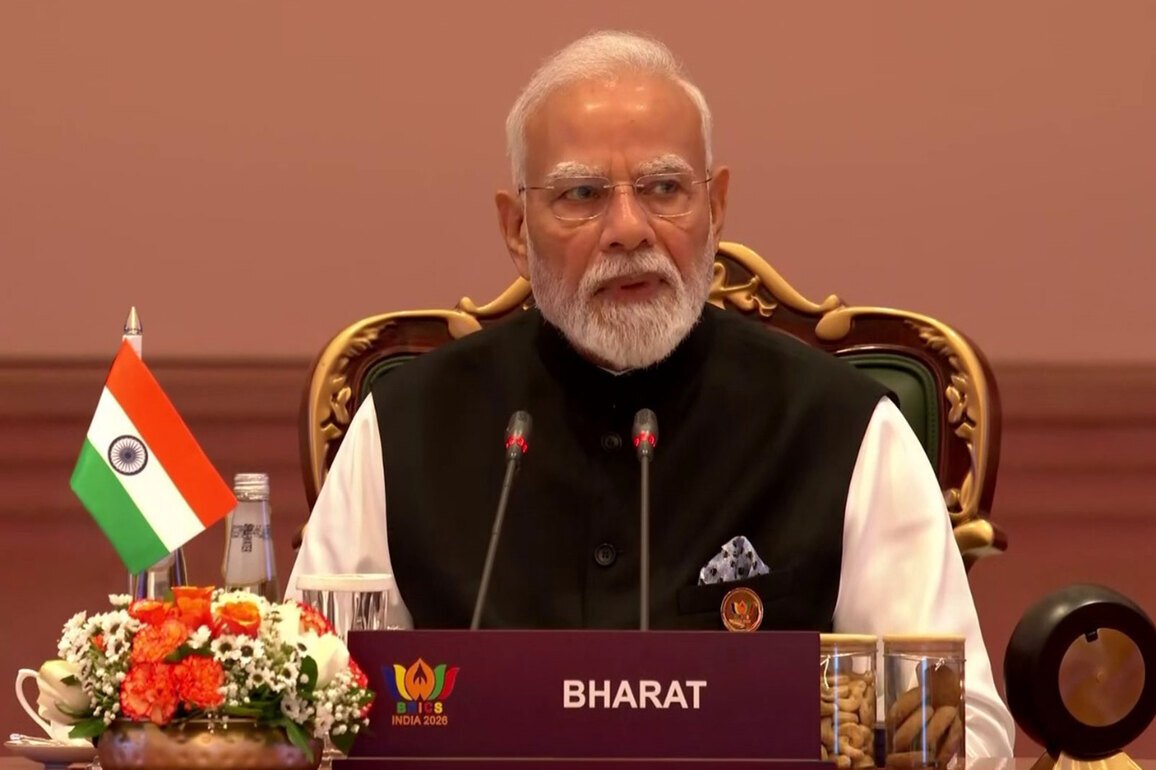
The declaration noted that members acknowledge the work done to study the cross-border interoperability of payment and messaging channels, alongside active discussions on promoting trade settlements and investments using BRICS local currencies. However, it explicitly recognized national priorities and the reality that there is no one-size-fits-all approach to cross-border financial integration.
Throughout the preliminary BRICS meetings leading up to the summit, the issue of linking Central Bank Digital Currencies was extensively discussed. India, however, steadfastly maintained its opposition to the creation of a unified "BRICS Currency." Right at the beginning of India’s presidency earlier in the year, the Reserve Bank of India had indeed recommended that linking CBDCs be placed on the BRICS agenda, but New Delhi drew a firm line against a single bloc currency.
India’s nuanced and measured stance on trade in local currencies stems primarily from concerns regarding potential economic dominance by single actors, notably China, within a unified currency framework. Senior Indian officials, including Commerce and Industry Minister Piyush Goyal, repeatedly reiterated this position during various BRICS forums. Elaborating on this diplomatic and economic tightrope, Sudhakar Dalela, Secretary of Economic Relations in the Ministry of External Affairs, told the media that there is currently no proposal within BRICS for the creation of a common BRICS currency. Furthermore, Indian officials have categorically emphasized that while the country seeks to reduce its dependence on the US dollar and prioritize its own sovereign economic interests, it has no intention of actively undermining the US dollar.
India’s Trade in Local Currencies and Opportunities
In practical terms, India currently settles approximately 2 percent of its exports and 8 percent of its imports in Indian Rupees. The proportion of imports handled in local currency is substantially higher due to energy trade, notably the fact that 96 percent of India-Russia trade is conducted in local currencies driven by India’s heavy importation of Russian oil.
To execute these transactions, India primarily utilizes two established mechanisms: formal Local Currency Settlement Systems and the broader Special Rupee Vostro Account network. While India already deals in local currency with several bilateral partners—including Indonesia, the UAE, Bangladesh, Sri Lanka, and Germany—the transaction volumes with most of these partners remain nominal.
Building on this foundation, India is actively pushing to expand local currency trade with broader BRICS partner countries, including Malaysia and Vietnam. Notably, on the sidelines of the New Delhi Summit, Indian representatives held focused talks with counterparts from Malaysia, Thailand, and Vietnam regarding the technical linking of Central Bank Digital Currencies. Economic analysts point out that India’s overall trade in local currencies with the expanded BRICS-plus grouping—which encompasses both full members and formal partner countries—has the potential to reach an impressive 40 percent over time.

De-dollarisation Target of the New Development Bank
The push away from greenback dependency found a concrete institutional anchor in the New Development Bank, the multilateral financial institution established by the BRICS bloc. The New Delhi declaration explicitly welcomed the NDB’s ongoing transition in development finance away from the US dollar by systematically scaling up lending in national currencies.
The declaration encouraged further efforts by the bank to steadily expand its capacity to mobilize resources, foster innovation, expand local currency financing, and diversify its funding sources.
Highlighting this trajectory, NDB President Dilma Rousseff noted that a significant percentage of the bank’s lending throughout 2025 was executed in local currencies. The NDB’s local currency lending portfolio has experienced exponential growth. In 2024, local currency approvals increased to 24.2 percent, before jumping dramatically to 45.9 percent of annual approvals in 2025. Furthermore, the bank achieved a historic milestone in 2025 by approving its first-ever rupee-denominated loan, followed closely by its second rupee-denominated equity investment.
Reflecting this momentum, Iran—which has formally applied for membership in the NDB—used the platform to advocate for deeper financial integration. During his address to the summit, Iranian President Masoud Pezeshkian pitched the idea of transforming the New Development Bank into the primary funding source for regional infrastructure and energy projects, emphasizing the expansion of local-currency lending and dedicated credit lines.
Ultimately, while a powerful consensus exists among BRICS nations regarding the long-term necessity of reducing global dependency on the US dollar in a shifting economic architecture, member states approach the issue through distinct lenses. For countries like Russia and China, the conversation has long been framed around the perceived weaponization of the US dollar. In contrast, India has consciously distanced itself from both the concept of a common BRICS currency and any policy aimed at undermining the US dollar.
India has repeatedly clarified that while BRICS must serve as an effective voice for the concerns of the Global South, the organization is not directed against any nation. New Delhi continues to champion the view that BRICS operates as a "non-Western" entity rather than an "anti-Western" one. Therefore, while both BRICS and the New Development Bank provide a viable forum to mitigate the global hegemony of the greenback, international financial experts agree there is no immediate threat of a sudden, disruptive de-dollarisation driven by the bloc.