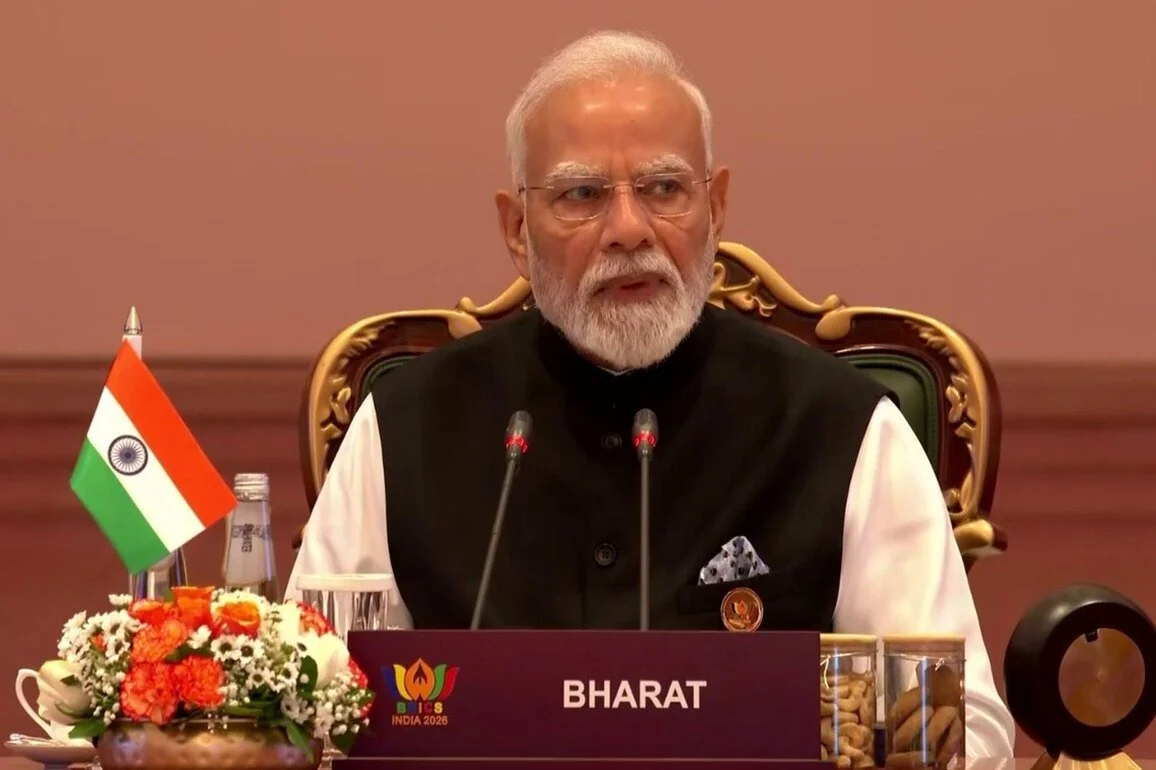
The BRICS Summit 2026, hosted in New Delhi on September 12–13, successfully concluded under the overarching theme “Building for Resilience, Innovation, Cooperation and Sustainability.” The high-profile gathering immediately drew intense global attention, driven largely by the convergence of key geopolitical figures. The presence of Chinese President Xi Jinping and Russian President Vladimir Putin underscored the summit’s strategic weight, while Iranian President Masoud Pezeshkian’s attendance against the backdrop of ongoing West Asia conflicts added a layer of critical diplomatic urgency. Despite notable regional tensions, one of the most remarkable achievements of the two-day summit was the ability of member states to navigate profound geopolitical divisions, ultimately evolving a complete consensus and unanimously adopting a joint declaration concerning the West Asia conflict.
Achieving this unified stance was no small feat. Doubts regarding the group’s cohesion on regional matters had been prominent, particularly following the BRICS Foreign Ministers’ meeting held in May 2026. During that earlier gathering, visible acrimony between Iranian Foreign Minister Abbas Araghchi and UAE Minister of State for Foreign Affairs Khalifa Shaheen Al Marar paralyzed discussions, rendering a joint statement elusive. Against this turbulent backdrop, New Delhi’s success in steering the bloc toward a unified declaration represents a significant diplomatic triumph for India’s presidency, demonstrating its capacity to bridge deep-seated diplomatic divides among key developing nations.
Further capitalizing on the diplomatic momentum generated by the summit, Iranian President Masoud Pezeshkian held direct bilateral talks with the Crown Prince of Abu Dhabi, Sheikh Khaled bin Mohamed bin Zayed Al Nahyan, on the sidelines of the event. This high-level interaction marked a vital breakthrough for regional diplomacy, representing the most significant direct contact between the two nations following the escalation of the West Asia conflict and filling a notable vacuum in bilateral dialogue.
Beyond regional security issues, the New Delhi Declaration addressed broader macroeconomic challenges, expressing grave concern over the proliferation of unilateral tariffs, protectionism, and restrictive economic sanctions. The declaration reaffirmed the indispensable role of the Global South in the international arena and emphasized the commitment of BRICS nations to articulating the collective concerns and priorities of developing economies. As outlined in the official text, BRICS countries will continue playing a pivotal role in voicing the concerns and priorities of the Global South, as well as promoting a more just, sustainable, inclusive, representative, and stable international order based firmly on international law.
New Delhi Declaration and Trade in Local Currencies
On the critical economic front of trade in local currencies, the New Delhi Declaration adopted a pragmatic, measured approach. Rather than mandating an abrupt transition or setting rigid, unrealistic deadlines, the declaration acknowledged ongoing technical efforts while respecting the diverse economic realities of member states. The text explicitly noted that members acknowledged the work done to study the cross-border interoperability of payment and messaging channels, alongside discussions on promoting trade settlements and investments using BRICS local currencies, while fully respecting national priorities and acknowledging that there is no one-size-fits-all approach.
Throughout the preparatory meetings leading up to the summit, the topic of linking Central Bank Digital Currencies (CBDCs) featured prominently on the agenda. At the very outset of India’s BRICS presidency earlier in the year, the Reserve Bank of India (RBI) had recommended incorporating CBDC linkages into the bloc’s agenda. However, these discussions also brought to light differing visions regarding monetary cooperation, with India consistently maintaining a cautious stance regarding the creation of a unified BRICS currency.
India’s Measured Stance on Trade in Local Currencies
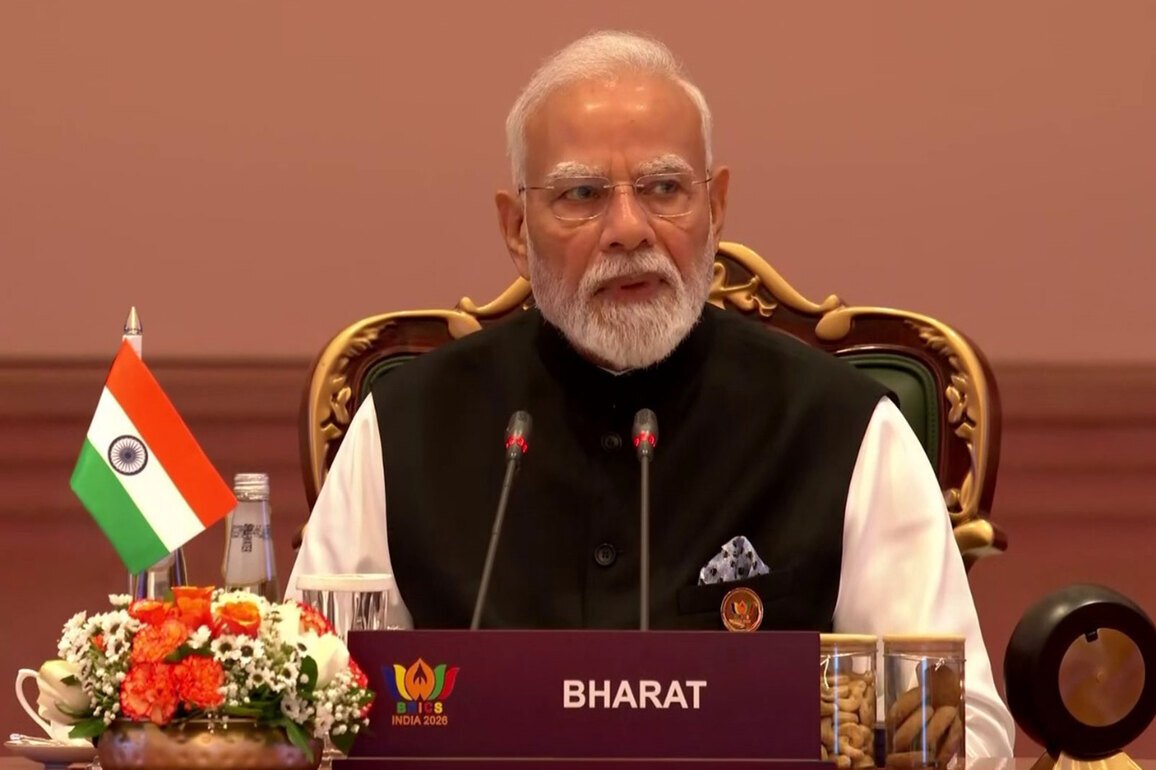
India has maintained a nuanced, highly calculated position regarding the broader discourse on trade in local currencies and de-dollarization. New Delhi deliberately distanced itself from proposals advocating for a common BRICS currency, driven largely by underlying strategic concerns regarding potential Chinese economic dominance within such a monetary framework. Senior Indian officials, including Commerce and Industry Minister Piyush Goyal, repeatedly reiterated this calibrated viewpoint during various BRICS ministerial deliberations. Elaborating on this position during media interactions, Sudhakar Dalela, Secretary of Economic Relations in the Ministry of External Affairs, clearly stated that there was no proposal within BRICS for a common BRICS currency as of now.
Furthermore, Indian policymakers have taken pains to clarify that while India seeks to reduce transaction costs, lower its dependence on the US dollar, and prioritize its core national economic interests, it harbors no intention of actively undermining the US dollar or weaponizing financial architectures.
India’s Trade in Local Currencies: Opportunities
At present, India settles approximately 2 percent of its exports and 8 percent of its imports in Indian Rupees (INR). The substantially higher share of imports settled in local currency is heavily skewed by energy trade, notably the fact that roughly 96 percent of India-Russia trade is conducted in local currencies due to large-scale Indian oil imports from Moscow. To facilitate these transactions, India primarily relies on two operational mechanisms: formal Local Currency Settlement Systems (LCSS) and the broader Special Rupee Vostro Account (SRVA) network.
While India currently engages in local currency trade with several bilateral partners—including Indonesia, the United Arab Emirates, Bangladesh, Sri Lanka, and Germany—the overall transaction volumes with most of these partners remain relatively nominal. Nevertheless, New Delhi is actively working to expand local currency trade with broader BRICS partner countries, including Malaysia and Vietnam. Notably, on the sidelines of the New Delhi Summit, Indian officials held focused discussions with counterparts from Malaysia, Thailand, and Vietnam regarding the technical possibilities of linking their respective CBDCs.
Industry experts point out that as these bilateral and plurilateral frameworks mature, India’s trade in local currencies with the broader BRICS-plus network—encompassing both full members and partner countries—has the structural potential to reach up to 40 percent of total trade.
De-dollarisation Target of NDB
The New Delhi Declaration also highlighted concrete progress made by the New Development Bank (NDB), the multilateral financial institution established by the BRICS nations. The declaration explicitly noted the bank’s ongoing strategic shift away from the US dollar by progressively scaling up development finance and lending in national currencies. The declaration explicitly encouraged further efforts by the bank to steadily expand its capacity to mobilize resources, foster innovation, expand local currency financing, and diversify its funding sources.

Weighing in on these financial trends, NDB President Dilma Rousseff underscored the rapid acceleration of local currency lending. The proportion of NDB lending denominated in local currencies has risen dramatically in recent years, climbing to 24.2 percent in 2024 before experiencing a sharp upward surge to 45.9 percent for annual approvals in 2025. Demonstrating this institutional shift in practical terms, the NDB approved its very first rupee-denominated loan and its second rupee-denominated equity investment over the past year.
The expanding mandate and currency flexibility of the NDB have also attracted external interest. During his summit address, Iranian President Masoud Pezeshkian formally pitched the idea of transforming the New Development Bank into the primary funding source for regional infrastructure and energy projects, emphasizing the necessity of robust local-currency lending and dedicated credit lines.
Ultimately, while a broad consensus persists among BRICS nations regarding the long-term economic necessity of reducing reliance on the US dollar in a shifting global economic architecture, member states approach this objective through distinctly different lenses. While countries like Russia and China have long framed the issue around the geopolitical weaponization of the US dollar, India continues to advocate for a purely economic, pragmatic approach—distinctly separating itself from proposals for a common currency or any design to undermine the greenback.
Reiterating its diplomatic and economic philosophy, India has consistently emphasized that while BRICS must serve as an effective platform to articulate the legitimate concerns and aspirations of the Global South, it remains an inclusive, non-western organization rather than an anti-Western one. Consequently, while forums like BRICS and the NDB provide institutional avenues to mitigate the hegemony of dominant global currencies, financial analysts agree there is no immediate or aggressive push toward rapid de-dollarization emanating from the bloc.